Lavorazione: L'Arte della Trasformazione del Materiale
Sommario
The machining is an essential manufacturing process. It entails controlled product removal. This develops exactly formed elements. Machining operates as a subtractive production technique. The starting work surface is constantly larger than the last part. Machining procedures supply exceptional accuracy compared to options like additive manufacturing. This precision is critical for several industries.
Exploring the Machining Operations
Machining operations encompass diverse techniques. Each suits specific requirements. These processes have two primary categories: conventional and non-conventional.
Conventional Machining: Traditional Material Removal
Conventional machining employs physical cutting tools. These include blades and drills. This approach has been refined over centuries.
Key Conventional Machining Processes:
Trasformazione:
- Process: A rotating workpiece is shaped by a stationary cutting tool. The tool removes material symmetrically.
- Applicazioni: Engine parts, machine components, shafts, creating holes, grooves, threads, and tapers. Ideal for cylindrical and conical shapes.
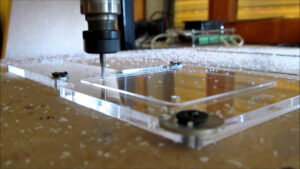
Perforazione:
- Process: Creates holes in a workpiece. This is often done using a drill press and a rotating drill bit.
- Applicazioni: Essential for screw holes, creating threads, and aesthetic purposes. It’s a ubiquitous machining operation.
Noioso:
- Process: Enlarges pre-drilled holes. A single-point cutting tool performs this. Boring tools can mount on lathes, milling machines, or drill presses.
- Applicazioni: Engine shafts, gun cylinders, and turbine cylinders benefit from this precise hole enlargement.
Reaming:
- Process: Enhances hole quality and precision. It’s a secondary finishing operation. Reaming usages multi-point cutting devices to improve precision, roundness, and surface area finish.
- Applicazioni: Critical for aircraft elements, engine parts, fuselages, and landing equipment.
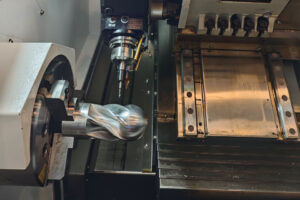
Milling:
- Process: A rotating cutting tool works against a stationary workpiece. Milling machines offer diverse cutting tool shapes.
- Applicazioni: Slotting, creating contours, gear cutting, and thread making are common. Various milling types exist, including end milling and face milling.
Rettifica:
- Process: A secondary finishing operation using an abrasive rotary disc (grinding wheel). It improves surface finish and dimensional accuracy.
- Applicazioni: Surface finishing, descaling, and deburring. It smooths defects from other machining processes.
Picchiettatura:
- Process: Creates internal threads. A cutting tool called a tap rotates and moves linearly inside a pre-drilled hole.
- Applicazioni: Essential for screw and bolt threads, plumbing, and part assembly.
Planing:
- Process: Machines an entire surface in a single pass. Planing machines create flat or inclined surfaces.
- Applicazioni: Woodworking, creating dovetail joints, slots, grooves, and accurate flat surfaces.
Knurling:
- Process: Creates a pattern on the workpiece surface using a knurling pin. Patterns can be linear or diamond-shaped.
- Applicazioni: Enhances grip on tool handles and provides aesthetic appeal.
Sawing:
- Process: Uses a toothed or abrasive cutting tool to slice through material. It’s used to divide workpieces. Accuracy is generally lower than other methods.
- Applicazioni: Woodworking, dies, and metal fabrication.
Shaping:
- Process: Alters a workpiece’s basic shape using a reciprocating cutting tool. The workpiece moves back and forth against the tool.
- Applicazioni: Creating internal spline holes, flat surfaces, gear teeth, dovetail joints, and keyways.
Broaching:
- Process: Employs a toothed cutting tool (broach) to remove minimal material per pass. It creates specific features.
- Applicazioni: Making keyways, splines, gears, and slots.
Lapping:
- Process: A secondary finishing operation. The workpiece rubs against a lap plate with an abrasive paste. It averages rough features, creating smooth edges and accurate flat surfaces.
- Applicazioni: Achieving high accuracy in flat surfaces.
Non-Conventional Machining: Advanced Material Erosion
Non-conventional machining bypasses standard cutting tools. These approaches utilize power forms like heat or pressure for material disintegration. They use high accuracy and modern-day capacities.
Trick Non-Conventional Machining Processes:
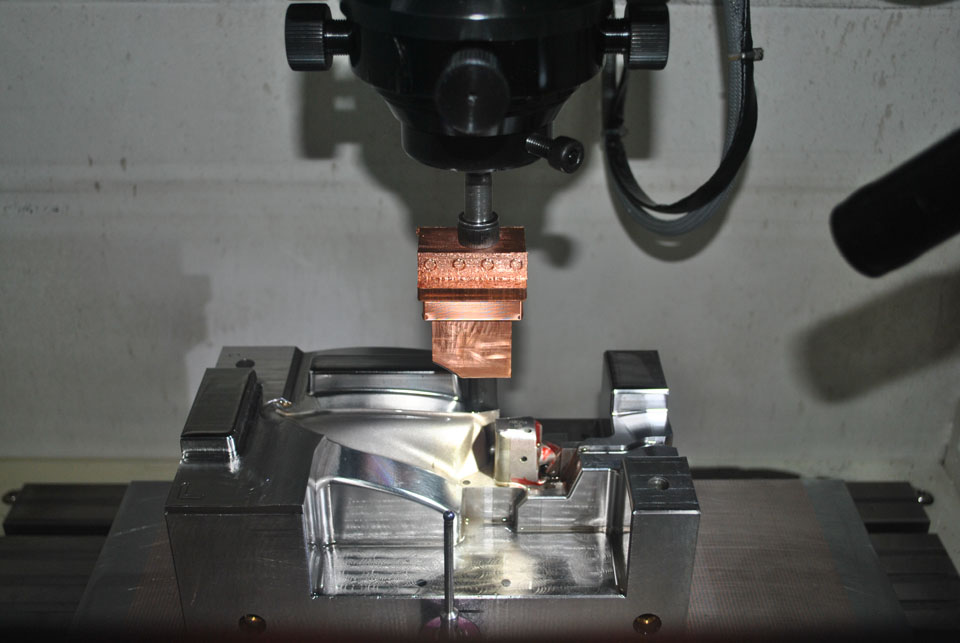
Electrical Discharge Machining (EDM):.
Process: Uses high-voltage electric pulses to thaw and remove conductive material. It generates accurate cuts.
Applications: Mold manufacturing, die production, blanking punches, tooling, and medical devices.
Chemical Machining (Etching):.
Process: Employs chemical reactions to remove product. Work surfaces are concealed, leaving certain areas revealed to a chemical agent.
Applications: Machining thin parts, automobile and aircraft components, fine displays, cable fits together, and hard-to-handle work surfaces.
Electrochemical Machining (ECM):.
Process: Combines chemical machining with electrical energy. It’s the opposite of electroplating. ECM is independent of material firmness or machinability.
Applications: Drilling numerous openings, pass away sinking, profiling, contouring, and shaping generator blades.
Unpleasant Jet Machining:.
Process: Uses a high-speed stream of gas to thrust unpleasant bits. This erodes product.
Applications: Cutting heat-sensitive products, deflashing, surface cleaning, deburring, and glass icing.
Ultrasonic Machining:.
Process: A high-frequency shaking device utilizes a rough paste to remove product.
Applications: Machining sensitive materials, glass cutting, and creating parts for optical and electrical devices.
Laser Beam Machining (LBM):.
Process: Utilizes a high-energy light beam to melt and get rid of material. It services the majority of materials, consisting of those with bad conductivity.
Applications: Cladding, surface therapy, noting, medical tools, marine, auto, and airplane markets.
Water Jet Machining:.
Process: Employs a high-pressure water stream, usually with rough fragments, for chilly cutting.
Applications: Surgical equipment, vehicle parts, oral implants, prototyping, and R&D.
Ion Beam Machining (IBM):.
Process: Accelerates ions to collide with a workpiece, altering surface particles. It’s a surface area finishing technique.
Applications: Etching in electronics, optical industry, and great cable pass away production.
Plasma Arc Machining (PAM):.
Process: Uses a high-velocity ionized gas (plasma) to melt product. A gas stream gets rid of liquified product for clean, exact cuts.
Applications: Cutting stainless steel alloys, profile cutting of steels, and taking care of hard-to-machine materials.
Micro-Machining: Precision on a Miniature Scale
Micro-machining produces elements on a micron scale. It entails numerous accurate techniques.
- Micro Milling: Uses little cutters for detailed forms in steels and polymers.
- Micro Turning: Creates small, cylindrical parts for clinical gadgets.
- Micro Drilling: Essential for producing minute holes in electronics.
- Micro Grinding: Achieves smooth coatings on hard products for optical parts.
- Laser Micro Machining: Precise product elimination with concentrated laser beams.
- Micro EDM: Shapes difficult materials with electric triggers for detailed styles.
- Chemical/Electrochemical Micro Machining: Uses responses for etching or dissolving product.
- Accuracy Machining: The Pursuit of Tight Tolerances
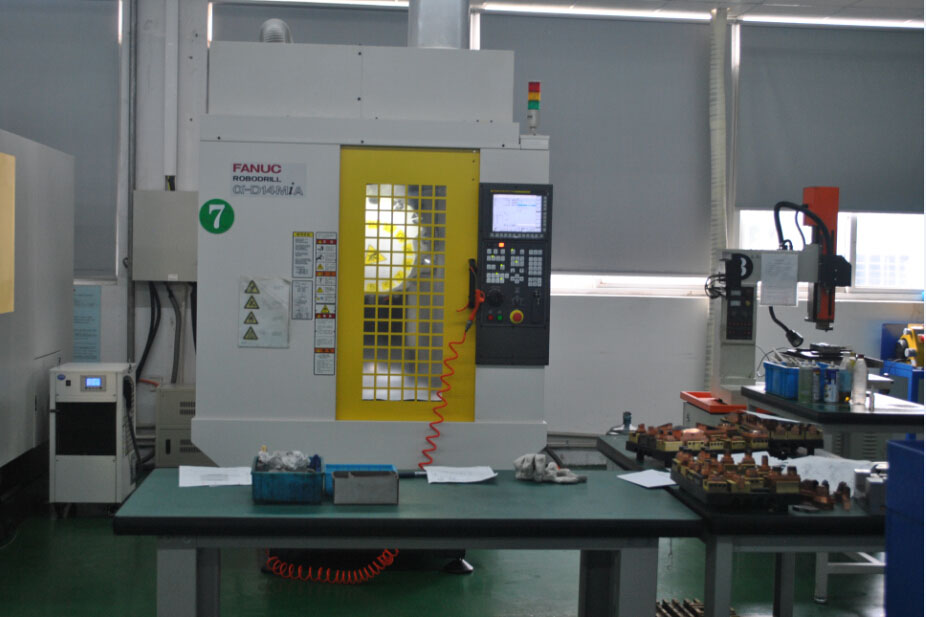
- Precision machining focuses on eliminating product while maintaining incredibly close resistances. CNC milling devices, turrets, and mills are essential devices. This process creates intricate parts with high precision, often measured in micrometers.
Trick Applications of Precision Machining:
- Aerospace Components: Turbine blades, engine components.
- Medical Devices: Surgical devices, implants.
- Automotive Parts: Engine and gearbox elements.
- Electronics: Connectors, warmth sinks.
- Custom-made Machinery: Tailored parts.
- Defense and Military: Weapon systems.
- Optical Instruments: Camera and microscopic lense parts.
Conventional vs. Non-Conventional Machining: A Comparative Analysis
| Funzione | Conventional Machining | Non-Conventional Machining |
|---|---|---|
| Cutting Tools | Metal alloys (carbide, HSS) | Energy forms (water, electricity, chemicals, friction) |
| Forme complesse | Limited; generally for simple shapes | High capability; can produce intricate geometries |
| Selezione del materiale | Difficult with poor machinability or high hardness | Easily handles tough materials; good for poor machinability |
| Precisione | Lower accuracy; limited by tool thickness | High accuracy; cutting medium can be microscopic (laser, arc) |
| Material Removal Rate | Higher; faster | Slower; particle-level erosion |
| Costi | Lower initial investment; less specialized skill | High initial investment; requires specialized equipment and skills |
| Cutting Speed | Faster; larger contact area | Slower; particle-by-particle removal |
Accuracy in Machining: Non-Conventional Leads the Way
Non-conventional machining processes generally offer superior accuracy. The cutting medium, such as a laser beam or electrical arc, can be incredibly fine. This results in extremely precise cuts with minimal kerf width. Conventional methods are constrained by the physical thickness of their cutting too
Conclusion: Choosing the Right Machining Path
Both conventional and non-conventional machining operations yield excellent results. The selection depends on priorities. Factors like cost, required precision, and desired cutting speed influence the decision. Understanding these machining processes allows for optimal component manufacturing. Each method plays a vital role in modern production.
Ultimi Post
Blog Correlati
Senyo blog è incentrato sulla condivisione della nostra conoscenza approfondita del prototipo di produzione. Attraverso i nostri articoli, abbiamo l'obiettivo di essere di supporto nella raffinazione, la progettazione del prodotto e la complessità di prototipazione rapida in modo più efficace.