Maquinação em torno: da maquinação manual às operações avançadas
Tabela de Conteúdo
O torno é muitas vezes chamado de "mãe de todas as máquinas-ferramenta", e com razão. Mesmo que esteja a realizar uma maquinação delicada em torno, a passar por um processo de torneamento extremamente complexo ou simplesmente a cortar um sulco numa peça giratória, esta máquina continua a ser a base da fabricação de precisão. Conhecer as técnicas básicas de maquinação manual e as técnicas avançadas de maquinação em torno é essencial para qualquer torneiro mecânico moderno.
Este artigo explica os detalhes mecânicos do torno e desvenda os mistérios da furação, roscagem e recartilha para produzir resultados profissionais. Após a leitura deste guia, terá adquirido os conhecimentos técnicos necessários para se deslocar numa oficina mecânica e utilizar o torno para fabricar componentes com uma precisão muito elevada através de maquinação especializada.
1.º O que é exatamente um torno e como é que esta máquina-ferramenta define a manufatura moderna?
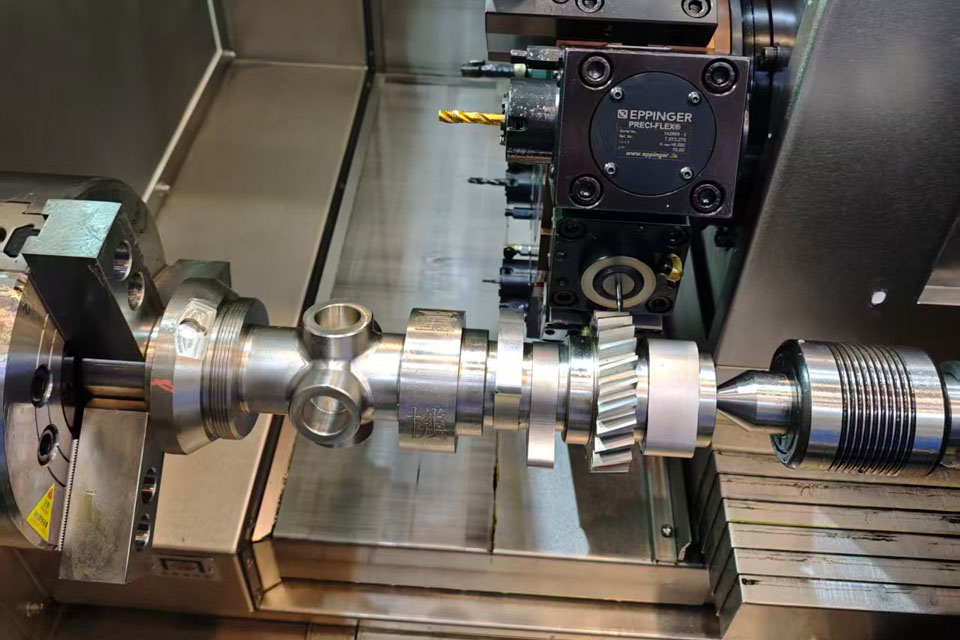
Um torno é uma ferramenta que funciona rodando uma peça de material enquanto a ferramenta de corte permanece imóvel. Graças a esta configuração, a ferramenta de corte pode remover o material da peça giratória, resultando numa peça perfeitamente redonda e centrada em torno do eixo de rotação. Nas oficinas mecânicas atuais, o torno continua a ser a principal máquina para o fabrico de cilindros; no entanto, as suas funções não se limitam apenas aos círculos. A gama de aplicações da maquinação em torno é tão ampla que inclui desde a produção de componentes até dispositivo médico de prototipagem para o fabrico de eixos industriais pesados.
Simplificando, um torno funciona da seguinte forma: o operador fixa a peça a trabalhar no veio, que é a fonte do movimento de rotação. Enquanto a peça gira, o operador move a ferramenta de corte para maquinar a peça até ao tamanho desejado. Ao contrário de uma fresadora, onde as ferramentas de corte giram, na maquinação em torno, a rotação da peça gera a velocidade de corte para a remoção do metal. Devido a esta característica, o torneamento é altamente eficaz para o fabrico de peças redondas, cónicas ou roscadas.
2. Qual a história da maquinação manual e a evolução do torno mecânico?
A arte da maquinação manual tem uma longa história que remonta a vários séculos. No entanto, a invenção do torno mecânico durante a Revolução Industrial foi um ponto de viragem. Embora inicialmente os primeiros tornos fossem utilizados principalmente para trabalhos em madeira, a introdução da construção totalmente metálica permitiu alcançar uma maior precisão e trabalhar com os materiais mais difíceis. A criação do carro móvel por Henry Maudslay foi o avanço que transformou o torno numa máquina-ferramenta de alta precisão, capaz de produzir roscas idênticas. Este foi um ponto muito significativo na história dos tornos mecânicos, pois permitiu a produção em massa de parafusos e porcas, essenciais para toda a montagem mecânica.
Hoje em dia, apesar de que De usinagem CNC Com o rápido crescimento da produção de tornos manuais, o torno para metais continua a ser uma ferramenta comum nas oficinas de reparação e para a prototipagem de peças pequenas. Um torneiro mecânico altamente qualificado pode utilizar um torno para realizar operações de maquinação que exigiriam uma longa programação em computador. A maquinação em torno manual proporciona feedback tátil, o que permite ajustes imediatos sem interromper o trabalho, especialmente quando se lida com uma peça fundida não maquinada ou uma peça única para criar uma ferramenta única.
3.º Que tipo de torno é mais adequado para o seu projeto específico de oficina mecânica?
A escolha do torno certo depende principalmente do tamanho da peça a maquinar e da complexidade do trabalho. Para pequenas tarefas ou projetos de hobby, um torno de bancada é geralmente mais do que suficiente. Estas pequenas máquinas, concebidas para serem colocadas numa bancada, podem realizar trabalhos de alta precisão em peças de pequeno diâmetro. Por outro lado, se estivermos a falar de projetos industriais de grande escala, um torno vertical é a melhor opção, pois pode lidar com peças grandes e pesadas, e o posicionamento da peça é mais fácil, uma vez que a gravidade ajuda no processo.
Quando visita um local normal oficina mecânicaO tipo de torno mais comum é o torno mecânico. A palavra "mecânico" remonta à época em que estes tornos estavam ligados a máquinas a vapor para a sua alimentação. Estes são os tornos mais populares e podem fazer praticamente tudo o que... Torneamento CNC As operações de torneamento e mandrilagem envolvem [inserir aqui os passos aqui]. Se o volume de produção for muito elevado, são utilizados tornos revólver, que possuem uma torre onde estão armazenadas as diferentes ferramentas. Desta forma, o operador pode trocar entre uma broca, uma ferramenta de corte e uma ferramenta de recartilhar sem ter de parar a máquina.
4.De que forma o processo de torneamento transforma uma peça em bruto num componente de precisão?
O torneamento é basicamente a principal operação na maquinação em torno. O processo consiste em cortar o diâmetro exterior de uma peça para atingir um determinado tamanho e acabamento. Após fixar a peça ao veio-árvore, a máquina começa a rodá-la a uma velocidade de corte controlada. O operador posiciona a ferramenta de corte em contacto com a superfície da peça. À medida que a ferramenta se move ao longo do barramento, remove uma camada de metal, diminuindo o diâmetro.
O torneiro mecânico pode necessitar de realizar várias passagens para obter um bom acabamento. As passagens iniciais são chamadas de "desbaste" porque removem uma grande parte do material muito rapidamente. A última passagem, de "acabamento", é feita com uma ferramenta afiada a uma velocidade mais elevada e uma velocidade de avanço mais lenta para manter a circularidade e a suavidade da superfície da peça. Em todas estas operações de torneamento, a ferramenta deve ter uma dureza superior à do material da peça para realizar cortes limpos e evitar o desgaste excessivo da ferramenta, que é a regra básica para uma maquinação de tornos bem-sucedida.
5. Quais são as partes essenciais de um torno mecânico que todo o operador de torno deve conhecer?
Para se tornar proficiente no torneamento, é necessário conhecer bem o funcionamento de um torno mecânico completo. O cabeçote está na extremidade esquerda do torno e alberga o veio-árvore e os controlos de velocidade. Um mandril ou uma placa de fixação é normalmente utilizado para prender a peça ao veio-árvore. Na outra extremidade está a contraponta, que pode ser movida ao longo do barramento para segurar a outra extremidade de uma peça longa. Além de servir de suporte, a contraponta pode também ser utilizada para segurar brocas ou um centro para estabilizar uma peça em rotação.
O carro transversal, que se desloca ao longo da bancada entre a cabeça e a contraponta, liga as duas extremidades. O carro transversal suporta o carro transversal, que permite que a ferramenta faça um movimento perpendicular em relação à peça de trabalho. O carro composto assenta sobre o carro transversal e pode ser rodado em diferentes ângulos para torneamento cónico. Todas estas peças estão fixas ao veio-árvore ou à bancada, conferindo ao torno a rigidez estrutural necessária para uma maquinação de alta precisão. fabricação de metal da folha utilizar um torno para fazer os mandris personalizados que são utilizados em metal flexão.
6.De que forma os porta-ferramentas e o suporte da ferramenta garantem a precisão no trabalho em torno?
Estabilidade e vibração são conceitos diretamente opostos. No contexto das operações em torno, a vibração resulta normalmente num acabamento superficial de menor qualidade. O porta-ferramentas refere-se à parte do carro transversal da qual os porta-ferramentas estão suspensos. Estes porta-ferramentas são fabricados com o objetivo principal de posicionar a ferramenta de corte no eixo central da máquina com uma precisão perfeita. Caso a ferramenta esteja posicionada ligeiramente acima ou abaixo do centro da peça rotativa, não estará a cortar, mas sim a raspar na peça ou até mesmo a penetrar no material.
Atualmente, os porta-ferramentas vêm com funcionalidades de "troca rápida", permitindo ao operador trocar as ferramentas em segundos, mantendo a posição exata. De facto, esta capacidade facilita a troca de uma ferramenta de corte concebida para o torneamento para uma fresa de ranhuras. Um porta-ferramentas bem apoiado torna a ferramenta rígida, de modo a que a força da maquinação não a faça entortar. Isto é extremamente importante quando se precisa de manter a precisão. industrial de prototipagem O trabalho de maquinação em torno apresenta uma precisão excepcional dentro dos limites especificados.
7.º O que é o torneamento cónico e como se consegue um cone perfeito numa máquina?
O torneamento cónico é uma operação especializada na qual um torno é utilizado para criar uma peça cónica com um diâmetro que aumenta ou diminui a uma taxa uniforme ao longo do seu comprimento. Existem várias opções para fazer um cone num torno. O método manual mais comum é deslocar a cabeça móvel ou utilizar o carro transversal. Ao ajustar o carro transversal num determinado ângulo, o operador pode mover a ferramenta ao longo da direção axial nesse ângulo enquanto a peça gira, resultando numa forma cónica.
Outra abordagem é a utilização de um dispositivo cónico que controla o carro transversal quando o carro se está a mover ao longo da bancada. Isto é crucial para o fabrico do tipo de ferramentas de moldagem por injeção que possuem ângulos de inclinação. Não importa se é um cone comum ou um tipo complexo de moldagem por injeção de múltiplas cavidades Além disso, a capacidade de realizar corretamente o torneamento cónico é sinal de um profissional altamente qualificado em maquinação em torno.
8.Um torno pode realizar operações de furação ou roscagem tão bem como uma fresadora?
Embora uma fresadora seja ótima para furos e ranhuras, o torno também pode realizar operações de furação e roscagem com extrema precisão e excelente concentricidade. A furação num torno envolve normalmente segurar as brocas na contraponta enquanto a peça gira no cabeçote. Isto garante que o furo fica perfeitamente centrado na peça cilíndrica. fabrico de chapas metálicas de precisãoA maquinação em torno é normalmente utilizada para fazer os furos iniciais para posterior montagem. corte a laser ou estampagem de metais processos.
Uma das competências mais avançadas na maquinação manual em torno é a abertura de roscas. É necessário que o operador coordene a rotação do fuso com o movimento linear do carro através do parafuso guia, resultando na formação de uma rosca na superfície da peça, que se assemelha a uma mola. Ao contrário de um macho ou de uma tarraxa, um torno pode produzir roscas com qualquer passo ou diâmetro personalizado, o que é extremamente importante para... sobremoldagem e moldagem por inserção onde são necessárias inserções roscadas personalizadas.
9.º O que é recartilhado e como se cria um sulco funcional numa peça rotativa?
O recartilhamento é uma forma de criar um excelente acabamento superficial na peça de trabalho. É geralmente utilizado para gerar uma pega firme em puxadores ou maçanetas. Uma ferramenta de recartilhamento é pressionada contra a peça enquanto esta roda. Em vez de remover o material, a ferramenta empurra-o internamente, criando a superfície com o padrão desejado. Este vai ao encontro, principalmente, das necessidades de... produto de consumo de prototipagem para os seus componentes ergonómicos.
Por outro lado, o corte de ranhuras consiste na utilização de uma fresa de pequenas dimensões para cortar a peça de trabalho até uma determinada profundidade. O corte de ranhuras pode ser feito tanto no diâmetro exterior como na face da peça. Normalmente, este é um requisito para sedes de anéis de vedação ou retentores de anéis de pressão. Se o produto for um automotivo prototipagem ou prototipagem de robôsA capacidade de maquinar um sulco num torno no local correto é uma parte vital da técnica de torneamento.
10.De que forma os tornos CNC modernos diferem dos tornos mecânicos tradicionais nas operações de torneamento?
A maior mudança no mundo dos tornos é a adição do controlo numérico. Os tornos CNC (Controlo Numérico Computadorizado) podem realizar operações de torneamento automaticamente, sendo possível criar formas complexas que seriam quase impossíveis com a maquinação manual. Num centro de torneamento CNC, um computador é capaz de gerir a velocidade de corte, as taxas de avanço e a posição da torre com uma precisão na ordem dos mícrons. É por isso que a maquinação moderna em torno é perfeita para rápida de moldagem por injeção e alto volume serviço de fundição sob vácuo projectos.
Por outro lado, os tornos não precisam necessariamente de um computador para funcionarem bem. Um operador qualificado com um torno mecânico pode ainda produzir peças excelentes para estampagem profunda de metais morre ou estampagem de metais Embora o controlo numérico tenha alterado drasticamente a velocidade e a consistência da produção, os princípios básicos da máquina-ferramenta — rotação, pressão da ferramenta e remoção de material — permaneceram os mesmos. Não importa se é um torno universal ou um torno vertical altamente especializado, a maquinação em tornos sempre foi o processo mais importante na história da engenharia.
Perguntas frequentes
O que é a maquinação em torno e como funciona?
Maquinação por torno é um processo de fabrico subtrativo onde um peça de trabalho está seguro e girado a altas velocidades enquanto estacionário ferramenta de corte lhe é aplicado. Isto máquina-ferramenta remove material da peça de trabalho para criar simetria, cilíndrico peças. É o principal método utilizado para operações de torneamento, enfrentando e criando componentes personalizados num oficina mecânica.
Quais são as operações mais comuns realizadas num torno?
Além da simples rotação, máquinas de torno são incrivelmente versáteis. Um profissional habilidoso maquinista pode usar um torno para berbequim furos centralizados, cortados interna e externamente tópicose executar serrilhado para adicionar uma textura antiderrapante a uma peça. Além disso, o máquina pode cortar um sulco para anéis de vedação ou executar torneamento cónico para criar formas cónicas.
Qual a diferença entre o cabeçote e a contraponta?
Em maquinagem de tornos, o cabeçote está localizado no lado esquerdo do máquina e alberga o fuso e motor que rodar a peça de trabalho. O contraponto Está localizado à direita e pode deslizar. ao longo da camaÉ utilizado para suportar a extremidade de um longo peça de trabalho rotativa ou segurar ferramentas como brocas para realizar axial operações de maquinagem.
Como se compara a maquinação manual com a maquinação em torno CNC?
Usinagem manual envolve o maquinista movendo fisicamente o transporte e slide cruzado para cortar a peça de trabalhoÉ ideal para peças pequenas, protótipos únicos e trabalhos de reparação. Tornos CNC utilização controlo numérico automatizar operações de torneamento, permitindo uma extrema precisão, produção a alta velocidade e geometrias complexas difíceis de obter manualmente.
Porque é que o posicionamento da ferramenta é tão crítico no trabalho em torno?
Para obter sucesso maquinagem de tornos, o ferramenta de corte deve ser mantido por porta-ferramentas exatamente na linha central do peça de trabalho rotativaSe o ferramenta Se estiver posicionado demasiado alto ou demasiado baixo, cria ângulos de corte inadequados, resultando em maus acabamentos superficiais e excesso de material. ferramenta desgaste e potenciais danos ao peça de trabalho. Devidamente alinhado porta-ferramentas garantir que a força é aplicado à peça de trabalho corretamente para um corte limpo e preciso.
Coisas importantes
- Maquinação por torno funciona rodando o peça de trabalho contra um ferramenta.
- Usinagem manual requer um conhecimento profundo de velocidade de corte e taxas de alimentação.
- O cabeçote abriga o fuso, enquanto o contraponto presta apoio ou realiza um berbequim.
- máquinas de torno pode executar viragem, aborrecido, serrilhadoe fio corte.
- Tornos CNC utilização controlo numérico para grandes volumes rápida de moldagem por injeção suporte e complexo dispositivo médico de prototipagem.
- porta-ferramentas deve estar precisamente alinhado com o máquina linha central para precisão trabalho em torno.
- Torneamento cónico pode ser alcançado através da repouso composto ou compensando o contraponto.
- São utilizados tornos. em quase todos os setores, desde torneamento de madeira para fabrico de chapas metálicas de precisão.
Comentários
Posts Mais Recentes
Blogs Relacionados
Senyo o blog é focado em compartilhar o nosso conhecimento extensivo de protótipo de fabricação. Através de nossos artigos, temos o objetivo de apoiar a refinar seu design de produto e navegação do complexidades de prototipagem rápida, mais eficaz.
Moldagem por injeção de linhas de separação: Dicas, tipos e técnicas
2 de dezembro de 2024
Ler Mais "