Anodização do alumínio: um guia completo sobre processos e tipos.
Tabela de Conteúdo
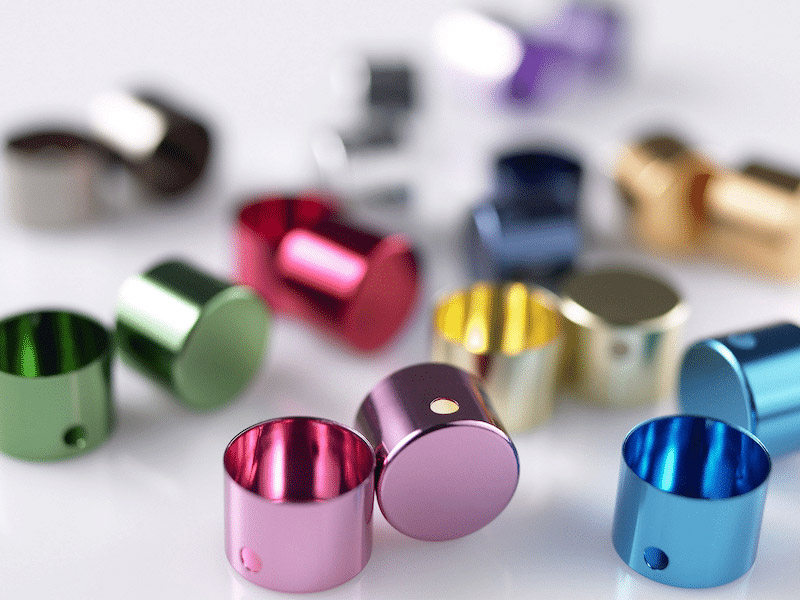
O alumínio é um material sólido no fabrico moderno. Os engenheiros confiam nele pela sua resistência, leveza e boa condutividade. As peças em bruto precisam de um revestimento para resistir às intempéries e ao desgaste. A anodização proporciona essa proteção. O processo de anodização do alumínio cria uma camada de óxido dura que penetra profundamente no metal, não cobrindo apenas a superfície. As cores ficam vibrantes após o tratamento — algumas parecem pedra polida, outras brilham com um azul intenso.
Este método utiliza eletricidade através de um banho ácido. A camada cresce lentamente ao longo de horas. Não é aplicada tinta posteriormente. Adere permanentemente ao metal base. As linhas industriais utilizam fórmulas diferentes para necessidades variadas. Algumas são adequadas para o setor aeroespacial, enquanto outras estão orientadas para a sinalização exterior. O acabamento resiste à ferrugem e ao desbotamento causado pelos raios UV a longo prazo.
O que define a anodização do alumínio?
A anodização do alumínio transforma o metal numa blindagem. Uma camada dura de óxido forma-se diretamente na superfície. É mais resistente que o alumínio em bruto. A resistência ao desgaste é excecional. O oxigénio não consegue penetrar o suficiente para danificar o núcleo.
A galvanoplastia utiliza metais estranhos – este processo não. O revestimento expande-se de dentro para fora. Os poros formam-se em uma fina rede. O corante fica retido no interior dos mesmos. As cores ganham vida com uma profundidade real. O brilho mantém-se. A dureza não diminui com o passar dos anos. Pode-se argumentar que este acabamento dura mais tempo do que qualquer versão pintada.
Importância industrial em diversos setores
Muitos setores dão prioridade à anodização do alumínio para garantir a longevidade das peças. O processo oferece vantagens únicas para aplicações de alto desempenho.
Engenharia Aeroespacial
A indústria aeroespacial exige materiais que sejam leves, mas incrivelmente resistentes. Os engenheiros utilizam maquinagem de precisão cnc Para criar componentes complexos de aeronaves, aplicam a anodização de alumínio para proteger estas peças da corrosão atmosférica a grandes altitudes. O revestimento não acrescenta um peso significativo, ao mesmo tempo que maximiza a durabilidade da superfície.
Inovação Automotiva
Os fabricantes de automóveis utilizam peças anodizadas tanto pela sua funcionalidade como pela sua estética. Estes acabamentos estão presentes nas rodas, nos componentes do motor e nas peças de acabamento. automotivo prototipagemA anodização ajuda a testar as peças quanto à exposição ambiental a longo prazo. Previne a ferrugem e mantém uma aparência de alta qualidade.
Arquitetura e Construção
Os edifícios modernos apresentam frequentemente fachadas e caixilhos de alumínio. O alumínio anodizado resiste à corrosão por picagem provocada pela chuva e pela poluição. Os arquitetos valorizam a estabilidade da cor destas peças, que não desbotam facilmente sob a luz ultravioleta.
Produtos médicos e de consumo
Para dispositivo médico de prototipagemA limpeza e a durabilidade são essenciais. A anodização cria uma superfície não reativa que é fácil de esterilizar. Da mesma forma, os produtos eletrónicos de consumo, como os smartphones, utilizam carcaças anodizadas. Estas carcaças proporcionam uma sensação premium e resistem aos riscos do dia a dia. industrial de prototipagemA anodização garante que os conjuntos mecânicos resistem a uma utilização intensa.
Os mecanismos técnicos do processo
Em ambiente de produção, como funciona o processo de anodização do alumínio? Envolve múltiplas etapas químicas e eletroquímicas. Cada etapa exige uma precisão extrema para garantir um revestimento final uniforme e consistente.
1. Limpeza de superfície Os técnicos devem remover completamente todos os contaminantes da superfície de alumínio. A sujidade, as manchas de óleo e a gordura podem dificultar a reação química normal da solução ácida. Os técnicos utilizam detergentes suaves e toalhitas com produtos químicos para obter uma superfície limpa e impecável. Os procedimentos de limpeza adequados garantem uma perfeita adesão entre a camada de óxido e o substrato.
2. Pré-tratamento A etapa de pré-tratamento inclui o ataque químico e a remoção de resíduos. O ataque químico visa remover uma camada muito fina de metal da superfície do alumínio, ocultando assim os riscos superficiais originais. O processo de remoção de resíduos é utilizado para remover os elementos de liga que migraram para a superfície durante o processo de ataque químico. Esta etapa tem como objetivo preparar as peças metálicas para o banho eletroquímico subsequente.
3. O tanque de anodização O técnico mergulha as peças a tratar no eletrólito. Este eletrólito contém normalmente ácido sulfúrico ou ácido crómico. As peças de alumínio atuam como o "ânodo" durante o processo de eletrólise, enquanto os materiais inertes, como o aço inoxidável, atuam como o "cátodo".
O operador aplica então corrente contínua (CC) ao eletrólito. A corrente induz o eletrólito a libertar iões de oxigénio. Estes iões de oxigénio migram imediatamente em direção à superfície do material de alumínio e reagem quimicamente com o substrato metálico, produzindo óxido de alumínio (Al₂O₃). Este processo de reação forma uma estrutura semelhante a um favo de mel com poros microscópicos na superfície do metal.
4. Colorir (opcional) Os fabricantes podem preencher estes microporos abertos com pigmentos. Devido à profundidade destes microporos, os pigmentos ficam firmemente retidos no interior do revestimento. Os métodos de coloração mais comuns incluem a coloração por impregnação e a coloração eletrolítica. Através destes métodos, é possível obter uma vasta gama de efeitos de cor, desde o preto profundo ao dourado brilhante.
5. A selagem final O processo de selagem é a etapa de acabamento mais crucial em todo o fluxo de processo. Os técnicos mergulham os componentes em água quente ou numa solução química de selagem específica. Este processo tem como objetivo promover a reação de hidratação dos cristais de óxido. À medida que os cristais se expandem, os microporos originalmente abertos são completamente selados. O processo de selagem não só fixa firmemente a cor no revestimento, como também maximiza a resistência à corrosão do material.
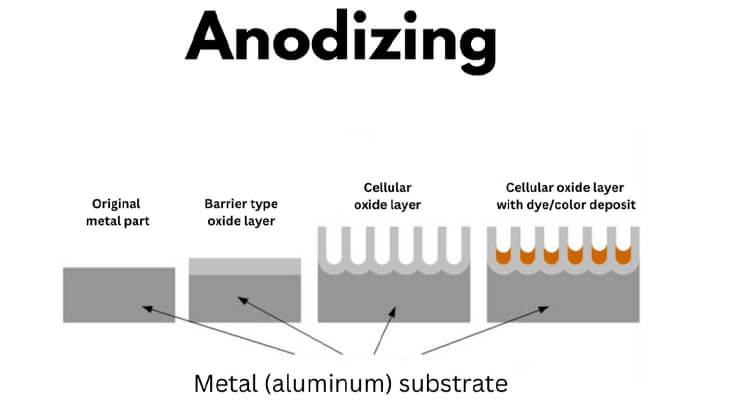
A Ciência dos Dielétricos e do Crescimento de Superfícies
A anodização é um processo "autolimitante". À medida que a camada de óxido continua a crescer, a sua impedância à corrente também aumenta. A alumina apresenta características de isolante elétrico. Isto significa que, uma vez que a espessura do revestimento atinge um valor específico determinado pela tensão aplicada, o seu crescimento cessa.
A direção de crescimento do revestimento estende-se tanto para o interior do metal como para o exterior, em direção à superfície. Aproximadamente 50% da camada de óxido cresce para o interior, em direção ao substrato, enquanto os outros 50% aumentam as dimensões exteriores da peça. Durante a fresagem CNC, os engenheiros devem considerar integralmente este efeito de "crescimento superficial". Se os requisitos de tolerância da peça forem extremamente rigorosos, este crescimento do revestimento pode resultar numa peça com dimensões superiores às necessárias, impossibilitando a montagem.
Comparação dos tipos de anodização
Nem toda a anodização é igual. As normas da indústria definem três tipos principais. Cada tipo utiliza diferentes produtos químicos e voltagens para alcançar resultados específicos.
| Imóveis | Tipo I (Ácido Crómico) | Tipo II (Ácido Sulfúrico) | Tipo III (Revestimento Duro) |
|---|---|---|---|
| Eletrólito | Ácido crômico | Ácido sulfúrico | Ácido Sulfúrico (Frio) |
| Espessura | 0,5 – 2,5 mícrons | 2,5 – 25 mícrons | 25 – 150 microns |
| Dureza | Baixa | Moderado | Muito alto (70+ Rockwell C) |
| Uso comum | Colagem aeroespacial | Decorativo/Colorido | Máquinas pesadas / Desgaste |
| Aparência | Cinza/Opaco | Cores nítidas e vibrantes | Castanho escuro / Preto |
Tipo I: Anodização com ácido crómico
Esta é a forma mais fina de anodização do alumínio. É ideal para peças com tolerâncias muito rigorosas. Oferece uma boa resistência à corrosão, mas é pouco resistente ao desgaste. Os engenheiros aeroespaciais costumam usá-la como base para a pintura.
Tipo II: Anodização com ácido sulfúrico
Este é o método mais comum. Produz uma camada mais espessa do que o Tipo I. É perfeito para acabamentos decorativos. Os poros são suficientemente grandes para reter uma vasta gama de corantes. A maioria produto de consumo de prototipagem Os projetos utilizam o Tipo II.
Tipo III: Anodização de camada dura
O processo do Tipo III utiliza alta tensão e baixas temperaturas. Cria uma camada de óxido extremamente espessa e densa. Este acabamento é tão duro como o aço ferramenta. Os fabricantes utilizam revestimento duro em peças sujeitas a atrito intenso, como pistões ou engrenagens. Geralmente, a cor resultante é demasiado escura para permitir a aplicação de cores vibrantes.
Verificando uma anodização bem-sucedida
O controlo de qualidade garante que a anodização corresponde às especificações do projeto. Testes confirmam os resultados. Um simples risco com uma ferramenta mostra se o revestimento é resistente. O acabamento fica suave e uniforme sob a luz. O óxido de alumínio resiste ao desgaste, pelo que os riscos não aparecem facilmente. É assim que sabe que é autêntico. A verificação final utiliza correntes parasitas para medir com precisão a espessura da camada de óxido.
A superfície apresenta uma textura áspera ao toque. Um voltímetro indica zero ao tocar nas peças anodizadas — prova de que a camada não é condutora. Este teste fornece dados precisos sobre as propriedades de isolamento. O aspeto mate é claramente visível durante o dia. A espessura varia de acordo com o tempo de processo e as definições de voltagem.
Prós e contras da anodização do alumínio
Todo o tratamento de superfície tem as suas vantagens e desvantagens. É necessário ponderar os benefícios em relação às limitações.
Prós
- Resistência extrema à corrosão: A camada de óxido protege o metal do sal, da humidade e dos produtos químicos.
- Alta durabilidade: O acabamento não descascará porque faz parte do metal.
- Estabilidade da cor: As cores anodizadas são mais resistentes aos raios UV do que a pintura ou o revestimento em pó.
- Dissipação de calor: As peças anodizadas irradiam calor de forma eficiente. Isto é vital para os componentes eletrónicos.
- Ecologicamente correto: O processo produz menos subprodutos perigosos do que a galvanoplastia.
Contras
- Material específico: Este processo funciona apenas em alumínio, magnésio e titânio.
- Variação de lote: É difícil obter uma correspondência perfeita de cores entre diferentes lotes de produção.
- Custo para camadas espessas: A anodização dura requer mais energia e tempo, aumentando o preço.
- Risco de fissuras: Camadas espessas de óxido podem desenvolver microfissuras se expostas a calor extremo.
Ligas de alumínio para anodização
Diferentes séries de alumínio reagem de forma diferente ao banho ácido. A liga escolhida determina o aspeto final da peça.
- Série 1000: O alumínio puro anodiza com muita clareza. É excelente para acabamentos decorativos.
- Série 2000: O teor de cobre torna estas ligas resistentes, mas difíceis de anodizar. Apresentam geralmente uma coloração amarelada.
- Série 3000: Estas ligas são bem anodizadas e mantêm uma cor cinzenta consistente.
- Série 5000: O elevado teor de magnésio permite acabamentos anodizados muito claros e brilhantes. São comuns nas peças náuticas.
- Série 6000: Estas são as melhores para a anodização. Ligas como a 6061 produzem uma camada de óxido uniforme e de elevada qualidade.
- Série 7000: As ligas com alto teor de zinco são anodizadas para um acabamento mais escuro e opaco. Elas são padrão em prototipagem de robôs para a resistência estrutural.
Considerações críticas de seleção
A anodização do alumínio não se resume apenas à aparência — as escolhas técnicas também importam. Provavelmente, vai querer escolher com base em saber se prioriza o estilo ou a durabilidade.
- O Tipo II funciona melhor. Quando procura brilho e cor, o Tipo III é o ideal. Suporta uso intenso e arranhões. Camadas mais espessas custam mais, mas resistem melhor a condições adversas.
- Alterações dimensionais durante a anodizaçãoSe uma peça for torneada com precisão, a peça final irá expandir ligeiramente. Portanto, termine primeiro a maquinação e depois tenha em conta o quanto o revestimento se expande.
- As superfícies anodizadas bloqueiam o fluxo de corrente. Pontos de ligação à terra? Devem ser protegidos com fita adesiva para evitar a formação de óxido. Ou então, opte por... serviço de fundição sob vácuo em vez de peças isoladas.
- É possível aplicar diferentes acabamentos sobre a anodização. A tinta adere melhor quando aplicada posteriormente. Alguns designs adicionam Teflon ao tipo III, um revestimento superior praticamente sem atrito.
Conclusão
A anodização do alumínio continua a ser um dos principais tratamentos de superfície no mundo da indústria transformadora. Combina química e eletricidade para criar um acabamento que é ao mesmo tempo bonito e funcional. Seja para componentes aeroespaciais ou eletrónica de consumo, a anodização proporciona a durabilidade que as suas peças necessitam. Realça as propriedades naturais do alumínio, ao mesmo tempo que oferece uma estética vibrante e duradoura.
O sucesso na anodização exige um conhecimento profundo das ligas metálicas e dos tipos de processo. A parceria com um serviço profissional garante resultados de elevada qualidade. SenyorapidOferecemos serviços especializados. maquinagem cnc e anodização de alumínio Serviços. Oferecemos prazos de entrega curtos e preços competitivos para todas as suas necessidades de tratamento de superfícies. Entre em contacto connosco hoje mesmo para começar o seu próximo projeto!
Perguntas frequentes
1. O alumínio anodizado enferruja?
Não. O alumínio não enferruja como o ferro ou o aço. No entanto, pode sofrer corrosão. A anodização cria uma espessa camada de óxido que impede esta corrosão.
2.º É possível anodizar outros metais?
O processo específico para o alumínio só funciona em alguns metais, incluindo o magnésio e o titânio. Não é possível anodizar aço ou cobre utilizando exatamente este método.
3.º A cor irá desbotar com o tempo?
As cores anodizadas são muito duráveis. No entanto, os corantes orgânicos podem desbotar se expostos à luz UV intensa durante anos. Os corantes inorgânicos e a coloração eletrolítica são muito mais resistentes ao desbotamento.
4.º A anodização é segura para o contacto com alimentos?
Sim. O alumínio anodizado não é tóxico e é estável. É frequentemente utilizado em utensílios de cozinha e eletrodomésticos de alta qualidade porque não liberta substâncias químicas.
5.º Porque é que a minha peça anodizada parece cinzenta em vez de preta?
Isto ocorre geralmente com anodização Tipo I ou revestimentos Tipo II muito finos. A camada não é suficientemente profunda para reter uma elevada concentração de corante preto. Para um preto verdadeiramente profundo, é necessário um revestimento Tipo II mais espesso.
Links externos recomendados:
Comentários
Posts Mais Recentes
Blogs Relacionados
Senyo o blog é focado em compartilhar o nosso conhecimento extensivo de protótipo de fabricação. Através de nossos artigos, temos o objetivo de apoiar a refinar seu design de produto e navegação do complexidades de prototipagem rápida, mais eficaz.