O que é a moldagem por inserção? Processo, considerações e aplicações.
Tabela de Conteúdo
A instalação de molduras embutidas parece simples vista de fora.
Coloque uma peça de aço num molde. Preencha o espaço à volta dela com plástico. Retire a peça acabada.
Maravilhoso e organizado, adequado?
Bem... sim e não. A ideia é simples. A implementação é onde as coisas se tornam interessantes. Um pequeno ajuste na inserção, um fecho inadequado, uma resina que se torna demasiado rígida em torno do latão ou uma rosca cheia de rebarbas podem transformar um excelente design num problema que vai diretamente para o ferro-velho.
É por isso que gostamos de usar molduras de encaixe quando são preparadas com antecedência, e não depois de a peça já ter arrefecido.
O que é a moldagem por inserção?
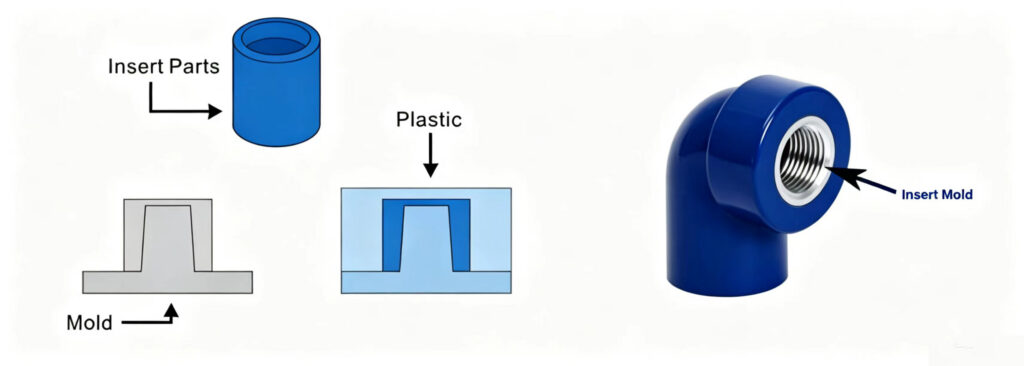
A moldagem por inserção é um processo de moldagem por injeção de plástico no qual uma peça diferente é colocada dentro do molde antes da infusão do produto. O plástico fundido move-se em torno do inserto, arrefece e fixa-o na peça final.
O inserto é geralmente de aço, mas nem sempre. Pode moldá-lo em torno de:
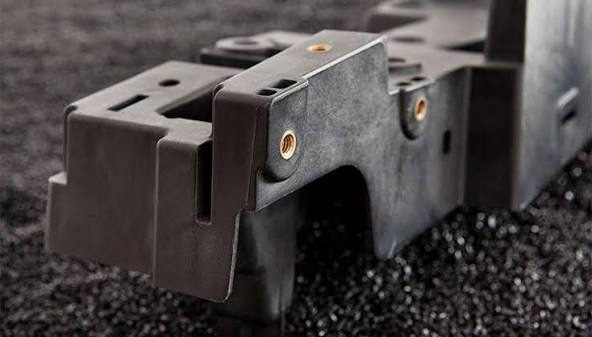
- Inserções roscadas de latão
- Pinos de aço inoxidável
- Os cabos elétricos de cobre entram em contacto com
- Ímãs
- Buchas
- Eixos
- Filtros
- Componentes cerâmicos
- Diversos outros componentes plásticos moldados
- Sensores ou módulos eletrónicos, quando o procedimento o permitir.
O resultado é um único componente integrado, em vez de 2 ou 3 componentes montados posteriormente.
Aquele é o principal destino turístico.
Obtém a resistência, a condutividade, a capacidade de suportar pressão ou a capacidade de roscagem do inserto, além da forma, do isolamento, da leveza e da flexibilidade de design do plástico.
Um exemplo comum? Uma estrutura plástica com cordas de latão embutidas. O cliente vê um elemento com um formato limpo. O engenheiro vê menos uma etapa de montagem, menos peças soltas e uma resistência à tração muito maior quando o projeto é feito corretamente.
Como é que exatamente a moldagem por inserção refina as características
O tratamento de moldagem por inserção Segue exatamente os mesmos princípios físicos da moldagem por injeção, no entanto com um requisito adicional: o inserto precisa de permanecer exatamente onde o posiciona.
Isso parece evidente.
É também aí que começam muitos problemas.
1.º Coloque o trabalho de preparação em curso.
Antes da moldagem, procuram-se os insertos:
- Dimensões adequadas
- Superfícies limpas
- Sem óleo, aparas, rebarbas, ferrugem ou contaminação.
- Corda correta de alta qualidade
- Características de alinhamento adequadas
- Estabeleça a rastreabilidade, se solicitado.
Se o inserto estiver sujo, a adesão e a retenção podem ficar comprometidas. Se apresentar rebarbas, pode prejudicar o crescimento de mofo e bolor. Se estiver ligeiramente fora das especificações, o bolor e o mofo podem não se formar facilmente.
Peças pequenas de aço podem gerar grandes problemas de moldagem.
2. Carregamento de localização
O inserto é colocado diretamente no bolor e mofo manualmente, por robôs, alimentadores de pratos, sistemas deslizantes ou automação personalizada.
Para montagens de baixo volume, o carregamento manual pode ser vantajoso. Isto reduz os custos com ferramentas e proporciona versatilidade à equipa. Para componentes de grande volume, a automatização geralmente paga-se a si própria ao minimizar erros de carregamento, variações de ciclo e esgotamento de drivers.
E abaixo está listada uma diretriz conquistada com muito esforço: se um inserto pode ser embalado ao contrário, alguém em algum momento o carregará ao contrário.
Utilize os recursos poka-yoke sempre que possível.
3.º Vedação e captura de mofo e bolor.
Quando o inserto estiver cheio, o bolor e o bolor fecham e mantêm o inserto no lugar. Isto pode exigir:
- Pinos centrais
- Fixação magnética
- ajuda do aspirador
- Funções acionadas por mola
- Desligamentos limitados
- Ninhos únicos
- Pinos de proteção de rosca
O molde deve suportar o inserto sem o danificar. Além disso, deve impedir que o material inunde áreas que precisam de permanecer limpas, como cordas internas ou zonas de chamadas elétricas.
4.º Tiro de plástico
O plástico fundido penetra na cárie dentária sob pressão e flui em torno da inserção. A resina deve preencher a cárie sem deslocar a inserção.
A localização da entrada é importante, como se descreve abaixo.
Se a frente de fusão atingir diretamente um dos lados de um pequeno inserto, poderá obter movimentação do inserto, encapsulamento irregular, linhas de junção, marcas de descongelamento ou áreas. Frequentemente, o feedback indica uma alteração na entrada. Ocasionalmente, é o suporte do inserto. Em muitos casos, é a espessura do material.
Normalmente, são os três.
5. Ar condicionado e encolhimento
À medida que o plástico arrefece, contrai-se ao redor do inserto. Esta contração pode ajudar a fixar o inserto no lugar, mas também pode gerar tensão.
O metal e o plástico comportam-se de formas diferentes. Um grande inserto de aço dentro de um corpo de nylon reforçado com fibra de vidro atua de forma distinta de um pequeno inserto de latão dentro de um corpo de ABS.
É aqui que a alternativa material deixa de ser um mero exercício de diretório e se transforma num projeto de layout real.
6. Ejeção e análise
Após o arrefecimento, o bolor abre e ejeta a parte afetada. O elemento é examinado quanto a:
- Posicione
- Piscar
- Planos curtos
- marcas de afundamento
- divisões
- saneamento de corda
- resistência de arranque
- resistência ao binário
- Ligação elétrica, se necessário.
- preocupações estéticas
Para uma produção em grande escala, não espere até à fabricação em plena capacidade para especificar estes testes. Incorpore-os no projeto desde o primeiro dia.
Porquê usar moldagem por inserção?
A opção mais simples: menos passos de configuração.
A resposta muito melhor: Desempenho em massa com muito menos manuseamento.
A moldagem por inserção pode substituir parafusos, adesivos, encaixe sob pressão, soldadura ultrassónica, assentamento e submontagem manual. Isto não significa que seja a solução ideal em todos os casos. No entanto, quando o projeto se adequa ao processo, pode ser uma atividade realmente eficaz.
Principais benefícios
Atributos de rosca mais robustosAs cordas de plástico partem-se ou desgastam-se com o uso repetido. As cordas moldadas em latão ou aço oferecem muito mais resistência à torção e maior durabilidade.
Redução da mão-de-obra de instalaçãoEm vez de moldar um corpo de plástico, obter um inserto, enviar ambos para montagem e prensar o inserto posteriormente, integra a operação.
Repetibilidade muito melhorUm molde bem construído posiciona o inserto numa posição precisa a cada ciclo. Isto pode melhorar o posicionamento em comparação com a montagem manual.
Tamanho da peça mais pequenoA aplicação de molduras pode remover fixadores, clipes, suportes e locais de aplicação de adesivo.
Recurso elétrico melhoradoOs contactos, terminais, pinos e barras de distribuição podem ser desenvolvidos em propriedades para adaptadores, sensores, interruptores e componentes relacionados com baterias.
formato de coisa de limpezaSem parafusos à mostra. Sem excesso de adesivo. Sem peças soltas a fazer barulho dentro da propriedade.
Moldagem por inserção vs. sobremoldagem vs. moldagem em duas fases vs. preparação
As pessoas misturam estes termos o tempo todo. Justo, adequado... os procedimentos ligam-se.
No entanto, não são a mesma coisa.
| Técnica | O que acontece | Melhor Para | Atenção |
|---|---|---|---|
| Moldagem por inserção | O plástico é moldado em torno de um inserto pré-posicionado. | Cordas de aço, contactos com pinos, casquilhos, eixos, ímanes | Mudança de posição, flash, retenção inadequada, quebra de stress |
| Overmolding | Um segundo item é formado sobre um componente base. | Fixações macias, vedantes, cuidados, almofadas antivibração | Colagem de artigos, preparação da superfície, ferramentas incluídas |
| Moldagem por injeção dupla | Dois artigos são formados num ciclo do dispositivo utilizando um molde exclusivo e bolor. | Elementos multimateriais de grande volume | Custo mais elevado do dispositivo, arranjo de moldagem avançado |
| Preparação pós-moldagem | Os componentes são desenvolvidos individualmente e, posteriormente, registados junto do cliente. | Baixa quantidade, modificações de design, produtos descomplicados | Custo da mão-de-obra, variação de posicionamento, componentes soltos |
Se precisa de ambas as soluções numa única estratégia de trabalho, faz todo o sentido compará-las. sobremoldagem e moldagem por inserção cedo, antes que o bolor e o bolor se instalem e o layout do bolor o prenda a um único padrão.
Produtos comuns de moldagem por inserção
Não existe um "plástico perfeito para a moldagem por inserção".
Existe simplesmente um dos plásticos mais eficientes para este trabalho.
Um imóvel portuário próximo de um ambiente acolhedor e moderno tem requisitos diferentes de um simples acabamento estético com um cordão de latão. Um componente médico pode exigir biocompatibilidade e rastreabilidade. Uma peça automóvel sob o capô pode exigir resistência ao calor, aos produtos químicos e à vibração.
Materiais plásticos típicos
| Produto | Por que razão é utilizado | Utilização normal de moldagem por inserção |
|---|---|---|
| ABDOMINAL | Visual fantástico, manuseamento muito fácil, resistência razoável | Imobiliário, administra, componentes do cliente |
| SISTEMA INFORMÁTICO | Difícil, notas claras oferecidas, boa influência na rigidez. | Capas de segurança e proteção, invólucros de dispositivos |
| PC/ABS | Equilíbrio entre resistência e processabilidade | Carcaças de dispositivos eletrónicos, interiores de automóveis |
| PA/Nylon | Sólido, resistente ao desgaste, excelente com enchimento de vidro. | Engrenagens, suportes, peças sob o capô |
| PBT | Boa estabilidade dimensional e instalações elétricas | Conectores, sistemas de captação, invólucros elétricos |
| PPS | Elevada resistência ao calor e a produtos químicos | Componentes automóveis, elétricos e industriais |
| PEEK | Alto desempenho, alta temperatura, resistência química | Aeroespacial, científico, componentes industriais de alta tecnologia |
| TPE/TPU | Práticas versáteis, que facilitam a aderência e garantem a segurança. | Áreas de toque suave, vedantes, locais de segurança |
Itens de inserção típicos
| Coloque o produto | Porque é que os designers o escolhem? | Notes |
|---|---|---|
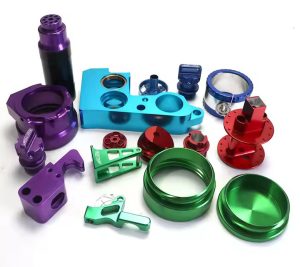
| Latão | Fácil de usar, boa resistência à degeneração, ótima rosca. | Típico dos insertos roscados. |
| Aço inoxidável | Sólido, resistente à ferrugem | Ideal para uso médico, marítimo ou em ambientes severos. |
| Aço carbono | Resistente e económico | Pode necessitar de revestimento ou camada de acabamento. |
| Cobre | Condutor | Utilizado em terminais e chamadas telefónicas elétricas. |
| Alumínio | Leve e usinável | Requisitos: cuidado com a resistência e vestir |
| Cerâmica | Aquecimento e edifícios elétricos | Delicado; auxílio em todas as fases do processo de moldação. |
O mercado mundial de moldagem por injeção de plástico ainda é grande e está em crescimento. Um estudo da Grand Sight reportou que US$ 183,84 mil milhões A dimensão do mercado em 2024 e a evolução dos postos de trabalho de 2025 a 2030 corroboram o que muitas empresas já estão a observar: uma procura ainda maior por peças moldadas que integram plástico, aço e componentes eletrónicos em embalagens mais compactas. Pode aceder aos dados de mercado em [link para os dados]. Estudo de investigação Grand View.
Padrões de design de moldagem por inserção que poupam dinheiro de verdade
Este é o elemento que desejamos que muito mais grupos tenham gerido mais cedo.
Um objeto pode ter a melhor aparência em CAD e ainda assim ser suscetível a mofo e bolor. A moldagem por inserção penaliza opções de formato invulgares. Compensa detalhes simples e práticos.
Dê ao inserto um fecho mecânico.
Não dependa apenas da diminuição do plástico.
Utilize recursos de inserção, tais como:
- Recartilhas
- Sulcos
- Problemas
- Apartamentos
- Aberturas em cruz
- Formas hexagonais
- Cristas
- Ombros
Estas funções ajudam a suportar a extração e a rotação. Para os encaixes roscados, a resistência ao binário é igualmente importante, assim como a força de tração.
Um pino redondo e liso, moldado em plástico, pode parecer uma penalização. Depois disso, o técnico de reparação principiante aperta um parafuso e a inserção roda.
Mantenha a densidade da parede sob controlo.
A quantidade insuficiente de plástico sobre o inserto pode provocar fraturas. O excesso de plástico pode fazer com que se afunde, deforme ou fique muito irregular.
Uma variável inicial importante é manter uma quantidade adequada de plástico à volta do inserto para garantir fluidez, durabilidade e controlo da tensão. Os valores exatos dependem da resina, do tipo de inserto, da espessura da parede e da carga prevista.
Para objetos com conteúdo de vidro, tenha cuidado com as arestas metálicas afiadas. Os plásticos rígidos podem ser menos tolerantes do que imagina.
Adicione as distâncias onde o plástico satisfaz o metal.
As arestas afiadas causam stress e ansiedade.
Se o inserto tiver um lado rígido e o plástico se retrair à sua volta, podem surgir fissuras. Utilize-o sempre que o design o permitir. Remova as rebarbas das arestas afiadas do aço. Elimine as rebarbas.
Esta é uma tarefa muito fácil, mas importante.
Cordas de proteção e zona sensível
Se o material entrar numa linha, poderá ser necessário rastrear o fio mais tarde ou descartar o componente.
Utilize pinos de núcleo, tampas ou dispositivos de fecho adequadamente concebidos para proteger:
- Cadeias internas
- Área de apoio
- Ligação elétrica com rostos
- Área óptica
- Áreas da unidade de sensorização
- Faces de vedação
Um bom fabricante de moldes perguntará certamente até onde pode ir o plástico e até onde não pode.
Uma solução simples.
Pense na transferência de calor.
O aço absorve o calor do plástico liquefeito.
As grandes inserções de metal podem arrefecer a resina muito rapidamente, causando falhas na injeção, linhas irregulares, revestimento superficial inadequado ou fraca adesão. O pré-aquecimento das inserções pode ajudar em alguns casos. Os ajustes na entrada de resina também podem ser úteis.
No entanto, não presuma. Examine a situação.
Resistências de inserção de controlo
A folga nas inserções dificulta a criação de moldes e bolores. Além disso, pode danificar as ferramentas.
Se um inserto diferir muito do conjunto para ser estabelecido, o molde e o molde podem apresentar os seguintes resultados:
- Ajuste inadequado
- Piscar
- inserções esmagadas
- desgaste do molde
- fecho incompleto
- variante parte a parte
Especifique as resistências de inserção tendo em conta o procedimento de moldagem, e não apenas a gama básica indicada no folheto do fornecedor.
Prepare-se para a análise.
Adicione pontos de referência. Inclua atributos compatíveis com os medidores. Tenha em consideração o acesso às dimensões.
Se a ilustração afirma que a área de inserção necessita de ser segurada firmemente, mas não existe um método razoável para o determinar, estará a convidar a discussões futuras.
Problemas comuns na moldagem por inserção e como evitá-los de forma simples.
Os defeitos na moldagem por inserção têm geralmente origem em quatro fontes: estilo da peça, design da ferramenta, definições do processo ou qualidade da inserção.
Em muitos casos, os quatro apertam as mãos.
| Sarilhos | Como é a aparência? | Provavelmente Desenvolver | Evitar |
|---|---|---|---|
| Coloque o troco | A inserção está descentrada ou inclinada. | Ajuda insuficiente, área de entrada negativa, elevado stress de injeção | Melhor instalação, modificação da entrada, redução do desequilíbrio de circulação |
| Pisque ao redor insira | Película plástica fina junto à inserção | Desligamento deficiente, variação da resistência de inserção, desgaste do molde | Sistema de desligamento muito melhor, especificações de encaixe mais precisas, manutenção do dispositivo. |
| Aproximando-se para inserir | O plástico rompe após arrefecer ou após ser utilizado. | Ansiedade, arestas vivas, encolhimento do produto, produto errado | Consiste em vão, melhoria do layout da área da superfície da parede, seleção de produtos de testemunho |
| Plano curto | O plástico não preenche completamente a área em redor do encaixe. | Efeito de arrefecimento do aço, fluxo bloqueado, redução do grau de temperatura de fusão | Pré-aqueça a inserção, ajuste a entrada, procedimento de sintonia |
| marcas de afundamento | Áreas deprimidas perto de locais densos | Espessura desigual da superfície da parede, embalagem inadequada. | Remova as camadas espessas, melhore a embalagem do produto |
| Baixa resistência à tracção | Lugar puxa livremente sob lotes inteiros | Inserção lisa, encapsulamento deficiente, produto fraco | Adicione serrilhados, ranhuras, problemas, resina muito melhor |
| Contaminação por rosca | Plástico dentro do cordão | Proteção fraca da corda ou fecho inadequado. | Utilize pinos de núcleo, tampas e melhor encaixe contra mofo e bolor. |
| Marcas de derretimento | Marcas escuras perto do inserto | Ar aprisionado em redor do inserto | Melhor ventilação, enchimento mais lento na zona problemática. |
Se a sua peça estiver sujeita a cargas elevadas, ciclos de rosca repetidos, requisitos de proteção ou utilização relacionada com a segurança, verifique a pressão de extração e o binário antecipadamente. Não espere até aos momentos de produção para descobrir que a geometria da pastilha também não está perfeita.
Aplicações de Moldação por Inserção
A moldagem por inserção surge sempre que os desenvolvedores precisam que o plástico faça mais do que apenas cobrir uma área.
Elementos automóveis e de veículos elétricos
As equipas automóveis utilizam moldagem por inserção para portas, unidades de inspeção, propriedades, suportes, terminais, barras de distribuição, instalações roscadas e componentes sob o capô.
O desenvolvimento de veículos elétricos inclui uma necessidade ainda maior de ferramentas elétricas portáteis. O relatório Worldwide EV Assumption 2025 da AIE indicou que as vendas de automóveis e camiões elétricos ultrapassaram [valor omitido]. 17 milhões de sistemas em 2024, acima 20% das vendas internacionais de automóveis e camiõesMais veículos elétricos significam ainda mais portas, componentes de carregamento, compartimentos para baterias, sistemas de dissipação de calor e embalagens de componentes eletrónicos. Fonte: Expectativas da AIE para o mercado mundial de veículos elétricos em 2025.
Dispositivos médicos
A moldagem por inserção clínica é utilizada para instrumentos médicos, propriedades de análise, peças para passagem de fluidos, ferramentas manuais, conjuntos relacionados com agulhas e componentes que requerem resistência do aço numa estrutura projetada.
Para os empregos em equipamentos médicos nos Estados Unidos, as expectativas do sistema de qualidade foram alteradas de forma deliberada. A Diretriz do Sistema de Controlo de Qualidade atualizada da FDA está muito mais alinhada com a ISO 13485:2016 e funciona em 2 de fevereiro de 2026Se utilizar componentes concebidos para uso médico, os controlos de transporte, a rastreabilidade, a validação e a documentação devem ser priorizados desde o início do processo. Veja o Página da FDA sobre a regulamentação do Sistema de Alta Qualidade.
Dispositivos e portas eletrónicas
Este é um dos lugares mais incríveis.
A moldagem por inserção é utilizada para:
- Adaptadores USB e de pagamento
- bloqueios incuráveis
- botões
- fornecedores de serviços de chamada
- propriedades do sistema de observação
- Aspectos de LED
- configurações de cabo
- contacto da bateria
- peças da antena
Os escudos de plástico. O aço conduz. O molde aguarda onde deve estar.
Produtos de consumo
Encontrará componentes com formato de encaixe em pegas, puxadores, peças de eletrodomésticos, armários de dispositivos, dispositivos wearable, instalações de câmaras, componentes e peças plásticas roscadas.
O comprador pode nunca saber que há um inserto no interior. Simplesmente observa que o artigo parece bastante resistente e que o parafuso não espanou após duas utilizações.
Componentes industriais e aeroespaciais
As peças industriais necessitam frequentemente de resistência ao desgaste, características como roscas de aço, cursos de formação elétrica ou resina resistente a produtos químicos. As aplicações aeroespaciais podem utilizar plásticos de alto desempenho como PEEK, PEI, PPS ou nylon reforçado, dependendo da necessidade.
Abaixo, a documentação e a repetibilidade têm um peso real. Os erros em ferramentas baratas tornam-se extremamente caros muito rapidamente.
Taxa de moldagem por inserção: o que determina, de facto, o preço?
A moldagem por inserção não é imediatamente economicamente viável.
Sim, isto pode reduzir o custo global. No entanto, a peça necessita de ter as suas ferramentas, método de embalagem, custo de inserção, desenvolvimento do procedimento e verificações de qualidade confirmados.
A chave para vocês, condutores, vai atrasar o processo.
Prós e contras dos gadgets A instalação de ninhos, válvulas de corte, corrediças, elevadores, pinos de núcleo e atributos de proteção acarreta custos adicionais.
Preço de colocação Um simples inserto de latão custa muito menos do que um veio de aço inoxidável maquinado com precisão ou uma ligação elétrica bipartida.
Método de embalagem O carregamento manual é mais barato inicialmente. A automatização tem um custo inicial, mas pode reduzir a mão-de-obra e os erros em grande escala.
Tempo de ciclo O preenchimento do espaço aumenta o tempo de ciclo. O arrefecimento em torno do metal também pode afetar o tempo total do processo.
Perigo de sucata Se o inserto for caro, cada disparo mal executado causa muito mais danos.
A avaliação requer Os componentes médicos, automóveis, aeroespaciais e elétricos podem exigir muito mais verificações, acessórios e documentação.
Tabela de custo-benefício
| Fase de fabrico | Melhor caminho de fabrico | Por que razão funciona |
|---|---|---|
| Triagem de ideias | Impressão 3D, maquinação ou espalhamento | Compreensão rápida antes do gasto com moldes |
| Modelos úteis iniciais | projeto de moldagem por injeção de plástico | Produto real, geometria precisa, muito melhor informação de exame. |
| Lançamento de mercado de curto prazo | moldagem por injeção rápida | Ferramentas mais rápidas e redução da ameaça inicial |
| Testes de aparência ou de partes moles | serviço de fundição sob vácuo | Útil antes de investir em ferramentas complexas. |
| Produção completa | moldagem por injeção multicavidades | Redução do preço do sistema em maior quantidade |
| Programa duradouro | Mofo e bolor endurecidos no fabrico | Vida útil e repetibilidade do dispositivo muito melhores. |
Se ainda estiver a modificar o inserto, o material ou a geometria da peça, não tenha pressa em investir em ferramentas de produção caras. Utilize modelos para eliminar incertezas.
Ferramentas para Moldação por Inserção
Uma fantástica moldagem por inserção começa com boas ferramentas. Nenhuma surpresa nisso.
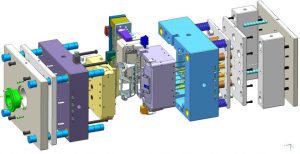
No entanto, as ferramentas de moldagem por inserção têm algumas funções adicionais em comparação com os moldes de injeção padrão. Devem posicionar a inserção em locais funcionais seguros, permitir o carregamento repetível, resistir ao desgaste do contacto metal-ferramenta e libertar a peça acabada sem fletir ou deformar a inserção.
É muita coisa para pedir de um bloco de aço.
O que o bolor precisa para se cuidar
- Insira a localização
- Área de apoio durante toda a filmagem
- Defesa de string ou chamada
- Ventilação perto de empresas siderúrgicas
- Ejeção de componentes sem danos no inserto
- equilíbrio térmico
- Acesso do operador ou do robô
- Prevenção de carregamento incorreto
- Utilização do dispositivo devido ao contacto repetitivo de inserção
Se o seu projeto tiver necessidades limitadas de posicionamento de pastilhas, dedique atenção à análise de ferramentas. O orçamento de molde mais barato pode acabar por ser uma das opções mais caras se houver oscilação em relação a todos os insertos.
Para trabalhos de fabrico, construídos especificamente para esse fim. dispositivos de moldagem por injeção A distinção reside geralmente entre "fizemos amostras" e "podemos fornecer esta peça todas as semanas sem alarido".
Protótipo, ponte ou produção: que caminho seguir?
Nem todos os componentes moldados por inserção devem ser enviados diretamente para um molde de produção com múltiplas cavidades.
É exatamente assim que as equipas descongelam os seus planos orçamentais.
Utilize ferramentas de protótipo quando...
- O desenho não está congelado.
- Necessita de atividades com materiais moldados
- Precisa de testes de tração ou de binário.
- Precisa de instâncias de consumidor.
- Precisa de comparar os designs de inserção.
- Não está preparado para um grande investimento em ferramentas.
Os moldes de design ajudam-no a descobrir o produto real e a lidar com a pressão real da moldagem.
Utilize ferramentas rápidas quando...
- O estilo é predominantemente seguro.
- Precisa dos componentes rapidamente.
- Pede a fabricação de pontes.
- Os problemas das janelas residenciais do mercado
- Quer dizer reduzir a ameaça antes de um dispositivo de alto volume?
Esta é, geralmente, a solução ideal, na prática.
Utilize ferramentas de fabrico quando...
- As quantidades são elevadas
- O estilo do item e do encarte foram verificados.
- Os controlos de qualidade são especificados.
- preocupações com o tempo de ciclo
- A automação tem como objetivo.
- A tarefa tem uma longa duração.
E se a quantidade for suficientemente elevada, um sistema anti-moldagem e anti-bolho com múltiplas cavidades pode reduzir significativamente o custo do sistema. Certifique-se apenas de que a técnica de preenchimento da cavidade é resistente.
Carregamento manual versus carregamento automático de encartes
Esta é simplesmente uma daquelas escolhas que parecem ser um problema de custos, mas que na verdade são uma questão de risco.
carregamento prático
A embalagem manual funciona bem para modelos, conjuntos pequenos, encartes grandes ou elementos em que a automatização não compensa o preço do plano.
Prós:
- Preço anteriormente reduzido
- Adaptável
- Ótimo para corridas curtas.
- Mais fácil de ajustar ao longo do desenvolvimento.
Contras:
- Tempo de ciclo mais lento
- Muito mais variantes de operador
- Maior possibilidade de erros de carregamento
- Mais difícil de calcular a distância.
Enchimento automatizado
A automação pode utilizar robótica, alimentadores, sensores, tabuleiros e dispositivos individuais de extremidade de braço.
Prós:
- Melhor repetibilidade
- Menor custo por peça em grandes quantidades.
- Perigo de carregamento incorreto reduzido
- Ciclos muito mais estáveis
- Rastreio de produção menos difícil
Desvantagens:
- Custo antecipado maior
- Mais tarefas de configuração
- A conversa na área exige correspondência.
- Muito menos flexibilidade nos ajustes de formato.
Para projetos de curta duração, o carregamento manual pode ser uma solução inteligente. No entanto, para muitas áreas portuárias, a automatização pode ser a única opção viável.
Lista de estilos de moldagem por inserção
Antes de publicar a ilustração, coloque estas questões.
- O inserto possui ranhuras, sulcos, saliências ou outras funções de retenção?
- O inserto consegue resistir tanto à extração como à rotação?
- Existe plástico suficiente à volta do inserto?
- As arestas afiadas das inserções estão danificadas ou arredondadas?
- As roscas estão fixas com resina?
- O inserto só pode ser preenchido de uma forma?
- A resistência do inserto é viável para a moldagem?
- O despejo vai deslocar a peça interior?
- As aberturas de ventilação são instaladas perto de zonas com ar aprisionado?
- O produto é compatível com o artigo inserido, é acolhedor e oferece grandes ofertas?
- As técnicas de análise estão definidas?
- Os testes de tração e binário foram preparados?
- A escolha entre o preenchimento manual ou automatizado baseia-se na quantidade?
- A ferramenta foi concebida para resistir ao desgaste com insertos de aço?
Publique este anúncio. Coloque-o junto da estação CAD. Com certeza evitará que alguém tenha de fazer uma modificação de ferramenta extremamente trabalhosa.
Quando a moldagem por inserção é um conceito negativo
Sim, há momentos em que resistimos.
A moldagem por inserção pode não ser o melhor processo se:
- As quantidades também são reduzidas para justificar o ferramental.
- O layout do encarte ainda está a ser alterado semanalmente.
- O inserto não suporta o calor ou a tensão da moldagem.
- A peça necessita de reparação de rotina ou substituição por um substituto.
- A resistência de inserção também foi afrouxada.
- A superfície plástica em redor do encaixe é muito fina.
- A montagem é muito melhor realizada por encaixe sob pressão após a moldagem.
- O trabalho pode reduzir o custo de refugo de fotos de inserção mal sucedidas.
Não há vergonha nenhuma em escolher um caminho diferente. Uma produção de excelência não se resume a impor um único processo em todas as fases. Trata-se de escolher o processo que funciona bem sob a pressão e a ansiedade reais da produção.
Uma preparação prática para o fornecimento de componentes moldados por inserção.
Se estiver a adquirir componentes moldados por inserção, não envie apenas um relatório de atividades e peça um orçamento.
Envie a história completa.
O que mostrar ao seu fornecedor
- Documentos CAD 3D
- Ilustração 2D com resistências
- Posicione o material e a superfície.
- Inclua as informações do fornecedor, se já estiverem resolvidas.
- Requisitos de elevada qualidade ou eficiência do produto
- Estimativa do valor anual
- Quantidade de protótipos
- exigências de tração e binário
- Necessidades estéticas
- A governação ou rastreabilidade exigem
- Verificando as exigências
- Dia alvo de fabrico
- Estabelecendo o contexto
E solicite reações DFM antes de reduzir o aço.
Um bom distribuidor necessita de avaliar a fraca retenção do inserto, a espessura insuficiente da superfície da parede, os pontos de passagem arriscados, as resistências imprecisas e as medições difíceis de inspecionar. Se apenas estimarem os dados sem questionar, esteja atento.
Perguntas frequentes
A moldagem por inserção é semelhante à sobremoldagem?
Não. A moldagem por inserção consiste em colocar um inserto, geralmente de aço, diretamente num molde e injetar plástico à sua volta. A sobremoldagem, por sua vez, molda e dá forma a um segundo produto sobre uma peça existente, geralmente para melhorar a aderência, a proteção, o suporte ou a aparência.
É possível inserir aço de molde em plástico?
Sim. Moldagem por inserção de aço É uma das variantes mais comuns do processo. As inserções de latão, aço inoxidável, aço carbono, alumínio leve e cobre são normalmente moldadas diretamente em peças de plástico.
Qual é o problema mais significativo na moldagem por inserção?
O movimento de inserção está entre os fatores de maior stress. Rebarbas em redor das inserções, plástico dividido, retenção fraca e contaminação da rosca também são comuns. A maioria destes problemas pode ser reduzida através de uma geometria de inserção, ferramentas, design de entrada e controlo de maquinação muito melhores.
A moldagem por inserção é mais económica do que a montagem?
Frequentemente. Pode reduzir a mão-de-obra de preparação, parafusos, adesivos e problemas de qualidade. Mas inclui a entrada e saída de ferramentas e o trabalho de carregamento de pastilhas. A vantagem em termos de custo depende da quantidade, do custo do inserto, do risco de refugo e de quanto o tempo de preparação é alterado.
Quais os plásticos mais adequados para a moldagem por inserção?
Podem ser utilizados ABS, PC, PC/ABS, nylon, PBT, PPS, TPE, TPU e PEEK, dependendo da resistência, do aquecimento, da composição química, da aparência e das exigências regulamentares do componente. Não existe uma recomendação única.
Comentários
Posts Mais Recentes
Blogs Relacionados
Senyo o blog é focado em compartilhar o nosso conhecimento extensivo de protótipo de fabricação. Através de nossos artigos, temos o objetivo de apoiar a refinar seu design de produto e navegação do complexidades de prototipagem rápida, mais eficaz.