Dökme Demir ve Çelik: Kesin Bir Üretim Rehberi
içindekiler tablosu
In the vast field of industrial manufacturing, material selection is a foundational engineering decision. The choice of metal directly impacts a product’s strength, durability, cost, and performance. Among the most common ferrous metals, cast iron and steel are foundational materials. Manufacturers like Senyorapid'in frequently employ these metals due to their exceptional properties. Both offer impressive strength and the ability to perform reliably over extended periods.
However, a critical distinction exists. While cast iron and steel may appear visually similar, their underlying metallurgy and performance characteristics are fundamentally different. The primary debate of cast iron vs steel revolves around these differences. Each material possesses unique features that present distinct advantages and disadvantages depending on the specific application. Is steel stronger than iron? Which is better for casting complex shapes? This guide provides a scientific and technological deep dive to answer these questions. We will dissect their properties, compare their performance, and provide clear guidance to help you make the optimal material choice for your manufacturing projects.
What is Cast Iron? A Metallurgical Perspective
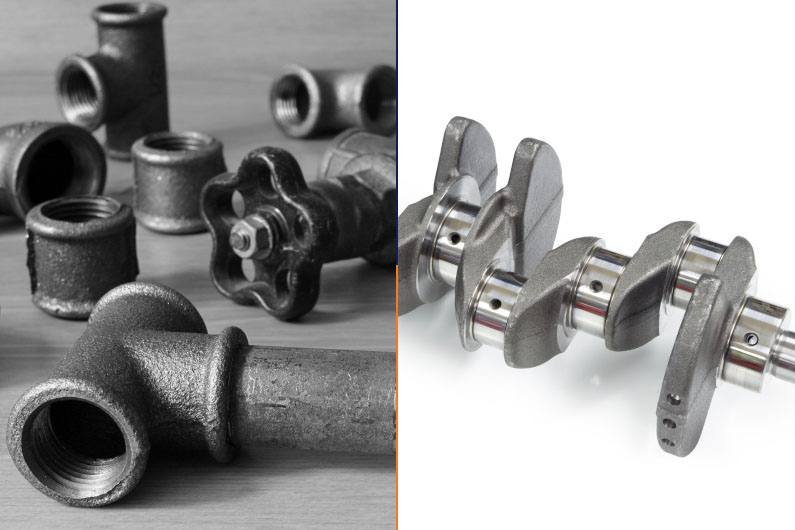
Cast iron is a ferrous alloy defined by a high carbon content. It is produced by smelting iron-carbon alloys in a furnace. The defining characteristic is a carbon percentage typically ranging from 2% to 4%. This level of carbon exceeds the amount that can be fully dissolved in the iron matrix. As a result, the excess carbon precipitates out during cooling, usually in the form of graphite or iron carbide (cementite).
The manufacturing process is straightforward. After smelting, the molten metal is poured directly into a mold to solidify into the desired shape. This is in contrast to wrought iron or steel, which is often worked with hammers or rolled while hot.
In addition to carbon, cast iron contains 1% to 3% silicon. This element is crucial as it promotes the formation of graphite instead of iron carbide, which significantly improves the material’s casting performance and machinability. Trace amounts of manganese are also present, along with impurities like sulfur and phosphorus. The interplay of these elements gives cast iron its distinct mechanical properties, including high hardness, excellent compressive strength, and notable brittleness.
The specific properties of cast iron can be manipulated through heat treatment and alloy composition, leading to several distinct types:
- Gray Iron: The most common type. Its carbon exists as graphite flakes. These flakes give it excellent machinability and vibration damping capabilities but also make it brittle.
- White Iron: The carbon forms iron carbide (cementite) instead of graphite. This makes it extremely hard and abrasion-resistant but also unmachinable and very brittle.
- Malleable Iron: Produced by heat-treating white iron. This process converts the iron carbide into irregular graphite nodules, giving the material improved ductility and toughness compared to gray iron.
- Sfero Döküm: Eriyik içine silikon ve diğer elementler (magnezyum gibi) eklenir. Bu, grafitin pul yerine küresel nodüller oluşturmasını sağlar. Bu küreler çatlak ilerlemesini engeller ve sfero döküme çeliğe yaklaşan üstün mukavemet, süneklik ve darbe dayanımı sağlar.
- Kompakt Grafitli Döküm: Gri ve sfero döküm arasında bir melezdir. Grafit parçacıkları birbirine bağlı ve solucan benzeridir. İyi termal iletkenlik, mukavemet ve sönümleme özelliklerinin bir kombinasyonunu sunar.
Çelik Nedir? Mühendisliğe Genel Bakış
Çelik de demir ve karbonun bir alaşımıdır, ancak onu tanımlayan özellik önemli ölçüde daha düşük bir karbon içeriğidir. Çelik, %2'den daha az karbon içerir ve çoğu kalitede %0,15 ile %1,5 arasında karbon bulunur. Bu daha düşük konsantrasyon, karbonun ısıtıldığında demirin kristal yapısı içinde tamamen çözülmesini sağlayarak tek, güçlü bir katı çözelti oluşturur. Karbon yönetimindeki bu temel fark, çeliğe karakteristik yüksek çekme mukavemeti ve sünekliğini verir ve kırılmaya karşı direncini artırır.
Çelik ayrıca çok çeşitli diğer alaşım elementlerini de içerebilir. Bu elementler, belirli özellikleri geliştirmek için eklenir. Örneğin, paslanmaz çelik, yüzeyde pasif bir oksit tabakası oluşturan ve olağanüstü korozyon ve oksidasyon direnci sağlayan minimum krom içerir. Diğer yaygın alaşım elementleri arasında manganez, silikon, nikel ve molibden bulunur ve her biri benzersiz nitelikler katar.
Çeliğin yüksek çekme mukavemeti, onu sayısız endüstride vazgeçilmez bir malzeme yapar. Altyapı için yapısal kirişlerden ve yüksek performanslı otomotiv bileşenlerinden hassas aletlere, silahlara ve araçlara kadar her şeyi üretmek için çelik kullanıyoruz. Çok yönlülüğü, onu aşağıdaki gibi işlemler için tercih edilen bir malzeme yapmasının önemli bir nedenidir. CNC işleme ve sac imalatı.
Dökme demir gibi, çelik de bileşimine göre çeşitli ana türlere ayrılır:
- Karbon Çeliği: Karbonun birincil alaşım elementi olduğu en yaygın kullanılan tür. Düşük, orta ve yüksek karbonlu kalitelere ayrılır ve mukavemet ve süneklik buna göre değişir.
- Alaşımlı Çelik: Sertleşebilirlik, mukavemet ve aşınma direnci gibi özellikleri iyileştirmek için manganez, nikel, krom ve molibden gibi belirli miktarlarda alaşım elementleri içerir.
- Paslanmaz Çelik: Üstün korozyon direnci sağlayan yüksek krom içeriği ile karakterizedir. Tıbbi, gıda sınıfı ve denizcilik uygulamaları için gereklidir.
- Takım Çeliği: Tungsten ve vanadyum gibi sert elementler içerir. Son derece sert ve ısıya dayanıklıdır, bu da onu kesici aletler, kalıplar ve kalıplar için ideal hale getirir, buna şunlarda kullanılanlar da dahildir: hızlı enjeksiyon kalıplama.
Dökme Demir ve Çelik: Teknik Karşılaştırma
Her iki malzeme de demir cevherinden elde edilmesine rağmen, farklı bileşimleri performansta keskin bir kontrasta yol açar. cast iron vs steel debate is best understood by examining their properties side-by-side.
| Mülkiyet | Cast Iron | Çelik | Technical Explanation |
|---|---|---|---|
| Carbon Content | 2% – 4% | < 2% (typically 0.1% – 1.5%) | This is the fundamental differentiator that governs all other properties. |
| Melting Point | Lower (~1200°C / 2200°F) | Higher (~1370-1540°C / 2500-2800°F) | The higher carbon content in cast iron acts as a flux, lowering its melting temperature. |
| Strength Profile | High Compressive Strength | High Tensile Strength | Cast iron’s graphite structure resists compression well but fails easily under tension. Steel’s crystalline structure resists being pulled apart. |
| Castability | Mükemmel | Fair to Poor | Cast iron’s lower melting point and fluidity make it easy to fill intricate molds with low shrinkage. Steel is viscous and shrinks more upon cooling. |
| Korozyon Direnci | İyi | Poor (except for Stainless/Weathering) | The high silicon content in cast iron provides a degree of inherent corrosion resistance. Standard steel rusts easily. |
| Impact Resistance | Low to Moderate (Poor for Gray Iron) | Yüksek | Cast iron is brittle and will fracture under sudden impact. Steel is tough and will deform or bend before breaking. |
| Vibration Damping | Mükemmel | Fakir | The graphite flakes in gray cast iron absorb and dissipate vibrational energy effectively, making it quiet. |
| Kaynaklanabilirlik | Difficult | Mükemmel | The high carbon content in cast iron makes it prone to cracking during welding. Most steels are easily welded. |
| Maliyet | Daha düşük | Daha yüksek | Cast iron production requires less energy and labor. Steel refining and alloying are more expensive processes. |
Deep Dive: Key Differentiators
Strength: Compressive vs. Tensile
This is the most critical mechanical difference in the cast iron vs steel comparison.
- Cast Iron excels in compressive strength. It can withstand immense crushing forces without deforming. This makes it ideal for machine bases, engine blocks, and support columns.
- Çelik excels in Çekme Dayanımı. It resists being pulled apart. This property, combined with its ductility, allows it to bend and stretch under load without failing. This is why steel is used for structural beams, cables, and automotive frames.
Melting Point and Castability
Cast iron is significantly easier to cast than steel. Its lower melting point (around 1200°C) requires less energy to melt. More importantly, molten cast iron is highly fluid, allowing it to flow into and fill complex and detailed molds with precision. It also exhibits less shrinkage as it cools. In contrast, steel’s higher melting point (1370°C+) and greater viscosity make it more challenging to cast. It is also more reactive with molding materials and shrinks considerably, requiring more complex mold designs and feeding systems.
Choosing the Right Material: Application-Driven Decisions
The decision between cast iron vs steel is not about which is “better,” but which is “right” for the job. Your choice should be dictated by the specific functional requirements of the component.
When to Choose Cast Iron:
- Karmaşık Geometriler: If your part has an intricate shape that is difficult or expensive to machine, cast iron’s superior castability makes it the ideal choice.
- Vibration Damping is Critical: For machine bases, engine blocks, and heavy machinery frames, gray cast iron’s ability to absorb vibrations is a major advantage. It leads to quieter and more stable operation.
- High Compressive Loads: For applications that involve primarily crushing forces, cast iron offers excellent performance at a lower cost than steel.
- Cost is a Primary Driver: Cast iron is generally cheaper than steel due to lower material, energy, and labor costs.
When to Choose Steel:
- High Tensile Strength is Required: For any structural application where parts are under tension, such as beams, bolts, or pressure vessels, steel is the only safe choice.
- Darbe Dayanımı Gereklidir: Bir bileşen ani şoklara veya darbelere maruz kalacaksa, çeliğin tokluğu ve kırılmadan deforme olabilme özelliği esastır. Otomotiv tamponlarını veya inşaat ekipmanlarını düşünün.
- Kaynak ve İmalat Gereklidir: Birden fazla bileşenin birbirine kaynaklanmasını gerektiren karmaşık montajlar inşa ederken, çeliğin mükemmel kaynaklanabilirliği onu dökme demirden çok daha üstün kılar.
- Esneklik ve Süneklik Önemlidir: Yaylar veya araba kaporta panelleri gibi kırılmadan bükülmesi veya esnemesi gereken parçalar için çeliğin sünekliği vazgeçilmez bir özelliktir.
| Karar Faktörü | Dökme Demir Seçin | Çelik Seçin |
|---|---|---|
| Birincil Yük Tipi | Sıkıştırma | Gerilme, Eğilme, Kesme |
| Parça Karmaşıklığı | Yüksek (Karmaşık Dökümler) | Düşük ila Orta (İşlenmiş, Damgalı, Kaynaklı) |
| Darbe Ortamı | Düşük | Yüksek |
| Titreşim Sönümleme İhtiyacı | Yüksek | Düşük |
| Birleştirme Yöntemi | Civatalama / Mekanik Bağlama | Kaynak, Civatalama |
| Bütçe Kısıtlaması | Yüksek (Maliyet duyarlı) | Düşük (Performans önemli) |
Sonuç
Bu cast iron vs steel tartışma, malzeme bilimi ve üretimde temel bir konudur. Her ikisi de demir esaslı alaşımlar olmasına rağmen, öncelikle karbon içeriğinden kaynaklanan farklılıkları derindir. Dökme demir, mükemmel dökülebilirlik, yüksek basınç dayanımı ve daha düşük maliyetle mükemmel titreşim sönümlemesi sunarak karmaşık, rijit yapılar için idealdir. Çelik, üstün çekme mukavemeti, tokluk, süneklik ve kaynaklanabilirlik sağlayarak yapısal, yüksek etkili ve fabrikasyon uygulamalar için önde gelen malzeme olarak kendini kanıtlamıştır.
Evrensel bir kazanan yoktur. En uygun seçim, tamamen ürününüzün tasarım gereksinimlerinin, çalışma ortamının ve bütçesinin kapsamlı bir analizine bağlıdır. Prototipleme ve üretim için, gibi deneyimli bir üreticiyle ortaklık yapmak Senyorapid'in çok önemlidir. Kalıp dökümden CNC hassas işleme'e kadar çok çeşitli metal fabrikasyon hizmetlerindeki uzmanlığıyla, tasarımınızı yüksek performanslı bir nihai parçaya dönüştürmek için gereken rehberliği ve üretim yeteneklerini, görev için en uygun malzemeyi kullanarak sağlayabiliriz.
Yorumlar
Son Yazılar
İlgili Bloglar
Senyo'nun blogu, prototip üretimi konusundaki kapsamlı bilgimizi paylaşmaya odaklanmıştır. Makalelerimiz aracılığıyla, ürün tasarımınızı geliştirmenize ve hızlı prototiplemenin karmaşıklıklarını daha etkin bir şekilde yönlendirmenize yardımcı olmayı hedefliyoruz.