주철 대 강철: 결정적인 제조 가이드
Table of Contents
광범위한 산업 제조 분야에서 재료 선택은 기본적인 엔지니어링 결정입니다. 금속의 선택은 제품의 강도, 내구성, 비용 및 성능에 직접적인 영향을 미칩니다. 가장 일반적인 철 금속 중에서 주철과 강철은 기본적인 재료입니다. 제조업체는 다음과 같습니다. Senyorapid 뛰어난 특성으로 인해 이러한 금속을 자주 사용합니다. 둘 다 인상적인 강도와 장기간에 걸쳐 안정적으로 작동하는 능력을 제공합니다.
그러나 중요한 차이점이 있습니다. 주철과 강철은 시각적으로 유사해 보일 수 있지만, 근본적인 야금학적 특성과 성능 특성은 근본적으로 다릅니다. 주요 논쟁은 주철 대 강철 이러한 차이점을 중심으로 전개됩니다. 각 재료는 특정 응용 분야에 따라 뚜렷한 장점과 단점을 제공하는 고유한 기능을 가지고 있습니다. 강철이 철보다 강한가요? 복잡한 모양을 주조하는 데 어느 것이 더 나은가요? 이 가이드는 이러한 질문에 답하기 위해 과학적이고 기술적인 심층 분석을 제공합니다. 우리는 그 특성을 분석하고, 성능을 비교하고, 제조 프로젝트에 가장 적합한 재료를 선택하는 데 도움이 되는 명확한 지침을 제공할 것입니다.
주철이란 무엇입니까? 야금학적 관점
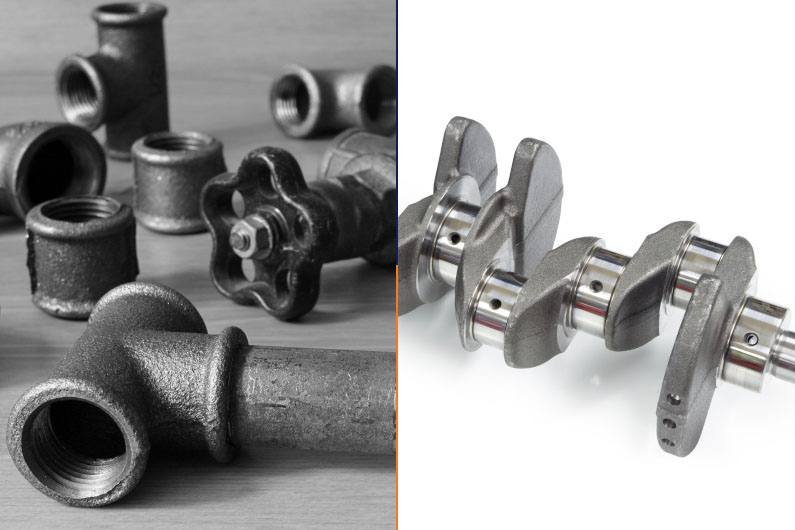
주철은 탄소 함량이 높은 철 합금으로 정의됩니다. 용광로에서 철-탄소 합금을 제련하여 생산됩니다. 정의적인 특징은 일반적으로 2%에서 4% 범위의 탄소 백분율입니다. 이 탄소 수준은 철 매트릭스에 완전히 용해될 수 있는 양을 초과합니다. 결과적으로 과잉 탄소는 냉각 중에 일반적으로 흑연 또는 탄화철(시멘타이트) 형태로 석출됩니다.
제조 공정은 간단합니다. 제련 후 용융 금속을 몰드에 직접 부어 원하는 모양으로 응고시킵니다. 이것은 종종 망치로 작업하거나 뜨거운 상태에서 압연되는 연철 또는 강철과 대조됩니다.
탄소 외에도 주철에는 1%에서 3%의 실리콘이 포함되어 있습니다. 이 원소는 탄화철 대신 흑연 형성을 촉진하여 재료의 주조 성능과 가공성을 크게 향상시키기 때문에 매우 중요합니다. 미량의 망간도 황 및 인과 같은 불순물과 함께 존재합니다. 이러한 원소의 상호 작용은 주철에 높은 경도, 우수한 압축 강도 및 현저한 취성을 포함한 고유한 기계적 특성을 부여합니다.
주철의 특정 특성은 열처리 및 합금 조성을 통해 조작할 수 있으며, 여러 가지 뚜렷한 유형으로 이어집니다.
- 회주철: 가장 일반적인 유형입니다. 탄소는 흑연 조각으로 존재합니다. 이러한 조각은 우수한 가공성 및 진동 감쇠 기능을 제공하지만 취성도 있습니다.
- 백주철: 탄소는 흑연 대신 탄화철(시멘타이트)을 형성합니다. 이것은 매우 단단하고 내마모성이 있지만 가공성이 없고 매우 취약합니다.
- 가단 주철: 백주철을 열처리하여 생산됩니다. 이 공정은 탄화철을 불규칙한 흑연 결절로 변환하여 회주철에 비해 재료의 연성 및 인성을 향상시킵니다.
- 연성 주철: 실리콘 및 기타 원소(예: 마그네슘)가 용융물에 첨가됩니다. 이로 인해 흑연이 플레이크 대신 구형 결절을 형성하게 됩니다. 이러한 구체는 균열 전파를 억제하여 연성 주철에 강철에 가까운 우수한 강도, 연성 및 충격 저항성을 제공합니다.
- 컴팩트 흑연 주철: 회주철과 연성 주철의 혼합형입니다. 흑연 입자는 상호 연결되어 있고 벌레 모양입니다. 우수한 열전도율, 강도 및 감쇠 특성의 조합을 제공합니다.
강철이란 무엇입니까? 엔지니어링 개요
강철 또한 철과 탄소의 합금이지만, 그 특징은 탄소 함량이 현저히 낮다는 것입니다. 강철은 2% 미만의 탄소를 함유하고 있으며, 대부분의 등급은 0.15%에서 1.5% 사이입니다. 이 낮은 농도로 인해 가열 시 탄소가 철의 결정 구조 내에 완전히 용해되어 단단하고 강한 고용체를 형성할 수 있습니다. 탄소 관리에 있어서 이러한 근본적인 차이점은 강철에 특유의 높은 인장 강도와 연성을 부여하여 파괴 저항성을 향상시킵니다.
강철은 또한 광범위한 다른 합금 원소를 포함할 수 있습니다. 이러한 원소는 특정 속성을 향상시키기 위해 첨가됩니다. 예를 들어, 스테인리스강은 최소 11%의 크롬을 함유하고 있으며, 이는 표면에 부동태 산화막을 형성하여 뛰어난 내식성 및 내산화성을 제공합니다. 다른 일반적인 합금 원소로는 망간, 실리콘, 니켈 및 몰리브덴이 있으며, 각각 고유한 특성을 제공합니다.
강철의 높은 인장 강도는 수많은 산업 분야에서 필수적인 재료입니다. 우리는 인프라용 구조용 빔과 고성능 자동차 부품에서 정밀 도구, 무기 및 차량에 이르기까지 모든 것을 생산하는 데 강철을 사용합니다. 그 다재다능함은 다음과 같은 공정에 선호되는 재료인 주된 이유입니다. CNC 기계로 가공 그리고 시트 금속 제조.
주철과 마찬가지로 강철은 조성에 따라 여러 주요 유형으로 분류됩니다.
- 탄소 강철: 가장 널리 사용되는 유형으로, 탄소가 주요 합금 원소입니다. 강도와 연성이 그에 따라 달라지는 저탄소, 중탄소 및 고탄소 등급으로 분류됩니다.
- 합금강: 경화성, 강도 및 내마모성과 같은 속성을 향상시키기 위해 망간, 니켈, 크롬 및 몰리브덴과 같은 특정 양의 합금 원소를 함유합니다.
- 스테인리스 스틸: 우수한 내식성을 제공하는 높은 크롬 함량이 특징입니다. 의료, 식품 등급 및 해양 응용 분야에 필수적입니다.
- 툴 스틸: 텅스텐 및 바나듐과 같은 단단한 원소를 함유합니다. 매우 단단하고 내열성이 뛰어나 절삭 공구, 다이 및 금형(다음을 포함)에 이상적입니다. 빠른 사출 성형.
주철 대 강철: 정면 기술 비교
두 재료 모두 철광석에서 유래하지만, 뚜렷한 조성으로 인해 성능에 현저한 차이가 있습니다. 주철 대 강철 debate is best understood by examining their properties side-by-side.
| 속성 | 주철 | Steel | Technical Explanation |
|---|---|---|---|
| Carbon Content | 2% – 4% | < 2% (typically 0.1% – 1.5%) | This is the fundamental differentiator that governs all other properties. |
| 녹는점 | Lower (~1200°C / 2200°F) | Higher (~1370-1540°C / 2500-2800°F) | The higher carbon content in cast iron acts as a flux, lowering its melting temperature. |
| Strength Profile | High Compressive Strength | High Tensile Strength | Cast iron’s graphite structure resists compression well but fails easily under tension. Steel’s crystalline structure resists being pulled apart. |
| Castability | 우 | Fair to Poor | Cast iron’s lower melting point and fluidity make it easy to fill intricate molds with low shrinkage. Steel is viscous and shrinks more upon cooling. |
| 부식 저항성 | 좋 | Poor (except for Stainless/Weathering) | The high silicon content in cast iron provides a degree of inherent corrosion resistance. Standard steel rusts easily. |
| Impact Resistance | Low to Moderate (Poor for Gray Iron) | 높 | Cast iron is brittle and will fracture under sudden impact. Steel is tough and will deform or bend before breaking. |
| Vibration Damping | 우 | 가난한 | The graphite flakes in gray cast iron absorb and dissipate vibrational energy effectively, making it quiet. |
| 용접성 | Difficult | 우 | The high carbon content in cast iron makes it prone to cracking during welding. Most steels are easily welded. |
| 비용 | Lower | 더 높음 | Cast iron production requires less energy and labor. Steel refining and alloying are more expensive processes. |
Deep Dive: Key Differentiators
Strength: Compressive vs. Tensile
This is the most critical mechanical difference in the 주철 대 강철 comparison.
- 주철 excels in compressive strength. It can withstand immense crushing forces without deforming. This makes it ideal for machine bases, engine blocks, and support columns.
- Steel excels in 인장 강도. It resists being pulled apart. This property, combined with its ductility, allows it to bend and stretch under load without failing. This is why steel is used for structural beams, cables, and automotive frames.
Melting Point and Castability
Cast iron is significantly easier to cast than steel. Its lower melting point (around 1200°C) requires less energy to melt. More importantly, molten cast iron is highly fluid, allowing it to flow into and fill complex and detailed molds with precision. It also exhibits less shrinkage as it cools. In contrast, steel’s higher melting point (1370°C+) and greater viscosity make it more challenging to cast. It is also more reactive with molding materials and shrinks considerably, requiring more complex mold designs and feeding systems.
Choosing the Right Material: Application-Driven Decisions
The decision between 주철 대 강철 is not about which is “better,” but which is “right” for the job. Your choice should be dictated by the specific functional requirements of the component.
When to Choose Cast Iron:
- 복잡한 지오메트리: If your part has an intricate shape that is difficult or expensive to machine, cast iron’s superior castability makes it the ideal choice.
- Vibration Damping is Critical: For machine bases, engine blocks, and heavy machinery frames, gray cast iron’s ability to absorb vibrations is a major advantage. It leads to quieter and more stable operation.
- High Compressive Loads: For applications that involve primarily crushing forces, cast iron offers excellent performance at a lower cost than steel.
- Cost is a Primary Driver: Cast iron is generally cheaper than steel due to lower material, energy, and labor costs.
When to Choose Steel:
- High Tensile Strength is Required: For any structural application where parts are under tension, such as beams, bolts, or pressure vessels, steel is the only safe choice.
- Impact Resistance is Necessary: If a component will be subjected to sudden shocks or impacts, steel’s toughness and ability to deform without fracturing are essential. Think of automotive bumpers or construction equipment.
- Welding and Fabrication are Needed: When building complex assemblies that require welding multiple components together, steel’s excellent weldability makes it far superior to cast iron.
- Flexibility and Ductility are Key: For parts that need to bend or flex without breaking, such as springs or car body panels, steel’s ductility is a non-negotiable property.
| Decision Factor | Choose Cast Iron | Choose Steel |
|---|---|---|
| Primary Load Type | Compression | Tension, Bending, Shear |
| 일부 복잡성 | High (Intricate Castings) | Low to Medium (Machined, Stamped, Welded) |
| Impact Environment | 낮 | 높 |
| Need for Vibration Damping | 높 | 낮 |
| Joining Method | Bolting / Mechanical Fastening | Welding, Bolting |
| Budget Constraint | High (Cost-sensitive) | Low (Performance is key) |
결론
이 주철 대 강철 debate is a fundamental topic in materials science and manufacturing. While both are iron-based alloys, their differences, driven primarily by carbon content, are profound. Cast iron offers superb castability, high compressive strength, and excellent vibration damping at a lower cost, making it ideal for complex, rigid structures. Steel provides superior tensile strength, toughness, ductility, and weldability, establishing it as the premier material for structural, high-impact, and fabricated applications.
There is no universal winner. The optimal choice depends entirely on a thorough analysis of your product’s design requirements, operating environment, and budget. For prototyping and production, partnering with an experienced manufacturer like Senyorapid is crucial. With expertise in a wide range of metal fabrication services, from die casting to CNC 정밀도 기계로 가공, we can provide the guidance and manufacturing capabilities needed to turn your design into a high-performance final part, using the material best suited for the task.
댓글
관련 블로그
Senyo 의 블로그에 초점을 맞추고 공유하는 우리의 광범위한 지식의 시제품을 제조합니다. 우리의 기사를 통해,우리는 당신을 지원하는 정제 제품의 디자인과 탐색의 복잡한 급속한 prototyping 더 효과적으로.