G Kodu Nedir: CNC Makine Programlamaya Giriş
içindekiler tablosu
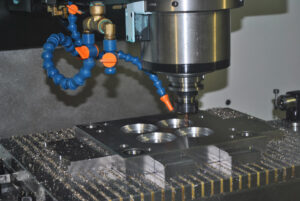
G-kodu nedir? Modern üretim dünyasında hassasiyet çok önemlidir. Havacılıktan tıbbi cihaz prototipleme depend on the flawless execution of complex designs. This execution is carried out by automated workhorses like Computer Numerical Control (CNC) machines and 3D printers. However, these powerful machines do not understand visual designs or abstract concepts. They require a precise, instruction-based language to function. That language is G-code. Understanding “what is G-code” is essential for anyone involved in manufacturing, engineering, or design. This article provides a definitive explanation of G-code, detailing its purpose, structure, workflow, and critical commands that transform digital blueprints into physical objects.Metal rapid prototyping has transformed the way products are developed, enabling designers and engineers to create high-precision metal prototypes at unprecedented speed. Whether for automotive, aerospace, or consumer products, this advanced methodology offers significant advantages, from cost savings to shorter production timelines. In this article, we’ll explore the tools, techniques, and benefits of metal rapid prototyping, making it a valuable resource for anyone involved in manufacturing or product development.

What Is G-Code? A Fundamental Definition
G-code is the main shows language that people make use of to instruct CNC makers and 3D printers. The “G” in G-code represent “Geometric,” since the language largely describes the geometry of the toolpath. Consider it as a collection of direct, detailed directions. These instructions tell the machine’s device head specifically where to move, exactly how swiftly to travel, and what course to adhere to.
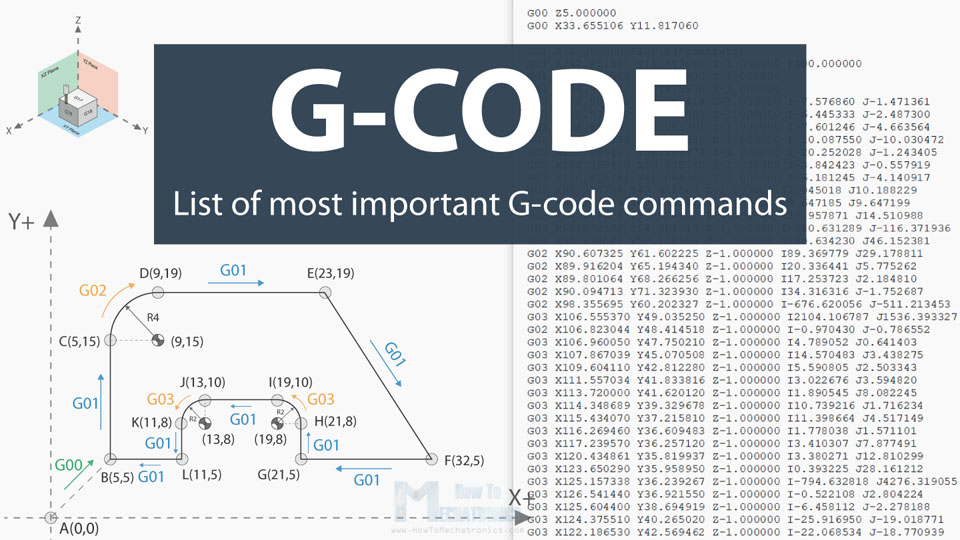
This language runs within a Cartesian coordinate system, using X, Y, and Z axes to define placements in three-dimensional space. G-code commands, likewise known as preparatory codes, determine every motion. Past simple positioning, G-code also controls important variables. These consist of feed rate (the speed of the cutting tool’s breakthrough), pin rate (the rotation speed of the tool), and the selection of particular tools needed for a task.
G-code rarely works alone. It functions in tandem with M-code, or “miscellaneous code.” While G-code commands manage the equipment’s motions, M-code commands control supporting equipment features. These include transforming the coolant on or off, beginning or quiting the program, and starting a device change. Together, G-code and M-code type a full program that guides a machine from its starting point to a finished component.
The Historical Roots of G-Code
The story of G-code starts in the 1950s at the Massachusetts Institute of Technology (MIT) Servomechanisms Laboratory. At the time, early numerical control (NC) equipments relied upon physical punched tape for instructions, a difficult and inflexible system. The development of G-code was an innovative action, developing a standardized text-based language for controlling machine movement.
Its prevalent adoption, however, was available in the 1960s. The Electronic Industries Alliance (EIA) standardized the language under the classification RS-274. This standardization was an important landmark. It developed a global foundation that equipment tool makers can build on. This permitted greater interoperability between various devices and software program systems. This crucial development led the way for the CNC revolution, changing manufacturing from a manual craft right into a very automated, precise science.
Why G-Code Is Crucial in Modern Manufacturing
Makers, by their nature, are not intelligent. A CNC işleme facility possesses powerful servomotors and precise actuators, however it requires explicit guidelines to execute any task. G-code serves as the essential bridge between an electronic design produced in software program and the physical activities of the maker. It converts the abstract intent of an engineer or designer right into a concrete, actionable collection of commands that the equipment’s controller can recognize and implement.
The importance of G-code depends on three crucial areas:
- Automation: G-code permits complicated machining processes to run from begin to completed with marginal human intervention. This is fundamental to mass production and performance in sectors like otomotiv prototipleme.
- Precision: The language permits movements specified to thousandths of an inch (or micrometers). This level of accuracy is difficult to accomplish regularly by hand and is essential for high-tolerance parts.
- Repeatability: Once a G-code program is improved, an equipment can execute it thousands of times, producing identical parts every time. This consistency is the bedrock of contemporary quality control.
Without G-code, the production of intricate elements for whatever from customer electronic devices to commercial equipment would be slower, more pricey, and much less trusted.
The G-Code Workflow: From Digital Design to Physical Part
Producing a finished part with a CNC device involves a structured, multi-stage procedure. The G-code script is the last outcome of the pre-production process. Right here is just how it functions.
1. Computer-Aided Design (CAD) The process starts with a concept. An engineer or designer develops a 2D drawing or 3D strong model of the preferred component utilizing CAD software program. This electronic plan specifies all the geometric attributes, measurements, and tolerances of the end product.
2. Computer-Aided Manufacturing (CAM) Next, the CAD data is imported into CAM software program. This is where the manufacturing strategy is established. The CAM software driver specifies the sort of basic material, picks the proper cutting tools, and sets machining specifications like reducing speed and depth. The software application then uses this info to determine one of the most effective toolpaths to develop the part. Its main outcome is a G-code program that translates these toolpaths right into machine-readable guidelines.
3. Post-Processing The G-code created by a CAM program is frequently common. Different brands of CNC machines (like Haas, Fanuc, or Siemens) talk slightly different “languages” of G-code. A post-processor is a tiny software program energy that functions as a translator. It converts the common CAM outcome into a particular G-code file formatted completely for the target equipment’s controller. This step is vital to stop errors and guarantee compatibility.
4. Device Execution The finalized G-code documents is moved to the CNC device’s controller, usually by means of USB or an ethernet connection. The maker operator sets up the work surface and tools. Once the program starts, the maker’s controller reviews the G-code one line, or “block,” each time. It analyzes each command and sends out electrical signals to the maker’s motors and systems, driving the device along the programmed course to reduce, drill, or shape the part.
Deconstructing G-Code: Understanding Its Structure
At first glance, a G-code file may look like a confusing assortment of letters and numbers. Nonetheless, it follows a rational and consistent framework. The program includes a series of lines, called blocks. Each block has several commands, known as words. A word is just a letter followed by a number. The maker executes the blocks sequentially from top to bottom.
Let’s evaluate an example block of G-code: N100 G01 X50.0 Y25.5 Z-5.0 F150 S1200 M03
- N100: The block number (N). This aids arrange the program and makes it easier to find specific lines.
- G01: A G command. This is a preparatory command telling the maker to carry out a details sort of movement– in this instance, a linear feed move.
- X50.0 Y25.5 Z-5.0: Koordinat verileri. Bu kelimeler, ekipmana X, Y ve Z eksenleri boyunca eylemin bitiş noktasını söyler.
- F150: İlerleme hızı (F). Bu, üreticiye kesme boyunca 150 birim (örneğin, mm/dakika) hızında hareket etmesini söyler.
- S1200: Mil hızı (S). Bu, redüksiyon cihazının dönüş hızını dakikada 1200 dönüşe (RPM) ayarlar.
- M03: Bir M komutu. Bu, iş miline saat yönünde talimatları başlatmasını söyleyen çeşitli bir komuttur.
Aşağıdaki tablo, G kodunda bulunan en tipik adres karakterlerini özetlemektedir.
Tablo 1: Ortak G-Kodu Adres Karakterleri
| Karakter | İsim | Amaç |
|---|---|---|
| G | Hazırlık Komutu | Hareket veya işlem türünü tanımlar (örneğin, hızlı hareket, doğrusal kesme, delme döngüsü). |
| M | Çeşitli Fonksiyon | Yardımcı makine fonksiyonlarını kontrol eder (örneğin, soğutucu açık/kapalı, program durdurma, takım değiştirme). |
| X, Y, Z | Doğrusal Eksenler | Birincil üç eksen boyunca hareket için hedef koordinatları belirtir. |
| A, B, C | Dönel Eksenler | Specifies the target coordinates for rotational axes around X, Y, and Z, respectively. |
| F | Feed Rate | Sets the speed at which the cutting tool moves through the material. |
| S | Spindle Speed | Sets the rotational speed of the machine’s spindle in RPM. |
| T | Araç Seçimi | Instructs the machine to select a specific tool from its turret or magazine. |
| N | Block/Line Number | Provides a sequence number for a line of code, used for organization and reference. |
| I, J, K | Arc Center Data | Defines the center point of an arc when using G02 or G03 commands. |
Common G-Code Commands You Must Know
While there are hundreds of G-code commands, a handful form the foundation of nearly every CNC program. An operator or programmer who understands these core commands can read and interpret most G-code scripts.
Table 2: Essential G-Code Commands and Their Functions
| Command | İsim | Tanım |
|---|---|---|
| G00 | Rapid Positioning | Moves the tool at the machine’s maximum travel speed to a specified coordinate. This is used for non-cutting movements to save time. |
| G01 | Linear Interpolation | Moves the tool in a straight line to a specified coordinate at a defined feed rate (F). This is the primary command for cutting material. |
| G02 | Clockwise Circular Interpolation | Moves the tool along a clockwise arc. Requires specifying the endpoint and the arc’s center or radius. |
| G03 | Counter-Clockwise Circular Interpolation | Moves the tool along a counter-clockwise arc. Similar to G02 but in the opposite direction. |
| G21 | Millimeter Units | Sets the machine’s interpretation of all dimensional values to millimeters. |
| G90 | Absolute Positioning | Interprets all coordinate values as positions relative to a fixed program zero point (the origin). This is the most common mode. |
| G91 | Incremental Positioning | Interprets all coordinate values as distances relative to the tool’s current position. |
| G81 | Drilling Cycle | A “canned cycle” that automates the standard process of drilling a hole to a specified depth and retracting. |
| G41/G42 | Cutter Radius Compensation | Automatically adjusts the toolpath to the left (G41) or right (G42) to compensate for the radius of the cutting tool. This ensures the final part dimensions are accurate. |
Understanding these commands is the first step to G-code literacy. For example, G00 X100 Y100 quickly repositions the tool, while G01 X100 Y100 F200 moves it to the same spot slowly and carefully, performing a cut.
G-Code vs. M-Code: Clarifying the Difference
A common point of confusion for newcomers is the distinction between G-codes and M-codes. While they work together in the same program, they have fundamentally different roles.
G-Codes (Geometric Codes): These are action commands that control the movement and operation of the tool. They answer the questions “Where is the tool going?” and “How should it get there?”. They manage the geometry of the part being created, controlling everything from straight lines and arcs to complex canned cycles for derin çekme metal damgalama.
M-Codes (Miscellaneous Codes): These are switching commands that control the non-geometric functions of the machine itself. They act like on/off switches for hardware. They answer questions like “Is the coolant on?” or “Is the spindle spinning?”.
In short: G-code moves the tool; M-code runs the machine. A program needs both to function. For example, a line might use G01 to start a cut while simultaneously using M08 to turn on the flood coolant to keep the tool and workpiece from overheating.
A Practical G-Code Example: Machining a Simple Square
To see how these commands work together, let’s examine a simple G-code program designed to mill a 20mm x 20mm square, cutting 1mm deep into a workpiece.
G21 ; Tüm birimleri ayarla için milimetre. Çok önemli bir ilk adım için açıklık. için mutlak. Tüm koordinatlar göreli için ve başlangıç noktası (X0 Y0) olacaktır. ve araç için a güvenli yükseklik . 5mm yukarıda ve iş parçası. ve araç için ve başlangıç köşesi . ve kare.-1 F100 ; Alçalt ve araç içine ve malzeme için a derinlik . 1mm at a ilerleme hızı . 100 mm/dakika. ve ilk taraf . ve kare ile hareket ederek için X=20 at a ilerleme hızı . 200 mm/dakika. ve saniye taraf ile hareket ederek için Y=20. İlerleme hızı aynı kalır 200.
G01 X0 ; Kes ve üçüncü taraf ile geri hareket için X=0.
G01 Y0 ; Kes ve son taraf, geri dönüyor için ve başlangıç nokta. ve aleti geri çek için ve güvenli yükseklik. son ve sıfırla. Bu M-kodu sinyaller ve Makine bu ve iş o tamamlandı.
This simple example demonstrates how a sequence of G-code and M-code commands can produce a precise geometric shape.
Yaygın G-Kodu Hatalarını Giderme
Web kamerası yazılım programı son derece güvenilir G-kodu üretse de, hatalar yine de meydana gelebilir. Bunları nasıl düzelteceğinizi anlamak, herhangi bir makine sürücüsü için değerli bir yetenektir.
- Sözdizimi Hataları: Bunlar, G1'i G01 olarak oluşturmak veya besleme hızı gibi gerekli bir değeri ihmal etmek gibi basit yazım hatalarıdır. Çoğu modern CNC denetleyicisi sözdizimi hatalarını algılar ve sorunlu satırı gösteren bir alarm sistemiyle programı durdurur.
- Mantıksal Hatalar: Kod sözdizimsel olarak doğrudur, ancak cihaza tehlikeli veya yanlış bir şey yapmasını emreder. Yaygın bir örnek, ürünü bir besleme adımı (G01) yerine hızlı bir hareketle (G00) komut vermektir, bu da cihaza zarar verebilir veya parçaya zarar verebilir.
- Son İşlemci Hataları: Kod, belirli cihaz denetleyicisinin tanımadığı komutlar içerir. Bu, yanlış son işlemci kullanıldığında meydana gelir ve bu eylemin neden bu kadar önemli olduğunun bir hatırlatıcısıdır.
Bu hataları önlemenin en iyi yolu bir G-kodu simülasyon yazılımı kullanmaktır. NC Viewer gibi bu programlar, alet yolunun sanal bir görüntüsünü oluşturarak, herhangi bir türde çelik kesmeden önce tüm programın bir ekranda çalışmasını izlemenizi sağlar. Bu, pahalı hasarlara neden olmadan önce çarpışmaları, verimsiz yolları ve mantıksal hataları yakalamaya yardımcı olur.
G-Kodu Kullanan Makinelerin Geniş Spektrumu
G-kodunun etkisi, tek bir makine türünün çok ötesine uzanır. Birden fazla üretim disiplininde çok çeşitli bilgisayar kontrollü ekipman için fiili standarttır.
- Çıkarıcı Üretim: Bu, G-kodunun geleneksel alanıdır. İçerir CNC freze makineleri dönen aletler kullanan, CNC torna tezgahları iş parçasını döndüren ve yüzeyleri bitirmek için taşlama makineleri.
- Üretim ve Kesme: Düz stoktan şekil kesen makineler büyük ölçüde G-koduna güvenir. Buna şunlar dahildir: lazer kesiciler, plazma kesiciler ve yüksek basınçlı su jeti kesiciler.
- Katmanlı Üretim: 3D yazıcılarkatman katman parça oluşturan da G-koduyla çalışır. Bir 3D modeli "dilimlediğinizde", dilimleme yazılımı, baskı kafasının hareketini (X, Y), katman yüksekliğini (Z) ve malzeme ekstrüzyon hızını kontrol eden bir G-kodu dosyası oluşturur.
Bu evrensellik, G-kodunu birçok alanda aktarılabilir bir beceri haline getirir. endüstriyel prototipleme ve üretim.
Sonuç
G-kodu, bir programlama dilinden daha fazlasıdır; dijital yenilik ve fiziksel gerçeklik arasındaki temel bağlantıdır. Otomatik makinelerin dünyamızı benzersiz hız ve doğrulukla inşa etmelerini sağlayan kesin, net talimatlar sağlar. Modern CAM yazılımı karmaşık G-kodu programları oluşturmanın ağır yükünü kaldırırken, "G-kodu nedir" sorusunun sağlam bir şekilde anlaşılması paha biçilmez bir varlık olmaya devam ediyor. Mühendisler, makine operatörleri ve hobi sahipleri için G-kodu okuryazarlığı, süreçleri optimize etmelerini, sorunları gidermelerini ve CNC teknolojisinin tüm potansiyelini ortaya çıkarmalarını sağlar. Üretimin devam eden evriminde, G-kodu kalıcı ve temel bir araç olarak duruyor.
Ekleme için Önerilen Harici Bağlantılar
- Genel Referans için: Autodesk'in G-Kodu Rehberi – Önde gelen bir yazılım sağlayıcısından mükemmel, yetkili bir genel bakış.
- Teknik Detaylar için: LinuxCNC G-Kodu Dokümantasyonu – Çok çeşitli G ve M kodları için son derece ayrıntılı bir teknik referans.
- Pratik Görselleştirme İçin: NC Görüntüleyici – Kullanıcıların kodlarını yapıştırmasına ve takım yolunun görsel bir temsilini görmesine olanak tanıyan ücretsiz, web tabanlı bir G kodu simülatörü.
- Üreticiye Özel Bilgiler İçin: Haas Automation'ın Kaynak Merkezi – En popüler CNC makine markalarından birine özel pratik ipuçları ve bilgiler sağlar.
Yorumlar
Son Yazılar
İlgili Bloglar
Senyo'nun blogu, prototip üretimi konusundaki kapsamlı bilgimizi paylaşmaya odaklanmıştır. Makalelerimiz aracılığıyla, ürün tasarımınızı geliştirmenize ve hızlı prototiplemenin karmaşıklıklarını daha etkin bir şekilde yönlendirmenize yardımcı olmayı hedefliyoruz.