9 CNC Machining Tools For The Precision and Versatility
Indice dei contenuti
Computer Numerical Control (CNC) machining has actually reinvented manufacturing. It delivers extraordinary precision and flexibility for making diverse components. The digital nature of CNC systems absolutely contributes to this precision. Nonetheless, the true breadth of CNC capabilities originates from the substantial variety of cutting tools offered. These specialized tools empower CNC makers to perform a wide variety of operations, from detailed describing to quick product elimination. Understanding the various CNC cutting tools and their particular features is critical. This knowledge permits producers to pick the optimal tools for their projects, making certain effectiveness, precision, and premium surface area coatings. This article explores nine unique sorts of CNC reducing devices and checks out the products used in their building and construction, offering a comprehensive introduction for anybody engaging with CNC factory.
Types of CNC Cutting Tools and Their Applications
CNC machines employ a diverse range of cutting tools, each designed for specific tasks. Selecting the correct tool is paramount for achieving desired part geometries, tolerances, and surface qualities.
Drill Bits

End Mills
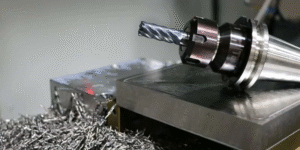
End mills share similarities with drill bits but offer far greater versatility. They typically possess between two and eight sharp flutes on their ends and sides. This design enables them to remove substantial amounts of material quickly. An end mill is the preferred tool for cutting straight down into a material without requiring a pre-drilled pilot hole.
Many varieties of end mills exist. Roughing end mills are particularly common. These tools feature up to eight serrated flutes. The serrations allow for even greater material removal rates compared to standard end mills. They efficiently prepare workpieces for finer finishing operations.

Face Mills
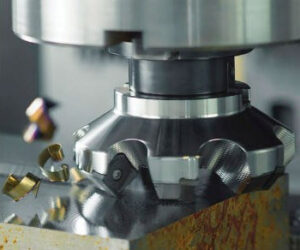
Workpiece preparation often precedes major milling operations. Face mills are specialized cutting tools designed to create flat surfaces on a workpiece. This pre-milling step ensures a stable foundation for subsequent detailed cutting. A face mill incorporates a solid body and multiple interchangeable cutter inserts. Operators can easily swap these inserts as needed.
For more complex and demanding operations, manufacturers often utilize “side and face cutters.” These tools enable cutting grooves or slots while simultaneously machining the sidewalls of the workpiece. They offer enhanced capabilities for intricate profiling.

Reamers
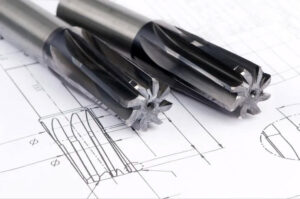
Achieving precise hole dimensions requires careful tool selection. If you need a 1/2-inch hole, directly using a 1/2-inch drill bit will likely result in an oversized hole. A better approach involves starting with a slightly smaller drill bit, such as a 31/64-inch bit.
Then, a reamer precisely widens the hole to the desired 1/2-inch dimension. Reamers are indispensable for expanding existing holes while maintaining exceptional dimensional accuracy and tight tolerances.

Gear Cutters
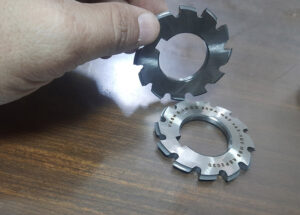
As their name suggests, gear cutters specifically fabricate gears for various industries. They produce a wide range of gear types. These include spur, bevel, worm, screw, and helical gears. Gear cutters are essential for applications requiring precise rotational motion transmission.

Hollow Mills
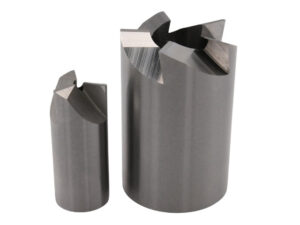
Hollow mills are pipe-shaped cutting tools. They feature three or more cutting edges. These edges enclose and revolve around a cylindrical workpiece. This design allows for rapid and efficient creation of consistent pre-thread diameters. They also prove useful in drill press applications for finishing projections that require a specific position.

Thread Mills
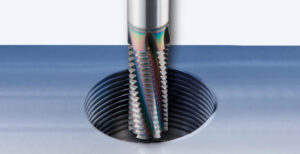
Thread mills are CNC cutting tools explicitly designed for cutting threads. They perform a similar function to taps. However, unlike taps, which cut only internal threads, thread mills on CNC machines cut both internal and external threads. Thread mills are an excellent choice for penetrating hard metals or machining asymmetrical parts. They offer flexibility in thread creation.

Slab Mills
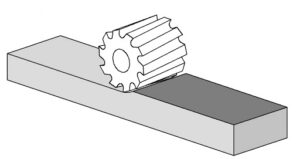
Slab mills, also known as slab cutters or plain mills, are used for cutting flat surfaces. These cutters typically have teeth only on their periphery. They efficiently create wide and narrow cuts quickly. Slab mills are ideal for operations requiring rapid material removal over broad areas.

Fly Cutters
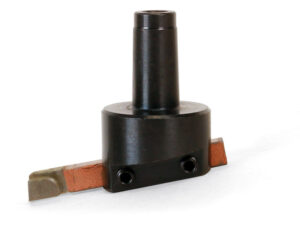
Fly cutters are single-point rotary tools. They make broad or shallow cuts and produce exceptionally smooth surface finishes. Compared to most face mills, fly cutters are often more affordable. They also deliver superior surface quality. Fly cutters are the go-to tool for plane surfacing operations where a fine finish is critical.

Materials Used in CNC Cutting Tools
The performance and durability of CNC cutting tools depend significantly on the materials from which they are constructed. Different materials offer varying degrees of hardness, heat resistance, and wear resistance.
- Acciaio al carbonio: This steel alloy contains up to 1% carbon and up to 1.6% manganese by weight. Carbon steel cutting tools are cost-effective and offer good machinability. They are suitable for low-speed CNC machining of soft metals like aluminum, brass, and magnesium.
- High-Speed Steel (HSS): HSS is carbon steel alloyed with elements such as molybdenum, tungsten, chromium, cobalt, and vanadium. These alloying elements impart high temperature and abrasion resistance, along with enhanced durability. HSS cutting tools are ideal for continuous high-speed cutting of both ferrous and nonferrous metals.
- Carbide: Carbide consists of a combination of carbon and tungsten. Carbide cutting tools exhibit excellent resistance to heat, rust, and scratches. They significantly outlast steel cutting tools in extreme machining conditions, offering superior longevity and performance.
- Ceramic: Ceramic cutting tools provide exceptional heat and corrosion resistance. They are also chemically stable, as ceramic does not react with most workpiece metals. Ceramic tools offer high cutting efficiency. They are ideal for high-speed semi-finishing and final finishing of hard steels, cast iron, and superalloys.
Conclusione
The accuracy and versatility of CNC machines are undeniably linked to the sophisticated array of cutting tools at their disposal. Each tool, from the fundamental drill bit to the specialized gear cutter, plays a crucial role in shaping raw materials into precisely engineered components. Understanding these tools—their designs, functions, and the materials from which they are made—empowers manufacturers to optimize their CNC operations. This knowledge ensures efficient production, adherence to tight tolerances, and the achievement of desired surface finishes. By carefully selecting the appropriate CNC machining tools, businesses can unlock the full potential of their CNC systems and produce high-quality parts for a multitude of industries.
Commenti
Ultimi messaggi

Blog correlati
Il blog di Senyo è incentrato sulla condivisione della nostra vasta conoscenza della produzione di prototipi. Attraverso i nostri articoli, ci proponiamo di aiutarvi a perfezionare il vostro progetto di prodotto e a navigare più efficacemente nelle complessità della prototipazione rapida.