Crafting Marks: A Precisão da Tecnologia de Fresagem CNC de Texto
Tabela de Conteúdo
Conclusão
Tired of fleeting labels or temporary stamps? Text milling technology offers a superior solution. It allows manufacturers to embed highly precise, permanent markings directly onto workpieces. This process enables the effortless creation of intricate designs and logos on various components. This article delves into the fundamentals of this advanced manufacturing technique, exploring its applications and related aspects.
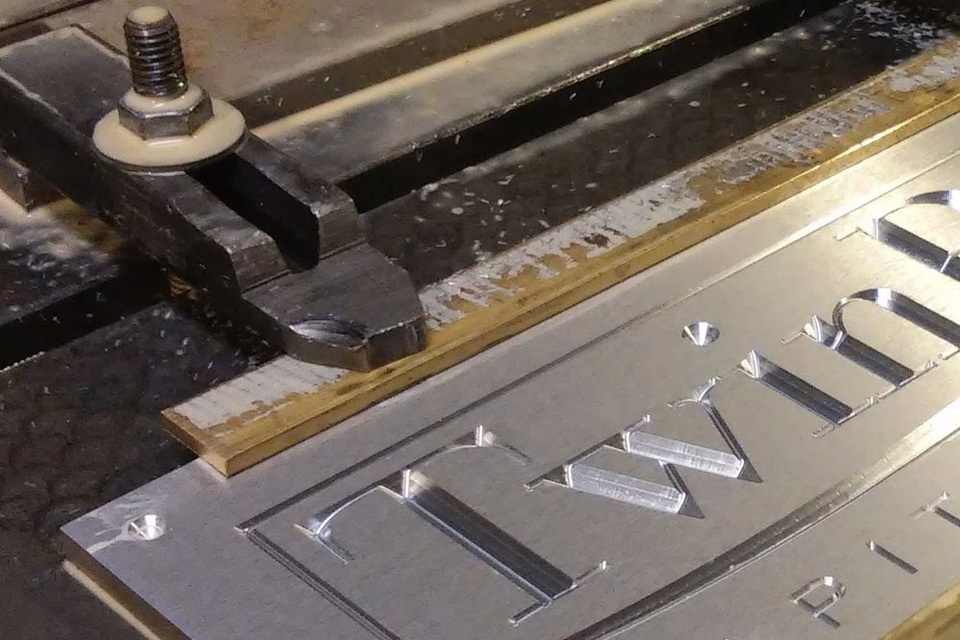
The Essence of Text Milling in CNC Engraving
CNC, or Computer Numerical Control, stands as a keystone of contemporary commercial machining. It facilitates the production of elaborate shapes and parts with exceptional precision. Amongst its myriad capacities, text milling differentiates itself by enabling the accurate and reliable development of logo designs, serial numbers, and attractive styles. Its computer-driven nature warranties precise, tidy, and enduring results, setting it apart from less advanced techniques.
Specifying CNC Text Engraving
Have you ever pondered the method behind the permanent logos and messages etched onto numerous products? Allow’s explore the underlying mechanism.
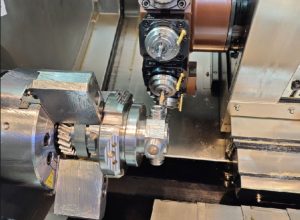
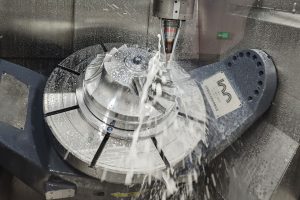
CNC machining begins with a computer interpreting a photo or textual data. It translates this information right into vector geometry. As opposed to simply duplicating the input, the computer system changes it right into fundamental lines and forms– vectors. These vectors function as a specific map, assisting the reducing tool’s movement. The tool then thoroughly engraves the layout, text, or logo design onto the workpiece, making certain both high accuracy and lasting durability.
Typical Applications of Machined Part Engraving
We regularly come across numbers, logos, and training notes diligently inscribed on varied components in our lives. These markings are not simply ornamental; they serve essential features such as branding, recognition, and operational support. Think about the universality of brand name logos on electronic gadgets or serial numbers on industrial machinery.
The Importance of Text Milling
Logo designs, identification numbers, and brand imbue every item with an unique identity. An iPhone, no matter its area, quickly determines itself via its distinctive markings. These inscriptions are critical for brand name acknowledgment and product distinction. Text milling as a result stands for a vital device in modern production, allowing companies to develop and keep their special market presence.
Engraving Text, Numbers, and Logos
CNC text milling equipments utilize particular programming codes customized to the style type– be it message, numbers, or complicated logos. Whether the style is simple or elaborate, the inherent accuracy of CNC text milling machines makes certain exceptional accuracy and consistency in the completed item.
Text Milling vs. Other Engraving Methods
This section explores alternative text engraving techniques and highlights when to prioritize text milling.
Alternative Methods for Engraving Text and Logos
Laser engraving and manual stamping represent common methods for imprinting logos and text onto workpieces. We will discuss both in detail.
Laser Engraving Text
Laser technology offers an established and durable method for engraving text onto components. This process utilizes a high-energy, focused laser beam directed at the workpiece. The laser’s intense energy vaporizes the surface material, thereby creating the desired text. This method excels in detail and speed for certain applications.
Manual Stamped Text
Manual stamping involves imprinting text into a workpiece using a hammer or a steel die press. This traditional method proves cost-effective. However, it is best suited for applications where high precision is not paramount and the workpiece possesses sufficient strength to withstand the stamping force.
The Limitations of Labels
Labels, essentially stickers, offer a temporary solution for marking machines or components. Operational conditions, such as high temperatures and vibrations, cause these stickers to degrade and fall off over time. This makes them unsuitable for permanent identification or critical information.
Choosing Between Milling and Laser for Part Marking
The optimal choice between text milling and laser processing hinges on the specific application and the operational environment of the part. For durable, highly accurate markings that must withstand harsh conditions, text milling is the preferred method.
Lasers offer a balance of cost-effectiveness and precision, making them suitable for applications where this trade-off is acceptable. Manual stamping, while sacrificing precision, provides the most economical marking solution when minimal accuracy suffices.
Advantages and Disadvantages of Text Milling
| Desempenho | Shortcoming |
|---|---|
| Provides integrated completion. | Requires a skilled CAM programmer for operation. |
| Leaves a lasting mark on the workpiece. | Significantly increases production time and costs. |
| Fully automated processes ensure consistency. | Not suitable for very hard or already finished surfaces. |
| Achieves high accuracy for text. | Requires expensive, specialized tools. |
Text Milling for Metal and Plastic Parts
Metals and plastics exhibit distinct chemical, physical, and mechanical properties. Consequently, text milling approaches differ significantly for these material categories.
Adding Text to Metal Parts
Metals like aluminum, stainless steel, and titanium possess high strength and durability. Engraving text on these parts necessitates high spindle speeds. Moreover, operators must meticulously control the depth of cut to prevent material breakage and loss. Achieving crisp, clear text on robust metals demands precise machine control and appropriate tooling.
Adding Text to Plastic Parts
Text milling plastic parts presents unique challenges and considerations. Common plastics such as polyvinyl chloride (PVC) and acrylonitrile butadiene styrene (ABS) are relatively easy to cut due to their lower melting points. However, excessive processing temperatures can induce cracking or deformation in plastic components. Therefore, careful management of cutting parameters is crucial.
Design Principles for Machined Part Text
Understanding fundamental text design principles is essential for effective engraving.
Relief Modes: Raised and Sunken
- Raised Text: For easily readable, wear-resistant text, raised designs are an excellent choice. This method involves removing material around the text, leaving the letters elevated.
- Intaglio Engraving (Sunken Text): When cost-effectiveness and fine detail are priorities, intaglio engraving proves ideal. This method engraves the letters directly into the material. Intaglio engraving generally conserves more material compared to raised text.
Path Type: Centerline vs. Contour
Centerline Engraving
This method suits smaller text, often used for serial numbers and codes. In centerline engraving, the tool traces the center of the text lines, much like a pen.
Contour Engraving
Employ contour engraving when the design demands sharper, more pronounced text. Here, the tool cuts along the periphery of the logo, text, or shape, defining its contours.
Minimum Feature Size for Readable Letters
Consider these size parameters for optimal text legibility:
Character Height Guidelines
For clear visibility, letters on the workpiece should possess a minimum height of 2.5 mm. Smaller characters may become illegible, especially under varying lighting conditions or at a distance.
Line Width and Tool Diameter
The ratio between the desired line width and the tool diameter directly impacts the tool’s ability to achieve the intended shape. Using a tool diameter approximately half of the expected line width often yields excellent readability.
Structural Safety Tips for Text Placement
Exercise caution when engraving text on parts, as improper placement can introduce weak points and compromise structural integrity. Adhere to these structural safety guidelines:
- Depth Limit: Never engrave text deeper than 10% of the component’s total thickness.
- Edge Clearance: Avoid placing text too close to edges. Even minor loads in these areas can cause material fracture.
- Uniformity: Maintain a consistent letter depth across the entire piece for structural stability.
- Stress Flow: Do not engrave text in high-stress areas that could degrade the material’s structural integrity.
Note for Post-processing: Always perform engraving before any surface treatment. Engraving after treatment can damage coatings or paint layers.
Selecting Fonts for CNC Text Milling
This section guides you through appropriate font selection for CNC text.
Monoline Fonts for Engraving
When dealing with small text and time constraints, single-line (monoline) fonts are optimal. Their reduced tool path length makes them a quick and efficient choice for text inscription.
TrueType to Vector Conversion
Convert TrueType fonts to vectors to ensure clear rendering of complex text on components. Design programs facilitate this essential conversion.
Monospaced Fonts for Serial Numbers
For serial numbers and codes, monospaced fonts are recommended. Their consistent character width enhances readability and consistency.
CJK Support and Special Symbols
CJK (Chinese, Japanese, Korean) symbols and other specialized characters become crucial when products are intended for export to or use in these regions. Ensure your software and process support these character sets.
Stick Font Sources
Many CNC libraries offer stick fonts, which are optimized for single-line engraving and provide a streamlined solution for text creation.
Text-to-G-code CAM Workflow
This section outlines the complete workflow for text engraving, from CAM software to G-code generation.
Step 1: Create a Text Sketch
Begin by sketching the desired text within CAD software. Ensure correct letter composition and placement during this initial design phase.
Step 2: Vectorize the Font
Next, import the design into CAM software. Convert the text into vectors. This step allows the CAM software to generate the necessary tool paths for CNC engraving.
Step 3: Select Tool Path
CNC engraving typically employs two primary tool path strategies: carving or pocketing. The choice depends on the specific design requirements of your part. Carving follows lines, while pocketing removes material within a defined area.
Step 4: Define Cutting Data
Set the parameters for text engraving. Consider these critical variables:
- Feed Speed: The rate at which the cutting tool moves through the material.
- Spindle Speed: The rotation speed of the cutting tool.
- Cutting Depth: The depth of material removed with each pass.
Step 5: Simulate the Tool Path
Before actual machining, perform a simulation of the tool path. This identifies potential collisions, verifies tool movement, and ensures the accuracy of the programmed path.
Step 6: Post-processing, Verification, and Operation
In the final step, generate the G-code, the machine-readable instructions. Conduct a test run to confirm everything functions as expected. Finally, execute the job on the CNC machine.
Text Milling Materials and Surface Finishes
Different materials react uniquely to text milling. Some are easily machinable, while others present significant challenges. This section explores the characteristics of various materials in text milling.
Metals: Aluminum, Steel, Titanium
Most metals, such as aluminum and stainless steel, offer vibrant natural colors. Engraving on them often creates excellent contrast, enhancing text visibility over time. However, very durable and hard materials, like titanium, prove challenging to machine, making intricate engraving more difficult.
Plastics: ABS, PC, Acrylic
Plastics like ABS, PC (polycarbonate), and acrylic are generally easy to machine. However, excessive tool speeds or heat can compromise the plastic’s structural integrity, leading to deformation or cracking.
Other Material Options
Composite materials, for instance, often cause greater tool wear than metals and plastics during text milling. This necessitates careful tool selection and parameter adjustment.
Surface Finish After Text Milling
É sempre uma boa prática fresar o texto antes de aplicar qualquer tratamento de superfície. Gravar texto após o tratamento de superfície pode danificar revestimentos ou tintas existentes. Por outro lado, aplicar um tratamento de superfície após a gravação pode melhorar a legibilidade e o apelo estético do texto gravado.
Compatibilidade com tinta, pó e anodização
| Processo | Métodos e instruções |
|---|---|
| Anodização | Sempre execute a anodização após gravação. A camada anodizada é uma superfície dura. Usinar através dela expõe o metal desprotegido, destruindo o acabamento da superfície e a resistência à corrosão. |
| Tintas e revestimentos em pó | A gravação após o revestimento pode criar um efeito de contraste, revelando a cor original do metal por baixo. Se você deseja que o texto seja preenchido e corresponda à cor do revestimento, você deve gravá-lo antes de aplicando a tinta ou revestimento em pó. |
Software gratuito de gravação de texto CNC
Se você está procurando software gratuito para fresagem de texto, esta seção fornece recursos valiosos.
Opções de software de gravação CNC gratuitas
Esta seção apresenta software gratuito para design de fontes vetoriais e programação CAM.
- Software de design de fontes vetoriais: Para projetar fontes vetoriais e gerar saída de código G, considere usar o Inkscape em conjunto com sua extensão Gcodetools.
- Software de programação CAM: O Fusion 360 oferece recursos de esboço adequados para design de texto, com uma licença gratuita para uso pessoal.
Opções de pagamento escalonadas
Soluções de software pagas, como o VCarve Pro, oferecem recursos estendidos e precisão aprimorada. O Mastercam oferece uma solução de ponta para programação CNC avançada e requisitos de fresagem de texto.
Senyorapid: Seu parceiro para fresagem de texto integrada em peças usinadas
Considere a gravação de texto não como um complemento opcional, mas como um elemento crítico que eleva o reconhecimento do produto e a identidade da marca. A Senyorapid, uma empresa de manufatura líder, oferece serviços de gravação de texto de alta precisão. Aproveitamos equipamentos de processamento avançados, incluindo máquinas CNC de última geração, para gravar texto com precisão e custo-benefício em uma ampla variedade de peças. Nossa experiência garante qualidade estética e longevidade funcional.
Conclusão
A fresagem de texto tem imensa importância no setor industrial. Ele aprimora significativamente o reconhecimento do produto, permitindo a gravação precisa de texto e logotipos em componentes. Os fabricantes podem escolher entre vários métodos de gravação, desde estampagem manual econômica até gravação de texto CNC de alta precisão, dependendo da aplicação específica e do resultado desejado. Esta tecnologia garante marcações permanentes, claras e profissionais, cruciais para branding, identificação e diferenciação de produtos em um mercado competitivo.
Perguntas frequentes
Quais materiais são melhores para fresagem de texto?
Materiais que exibem boa ductilidade, como alumínio e aço macio, são geralmente adequados para fresagem de texto. Materiais quebradiços representam maiores desafios para a gravação.
Quão profundo deve ser o texto CNC?
A profundidade do texto gravado em peças processadas idealmente não deve exceder 1% da espessura total da peça para manter a integridade estrutural.
Comentários
Posts Mais Recentes
Blogs Relacionados
Senyo o blog é focado em compartilhar o nosso conhecimento extensivo de protótipo de fabricação. Através de nossos artigos, temos o objetivo de apoiar a refinar seu design de produto e navegação do complexidades de prototipagem rápida, mais eficaz.