Посібник із сучасних процесів виробництва пластмас
Зміст
Пластмаси є основними матеріалами в сучасному виробництві. Вони створюють основу для численних продуктів кінцевого використання, від медичних пристроїв, що рятують життя, до повсякденних товарів тривалого користування. Світ пластмас пропонує тисячі полімерних альтернатив, кожна з яких пропонує особливі механічні та естетичні властивості. Ця гнучкість, однак, піднімає важливе питання для дизайнерів та інженерів: який найкращий спосіб перетворити пластиковий матеріал на готовий компонент?
Існує широкий спектр процесів виготовлення пластмас, які відповідають різноманітним застосуванням, геометрії деталей та типам матеріалів. Розуміння цих варіантів є важливим для будь-кого, хто бере участь у розробці продукту. Обґрунтований вибір може значно зменшити витрати, скоротити підготовку та покращити якість кінцевого продукту. Цей вичерпний посібник досліджує найпоширеніші сьогодні технології виготовлення пластмас. Ми надамо чіткі вказівки, які допоможуть вам вибрати ідеальний процес для вашого конкретного застосування, гарантуючи, що ваше завдання перейде від ідеї до реальності з ефективністю та точністю.
Як вибрати правильний процес виробництва пластмас
Вибір оптимального виробничого процесу вимагає продуманої оцінки конкретних потреб вашого проекту. Перш ніж віддавати перевагу технології, інженер повинен врахувати ряд важливих елементів. Ми рекомендуємо вам оцінити наступні аспекти, щоб зробити обґрунтований вибір.
- Геометрія та форма компонента: Чи містить макет вашого компонента складні внутрішні функції? Чи потрібні надзвичайно жорсткі опори? Геометрія вашого дизайну значною мірою впливає на ваші виробничі альтернативи. Деякі процеси чудово підходять для розробки детальних форм, тоді як інші обмежуються простішими типами. Складні макети можуть також потребувати значних коригувань Design for Manufacturing (DFM) для економічного створення.
- Обсяг виробництва та вартість: Скільки деталей ви плануєте виготовити, як спочатку, так і щорічно? Певні методи виготовлення пластмас, такі як лиття під тиском, мають високі початкові витрати на інструменти, але виробляють деталі за дуже низькою вартістю за одиницю. Це робить їх оптимальними для автоматизації. Навпаки, такі процеси, як 3D-друк, мають дуже незначні витрати на налаштування, однак ціна за деталь залишається відносно високою, що робить їх ідеальними для дрібносерійного виробництва та прототипування.
- Час виконання замовлення: Як швидко вам потрібні готові деталі? Деякі процеси можуть доставити перший прототип протягом 24 годин. Інші, особливо ті, що вимагають виготовлення інструментів, можуть зайняти тижні або навіть місяці, перш ніж буде виготовлено перший компонент. Хронологія вашої роботи, безумовно, буде визначальним фактором.
- Вимоги до матеріалів: Які функціональні та екологічні навантаження повинен витримувати ваш продукт? Ідеальний матеріал залежить від балансу факторів, включаючи міцність, гнучкість, термостійкість, хімічну стійкість і зовнішній вигляд. Вам потрібно оцінити бажані функції відповідно до матеріалів, доступних для даного виробничого процесу.
Розуміння двох основних типів пластмас
Пластмаси широко поділяються на дві основні родини: термопласти та термореактивні. Їх основна відмінність полягає в тому, як вони реагують на тепло, що визначає, які процеси виготовлення пластмас підходять для них.
Термопласти
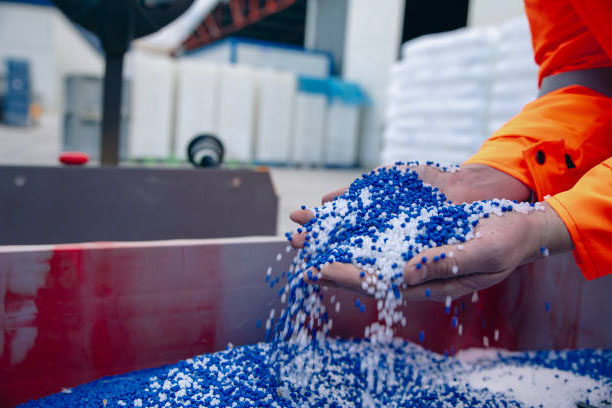
Термопласти є найпоширенішим типом пластику, який використовується у виробництві. Їх визначальною характеристикою є здатність плавитися, тверднути, а потім знову плавитися без значної хімічної деградації. Ця властивість робить їх придатними для переробки та повторного використання. Виробники зазвичай постачають термопласти у вигляді невеликих гранул або листів. Вони нагрівають матеріал до пластичного стану, а потім формують його в потрібну форму. Цей процес є повністю фізичним і оборотним.
Звичайні термопластичні матеріали:
- Акрилонітрилбутадієнстирол (ABS)
- Полікарбонат (PC)
- Поліпропілен (PP)
- Поліетилен (PE)
- Поліамід (PA / Нейлон)
- Полімолочна кислота (PLA)
- Полівінілхлорид (ПВХ)
- Поліефір ефір кетон (PEEK)
Термореактивні пластмаси
Термореактивні пластмаси, або термореактиви, поводяться інакше. Після затвердіння вони залишаються в постійному твердому стані. Під час процесу затвердіння, викликаного теплом, світлом або хімічною реакцією, полімери зшиваються, утворюючи незворотний хімічний зв’язок. Якщо ви повторно нагрієте термореактивний пластик, він розкладеться та згорить, а не розплавиться. Це означає, що ви не можете переформувати або переробити термореактиви так само, як термопласти.
Поширені термореактивні матеріали:
- Епоксидна смола
- Силікон
- Поліуретан
- Поліестер
- Вулканізована гума
- Ціанатний ефір
| Особливість | Термопласти | Термореактивні пластмаси (термореактиви) |
|---|---|---|
| Реакція на тепло | Розм'якшується при нагріванні, твердне при охолодженні. Оборотний. | Затвердіває і твердне назавжди під впливом тепла. Необоротний. |
| Молекулярна структура | Довголанцюгові полімери зі слабкими міжмолекулярними силами. | Полімери утворюють жорстку, зшиту 3D мережу. |
| Придатність до вторинної переробки | Дуже придатний для переробки. Можна розплавити та переформувати. | Зазвичай не підлягає переробці шляхом плавлення. |
| Механічні властивості | Часто більш гнучкий і ударостійкий. | Зазвичай більш жорсткий, стабільний і термостійкий. |
| Загальні процеси | Лиття під тиском, 3D-друк (FDM), екструзія. | Полімерне лиття, реакційне лиття під тиском. |
| Типові області Застосування | Споживчі товари, упаковка, труби, контейнери. | Клеї, покриття, електричні компоненти, деталі, що нагріваються. |
Ключові процеси виробництва пластмас пояснено
Тут ми детально описуємо вісім найважливіших технологій виробництва пластмас, які використовуються в промисловості сьогодні.
1. 3D-друк (Адитивне виробництво)
3D-принтери створюють тривимірні деталі безпосередньо з CAD-файлів. Процес працює шляхом додавання матеріалу шар за шаром, доки кінцевий об’єкт не буде завершено. Цей адитивний підхід різко контрастує з традиційними субтрактивними методами.
Процес:
- Налаштування друку: Оператор використовує спеціалізоване програмне забезпечення для орієнтування цифрової моделі у віртуальному просторі побудови. Потім програмне забезпечення розрізає модель на тонкі горизонтальні шари та генерує траєкторію інструменту для принтера. За потреби програмне забезпечення додає структури підтримки.
- Друк: Принтер виконує траєкторію інструменту шар за шаром. Конкретна технологія визначає, як він додає матеріал. Моделювання методом наплавлення (FDM) екструдує розплавлену пластикову нитку. Стереолітографія (SLA) використовує лазер для затвердіння рідкої фотополімерної смоли. Селективне лазерне спікання (SLS) використовує лазер для з’єднання порошкоподібного пластику.
- Пост-обробка: Після друку оператор знімає деталь з принтера. Залежно від технології, деталь може потребувати очищення, промивання та пост-затвердіння для досягнення її кінцевих властивостей. Потім оператор видаляє будь-які структури підтримки.
3D-друк усуває потребу в інструментах, що значно скорочує час налаштування та витрати на виготовлення деталей на замовлення. Однак, як правило, це повільніше та трудомісткіше на деталь, ніж методи масового виробництва. З розвитком технологій її економічна ефективність покращується, що робить її життєздатною для виробничих циклів від низького до середнього обсягу.
| 3D-друк | |
|---|---|
| Свобода форми | Високий |
| Час виконання замовлення | < 24 години |
| Вартість налаштування | $ |
| Вартість за деталь | $$$ |
| Ідеальний обсяг | ~1 – 1000 деталей |
| Звичайні матеріали | Термопласти (нейлон, ABS, PLA), термореактивні смоли |
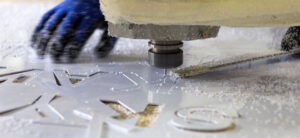
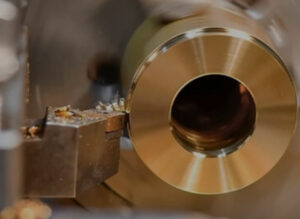
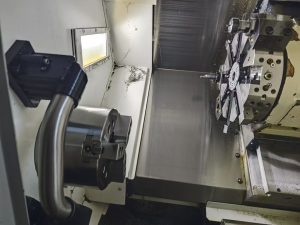
Обробка з ЧПК (комп’ютерне числове керування) — це субтрактивний виробничий процес. Він використовує інструменти з комп’ютерним керуванням, такі як фрезерні верстати, токарні верстати та шліфувальні машини, щоб вибірково видаляти матеріал із твердого блоку пластику чи металу, відомого як заготовка.
Процес:
- Job Setup: A programmer first converts a CAD model into a CAM (Computer-Aided Manufacturing) file. This file contains toolpaths that direct the cutting tools’ movements and speeds.
- Machining: The operator sends the toolpaths to the CNC machine. For milling, a spinning tool removes material from a fixed workpiece. For turning on a lathe, the workpiece spins against a fixed cutting tool.
- Пост-обробка: Once machining is complete, the operator cleans the part, deburrs sharp edges, and trims away any excess material.
CNC machining is ideal for producing low-volume plastic parts with very tight tolerances and geometries that are difficult to mold. It excels at creating prototypes and functional end-use parts like gears and fixtures. While setup costs are moderate, part complexity can significantly increase machining time and cost.
| Обробка на верстатах з ЧПК | |
|---|---|
| Свобода форми | Середній |
| Час виконання замовлення | < 24 години |
| Вартість налаштування | $$ |
| Вартість за деталь | $$$$ |
| Ідеальний обсяг | ~1 – 5,000 parts |
| Звичайні матеріали | Most rigid plastics (PC, POM, PEEK, Nylon, ABS) |
3. Polymer Casting
Polymer casting involves pouring a liquid reactive resin or rubber into a mold. The material then undergoes a chemical reaction and solidifies into the final part.
Процес:
- Mold Preparation: An operator applies a release agent to the mold’s interior surfaces to prevent the part from sticking. Sometimes, they preheat the mold to a specific temperature.
- Casting: The operator mixes a synthetic resin with a curing agent and pours or injects it into the mold cavity.
- Curing: The material cures inside the mold until it solidifies. Applying heat can accelerate this process for certain polymers.
- De-molding: The operator opens the mold and carefully removes the cured part.
- Trimming: Finally, the operator cuts or sands away any artifacts like flash or sprues.
Molds for polymer casting, often made from RTV silicone rubber, are inexpensive compared to the hard steel tools used in injection molding. This makes the process excellent for prototyping and short production runs. However, thermoset casting resins are often more expensive than thermoplastics, and the process is labor-intensive, resulting in a higher cost per part.
| Polymer Casting | |
|---|---|
| Свобода форми | Високий |
| Час виконання замовлення | 1 – 3 days |
| Вартість налаштування | $ |
| Вартість за деталь | $$ |
| Ідеальний обсяг | ~1 – 1000 деталей |
| Звичайні матеріали | Polyurethane, Epoxy, Silicone, Acrylic |
4. Rotational Molding
Rotational molding, or rotomolding, is a unique process for creating large, hollow plastic objects. It involves heating a hollow mold filled with powdered plastic while rotating it on two axes.
Процес:
- Charging: An operator loads a measured amount of plastic powder into the mold cavity and closes it securely.
- Опалення: The mold is placed in an oven and rotated along two perpendicular axes. The heat melts the powder, which tumbles and coats the mold’s interior walls.
- Охолодження: The mold continues to rotate as it cools slowly. This ensures the plastic skin solidifies evenly without sagging.
- Видалення частин: Once cool, the operator opens the mold and removes the finished hollow part.
Rotomolding uses centrifugal force, not pressure, so its tooling can be made from less expensive materials like aluminum. This keeps setup costs relatively low. The process is perfect for producing items like tanks, kayaks, and large containers. Its main limitations are long cycle times and looser tolerances compared to other molding methods.
| Ротаційне формування | |
|---|---|
| Свобода форми | Medium (ideal for large hollow parts) |
| Час виконання замовлення | Days to weeks |
| Вартість налаштування | $$$ |
| Вартість за деталь | $$ |
| Ідеальний обсяг | ~200 – 5,000 parts |
| Звичайні матеріали | Polyethylene (PE), Polypropylene (PP), PVC, Nylon |
Vacuum forming is a type of thermoforming where a sheet of heated plastic is draped over a mold and a vacuum pulls it into shape.
Процес:
- Затискаю: A machine clamps a sheet of plastic into a frame.
- Опалення: Heating elements warm the sheet until it becomes soft and pliable.
- Vacuum: The frame lowers the softened sheet over a mold. A vacuum pump then activates, sucking out the air between the sheet and the mold, forcing the plastic to conform to the mold’s shape.
- Cooling and Release: The formed part cools and solidifies. Fans or a fine water mist can speed up this stage.
- Trimming: The operator removes the part from the mold and trims away excess material.
Tooling for vacuum forming is very cost-effective since the process involves low pressures. This makes it suitable for everything from one-off prototypes to mass production. However, it is limited to creating parts with relatively simple geometries and thin walls, such as packaging, trays, and automotive liners.
| Vacuum Forming | |
|---|---|
| Свобода форми | Limited (simple, thin-walled parts) |
| Час виконання замовлення | Hours to weeks |
| Вартість налаштування | $-$$$$ |
| Вартість за деталь | $-$$$ |
| Ідеальний обсяг | Any volume |
| Звичайні матеріали | ABS, PETG, Polystyrene (PS), PC, PP, PVC |
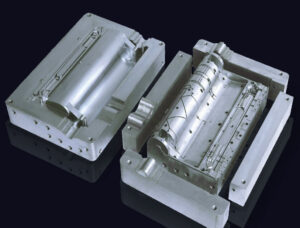
Injection molding is the dominant process for mass-producing plastic parts. It works by injecting molten thermoplastic material at high pressure into a precisely machined mold.
Процес:
- Mold Setup: The two halves of a steel mold are closed by a powerful hydraulic press.
- Ін'єкція: A large screw melts plastic pellets and forces the molten material forward. The machine then injects this material into the mold cavity at high pressure.
- Cooling and Release: The plastic cools and solidifies inside the mold. Once it is solid, the mold opens, and ejector pins push the part out.
- Пост-обробка: The system often automatically removes sprues and runners (channels that guide the plastic) as the mold opens.
Injection molding can produce highly complex parts with excellent repeatability. However, the molds themselves are extremely expensive and can take months to create. This high initial investment is only justified by very high production volumes, where the per-part cost becomes incredibly low.
| Лиття під тиском | |
|---|---|
| Свобода форми | Високий |
| Час виконання замовлення | 2 – 4 months (for tooling) |
| Вартість налаштування | $$$$$ |
| Вартість за деталь | $ |
| Ідеальний обсяг | 5,000+ parts |
| Звичайні матеріали | Almost any thermoplastic (ABS, PP, PC, PA, etc.) |
7. Extrusion
Extrusion creates objects with a fixed cross-sectional profile. The process works by pushing molten plastic through a shaped die.
Процес:
- Plasticating: A screw melts and conveys plastic pellets through a heated barrel.
- Лиття: The screw forces the molten plastic through a die. The shape of the die opening determines the profile of the final part.
- Охолодження: The extruded plastic profile emerges from the die and is cooled, often in a water bath.
- Ріжу: The continuous shape is then cut into desired lengths or coiled onto a spool.
Extrusion is a highly efficient, continuous process with relatively low tooling costs compared to injection molding. It is limited to producing linear, two-dimensional shapes. Common applications include pipes, tubing, window frames, and weather stripping.
| Екструзія | |
|---|---|
| Свобода форми | Limited (continuous linear profiles) |
| Час виконання замовлення | Weeks |
| Вартість налаштування | $$$ |
| Вартість за деталь | $ |
| Ідеальний обсяг | 1,000+ parts |
| Звичайні матеріали | PVC, PP, PE, ABS, Polystyrene |
8. Blow Molding
Blow molding is a technique for creating hollow plastic parts, most notably bottles and containers. It works by inflating a heated plastic tube inside a mold cavity.
Процес:
- Parison Creation: A machine melts plastic pellets and extrudes them into a hollow tube called a parison.
- Лиття: A mold closes around the parison, pinching one end shut. Pressurized air is then blown into the parison, inflating it like a balloon until it presses against the cold mold walls.
- Cooling and Release: The part cools and solidifies. The mold then opens and ejects the finished product.
Blow molding uses lower pressures than injection molding, which helps keep tooling costs moderate. As a continuous, automated process, it can achieve very high production rates and an extremely low cost per unit. It is the go-to method for manufacturing bottles, fuel tanks, and other hollow items at scale.
| Видувне формування | |
|---|---|
| Свобода форми | Limited (hollow, thin-walled parts) |
| Час виконання замовлення | Weeks |
| Вартість налаштування | $$$$ |
| Вартість за деталь | $ |
| Ідеальний обсяг | 5,000+ parts |
| Звичайні матеріали | Polyethylene Terephthalate (PET), PP, PVC, PE |
Critical Quality Control Considerations
Achieving success in plastics producing depends not only on selecting the best procedure however likewise on applying strenuous quality assurance. Regardless of the method, you have to verify that the ended up parts satisfy the required requirements. Secret locations of emphasis include dimensional accuracy, product properties, and aesthetic coating. Makers make use of precision devices like electronic calipers, micrometers, and Coordinate Measuring Machines (CMMs) to validate that part dimensions are within the specified tolerances.
Additionally, it is frequently needed to perform functional examinations. Product screening can validate properties like tensile stamina, solidity, and impact resistance to make sure the part will certainly do correctly under tension. Aesthetic inspection is additionally important, especially for consumer-facing products. This includes monitoring for surface flaws like sink marks or flash, verifying color uniformity versus a criterion, and ensuring the surface coating satisfies the layout needs. A durable quality control strategy makes certain consistency and integrity from the initial component to the last.
Висновок
The field of plastics manufacturing is dynamic and diverse, offering a solution for nearly any design challenge. Each process, from the rapid versatility of 3D printing to the high-volume efficiency of injection molding, has a unique profile of strengths and weaknesses. The best choice always depends on a careful analysis of your project’s specific requirements for geometry, volume, speed, and material performance.
By understanding the fundamental principles of these core technologies, designers and engineers can make smarter decisions early in the development cycle. This knowledge empowers you to optimize your designs for manufacturing, reduce costs, and accelerate your time to market. As technology continues to evolve, the boundaries between these processes will shift, opening up new possibilities for innovation in how we create the plastic parts that shape our world.
For Reference
- Society of Plastics Engineers (SPE):
https://www.4spe.org/– A leading technical society for plastics professionals, providing valuable resources and industry information. - Plastics Industry Association (PLASTICS):
https://www.plasticsindustry.org/– An organization that supports the entire plastics supply chain, offering market data and advocacy. - UL Prospector (formerly IDES):
https://www.ulprospector.com/en/na/plastic– A comprehensive database for searching and comparing technical data sheets for thousands of plastic materials. - Autodesk’s Design for Manufacturing (DFM) Guide:
https://www.autodesk.com/products/fusion-360/blog/what-is-design-for-manufacturing-dfm/– An excellent resource for understanding DFM principles, which are critical for processes like injection molding.
Коментарі
Останні публікації
Пов'язані блоги
Блог Senyo зосереджений на тому, щоб поділитися нашими глибокими знаннями у сфері виробництва прототипів. За допомогою наших статей ми прагнемо допомогти вам удосконалити дизайн вашого продукту та ефективніше розібратися зі складнощами швидкого прототипування.