Prototypage rapide en métal : Des solutions rapides et précises pour la conception
Table des matières
Qu'est-ce que le moulage en uréthane ?
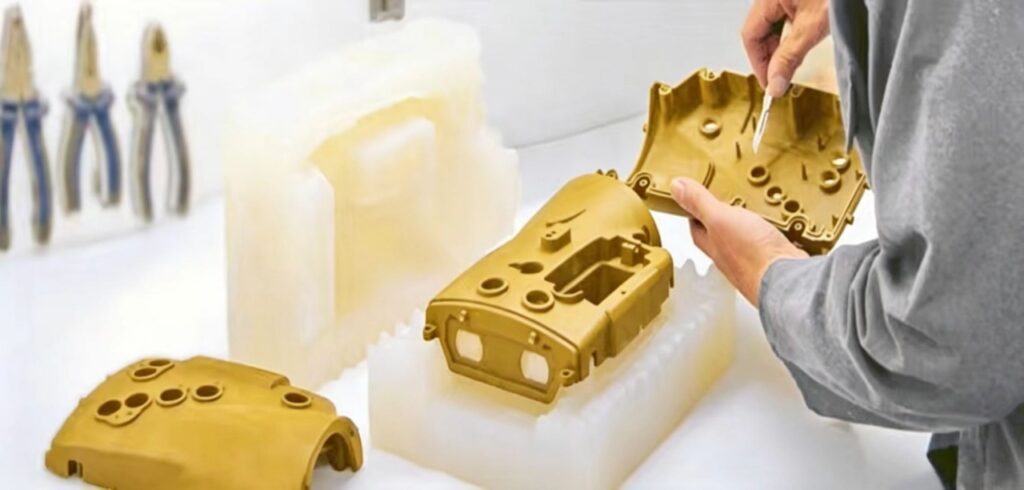
Le moulage sous vide (moulage en uréthane) est un procédé de fabrication utilisé pour produire de petits lots de pièces en plastique ou en caoutchouc à l'aide d'un moule en silicone et de résine de polyuréthane liquide.
Le principe est simple. On commence par réaliser un modèle maître. Ensuite, on crée un moule en silicone autour de ce modèle. Une fois le moule durci, on retire le modèle maître, on injecte le matériau liquide dans la cavité dentaire et on le polymérise sous vide ou sous pression contrôlée afin de limiter les bulles.
Le résultat est une copie très fidèle du master original.
Aux États-Unis, ce processus est communément appelé moulage en uréthane ou moulage en polyuréthaneEn Europe et en Asie, coulée sous vide est le terme le plus courant. Techniquement parlant, les trois noms désignent généralement la même famille de procédés.
Le moulage sous vide est particulièrement utile lorsqu'une équipe a besoin de composants dont l'aspect et le toucher sont proches de ceux des produits moulés par injection, mais ne souhaite pas encore investir dans des outillages en acier ou en aluminium léger.
Les utilisations courantes comprennent :
- Prototypes fonctionnels
- Versions d'affichage
- Dispositifs de démonstration capitalistes
- échantillons de salons professionnels
- Lots de test de marché
- Fabrication de ponts
- Immobilier pour dispositifs médicaux
- Pièces automobiles intérieures
- Salles électroniques clients
- Poignées, boutons et joints doux au toucher
- Lentilles claires et aperçus lumineux
- Articles sur mesure ou en édition limitée
Si vous avez besoin d'une formation fonctionnelle en fabrication pour des prototypes de haute qualité et des composants en petite série, un spécialiste est là pour vous aider. solution de coulée sous vide peut contribuer à réduire le temps de développement sans vous contraindre trop tôt à investir dans des outils coûteux.
Pourquoi le moulage en uréthane pose-t-il encore des problèmes dans la croissance des produits modernes ?
Il est tentant de supposer que Impression 3D a changé toutes les approches de prototypage standard. Ce n'est pas le cas.
Impression 3D est particulièrement performant pour les itérations rapides, les géométries complexes et les modèles uniques. Usinage CNC Elle est exceptionnelle lorsqu'on a besoin de résistances élevées et de matériaux de conception spécifique. Le moulage par injection est la solution idéale lorsqu'il faut des milliers, voire des millions de composants.
Le moulage en uréthane occupe l'espace précieux qui les sépare.
Elle offre aux groupes une méthode pour produire de petits lots de pièces avec :
- Des cosmétiques de meilleure qualité que beaucoup de pièces imprimées
- Coût d'outillage réduit par rapport au moulage par injection
- Une répétabilité supérieure aux prototypes fabriqués à la main
- Une polyvalence matérielle bien plus grande que ce que beaucoup anticipent
- Délais de production plus rapides qu'avec les outils de production standard
C’est pourquoi elle reste très présente dans les secteurs de l’automobile, de l’électronique grand public, de la robotique, des équipements industriels, des dispositifs médicaux et des studios de design de produits.
Le marché plus large de la fabrication rapide confirme également cette tendance. La fabrication additive continue de croître, mais de nombreuses entreprises l'utilisent désormais en complément de l'extrusion, de l'usinage CNC et du moulage, plutôt que comme une solution de substitution complète. IDTechEx prévoit que le marché des équipements et matériaux d'impression 3D atteindra… 49 milliards de dollars américains d'ici 2034, démontrant ainsi comment la fabrication électronique s'intègre aux processus de production courants et ne se limite plus au prototypage. Consultez les perspectives du marché dans IDTechEx.
En termes simples, les équipes produit les plus intelligentes ne se demandent pas : « Quel processus est idéal ? » Elles se demandent : « Quelle procédure est la meilleure pour cette étape ? »
Comment fonctionne le procédé de moulage en uréthane ?
Le moulage en uréthane est simple en théorie, mais exige un savoir-faire. De petites erreurs dans le modèle maître, la conception du moule, le système d'alimentation, le mélange de résine ou le durcissement peuvent affecter chaque pièce.
Voici le flux de travail typique.
1. Développer le modèle CAO
Le processus commence par une version 3D électronique. Les concepteurs développent généralement la pièce à l'aide de logiciels tels que SolidWorks, Combination 360, CATIA, Creo ou Siemens NX.
À ce stade, le style doit actuellement prendre en compte :
- densité de la surface de la paroi
- Angles de tirage
- Sous-coupes
- Employeurs et côtes
- Fonctions de configuration
- texture de surface
- Couleur et surface
- attentes en matière de tolérance
- Reste à savoir si ce style sera ultérieurement adapté au moulage par injection.
Si la pièce est destinée à la fabrication, il est judicieux de la concevoir dès le départ en tenant compte des contraintes de production. Un prototype moulé sous vide qui néglige ces contraintes peut paraître excellent, mais il ne vous apportera pas beaucoup d'informations sur la pièce finale.
2. Réalisez le patron principal
Le modèle maître est le modèle physique initial utilisé pour fabriquer le moule en silicone. La qualité de ce modèle maître détermine la qualité de chaque pièce moulée.
Les méthodes courantes du modèle maître consistent en :
- Impression 3D de bidonvilles
- Usinage CNC
- Impression PolyJet
- Impression SLS avec finition
- Maquettes finies à la main
- Duplication de pièces existantes
L'impression sur tissu est réputée pour sa capacité à produire des détails précis et des surfaces lisses. L'usinage CNC est généralement utilisé lorsque le client exige une précision dimensionnelle extrêmement élevée, un produit stable ou une finition de haute qualité.
C'est ici que usinage CNC de précision Elles jouent toujours un rôle important. De plus, dans les opérations contrôlées par fonderie et impression 3D, les matrices usinées CNC offrent une excellente précision, des arêtes vives, une planéité parfaite et des surfaces d'assemblage impeccables.
Si la rapidité du modèle est plus cruciale que la précision extrême du modèle maître, impression additive Il s'agit généralement du moyen le plus rapide d'obtenir un modèle maître ou une version très préliminaire du schéma.
3. Terminez le patron principal
Le moule en silicone reproduit tout dans les moindres détails.
Cela inclut les rayures, les lignes de couches, les empreintes digitales, les marques de ponçage, l'effet peau d'orange et les irrégularités de la peinture.
Le modèle maître est donc généralement réalisé avant le moulage. Selon le résultat souhaité, cela peut inclure :
- Ponçage
- Polissage
- Amorçage
- Peinture
- Texturage
- Couche transparente
- Explosion des céréales
- Lissage de la vapeur
- Gravure laser
- Application de logos ou d'informations de surface
Pour les pièces brillantes ou transparentes, la finition du moule maître devient primordiale. Le moindre défaut de surface sur le moule maître peut se retrouver sur chaque pièce moulée.
4. Développer la boîte à moisissures
Le moule maître est placé à l'intérieur d'un caisson. Le mouleur conçoit également la ligne de joint, les entrées, les évents et les colonnes montantes.
Cette étape relève à la fois de la conception et de la fabrication des composants.
Un bon type de moule permet à la matière de se dilater et de se contracter librement tout en évacuant l'air. Un mauvais type de moule, en revanche, emprisonne des bulles, crée des zones de faiblesse, laisse des défauts visibles ou rend le démoulage difficile.
5. Mettre en place et traiter le moule en silicone et la moisissure
On mélange du silicone liquide, on le dégaze, puis on le coule autour du moule. Le moule durcit ensuite, généralement à température ambiante ou sous atmosphère contrôlée.
Après la cicatrisation, le moule est découpé avec une extrême précaution. Le modèle est retiré, laissant une carie dentaire indésirable.
Grâce à sa polyvalence, le silicone permet de combler certaines contre-dépouilles qui seraient certainement difficiles ou coûteuses à réaliser avec des outillages rigides. C'est là l'un des avantages du moulage sous vide pour le développement de prototypes.
6. Mélanger et dégazer le matériau polyuréthane
Ensuite, la résine de polyuréthane sélectionnée est pesée et mélangée. Des pigments, des charges ou des additifs peuvent être incorporés pour obtenir la teinte, la dureté, la porosité ou la performance souhaitées.
Le matériau est ensuite dégazé sous vide pour éliminer l'air emprisonné.
C'est important car les bulles peuvent causer des dégâts :
- Composants transparents
- surfaces murales minces
- Surfaces esthétiques
- Attributs de sécurisation
- Les pauses s'adaptent
- Petits patrons
- Grandes structures
7. Mouler la pièce sous vide
La résine est coulée dans le moule en silicone et durcie sous vide ou sous vide assisté. Ceci permet au matériau liquide de remplir parfaitement les cavités et de réduire les bulles d'air.
La moisissure est ensuite guérie. La durée du traitement varie selon le type de matériau, l'épaisseur de la paroi, la taille de la pièce et les exigences thermiques.
8. Démouler et terminer la pièce coulée
Une fois cicatrisée, la pièce est débarrassée des moisissures. La seconde étape de finition peut comprendre :
- Élagage flash
- Supprimer les entrées et les conduits d'aération
- Marques de passage de ponçage
- Peinture
- Embellir
- tampographie
- Test de soie
- EMI sécurisant
- Couche transparente
- Installation des inserts
- Assemblée
Le dernier composant peut être remarquablement proche d'une pièce moulée en production.
Produits de moulage en uréthane (moulage sous vide)
Les produits de moulage en uréthane sont généralement des systèmes à base de polyuréthane créés pour imiter les plastiques et élastomères de production courants.
Contrairement au moulage par injection, ces matériaux ne reproduisent pas chimiquement l'ABS, le PP, le PC ou le TPE. Ils imitent plutôt des propriétés utiles telles que la rigidité, la résistance aux chocs, la flexibilité, la transparence, la résistance à la chaleur et le toucher.
Types typiques de produits de moulage en uréthane
| Type de matériau | Caractéristiques régulières | Applications habituelles |
|---|---|---|
| polyuréthane de type ABS | Rigide, exigeant, polyvalent | Boîtiers, couvercles, supports, modèles d'articles clients |
| polyuréthane de type PP | Un peu plus polyvalent, rigidité réduite | Clips, principes de charnière vivante, conteneurs |
| polyuréthane de type PC | Plus puissant, plus clair, beaucoup plus résistant à la chaleur | Lentilles, guides de lumière, protections |
| matériau transparent de type PMMA | Transparent, polissable | Versions optiques, pièces d'exposition, boîtiers transparents |
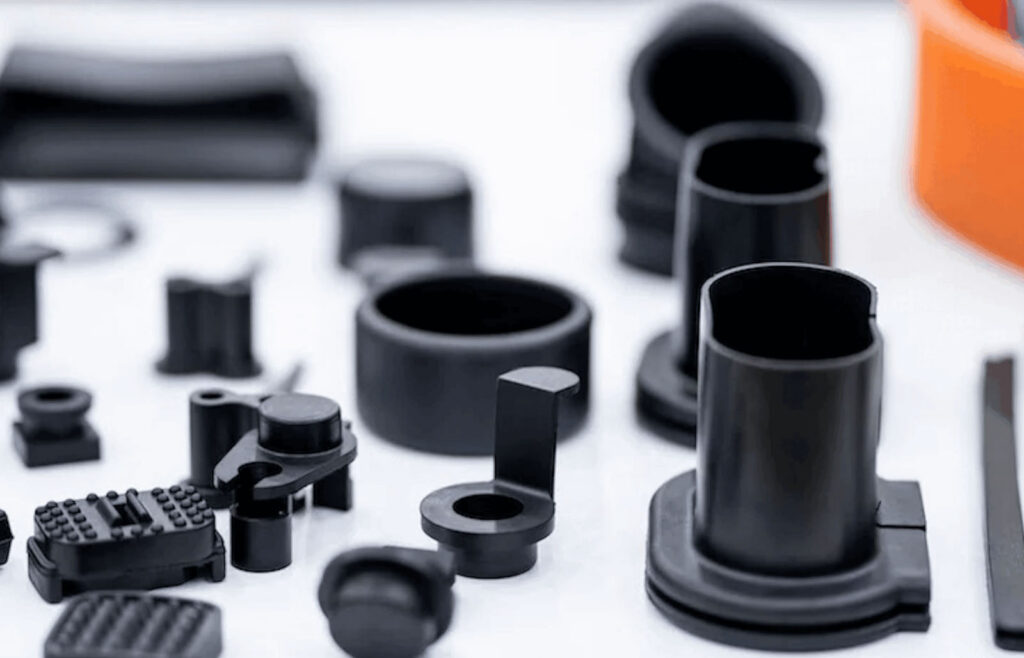
| polyuréthane caoutchouteux | Polyvalent, options de dureté Shore A | Maintien, étanchéité, boutons, joints, vêtements |
| Matériau haute température | meilleure résistance thermique | Modèles sous capot, composants d'appareils électroménagers |
| Matériau ignifuge | Efficacité accrue contre les incendies | Salles d'appareils électroniques, pièces industrielles |
| résine chargée | Plus grande élasticité ou aspect particulier | Prototypes architecturaux, finitions à l'aspect métallique |
Options de solidité du rivage
Pour les pièces polyvalentes, la solidité est généralement définie à l'aide des valeurs Shore A.
Exemples :
- Côte A 20&8211; 40 : caoutchouc souple, sensation agréable
- Côte A 50&8211; 70 : adaptable mais plus robuste
- Shore A 80-90 : élastomère de l'entreprise
- Produits Shore D : plastiques rigides
Cela rend le moulage en uréthane utile pour vérifier les trous surmoulés, les joints, les soufflets, les claviers et les composants d'usure avant de se consacrer à l'outillage de production.
Normes de conception pour le moulage en uréthane
Le moulage en uréthane est plus tolérant que le moulage par injection, mais il reste soumis à une réglementation.
Densité de surface murale recommandée
Une excellente fourchette de départ est :
- Densité minimale des parois : environ 1,0 mm, selon la géométrie
- Épaisseur de paroi préférée : 1,5 x 4,0 mm
- Surfaces murales plus épaisses : faisable, mais susceptible d'augmenter le rétrécissement, la profondeur de la rétraction, la durée du traitement et son coût.
Évitez autant que possible les variations de épaisseur des parois. Bien que le moulage en uréthane gère bien mieux les variations d'épaisseur que le moulage par injection, des variations importantes peuvent tout de même engendrer des problèmes d'aspect ou de dimensions.
Côtes et employeurs
Pour les côtes :
- Maintenir la densité des nervures à environ 50 à 60 % de l'épaisseur de la surface de la paroi adjacente.
- Inclure une distance généreuse
- Évitez les côtes hautes et fines si elles ne sont pas essentielles.
- Prendre en compte le flux de matériaux et le démoulage
Pour les bossages à vis :
- Utilisez la portée à la base
- Évitez les surfaces murales extrêmement épaisses.
- Inclure des inserts en acier si un assemblage répété est nécessaire.
Angles d'ébauche
Les moules en silicone sont adaptables, l'angle de dépouille n'est donc pas toujours indispensable. Toutefois, il est judicieux de l'intégrer si la pièce est destinée ultérieurement à être moulée par injection.
Recommandations pour les projets de loi réguliers :
- 1,2° pour les murs verticaux généraux
- 3 °C ou plus pour les surfaces texturées
- Un tirage encore plus important pour les côtes profondes ou les attributs élevés
Sous-coupes
Le moulage en uréthane tolère les contre-dépouilles modérées grâce à la flexibilité du moule lors du démoulage. Cependant, des contre-dépouilles importantes risquent de déchirer le moule, de provoquer des moisissures ou de réduire sa durée de vie.
Si le chanfrein est essentiel, examinez-le très tôt avec l'équipe de production.
Texture de surface
Les moisissures reproduisent la surface originale. Vous pouvez constater le développement de :
- revêtement mat
- Finition brillante
- Superbe texture
- Grain moulé
- aspect peint
- revêtement transparent et lisse
La texture peut masquer de petites imperfections, mais elle peut aussi compliquer le démoulage. Pour les modèles destinés à la production, il est important d'adapter la structure au processus de fabrication futur.
Tolérances normales pour le moulage en uréthane
Le moulage en uréthane est suffisamment précis pour de nombreuses applications de modélisation et de petites séries, mais il n'est pas identique à Usinage CNC ou moulage par injection avec outillage en acier trempé.
Les tolérances typiques dépendent du fournisseur, de la géométrie du composant, de la résine et du modèle maître. Aperçu fonctionnel :
| Type d'attribut | Tolérance de moulage sous vide standard |
|---|---|
| Petits éléments de moins de 100 mm | ± 0,2 mm à ± 0,3 mm |
| Mesures plus grandes | ± 0,3 % de la mesure nominale |
| épaisseur de la surface de la paroi | ± 0,2 mm à ± 0,4 mm |
| diamètres d'ouverture | ± 0,2 mm à ± 0,3 mm |
| Répétabilité d'une pièce à l'autre | Souvent de l'ordre de ± 0,15 mm à ± 0,3 mm |
Pour des tolérances plus serrées, Usinage CNC Ce serait peut-être mieux. Pour les modèles moulés offrant une excellente finition esthétique et un ajustement pratique, le moulage sous vide est souvent plus que suffisant.
Si une dimension de détail est essentielle, indiquez-la sur l'illustration. Ne présumez pas que toutes les mesures nécessitent la même tolérance. Cela engendre des coûts supplémentaires et des contraintes de production inutiles.
Moulage en uréthane vs impression 3D
Coulée d'uréthane et Impression 3D sont souvent utilisées ensemble, mais elles résolvent des problèmes différents.
L'impression 3D est généralement bien meilleure pour les prototypes uniques, les canaux intérieurs complexes, les ajustements rapides de l'agencement et les géométries qui seraient certainement difficiles à mouler et à travailler.
Le moulage en uréthane est généralement préférable lorsque vous avez besoin de nombreux exemplaires présentant un aspect régulier, des surfaces similaires à celles moulées et des propriétés du matériau plus proches de celles des plastiques de fabrication industrielle.
| Facteur | Coulage en uréthane/sous vide | L'Impression 3D |
|---|---|---|
| Plage de quantité idéale | 5 × 200 composants | 1,50 pièces, selon la procédure |
| Outillage nécessaire | Moule en silicone | Absence de moisissures |
| Revêtement de surface | Exceptionnel, comme moulé | Varie selon le processus ; nécessite généralement de compléter |
| Modifications de la mise en page | Demande de nouveau maître/moule | Facile à réviser |
| Actions matérielles | Les produits en PU imitent les plastiques moulés. | S'appuyer sur les technologies et produits d'impression modernes |
| Correspondance des teintes | Solide ; les pigments peuvent être mélangés directement à la matière. | Minimal sauf peint ou teint |
| Composants transparents | Excellent avec la résine appropriée et une remise en état | C'est possible, mais cela nécessite généralement une finition importante. |
| Coût par pièce | Diminuer à mesure que la taille du lot augmente | Souvent bien meilleur pour de très faibles quantités |
| Préparation | Configuration plus longue, excellent résultat par lots | Extrêmement rapide pour des modèles très anciens |
Selon les Wohlers Associates Grâce à un système d'étude de marché sur la fabrication additive, le marché de la FA est désormais suivi à travers une couverture annuelle et trimestrielle exhaustive, démontrant son importance. Impression 3D est en fait devenue une stratégie de fabrication concrète. Pourtant, malgré ce développement, le moulage, la fonderie, Usinage CNCet les flux de travail hybrides restent essentiels.
Un flux de travail typique ressemble à ceci :
- Utilisez l'impression 3D pour les tout premiers modèles.
- Utilisation de la diffusion sous vide pour les tests individuels et la reconnaissance du marché.
- Utiliser des outillages modèles ou le moulage par injection pour la validation de la production.
- Passer à l'outillage rigide lorsque le besoin est confirmé.
Cette série maintient le danger à un faible niveau et le taux de découverte à un niveau élevé.
Moulage en uréthane vs moulage par injection
Moulage par injection est le choix idéal pour la production en grande série. Coulée d'uréthane est le choix approprié avant ce point.
Le moulage par injection nécessite un outillage en acier usiné, généralement en aluminium léger ou en acier. Il permet de fabriquer rapidement des composants dès que l'outillage est prêt, et le coût unitaire devient très faible pour les productions en série. Cependant, l'outillage peut s'avérer coûteux et long à réaliser.
Le moulage en uréthane utilise des moules en silicone. L'outillage est beaucoup moins cher et plus rapide à réaliser, mais chaque moule a une durée de vie limitée.
| Élément | Coulage en uréthane | Moulage par injection |
|---|---|---|
| Produit d'outillage | Silicone | aluminium ou acier |
| Coût de l'outillage | Réduit à modéré | Modéré à élevé |
| délai d'outillage | Rapide | Plus long |
| Volume le plus fin | Fabrication en petites séries et fabrication de ponts | Moyen à l'automatisation |
| Durée de vie des moisissures | Normalement, 15 à 30+ moulages par moule | Des milliers à de nombreux coups |
| Matériel | matériaux PU imitant les plastiques | De véritables thermoplastiques |
| Flexibilité de la mise en page | Plus flexible | Des réglementations DFM plus strictes |
| Coût de l'appareil à grande échelle | Plus élevé | Beaucoup de réduction |
| intention de fabrication | Exceptionnel pour la validation | Procédure de production finale |
Si votre schéma est pratiquement prêt pour la production et que vous avez besoin de pièces moulées en véritables thermoplastiques, moulage par injection de plastique prototype Ce serait peut-être la meilleure prochaine étape.
Moulage d'uréthane vs usinage CNC
Usinage CNC et le moulage en uréthane sont également correspondants.
L'usinage CNC enlève de la matière d'un bloc robuste. Il est idéal pour les tolérances serrées, les plastiques et métaux techniques de haute qualité, et les composants exigeant une grande précision dimensionnelle.
Le moulage en uréthane utilise des moules en matériau et en silicone. Il est particulièrement adapté aux prototypes en plastique moulé, aux pâtes à modeler, aux échantillons de couleur assortie et aux séries de pièces identiques.
Choisissez l'usinage CNC lorsque vous avez besoin de :
- Aluminium léger, acier inoxydable, laiton, cuivre, POM, nylon, PEEK ou ordinateur
- Tolérances serrées
- Planéité et parallélisme
- Caractéristiques en acier fileté
- Performances à haute température ou architecturales
- Un modèle de référence d'une précision exceptionnelle
Choisissez le moulage en uréthane lorsque vous avez besoin de :
- De nombreuses copies en plastique
- Matériaux doux au toucher ou semblables à du caoutchouc
- Pièces cosmétiques de type production
- Pièces transparentes ou colorées
- Ensembles à faible volume sans outillage en acier
- échantillons d'analyse de marché
Ces deux procédés sont généralement parfaitement complémentaires. Par exemple, un maître usiné par commande numérique peut servir à fabriquer un moule en silicone, puis un procédé d'étalement sous vide permet de reproduire la pièce en petites séries.
Combien coûte le moulage en uréthane ?
Le prix du moulage en uréthane dépend des dimensions, de la géométrie, du matériau, de la finition, des résistances et de la quantité de la pièce.
Les principaux facteurs de prix pour les automobilistes sont :
- Production du patron maître
- Maître finissant par
- Fabrication de moules et de moisissures en silicone
- Type de matériau
- Travail de fonderie
- Post-traitement
- Peinture ou revêtement
- Insérer la configuration
- Évaluation de la qualité
- Emballage
En tant que politique de base :
- Une petite pièce de base coûte moins cher.
- Les pièces de grande taille nécessitent plus de silicone et de matériau.
- Les pièces transparentes coûtent plus cher car les problèmes sont plus faciles à repérer.
- Des exigences cosmétiques limitées améliorent le travail.
- La multitude de couleurs et d'apparences influe sur la complexité de la configuration.
- Un plus grand nombre de caries dentaires peut diminuer le coût par pièce, mais augmenter la complexité du moule.
Le moulage en uréthane devient beaucoup plus rentable lorsque le coût du moule est réparti entre plusieurs composants.
Par exemple:
| Montant | Choix de raffinement typique |
|---|---|
| 1&8211; 3 parties | Impression 3D ou usinage CNC |
| 5,20 pièces | Impression 3D, Usinage CNCou moulage en uréthane selon la surface |
| 20 x 100 pièces | L'utilisation de l'aspirateur pour étendre le fil conducteur devient souvent attrayante |
| 100 × 500 composants | Coulée sous vide ou moulage par injection de modèle |
| Plus de 500 composants | Moulage par injection devrait être évalué |
Ces aspects ne sont pas pris en compte par les politiques en vigueur. Un petit boîtier cosmétique et un grand couvercle optique transparent ont des implications économiques très différentes.
Combien de temps dure un moulage en uréthane ?
Le délai de livraison habituel est généralement 7,85 jours d'organisation, en misant sur la complexité et les compétences du prestataire.
Un calendrier serré :
| Phase | Temps typique |
|---|---|
| Examen DFM et estimation des prix | 1 à 2 jours |
| fabrication du patron maître | 1,5 jour |
| Finition de maître | 1 à 3 jours |
| Fabrication de moules en silicone et de moisissures | 1 à 3 jours |
| incantation et guérison | 2,7 jours |
| Finir et examiner | 1,5 jour |
Les tâches simples peuvent être réalisées rapidement. Les travaux complexes impliquant de la peinture, des ouvertures, des insertions ou plusieurs produits nécessitent plus de temps.
Si la rapidité est importante, envoyez les documents complets dès le départ :
- Documents CAO ACTION ou IGES
- STL soumet le cas échéant
- Dessins 2D avec dimensions essentielles
- Demandes matérielles
- Norme de teinte, telle que RAL ou Pantone
- Exigences de finition
- Montant
- Mise en place des notes
- Conditions d'utilisation finale
Une contribution efficace met fin aux échanges lents et répétitifs.
Applications courantes du moulage en uréthane
Électronique client
Le moulage en uréthane est largement utilisé dans l'immobilier, pour les interrupteurs, les cadres, les télécommandes, les appareils portables, l'électronique portable et les stations d'accueil.
Cela permet aux équipes d'examiner :
- Ajustement et installation
- On sent vraiment le bouton
- texture de surface
- Couleur
- Ergonomie
- Hypothèse du client
- Emballage des composants internes
Automobile
Les groupes automobiles utilisent le moulage en uréthane pour :
- Garniture intérieure
- Composants du panneau de commande
- lentilles de lumière
- Bouches d'aération pour le chauffage et la climatisation
- Boutons et modifications
- Immobilier de capteurs
- Pièces automobiles conceptuelles
- Modèles sous capot utilisant des matériaux résistants à la chaleur
Pour les premières phases d'évaluation du style, une pièce moulée sous vide peut paraître encore plus réaliste qu'une impression 3D brute.
Dispositifs médicaux
Les équipes chargées des articles cliniques ont généralement besoin de lots de faible volume pour le dépistage de la facilité d'utilisation, la conception d'évaluations professionnelles ou la documentation réglementaire.
Les exemples habituels sont les suivants :
- Boîtiers d'appareils
- Capteurs portables
- Prototypes orthopédiques
- outils de diagnostic portables
- Prises douces
- Pièces de démonstration fluidiques transparentes
Les problèmes liés au choix des matériaux sont détaillés ci-dessous. Il convient de valider systématiquement la biocompatibilité, la compatibilité sanitaire et la conformité aux exigences réglementaires avant d'utiliser des composants en milieu médical.
Outils industriels et robotique
Le moulage en uréthane convient pour :
- Couvertures de robots
- Unités de détection immobilières
- Composants de surveillance des câbles
- Bottes de protection
- pinces personnalisées
- carte de contrôle
- Pièces de rechange en faible volume
Publicité, marketing et échantillons de vente
Parfois, le modèle n'a qu'une seule fonction : paraître réel.
Le moulage sous vide est particulièrement adapté aux ensembles disponibles, aux présentations financières, aux écrans d'exposition et à la photographie numérique d'articles, car il permet de contrôler parfaitement la couleur, le revêtement et la qualité de la réponse.
Avantages et limites du moulage en uréthane
Avantages
Le moulage en uréthane présente un certain nombre d'avantages pratiques.
- Excellente finition de surface :Puisque le moule en silicone reproduit fidèlement le modèle final, la pièce à mouler peut présenter une surface lisse, brillante, mate ou distinctive directement issue du moule.
- Prix de l'outillage inférieur :Les moules en silicone sont beaucoup plus économiques que les moules d'injection en acier usiné.
- Utile pour les volumes réduits : Pour les petits espaces, l'utilisation d'un aspirateur peut offrir un bon compromis entre prix, rapidité et qualité.
- Options de produits polyvalentes :Les systèmes en polyuréthane peuvent imiter les plastiques rigides, le caoutchouc adaptable, les matériaux transparents et les matériaux spéciaux.
- Correspondance des teintes :Les pigments peuvent être mélangés à la résine, ce qui réduit le besoin de peinture et améliore l'aspect gratté par rapport aux surfaces colorées.
- Aspect moulé :Pour la reconnaissance des produits, cela pose problème. Un consommateur, un investisseur ou une partie prenante réagira différemment à un modèle d'acteurs nuancé qu'à un modèle rigide.
Limites
Il n'existe pas de méthode idéale.
- Durée de vie limitée contre les moisissures :Les moules en silicone s'usent. La chaleur, la chimie de la résine, la complexité des pièces et les dommages influencent tous la durée de vie du moule.
- Ne convient pas à la production en grande série :Lorsque les volumes augmentent, le moulage par injection devient généralement plus rentable.
- Ce produit n'est pas le dernier thermoplastique :Les résines de coulée PU peuvent imiter l'ABS, le PP, le caoutchouc ou le caoutchouc, mais elles ne sont pas similaires aux thermoplastiques moulés par injection.
- La sécurité dimensionnelle a ses limites :Les caractéristiques de rétrécissement et d'adaptation des moisissures impliquent que le moulage sous vide ne peut égaler la précision de l'usinage CNC pour les résistances limitées.
- Les pièces complexes nécessitent une conception de moule experte :Les surfaces murales minces, les nervures profondes, les zones d'air emprisonnées et les contre-dépouilles importantes nécessitent une préparation minutieuse.
Meilleures pratiques pour des composants de moulage en uréthane de qualité supérieure
Utilisez ces idées pour réduire les défauts et améliorer les résultats :
- Commencez par un modèle CAO propre et précis.
- Identifier les dimensions importantes sur une illustration 2D.
- Utilisez un patron maître de haute qualité.
- Réalisez le modèle original avec la qualité de surface précise que vous souhaitez reproduire.
- Évitez les murs inutilement minces.
- Inclure des rayons aux arêtes internes vives.
- Maintenir la densité de la surface des parois aussi constante que possible.
- Vérifier les contre-dépouilles avant l'outillage.
- Choisissez le matériau en fonction de ses caractéristiques, et non pas simplement de son apparence.
- Utiliser des couleurs moulées lorsque cela est possible.
- Prévoyez un délai supplémentaire pour les pièces transparentes ou à l'aspect extrêmement esthétique.
- Examiner un ou deux articles courts initiaux avant d'accepter un ensemble complet.
Plus votre distributeur en apprendra sur l'utilisation réelle de la pièce, meilleurs seront les résultats.
Quand faut-il choisir le moulage en uréthane ?
Sélectionnez le moulage de l'aspirateur lorsque vous en avez besoin :
- 10 × 200 composants de type production
- Des cosmétiques bien meilleurs que l'impression 3D
- Coût d'outillage réduit par rapport au moulage par injection
- Pièces transparentes, colorées, en caoutchouc ou de couleur assortie
- unités de contrôle des utilisateurs
- Exemples prêts à être présentés aux investisseurs
- Production de ponts avant outillage
- Composants qui ressemblent presque à des objets de forme finale
N’optez pas pour le moulage sous vide lorsque :
- Vous avez besoin d'innombrables pièces immédiatement
- Vous avez besoin de maisons en polycarbonate de fabrication récente
- Les résistances sont extrêmement limitées
- Le composant doit résister à des températures très élevées.
- La géométrie va certainement détruire rapidement le moule en silicone.
- Vous continuez à modifier la mise en page quotidiennement.
Dans ces cas-là, l'impression 3D, l'usinage CNC ou le moulage par injection peuvent s'avérer bien meilleurs.
Les opérations les plus intelligentes : intégrer les procédures
Les meilleurs producteurs dépendent rarement d'une seule méthode.
Une opération de développement de produit efficace peut se présenter comme suit :
- Idées de conception : Impression 3D FDM ou impression 3D de quartier délabré
- Modèles fonctionnels : Usinage CNC ou impression 3D de qualité industrielle
- Prototypes cosmétiques : Coulée sous vide
- Analyse de marché : lot de faible volume moulé sous vide
- Reconnaissance de la production : Moulage par injection de prototype
- Automatisation : outillage de moulage par injection d'aluminium ou d'acier
Cette stratégie permet d'investir en toute confiance. Vous n'investissez davantage que lorsque la stratégie a fait ses preuves.
Cela permet également d'éviter une erreur terrible : développer prématurément des outils de fabrication coûteux, puis découvrir que les utilisateurs n'aiment pas le produit, qu'une attache se casse, que le couvercle de la batterie est mal conçu ou que la couleur ne correspond pas à la marque.
FAQ
1. À quoi sert le moulage sous vide ?
Le moulage sous vide permet de fabriquer de petites séries de pièces de haute qualité en plastique ou en matériau caoutchouteux à partir de moules en silicone. Il est couramment utilisé pour les prototypes fonctionnels, les échantillons de produits, les unités de test utilisateur, les modèles d'exposition, la production de ponts et la fabrication en petites séries avant le moulage par injection.
2. Le moulage sous vide est-il identique au moulage en uréthane ?
Oui. Les termes « moulage sous vide », « moulage en uréthane » et « moulage en polyuréthane » désignent généralement le même procédé. Le terme « moulage sous vide » décrit la méthode de moulage assistée par le vide, tandis que « moulage en uréthane » fait référence aux résines de polyuréthane utilisées pour fabriquer les pièces.
3. Combien de pièces un moule en silicone peut-il produire ?
Un moule en silicone standard permet généralement de produire entre 15 et 30 pièces, selon la géométrie de la pièce, le type de résine, la finition de surface, la température de polymérisation et la difficulté de démoulage. Les pièces simples ont une durée de vie plus longue, tandis que les pièces complexes présentant des contre-dépouilles profondes ou des détails délicats peuvent réduire la durée de vie du moule.
4. Le moulage sous vide est-il meilleur que l'impression 3D ?
Le moulage sous vide est préférable lorsqu'il s'agit de produire en série de nombreuses pièces présentant une finition, une couleur et un aspect uniformes. L'impression 3D est plus adaptée aux prototypes uniques, aux modifications rapides de conception et aux géométries complexes. De nombreuses équipes produit privilégient l'impression 3D, puis le moulage sous vide pour les petites séries de prototypes.
5. Quand dois-je choisir le moulage sous vide plutôt que le moulage par injection ?
Optez pour le moulage sous vide pour les petites séries (généralement de 5 à 200 pièces) afin d'éviter les coûts élevés d'outillage métallique. Choisissez le moulage par injection lorsque votre conception est stable, que les exigences relatives aux matériaux sont définitives et que le volume de production est suffisamment important pour justifier le coût de l'outillage.
Commentaires
Derniers articles
Blogs associés
Le blog de Senyo est dédié au partage de notre expertise en matière de prototypage. Nos articles visent à vous accompagner dans l'amélioration de la conception de vos produits et à vous aider à maîtriser plus efficacement les complexités du prototypage rapide.