Lití pod tlakem vs. vstřikování plastů: Podrobný technický průvodce
Obsah
Výrobní průmysl se silně spoléhá na dva hlavní procesy: tlakové lití a vstřikování plastů. Tyto metody vyrábějí drtivou většinu součástí, které denně používáme. Od kovové baterie ve vaší koupelně až po plastové pouzdro vašeho smartphonu, tyto techniky utvářejí náš moderní svět. I když sdílejí několik mechanických podobností, slouží velmi odlišným účelům.
Inženýři a projektanti často čelí obtížné volbě. Která metoda nabízí nejlepší nákladovou efektivitu? Která z nich poskytuje lepší strukturální integritu? Tento článek poskytuje podrobné srovnání... Lití pod tlakem vs. vstřikování plastů aby vám pomohli učinit informované rozhodnutí o vašem projektu.
Pochopení procesu tlakového lití
Tlakové lití roztaveného kovu do formy umožňuje rychle vytvářet ostré a detailní tvary. Z hliníku, zinku nebo hořčíku jsou díly pevné a konzistentní. Kořeny této metody sahají až do 19. století a dodnes dominuje tváření neželezných kovů.
Stroje a pece zvládají teplo potřebné k roztavení kovu. Většina volí lehké slitiny, protože rychle tuhnou a hladce tečou.
Čtyři základní kroky tlakového lití
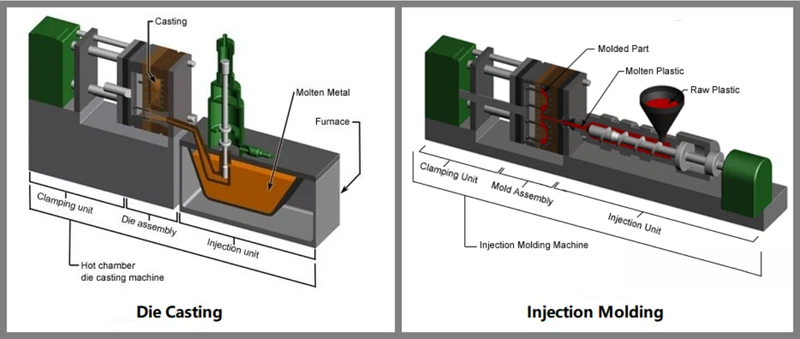
Abychom pochopili mechaniku tlakového lití, musíme se podívat na sled operací. V oboru se to často nazývá lití pod vysokým tlakem (HPDC).
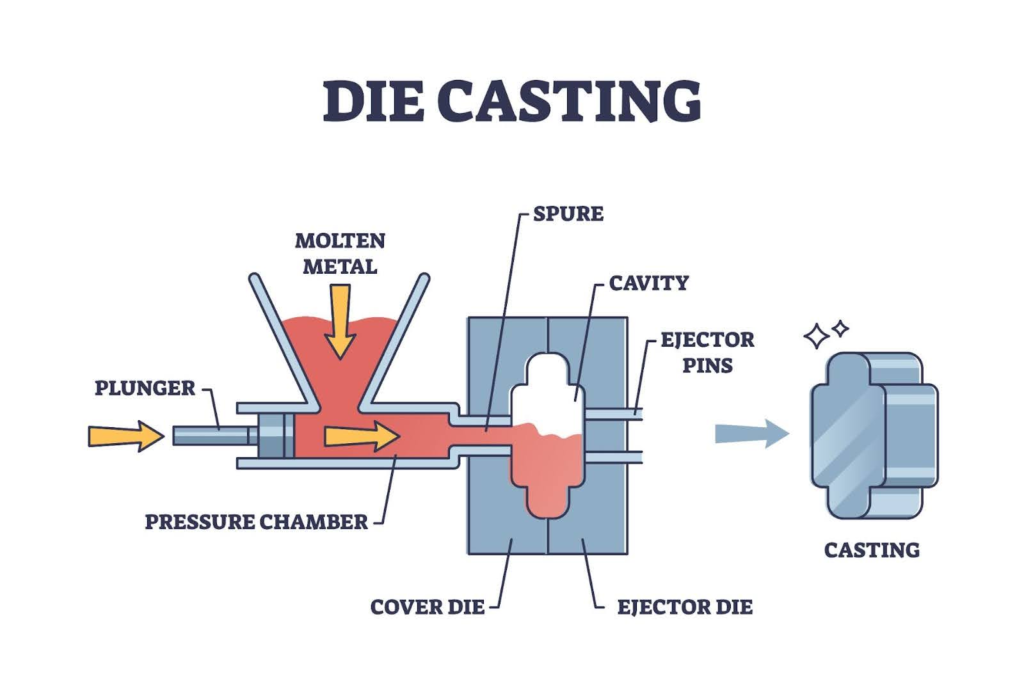
- Příprava matrice: Technici nastříkají dutinu formy specializovaným mazivem. Toto mazivo reguluje teplotu a zabraňuje přilepení kovu. Po nanesení povlaku stroj sevře poloviny formy k sobě.
- Vyplnění dutiny: Stroj vstřikuje roztavený kov do formy pod extrémním tlakem. Tento tlak zajišťuje, že kov vyplní každý složitý detail formy. Stroj udržuje tento tlak, dokud kov nezačne tuhnout.
- Fáze ochlazování: Kov musí rychle chladnout, aby se udržely vysoké výrobní rychlosti. Výrobci často používají vnitřní vodní kanály nebo externí postřikovače k urychlení odvodu tepla.
- Vyhození komponenty: Jakmile kov ztuhne, stroj otevře matricu. Vyhazovací kolíky vytlačí „výstřel“ z dutiny. Výstřel se vztahuje na celkovou hmotnost kovu včetně součásti a běhounů.
Výhody metody tlakového lití
- Rychlá výroba: Tento proces umožňuje velmi rychlé časy cyklů.
- Vysoká složitost: Můžete vytvářet složité geometrie, kterých jiné metody nedosáhnou.
- Vynikající trvanlivost: Kovové díly nabízejí vynikající pevnost a tepelnou odolnost.
- Rozměrová přesnost: Tato metoda umožňuje výrobu dílů s velmi malými tolerancemi.
- Vynikající povrchová úprava: Většina dílů vyžaduje minimální následné zpracování.
Nevýhody metody tlakového lití
- Materiální limity: Nelze použít kovy s vysokým bodem tání, jako je ocel.
- Počáteční investice: Cena stroje a ocelových forem je velmi vysoká.
- Velikost dílu: Tato metoda obecně není vhodná pro extrémně velké součásti.
- Rizika poréznosti: Pokud tlak není dokonalý, mohou se uvnitř kovu zachytit vzduchové bubliny.
Zkoumání procesu vstřikování plastů
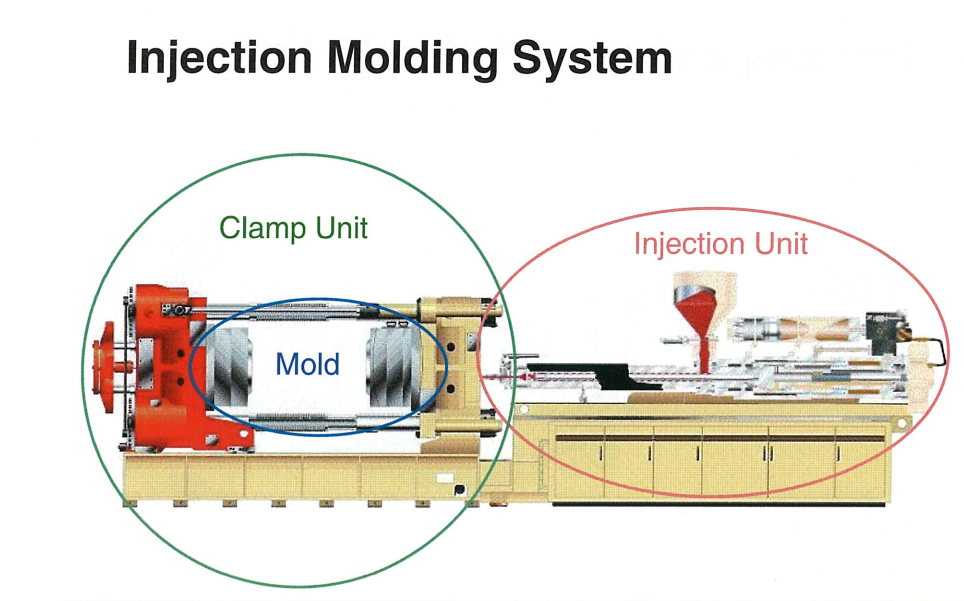
Vstřikování plastů se řídí podobnou logikou jako tlakové lití, ale používá jiné materiály. Je to hlavní metoda pro hromadnou výrobu plastových součástek. Inženýři si tento proces vybírají pro vše od zdravotnické zařízení prototyping na spotřebitel výrobek prototypování.
Tento proces využívá polymery, jako je ABS, nylon, polypropylen a TPU. Stroj roztaví plastové pelety a vstřikuje tekutou pryskyřici do kovové formy, obvykle vyrobené z kalené oceli nebo hliníku.
Provozní fáze vstřikování plastů
Pracovní postup odráží proces odlévání, ale vyžaduje odlišnou regulaci teploty.
- Mold Preparation: Obsluha nanese na formu separační prostředek. Tím se zajistí, že se plastový díl během vyhazování neroztrhne.
- Injekce: Vratný šroub posouvá roztavený plast vpřed. Vtlačuje materiál do formy pod vysokým tlakem.
- Chlazení a tuhnutí: Plast ztrácí teplo a tvrdne. Doba chlazení je nejdelší částí cyklu.
- Vysunutí části: Forma se otevře a díl vypadne. V mnoha případech je díl připraven k okamžitému použití.
Proč zvolit vstřikování plastů?
- Bezkonkurenční flexibilita: Můžete si vybrat z tisíců plastových pryskyřic a přísad.
- Nízké jednotkové náklady: U velkoobjemových sérií je cena za díl neuvěřitelně nízká.
- Úspora materiálu: Moderní stroje produkují téměř žádný odpad. Odpadní plast můžete často rozemlít a znovu použít.
- Zvýšení síly: Pro zvýšení tuhosti dílu můžete přidat skleněná vlákna nebo jiná plniva.
Nedostatky vstřikování plastů
- Vysoké vstupní náklady: Navrhování a nástroje pro vstřikování plastů do staveb vyžaduje značný kapitál.
- Dlouhé dodací lhůty: Vytvoření složité formy může trvat týdny nebo měsíce.
- Omezení návrhu: Tloušťku stěny musíte pečlivě zvážit, abyste se vyhnuli „propadlinám“ nebo deformaci.
Tlakové lití vs. vstřikování plastů: Podrobné srovnání
I když obě metody používají vysoký tlak a formy, jejich technické aplikace se výrazně liší.
1. Vlastnosti materiálu a všestrannost
Nejzřetelnější rozdíl spočívá v materiálu. Tlakové lití používá neželezné slitiny. Ty poskytují vysokou elektrickou vodivost a strukturální pevnost. Vstřikování plastů používá polymery. Plasty nabízejí lepší chemickou odolnost a izolační vlastnosti. Nicméně specializované procesy, jako je vstřikování kovů začali tuto propast překlenovat.
2. Přesnost a tolerance
Tlakové lití obecně nabízí menší tolerance než lisování plastů. Kov se během fáze chlazení nesmršťuje tolik jako plast. U vysoce přesných součástek, přesné obrábění na CNC se často používá k povrchové úpravě tlakově litých dílů. Plastové díly často vyžadují „velkorysé“ tolerance kvůli vysoké tepelné roztažnosti polymerů.
3. Možnosti povrchové úpravy
Díly odlévané tlakovým litím často vypadají skvěle hned po vyjmutí z formy. Můžete je však vylepšit několika způsoby. Mezi možnosti patří:
- eloxování: Zvyšuje odolnost proti korozi.
- Práškové lakování: Poskytuje odolnou, barevnou vrstvu.
- Zlacení: Používá se pro špičkovou elektroniku.
Povrchové úpravy pro vstřikování plastů jsou obvykle zabudovány do samotné formy. Můžete vytvářet textury (jako je kožená kresba) nebo vysoce lesklé povrchy. U plastů patří mezi primární kroky následného zpracování odplynění a čištění.
Srovnávací tabulka: Technické specifikace
| Funkce | Tlakové lití | Vstřikování |
|---|---|---|
| Primární materiál | Neželezné kovy (Al, Zn, Mg) | Polymery (ABS, PC, PP) |
| Nástrojový materiál | Kalená nástrojová ocel | Ocel nebo hliník |
| Typická doba cyklu | 10 až 60 sekund | 15 až 90 sekund |
| Úroveň tolerance | Extrémně těsné (±0,02 mm) | Střední (±0,1 mm) |
| Jednotková cena (objem) | Středně | Velmi nízká |
| Počáteční náklady | Velmi Vysoká | Vysoká |
| Hmotnost | Těžší | Zapalovač |
Udržitelnost a materiálová cirkularita ve výrobě
Moderní výroba musí upřednostňovat životní prostředí. Lití pod tlakem vs. vstřikování plastů V debatě je udržitelnost klíčovým faktorem. Kovy jsou nekonečně recyklovatelné. Můžete roztavit starý hliníkový blok motoru a přeměnit ho na nový, aniž byste ztratili kvalitu materiálu. Díky tomu je tlakové lití oblíbeným způsobem pro ekologické průmyslové prototypování.
Plasty jsou náročnější. I když je mnoho termoplastů recyklovatelných, při každém roztavení se degradují. Vstřikování plastů však během prvního cyklu produkuje jen velmi málo odpadu. Výrobci mohou také použít biopryskyřice ke snížení své uhlíkové stopy. Ať už se zaměřujete na… automobilový prototyping nebo prototypování robotů, výběr materiálu ovlivňuje vaše dlouhodobé cíle udržitelnosti.
Náklady na nástroje a provoz
Finanční volby často ovlivňují, která metoda zvítězí.
Tlakové lití vyžaduje nástroje, které odolávají intenzivnímu teplu a tlaku – což je od začátku nákladné. Roztavený kov tyto nástroje prohlodává a časem otupuje jejich hrany. Udržovat je ostré? To je neustálý výdaj. Nekupujete si jen nástroj – zavazujete se k jeho dlouhodobému opotřebení a údržbě.
Vstřikování plastů snižuje náklady na díl, když objem výroby roste. Pro 100 000 industrial prototyping komponentu, je to obvykle lepší. Vícedutinové sestavy umožňují jednomu stroji vyrábět desítky najednou – což je skutečná výhoda při velké poptávce. Nejde o počáteční nastavení – jde o to, kolik později skutečně utratíte.
Porovnání forem: Technické rozdíly
Forma pro tlakové lití není jako forma pro vstřikování plastů. Zdá se těžší ignorovat, jak silné musí být – ocelové stěny odolávají tepelným šokům lépe než cokoli jiného.
Ale přepadové šachty a velké odvětrávací otvory jsou pro tlakové lití standardem. Vzduch je rychle vytlačen, než zničí díl. Plastové formy? Jen malé odvětrávací otvory poblíž dělicí linie fungují dobře. Tepelné zpracování je intenzivní – nástroje pro tlakové lití odolávají teplotám až 700 °C bez praskání. Plastové formy takové namáhání nepotřebují, pokud nejsou použity abrazivní přísady. Ocel se při kontaktu s taveným hliníkem rozežírá sama. Plast zůstává neutrální, nereaktivní a bezpečný v průběhu času.
Který proces se hodí pro váš projekt?
Výběr mezi Lití pod tlakem vs. vstřikování plastů vyžaduje pohled na konečné prostředí vaší součásti.
- Musí součástka vést elektrický proud? Použijte tlakové lití.
- Musí být součástka lehká? Použijte vstřikování plastů.
- Bude součást vystavena extrémnímu teplu? Použijte tlakové lití.
- Vyrábíte miliony malých, barevných předmětů? Použijte vstřikování plastů.
- Potřebujete vysokou konstrukční tuhost? Použijte tlakové lití.
Pro složité geometrie, které vyžadují pevnost kovu, ale přesnost tvarování, můžete také zvážit CNC obrábění nebo CNC frézováníPokud potřebujete rychlý kovový díl k testování, CNC soustružení nebo sheet metal fabrication mohly by být rychlejší alternativy.
Senyorapid: Váš odborný partner pro odlévání a formování
Znalost rozdílu mezi těmito procesy je pouze prvním krokem. Potřebujete partnera, který dokáže vaši vizi realizovat. Senyorapid poskytuje prvotřídní CNC obrábění a vstřikování plastů služby.
Náš tým rozumí nuancím výběru materiálů a návrhu forem. Nabízíme vše od služba vakuového lití pro nízkoobjemové běhy přetlačování a vkládání výlisků pro složité sestavy. Specializujeme se také na lisování kovů, kovové ohýbánía řezání laseremAť už potřebujete hlubokotažné lisování kovů nebo vysokorychlostní 3D tisk, dodáváme kvalitu.
Závěr
Debata o Lití pod tlakem vs. vstřikování plastů ukazuje, že obě metody jsou pro moderní výrobu nezbytné. Nabízejí zřetelné výhody, pokud jde o pevnost, náklady a výběr materiálu. Tlakové lití zajišťuje strukturální integritu kovu, zatímco vstřikování plastů nabízí všestrannost a úsporu nákladů polymerů.
Vyhodnocením funkce vašeho dílu, objemu výroby a rozpočtu si můžete vybrat perfektní metodu. Oba procesy se neustále vyvíjejí a každým rokem zahrnují inteligentnější automatizaci a lepší materiály. Úspěch spočívá ve výběru správné technologie pro správnou aplikaci.
Často kladené otázky
1. Je vstřikování kovů do forem totéž co tlakové lití?
Ne. Vstřikování kovů do formy (MIM) používá směs kovového prášku a plastového pojiva. Tuto směs vstříknete do formy, poté ji „odstraníte“ a spékáte v peci. Tlakové lití používá 100% roztavený kov. MIM je lepší pro velmi malé, vysoce složité díly s použitím oceli.
2. Který proces je pro prototypování rychlejší?
Vstřikování je obecně rychlejší pro prototypování, pokud se používají hliníkové nástroje. U kovových dílů však mnoho inženýrů dává přednost CNC obrábění pro prototypy, aby se vyhnuli nákladům na raznici.
3. Jaký je rozdíl mezi raznicí a formou?
Tyto termíny se často používají zaměnitelně. V technických kruzích se však „forma“ obvykle vztahuje na nástroj používaný pro kov (tlakové lití, ražení). „Forma“ se obvykle vztahuje na nástroj používaný pro plasty (vstřikování plastů, vyfukování plastů).
4. Proč je tlakové lití dražší než lití do pískových forem?
Lití do pískových forem používá formu vyrobenou z písku, což je velmi levné. Tlakové lití používá permanentní formu vyrobenou z vysoce kvalitní nástrojové oceli. Tlakové lití je na začátek dražší, ale je mnohem rychlejší a přesnější pro hromadnou výrobu.
5. Mohu použít stejnou formu pro oba procesy?
Ne. Tepelná roztažnost, vstřikovací tlak a požadavky na chlazení jsou zcela odlišné. Plastová forma by se roztavila nebo praskla, pokud byste se do ní pokusili vstřiknout roztavený hliník.
Komentáře
Nejnovější Příspěvky
Související Blogy
Senyo ' s blog je zaměřen na sdílení naše rozsáhlé znalosti z prototypové výroby. Prostřednictvím našich článků, naším cílem je podporovat vás ve rafinace produktu design a navigaci složitosti rapid prototyping efektivněji.