Metal Rapid Prototyping: Fast, Precise Solutions for Design
Table of Contents
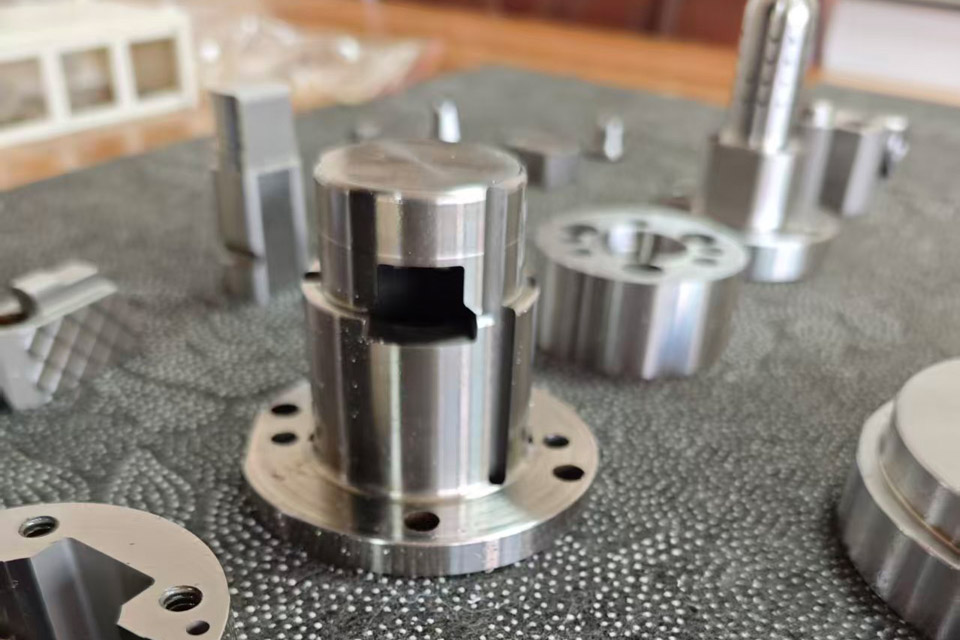
Precision is a must in the complicated world of industrial manufacturing. Aerospace propulsion components or tiny surgical instruments, the allowable error is often in microns. This requirement has led the industry to embrace high precision CNC machining parts. Such parts are the enablers of technology, thus, they ensure that complicated systems run safely and efficiently.
High precision CNC machining parts are not the outcome of normal manufacturing; they are the outcome of thorough engineering, advanced material science, and cutting-edge automation. This tutorial defines, examines and reveals the breakthroughs of the sector that are the main themes of this guide. Besides, we will talk about the difficulties of finding trustworthy suppliers and quality control in a market where there is a demand for speed but not for accuracy. It is fundamental for engineers and product developers to have knowledge of these factors if they want to make their complex designs come true.
Defining Precision in Manufacturing
To really understand the worth of high precision CNC machining parts, it is necessary to first be able to differentiate between accuracy and precision, which are two basic concepts. These two terms are often confused as one in casual talks but have different meanings in the field of metrology and engineering.
Accuracy is the degree to which a measurement is near the true or accepted value. For example, if the design is supposed to have the diameter of 10.00mm, then the accurate part is the one that measures exactly 10.00mm. Precision, on the other hand, is about repeatability. It is the capability of a production process to yield the same result steadily over time. A process is precise if it makes 100 parts each having 10.05mm even though the target was 10.00mm.
It is the desire of high precision CNC machining parts to have both. A top manufacturer guarantees that each part not only meets the target size (accuracy) but also does so very closely for the whole production run (precision). The latter is the main reason why machine shops with standard capabilities cannot be on the same level as the high-end precision partners.
The Foundation of High Precision CNC Machining Parts
Producing high precision CNC machining parts involves more than just super-tech machines. It means managing quality and keeping control of the whole process. A strong quality system is the foundation of precision manufacturing.
Quality Management Systems (QMS) An establishment capable of fabricating ultra-precision parts normally follows very strict quality standards, e.g. ISO 9001 or AS9100 (for the aerospace industry). These standards require tightly structured procedures for employee training, equipment maintenance, and continuous improvement. They also make sure that every operator recognizes how their work affects the final tolerances of the part.
Measurement and Inspection
The phrase “You cannot manufacture what you cannot measure” is very true in this case. High-precision shops have on hand state-of-the-art metrology devices like Coordinate Measuring Machines (CMM) and laser scanners. Besides, they use statistical process control (SPC) and Gage Repeatability and Reproducibility (GR&R) studies to ensure the reliability of their measurement systems. It is simply not feasible to verify the tolerances of high precision CNC machining parts—which sometimes can be as close as ±0.004mm—without the use of these instruments.
The Anatomy of Precision Equipment
Not every CNC machine is capable of high precision. To make fine CNC machining parts, the manufacturers go for the equipment that is highly rigid and thermally stable.
Rigidity and Stability
Typically CNC machines may be subject to bending or vibration (chatter) due to heavy cutting loads. High-precision machines have, among other things, heavy, stabilizing bases and linear roller guides without any clearance. Such firmness is what guarantees that the cutting tool follows the path exactly as per the program, irrespective of the material resistance.
Advanced Feedback Systems
Contemporary precision machines cannot do without linear scales and thermal compensation sensors. These systems constantly keep an eye on the machine’s location and make corrections for thermal expansion and mechanical backlash that may occur due to the minute errors. Such closed-loop feedback is what enables the machine to retain micron-level accuracy for long hours of production.
Utilization of Multi-Axis
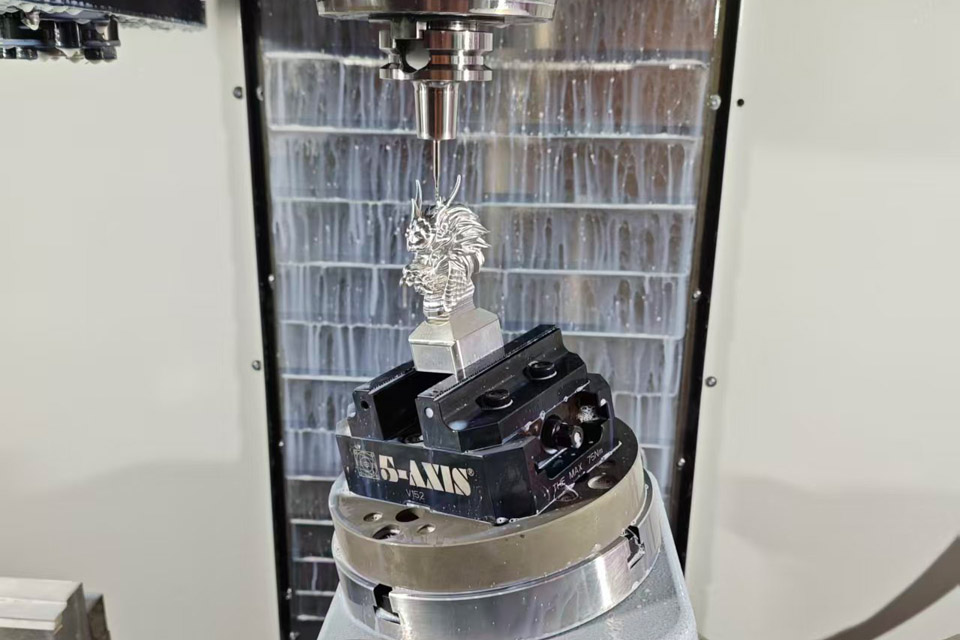
The fabrication of complex high precision CNC machining parts is one of the cases where 5-axis machining is utilized. This equipment lets the cutting tool get to the workpiece from any angle, practically. Not only that, but by processing multiple sides of a part at a time, manufacturers get rid of the total error coming from re-fixturing which is the change of the fixing position of the part. This, in turn, is very important for the strict geometric dimensioning and tolerancing (GD&T) relationships to be preserved.
Materials and Applications
The versatility of CNC machining allows for the creation of precise components from a vast array of materials. The choice of material often dictates the machining strategy and tooling required.
Table 1: Common Materials for High Precision CNC Machining Parts
| Material Category | Examples | Key Characteristics | Typical Applications |
|---|---|---|---|
| Aluminum Alloys | 6061-T6, 7075-T6, MIC6 | Lightweight, excellent machinability, high strength-to-weight ratio. | Aerospace structures, optical housings, consumer electronics. |
| Stainless Steels | 304L, 316L, 17-4 PH | Corrosion resistance, high strength, biocompatibility. | Medical devices, food processing equipment, marine hardware. |
| Hard Metals | Titanium Gr 5, Inconel | Extreme heat resistance, high tensile strength, difficult to machine. | Jet engine components, chemical processing valves, implants. |
| Engineering Plastics | PEEK, Delrin (Acetal), Ultem | Electrical insulation, low friction, chemical resistance. | Semiconductor components, medical insulators, bearings. |
| Copper Alloys | 101 Copper, 360 Brass | High electrical and thermal conductivity, aesthetic appeal. | Heat sinks, electrical connectors, plumbing fittings. |
Applications Across Industries
The versatility of high precision CNC machining parts is just about everything major industrial sectors.
- Aerospace: To make sure safety and efficiency at high altitudes, turbine blades, fuel nozzles, and landing gear parts are some of the components that need very tight tolerances.
- Medical: The parts that are surgical robots, orthopedic implants, and diagnostic equipment made from precision are the ones that these devices use to function correctly in the human body.
- Automotive: To get the most out of a car of fuel efficiency and reliability, high-performance engine components, transmission gears, and sensor housings are some of the things that need precision.
- Robotics: To operate a smooth, accurate motion control, joint mechanisms and drive systems need to be precise fits.
Technological Advancements in Precision Machining
The field of CNC machining is rapidly changing. Technologies are continuously improving the way CNC machining parts of high precision can be done quickly and reliably.
Tooling Innovations Cutting tools are the part of the machine that directly interact with the material. One of the latest upgrades in nanocoatings is Titanium Aluminum Nitride (TiAlN) which permits tools to be used at higher temperatures and that they keep their edges for a longer time. This longevity is very important if one wants to keep the same dimensions over a large production batch.
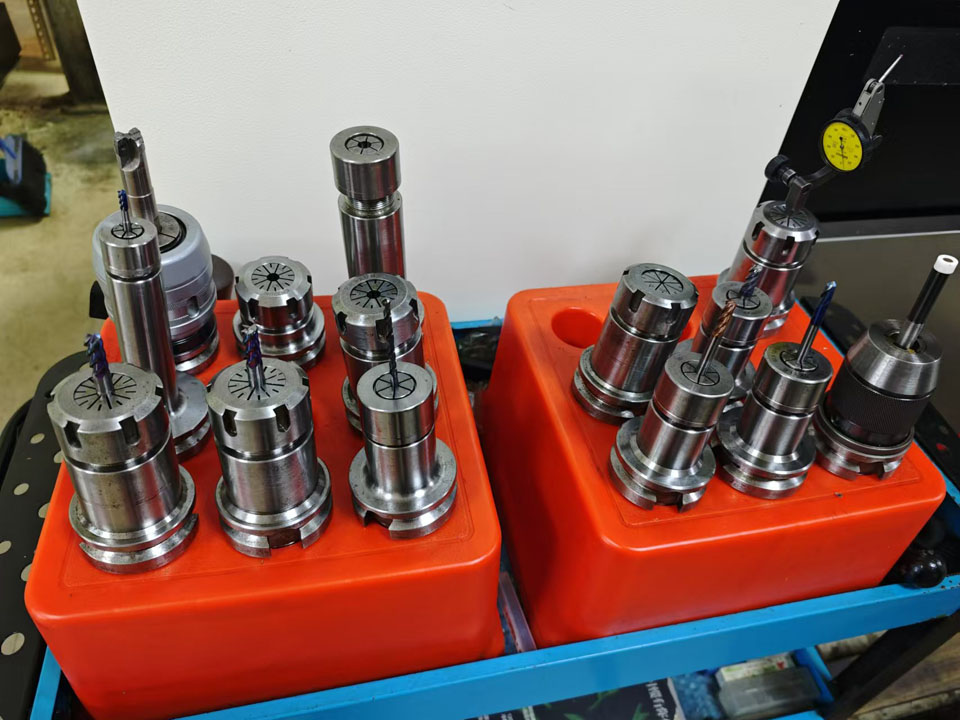
AI and Automation Artificial Intelligence (AI) and machine learning are turning the shop floor upside down. Intelligent software can now review tool paths and foresee mistakes that will happen even if no cutting has been done yet. Also, real-time monitoring is equipped with sensors that can feel tool wear or vibration and thus can by themselves change feed rates to stop the creation of defects. Besides that, robotic machine tending makes it possible to have “lights-out” manufacturing which leads to capacity increase and lead time reduction for high precision CNC machining parts.
The Future of Manufacturing
With intricacies increasing in designs and the demand for tighter tolerances, the use of high precision CNC machining parts will be the main trend. By the integration of digital manufacturing platforms, engineers can upload their designs and get instant feedback regarding the manufacturability of the design. This helps in speeding up the procurement process making it possible to deliver quality parts on time.
Senyorapid is the company that is leading the way in this change. The company, by the combination of advanced multi-axis machinery and a strict quality management system, is able to make high precision CNC machining parts that can even be used for the most demanding specifications. The sourcing of components that are consistent and accurate can be a great advantage for a company in a rapid market, whether it is for a small batch of prototyping or for mass production.
Conclusion
High precision CNC machining parts are basically the main things that make new innovations possible in the modern world. Basically, these components are the ones that are used in extreme conditions, like deep in the ocean or outer space, and they have to work flawlessly. The kind of precision that is required for this level has to come from a combination of very sophisticated machines, highly skilled human work, and constant quality control.
With the continuous progress in technology, precision machining will be able to do even more and thus create new opportunities for designers and engineers to come up with more innovative and high-performing products. If you really want to go beyond the limits of what’s possible, then working with a manufacturer like Senyorapid, who is capable, is the way to go.
Comments
Latest Posts
Related Blogs
Senyo’s blog is focused on sharing our extensive knowledge of prototype manufacturing. Through our articles, we aim to support you in refining your product design and navigating the complexities of rapid prototyping more effectively.