Exploration of Injector Pin Selection Strategy for Molds
Table of Contents
The most commonly used component in the mold ejector system is the ejector pin, including the driver cylinder and flat ejector pin. The size of the parts, draft angle, complexity of shape, vertical wall height, and type of plastic formed all help determine the appropriate type, position, and quantity of ejector pins. Due to its widespread use, the selection of ejector pins is often overlooked. However, there is no “one ejector pin type suitable for all situations” solution, so it is important to correctly understand the ejector pin selection strategy to avoid many problems in the subsequent molding process, including poor ejector, ejector pin bending, fracture, product deformation, and so on.
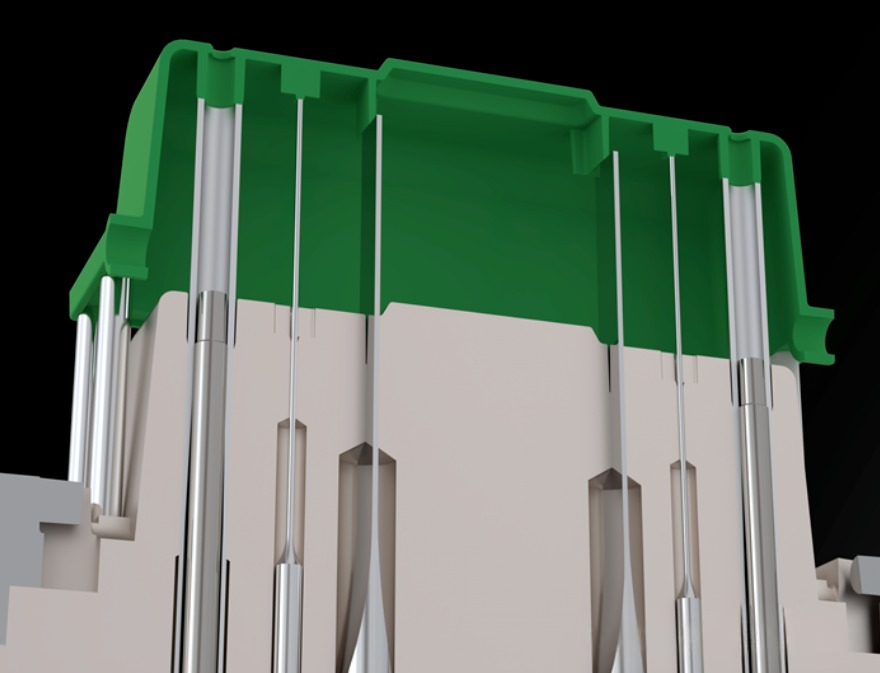
Basic Knowledge Of Injector Pin
To achieve optimal performance, the ejector pin must possess certain basic characteristics, including good strength, toughness, and wear resistance. More application specific features include thermal hardening (the ability of materials to maintain hardness at high temperatures), as well as corrosion resistance and lubricity that vary depending on the type of molding application. Geometric accuracy is another fundamental requirement for the performance and service life of the ejector pin. The manufacturing of top pins must comply with strict tolerances and specifications. True roundness, straightness, and high-quality surface finish are all crucial for its functionality – for example, poor geometric accuracy may lead to premature flash or product scratches. The combination of materials, processing techniques, and coatings determines whether the ejector pin is suitable for a specific application. However, enhancing one or more of these features may require sacrificing other features.
Material Advantages
Familiarity with the materials and properties used to manufacture ejector pins will help mold designers and manufacturers make better choices. Here are some of the most commonly used materials and their characteristics
H13 steel
H13 is a chromium molybdenum hot work tool steel with excellent strength and toughness. Among various commonly used materials, its thermal hardening and thermal shock resistance values are the highest, with a hardness value of up to 54 HRC (slightly lower than some other fully hardened steels). However, its shortcomings in wear resistance and corrosion resistance can be compensated for through surface treatment. Due to its unique combination of required performance, H13 may be one of the most widely used materials in global pin manufacturing.
Fully hardened cold work tool steel
The ejector pin, ejector piece, and ejector tube can also be made of O1, A2, and other high carbon cold work tool steels. This type of material can reach a hardness of about 60 HRC after full hardening treatment, with good wear resistance, and is suitable for molding general plastics and various materials that do not require high mold temperatures.
Fully hardened high-temperature tool steel
M2 steel belongs to the high-speed steel (HSS) category, with excellent strength and moderate toughness. Similar to H13, it has high thermal hardening and thermal shock resistance. After full hardening treatment, the hardness of M2 steel can reach 64 HRC, with excellent wear resistance. Another characteristic is that it can maintain sharp edges.
Stainless steel
When forming highly corrosive materials, stainless steel ejector pins are a feasible choice. According to different steel grades, the hardness value after full hardening treatment can reach 50-60 HRC. To achieve high hardness and wear resistance, martensitic stainless steel is commonly used (note: its corrosion resistance is not the highest in the stainless steel family). However, due to its comprehensive performance of strength, toughness, and hardness, it is more suitable as a top pin material.
Copper alloy
Copper alloy is mainly used for manufacturing core pins. Under certain extreme conditions, when rapid thermal conductivity becomes a priority, it can also be used to manufacture ejector pins (including beryllium copper and beryllium free copper alloys [for medical purposes]). However, copper alloy materials have certain limitations due to their soft texture and low strength.
Diamond like coating (DLC) ejector pin
Diamond like coating (DLC) top pins are an ideal choice for cleanroom and medical applications as they can operate without lubrication. This type of ejector pin is usually made of cold work tool steel and has a hardness of about 60 HRC after full hardening treatment. The coating has excellent wear resistance and adhesion resistance, with an extremely low friction coefficient (0.1-0.15) and a working temperature of up to 350 ° C. In addition, the surface hardness of the DLC ejector pin is about 3000 HV, far exceeding any other ejector pin type discussed in this article. All these features make it a high-performance and durable choice.
Stainless steel ejector pin
Stainless steel top pins are the best choice for molding highly corrosive materials such as PVC, and are also very suitable for medical and other cleanroom applications. The selection of steel grades from different suppliers may vary, so it is necessary to evaluate other properties to help choose the type that is suitable for the current application. If used in high-temperature scenarios, it is necessary to confirm applicability with the manufacturer, as high temperatures may reduce corrosion resistance and hardness.
Selection Of Injector Pin

Understanding the characteristics and material types of the ejector pin lays a solid foundation for material selection in mold design. However, given the numerous options offered by suppliers today, there is still more information to be learned, which may also be confusing. The following is a classification of common ejector pin products, including their ingredients and advantages:
H13 fully hardened nitride ejector pin
The core hardness of this type of ejector pin is usually 48-55 HRC, and the surface hardness reaches 65-74 HRC. Ionic nitriding is one of the common surface treatment processes. This ejector pin has a wide range of applications and can be used in high and low temperature scenarios, with a working temperature close to 1112 ° F (600 ° C), making it also suitable for metal injection molding (MIM) and die-casting molds. It should be noted that when processing nitride treated top pins, micro chipping should be avoided, and grinding and electrical discharge machining (EDM) processes are preferred. Fully hardened cold work tool steel ejector pin
This type of steel ejector pin has good wear resistance and is very suitable for applications in medium and low temperature molds. Untreated or uncoated pins are an economical choice that combines good performance and service life. It should be noted that the top pins made of this type of steel will begin to anneal or soften at high temperatures.
High hardness M2 steel ejector pin
This type of multifunctional ejector pin usually does not require additional coating or treatment, but is a high-performance and durable option suitable for all types of resin molding. The high thermal hardness of steel makes it suitable for cold and hot forming scenarios, and its ability to maintain sharp edges ensures that it can be formed without burrs for a long time in high-precision molds (such as connector molds). Due to its high strength, the ejector pin can be made into smaller diameters or sizes, making it suitable for molding micro parts. It has consistent hardness from the core to the surface and can be used in conjunction with the top pipe as a core pin.
Plating (armor plating or chrome plating) H13 ejector pin
The chrome plating process can increase the surface hardness of H13 ejector pin to around 70 HRC. The coating is extremely thin but has a dense structure, which not only has excellent wear resistance but also improved corrosion resistance. The friction coefficient is extremely low (about 0.20-0.25), making the ejector pin durable. These characteristics make the H13 coated ejector pin an ideal choice for high-yield molds and clean room environments. It should be noted that the working temperature of the coating may be lower than that of H13 core material, for example, the working temperature of a certain type of ejector pin is about 842 ° F (450 ° C), and the coating may not be suitable for PVC molding. Due to possible differences in coating processes among different suppliers, it is best to confirm whether these factors are applicable.
Black nitride H13 ejector pin
As a relatively new product type, the core hardness of the black nitride H13 ejector pin is 50 HRC, and the surface hardness is about 70 HRC. In addition, it also has improved wear resistance and corrosion resistance. Nitriding treatment also enhances fatigue life, allowing it to maintain high performance even under harsh conditions. Its working temperature is close to 600 ° C, suitable for die-casting molds (especially in scenarios with sticking problems) and metal injection molding (MIM). Due to the enhanced anti adhesion performance, the lifespan of the ejector pin is significantly extended, and the pinhole wear of the mold or cavity is also significantly reduced. Finally, this type of ejector pin is durable and can operate without lubrication, making it ideal for cleanroom environments such as molds for medical, food, and packaging products. Be careful during processing to avoid micro cracking.
Additional Precautions For Injector Pins
It should be noted that many common ejector pins have a deviation in diameter near the head due to manufacturing process reasons, and the area near the head is softer due to annealing treatment. This is a standard practice in the industry, so this type of ejector pin is not suitable for use as a short core pin.
The standard core pin made of H13 has different hardness options and is sometimes used as a top pin. They have not undergone any coating or nitriding treatment, so they can be machined, coated, or nitrided later. However, the tolerances of the inch sized core pin and ejector pin are different, so the hole size must be adjusted to accommodate.
Top pins with lower core hardness are prone to embossing, which may damage the pinholes in the core or cavity. Fully hardened top pins can help alleviate this problem. The reasonable design of the mold ejection system is crucial for its production efficiency, service life, and performance (including molding speed and smooth uninterrupted operation). The information provided in this article can serve as a reliable guide to help you make the correct choice of ejector pin.
Latest Posts
Related Blogs
Senyo’s blog is focused on sharing our extensive knowledge of prototype manufacturing. Through our articles, we aim to support you in refining your product design and navigating the complexities of rapid prototyping more effectively.