Prototype Plastic Injection Molding For Custom Parts
Get prototype plastic injection molding parts to high volume injection molding parts, which can have a quick delivery time with only several days from order to delivery.
- Free DFM and Mold Flow Analysis
- High Volume Best Solution
- Fast Return On Investment
Get instant quote in 24H, reaction time in 2H.
In house machine shop, one-stop abilities for injection molding process
Cost effective and fast turnaround
Flexible injection machine clamping force
No MOQ, we can accept the injection molding parts even 1 piece.
Variety Plastic &Matal Materials
What is Prototype Plastic Injection Molding?
Prototype Plastic Injection molding is a widely used and well developed process, which is very suitable for rapid production of parts with strict tolerance requirements. This process is used to manufacture diverse daily plastic products. In the production process, precise design of molds and high injection pressure are essential to achieve smaller surface roughness and reproduce details.
The injection molding process of plastic parts mainly includes four stages: filling, pressure holding, cooling, and demolding. These four stages directly determine the molding quality of the product, and these four stages are a complete continuous process.
Prototype Plastic Injection Molding Capabilities


Plastic Injection Molding
The plastic injection molding process consists of six stages: mold closure, filling, pressure holding, cooling, mold opening, and finally demolding. These 6 stages directly determine the forming quality of the product, and they are a complete continuous process.
Vacuum Casting
Vacuum Casting refers to the use of the original template to pour and produce silicone models under vacuum, and the entire process is called silicone replica.
Silicone replication has the characteristics of low cost and fast speed, which can effectively help enterprises reduce development costs, shorten delivery cycles, and reduce mold opening risks. The main materials used for silicone replication are generally PU, transparent PU, ABS, POM, and etc…
Overmolding and Insert Molding
As two types of injection molds, overmolding normally involves injecting the base material (usually plastic) onto one or more pre prepared parts to form an organic whole. This can provide additional protection, appearance improvement, or additional functionality for the product.
Insert Molding:a process of insert metal or other material components into injection molded products. It usually involves placing the insert in an injection mold, and then injecting molten plastic into the mold through the injection molding process to combine the insert with the plastic into a whole.
Multi Cavity Injection Molding
High cavity molding means that the number of cavities is greater than one, and we usually say that the first mock examination has several cavities. Multiple identical or different products can be completed simultaneously in one mold. Multi cavity molds can save a lot of production costs and are particularly suitable for products with high production volumes
Prototype Plastic Injection Molding Process At SENYORAPID
Upload Your File to Have a Quote
After receiving your drawing file, we will provide your instant qutoation in 24H
DFM or Mold Flow Analysis
When encountering products that require repeated confirmation or have functional doubts, we will provide a DFM analysis report to avoid discovering problems during the production process and rework. For some products, we will assist with mold flow analysis, and through software analysis, we can have a clear understanding of plastic flow and make design adjustments.
Design Approval and Molding Production
After confirming your specific requirements, selecting appropriate mold materials and surface treatments, we will begin manufacturing molds and corresponding products
On Time Delivery With QC Inspection Report
Under strict QC inspection, we usually conduct multiple tests on appearance, function, and size. Before shipment, we will provide customers with a strict inspection report for re inspection and shipment
Low Volume or Mass Production
With receiving your T1 samples approval and your request for production we will proceed to low volume or mass production as quickly as possible to ensure the on time delivery.
T1 Sample Validation
T1 samples will send to you for validation to ensure quality before mass production
Classes of Plastic Injection Mold
Generally speaking, molds are divided into five categories from SPI Class 101-105. Each of these five types of molds has its own different requirements and standards.
| Mold Class | Level | Mold Life | Mold Material | Cost and Applications | |
|---|---|---|---|---|---|
| Class 101 | Very High | over 1 Million Shots | Mold steel with HRC30 and inserts with HRC48 with certain surface finishing | Quite high and suitable for tight tolerance and fast cycle time | |
| Class 102 | Medium to High | 500K to 1 million shots | Mold steel with HRC30 and inserts with HRC48 | Medium to high volume products with tight tolerance | |
| Class 103 | Medium | 500K shots | Mold steel with certain hardness | From low to medium volume products | |
| Class 104 | Low | 100K shots | Soft steel or aluminum | Quite low and suitable for prototypes and low volume products | |
| Class 105 | Quite Low | Less than 100K shots | Epoxy resin or other materials that can provide sufficient strength | Very low and suitable for prototypes |
Common Types For Prototype Plastic Injection Molding
For common prototype molds, we can generally categorize them into aluminum molds and steel molds, each with its own advantages, and choose appropriate materials for mold making according to different product requirement
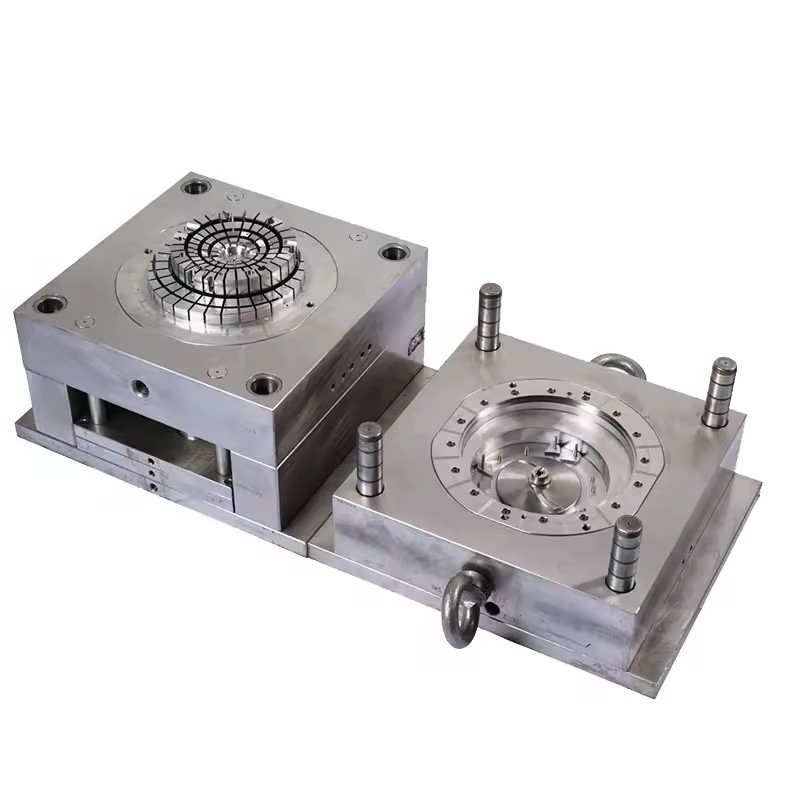
Aluminum Prototype Plastic Injection Molding
Injection molds are key equipment in plastic product processing, and aluminum injection molds have the following characteristics compared to other material molds:
- Lightweight: Compared to steel molds, aluminum molds are lighter in weight and more convenient to operate, especially for large injection molding machines, which are convenient for opening and closing molds, installation and movement.
- Fast heat dissipation: Aluminum molds have good thermal conductivity, and heat dissipation is fast during injection molding, accelerating the cooling and solidification of plastics and shortening the production cycle.
- Low cost: Compared to steel molds, aluminum molds have lower manufacturing material costs, simple processing technology, and short manufacturing cycles, so the cost is relatively low.
- Easy to process: Aluminum molds can be processed using different methods, such as casting, sheet metal, and CNC machining, and have high processing accuracy, making it easy to process complex mold structures and meet the processing needs of different plastic products.

Steel Prototype Plastic Injection Molding
The main characteristics of steel molds include the following aspects
- High hardness:The thin steel used in injection molds has high hardness and can withstand high pressure and high temperature, ensuring the accuracy and stability of the size and shape of the injection molded products.
- High wear resistance: The surface of the thin steel injection mold has undergone special treatment, which has high wear resistance and can resist the wear and corrosion of the mold during the production process.
- High bending strength: The thin steel used in injection molding has high bending strength, which can withstand the bending and deformation of the mold during the production process, ensuring the stability of the shape and size of the injection molded product.
- Good processability: The injection mold is made of thin steel material with moderate softness and hardness, which is easy to process and control, and can meet the production needs of various complex molds.
FAQs For Prototype Plastic Injection Molding
What materials are available for prototype plastic injection molding?
Almost all plastics can be used for injection molding production, but due to the different characteristics of plastics, different steels and designs are required, and injection molding machines are also important. Common plastics include the following:
ABS/PC/Acetal/Delrin/HDPE/LDPE/Nylon/PEEK/PET/PETG/PMMA (Acrylic)/PP/PS/PSU/POM
…
What you can do for prototype plastic injection molding?
we can have injection molding for different plastics, and liquid silicone rubber molding for certain low cost solutions and overmolding or insert molding as request, and high cavitation mold for big volume products.
How to choose whether to use 3D printing or injection molding?
From a cost perspective: Due to the wide availability of raw materials for prototype plastic injection molding, its large-scale and rapid standardized production characteristics are also conducive to reducing the cost of individual products. Therefore, in terms of manufacturing costs, the cost of injection molding is much lower than that of 3D printing technology.
From the perspective of delivery time: 3D printing is a fully automated processing, and modifying the prototype only requires modifying the CAD model without incurring manufacturing costs. In this regard, 3D printing technology is very advantageous.
In summary, if it is a mass production product, injection molding is the primary consideration. If a single product does not exceed 500 pieces, 3D printing can be considered.
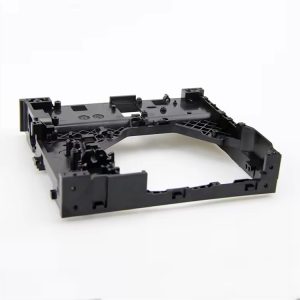
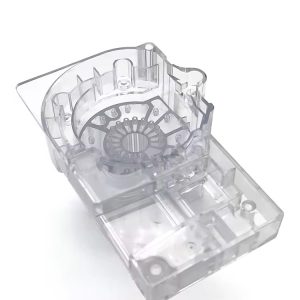
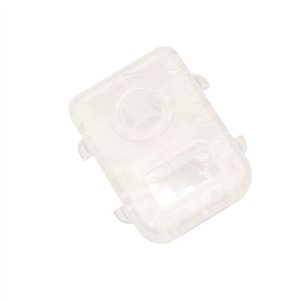
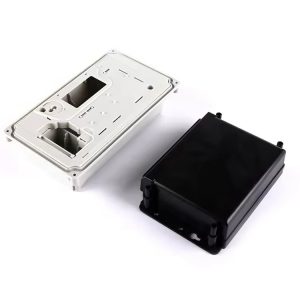
Gallery For Prototype Plastic Injection Molding Parts