Aluminum 3D Printing: Build Lightweight, Complex Parts
Table of Contents
Conclusion
Are you a product developer looking to revolutionize your prototyping and manufacturing processes? Aluminum 3D printing, also known as metal 3D printing, opens a world of possibilities for creating lightweight, strong, and complex parts. This guide dives deep into the world of aluminum 3D printing, exploring its benefits, processes, materials, and applications. Learn how this cutting-edge technology can help you bring your innovative ideas to life faster and more efficiently. Discover how additive manufacturing with aluminum can give you a competitive edge. Read on to find out if aluminum 3D printing is the right solution for your needs.
Aluminum 3D printing is a powerful technology that offers product developers a unique combination of design freedom, performance, and efficiency. Whether you’re creating prototypes, customized parts, or lightweight aluminum parts to meet demanding requirements, aluminum 3D printing can help you achieve your goals.
Here’s a quick recap of the key takeaways:
Aluminum 3D printing enables the creation of lightweight and complex parts with excellent strength-to-weight ratios.
AlSi10Mg is a popular aluminum alloy for 3d print due to its good mechanical properties.
DMLS and SLM are common 3d printing processes for aluminum.
Post-processing is often required to improve surface finish and mechanical properties.
Aluminum 3D printing is used in aerospace, automotive, medical, and consumer product industries.
Ready to explore the possibilities of aluminum 3D printing for your next project? Get an instant quote today! Contact us across national to discuss your needs. Let Senyorapid help you bring your vision to life. Explore our cnc machining and injection molding services for a comprehensive manufacturing solution. See what we can do with our precision sheet metal fabrication services, too. For high-quality parts, consider our vacuum casting service.

What is Aluminum 3D Printing and Why is it Gaining Popularity?
Aluminum 3D printing, a subset of 3D printing metal, also known as additive manufacturing, is a process of building three-dimensional objects from aluminum alloy powders, layer by layer. Unlike traditional subtractive manufacturing methods like CNC machining, which remove material to create a part, 3D printing adds material, allowing for more complex geometries and efficient material usage. The rising popularity of aluminum 3D printing stems from its ability to produce complex parts with excellent strength-to-weight ratios, making it invaluable across various industries.
The benefits are numerous. It enables rapid prototype development, accelerating the design cycle. It allows for the creation of intricate internal structures, such as weight-saving lattice structures, that would be impossible to manufacture using conventional methods. Further, it facilitates on-demand production, reducing the need for large inventories.
What are the Key Benefits of Using Aluminum in 3D Printing?
Aluminum offers a unique combination of properties that makes it an ideal material for 3D printing. First and foremost, aluminum is lighter than many other metals, such as steel and titanium, while still maintaining high strength. This makes it ideal for applications where build lightweight is critical, such as in the aerospace industry and automotive and aerospace industries.
Beyond its lightweight nature, aluminum boasts excellent thermal and electrical conductivity, as well as impressive corrosion resistance. These properties, combined with its good machinability and weldability, make 3D printed aluminum a versatile choice for a wide range of applications. The ability to print and finish complex designs in aluminum is a huge advantage, giving product developers greater freedom and control.
Which Aluminum Alloys are Commonly Used in 3D Printing?
Several aluminum alloys are well-suited for 3D printing metal, each offering slightly different characteristics. One of the most popular is AlSi10Mg. This aluminum alloy is known for its good mechanical properties, castability, and heat treatability. It’s typically used for parts that require high strength-to-weight ratio and good thermal conductivity. For example, AlSi10Mg is a great option for printed parts.
Other commonly used aluminum alloys include those from the 2000, 6000, and 7000 series. Each alloy family offers different combinations of strength, ductility, and corrosion resistance. The specific choice of alloy depends on the desired mechanical properties and application requirements of the final part.
What 3D Printing Processes are Suitable for Aluminum?
Several 3D printing processes are capable of printing aluminum. The most common include:
- Direct Metal Laser Sintering (DMLS): DMLS is a powder bed fusion technology where a laser selectively sinter aluminum powder, layer by layer, to create a solid object. DMLS offers high precision and is capable of producing complex geometries with fine details. DMLS is often the go-to choice for high-performance applications in aerospace.
- Selective Laser Melting (SLM): Similar to DMLS, SLM fully melts the aluminum powder during the printing process, resulting in parts with higher density and mechanical properties.
- Directed Energy Deposition (DED): DED uses a focused energy source, such as a laser or electron beam, to melt aluminum wire or powder as it’s deposited onto a surface. DED is often used for repairing or adding features to existing metal objects.
Each of these processes has its strengths and weaknesses, and the best choice depends on the specific requirements of the application.
What are the Mechanical Properties of 3D Printed Aluminum Parts?
The mechanical properties of 3D printed aluminum parts can vary significantly depending on the printing process, the aluminum alloy used, and the preparation and post-processing steps employed. However, in general, 3D printed aluminum parts exhibit good strength, stiffness, and ductility. It is crucial to consider the specific requirements of your application when selecting a material and printing process.
For example, Fathom’s 3D printing metal service can achieve tensile strengths up to 400 MPa and yield strengths up to 300 MPa with AlSi10Mg using the T6 heat treatment. Elongation at break can reach up to 10%. These values also depend on the measurement method used and the orientation of the part during printing.
What Industries Benefit Most from Aluminum 3D Printing?
Several industries are leveraging the benefits of aluminum 3D printing to improve their products and processes. These include:
- Aerospace: The aerospace industry benefits greatly from the excellent strength-to-weight ratio of 3D printed aluminum. It is used for parts like aircraft brackets, ducting, and engine components. The ability to create lightweight aluminum parts to meet stringent performance requirements is a major advantage.
- Automotive: In the automotive sector, aluminum 3D printing is used for prototype development, tooling, and the production of customized parts with intricate designs.
- Medical: The biocompatibility and sterilizability of aluminum make it suitable for certain medical implants and devices.
- Consumer Products: Aluminum 3D printing enables the creation of customized consumer products with complex geometries and aesthetic appeal.
What are the Design Considerations for Aluminum 3D Printing?
Designing for aluminum 3D printing requires consideration of several factors to ensure successful print and finish complex. These include:
- Support Structures: Overhanging features may require support structures to prevent them from collapsing during the printing process. These supports need to be removed during post-processing.
- Orientation: The orientation of the part on the build platform can affect its mechanical properties and surface finish.
- Thermal Management: Aluminum has high thermal conductivity, which can lead to warping or distortion during the printing process. Careful thermal management is essential to prevent these issues.
- Wall Thickness: Minimum wall thicknesses should be considered to ensure the structural integrity of the 3d printed parts.
- Geometry: While aluminum 3D printing allows for complex geometry, there are still limitations to what can be achieved. Understanding these limitations is crucial for successful design.
What Post-Processing Options are Available for Aluminum 3D Printed Parts?
Post-processing is often required to improve the surface finish, mechanical properties, and dimensional accuracy of aluminum 3D printed parts. Common post-processing options include:
- Support Removal: Removing support structures is typically the first step in post-processing.
- Surface Finishing: A variety of surface finishing techniques can be used to improve the smoothness and appearance of the parts, including polishing, sandblasting, and coating. Parts can be polished and coated to meet specific aesthetic requirements.
- Heat Treatment: Heat-treat is used to enhance the mechanical properties of the parts. For example, using the T6 heat treatment can significantly increase the strength of AlSi10Mg parts. Hardening heat treatments are often employed.
- CNC Machining: CNC machining can be used to achieve tighter tolerances and improve the accuracy of critical features.
- Micro Shot-Peened: The parts can be micro shot-peened to improve fatigue life.
- Spark-Eroded: The parts can be spark-eroded to create specific surface textures.
The specific post-processing steps required will depend on the application and the desired properties of the final part.
What are the Alternatives to Aluminum 3D Printing, such as CNC Machining?
While aluminum 3D printing offers many advantages, it’s not always the best solution. Alternatives such as CNC machining can be more cost-effective for simpler geometries or when very tight tolerances are required. Consider CNC machining for high-volume production of simpler parts.
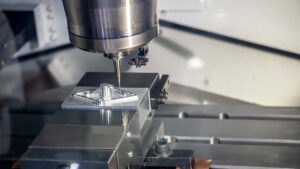
CNC machining involves removing material from a solid block of aluminum to create the desired shape. This process is well-established and can produce parts with high accuracy and good surface finish. However, it’s generally less suitable for complex parts with intricate internal features. Other manufacturing technologies include casting and forging, each with its own set of advantages and disadvantages.
How Can I Get Started with Aluminum 3D Printing?
If you’re interested in exploring the potential of aluminum 3D printing, there are several ways to get started. You can:
- Partner with a 3D printing service provider: Companies like Senyorapid offer aluminum 3D printing services using a variety of processes and materials. Fathom is one such provider.
- Invest in your own 3D printer: If you have the budget and expertise, you can purchase your own 3d printer and bring the process in-house.
- Attend a 3D printing workshop or training course: This can help you learn the basics of aluminum 3D printing and gain hands-on experience.
- Experiment with different materials and processes: The best way to learn is by doing. Start with simple projects and gradually increase the complexity as you gain experience.
What Factors Influence the Cost of Aluminum 3D Printing?
The cost of aluminum 3D printing can vary depending on several factors, including:
- Material: The cost of the aluminum alloy powder.
- Printing Process: Different printing processes have different costs associated with them.
- Part Size and Complexity: Larger and more complex parts will generally cost more to 3d print.
- Build Time: Longer build times translate to higher costs. The number of layers and the dmls settings will influence build time.
- Post-Processing: The amount of post-processing required will affect the overall cost.
- Volume: The cost per part generally decreases as the production volume increases.
- across national shipping costs if applicable.
It’s important to get quotes from multiple service providers to compare prices and find the best value for your needs.
FAQs
What tolerances can I expect with aluminum 3D printing?
Typical tolerances range from ±0.05 mm to ±0.1 mm, depending on the printing process and part size.
Can aluminum 3D printed parts be used in high-temperature applications? Yes, certain aluminum alloys, especially after heat treatment, can withstand elevated temperatures. AlSi10Mg, for example, can operate at temperatures up to 572 °F.
What is the typical build volume for aluminum 3D printing?
Build volumes vary depending on the machine used. Some machines are capable of producing multiple parts within a single build, optimizing efficiency. The eosint m 280-400w offers a good balance of build volume and precision.
Is aluminum 3D printing suitable for mass production?
While aluminum 3D printing is great for prototype and low-volume production, traditional methods like casting or CNC might be more cost-effective for large-scale production runs.
What surface finish can I expect from aluminum 3D printing?
The surface finish depends on the printing process and post-processing. DMLS and SLM typically produce rougher surfaces that require post-processing to achieve desired smoothness.
How does aluminum 3D printing compare to aluminum casting?
Aluminum 3D printing allows for more complex geometry and customization compared to casting but may not be as cost-effective for high-volume production. It offers better material properties than those used in casting.
Comments
Latest Posts
Related Blogs
Senyo’s blog is focused on sharing our extensive knowledge of prototype manufacturing. Through our articles, we aim to support you in refining your product design and navigating the complexities of rapid prototyping more effectively.