The Complete Guide To Aluminum Metal Stamping Processes
Table of Contents
The very basis of precision manufacturing is the capability of converting raw sheet metal to functional parts. Among various fabrication methods, aluminum metal stamping is probably the most visible one in the field of engineering today. It works by a metal forming action using a high, tonnage press and a tool and die set designed for operation on aluminum alloys. This method is chosen by the manufacturers for the time, reliability, and low unit cost in a high volume of production that it can bring.
Scientists and technologists who combine the study of materials and engineering have a favorite metal, aluminum, for its atomic makeup that offers the highest strength, to, weight ratio. The matter is quite different if one thinks of steel as a typical ferrous material. The metallurgy, tribology, and plastic deformation aspects will be the key factors when it comes to the process that involves a piece of aluminum being stamped. This article is intended to be a walk through of the factors influencing the performance of the aluminum metal stamping process. The list of issues will include as well alloy selection, operational methods, tooling mechanisms, and the troubleshooting techniques that are most frequently encountered.
The Science of Alloy Selection
Success in aluminum metal stamping really starts at the molecular level. Different forms of aluminum have different uses.
It is essential to choose the right alloy series depending on the mechanical properties that are required. Pure aluminum is very soft and hence, it lacks the shear strength that is necessary for structural components. That is why, among other things, suppliers add alloy elements such as magnesium, silicon, or copper in order to change the grain structure and improve the performance of the metal.
Engineers categorize these alloys by series. The choice dictates the material’s formability, weldability, and corrosion resistance.
Table 1: Comparative Analysis of Aluminum Alloys for Stamping
| Alloy Series | Primary Alloying Element | Key Characteristics | Typical Stamping Applications |
|---|---|---|---|
| 1xxx | Pure Aluminum (99%+) | High ductility, excellent corrosion resistance, high electrical conductivity. Low mechanical strength. | Electrical bus bars, chemical equipment, decorative trim. |
| 3xxx | Manganese | Moderate strength (20% stronger than 1xxx), good workability. Non-heat treatable. | Cooking utensils, heat exchangers, storage tanks. |
| 5xxx | Magnesium | High strength, supreme corrosion resistance (marine environments). Hardens rapidly during cold working. | Automotive panels, marine hardware, fuel tanks. |
| 6xxx | Magnesium & Silicon | Heat-treatable, high structural strength, excellent formability. The most versatile series. | Automotive chassis, architectural components, aerospace frames. |
| 7xxx | Zinc | Highest strength (comparable to steel). Difficult to stamp due to low ductility. | Aerospace structural components, high-stress gears. |
You should also take into account the temper designation. Temper refers to the level of hardness and elasticity of the metal.
- O-Temper: Soft, annealed, and easily drawable. Perfect for deep drawing operations.
- H-Temper: Cold, worked to a certain degree. It results in a stiffer material with lower formability.
- T-Temper: Heat treated. Gives the material the highest level of strength.
Engineering Benefits of Stamped Aluminum
Why do industries continue to change their materials from steel to aluminum? The main explanation is the fact that it is physics and chemistry.
High Strength-to-Weight Ratio
Aluminum has a density that is about one, third that of steel. However, the tensile strengths of the top alloys can match the structural steel one. Such a decrease in weight is vital for energy efficiency in vehicles and aerospace sectors.
Natural Passivation
Aluminum is an element that instantly reacts with oxygen in the air. This causes the formation of a very thin, tough layer of aluminum oxide on the surface of the metal. The film isolates the metal underneath and thus prevents further rusting. That is why aluminum metal stamping parts have the characteristic of rust resistance even without costly galvanization.
Thermal and Electrical Dynamics
Aluminum is an excellent conductor of heat and electricity. Heat sinks made of metal sheets help to cool down electronic devices very efficiently. Likewise, the use of bus bars made out of metal sheets helps to transfer the current with very little resistance.
Core Aluminum Metal Stamping Techniques
Aluminum metal stamping is not a singular action. It is a collection of cold-forming processes. Fabricators utilize specific techniques based on the geometric complexity of the final part.
Blanking Operations
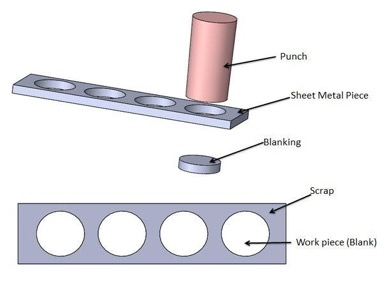
Blanking is the process by which a flat piece of geometric stock is separated from a larger coil or sheet. The punch is lowered and it shears the metal into the die. The portion which drops through is the usable one (the blank). It is very important that engineers calculate accurate clearances. Aluminum, for example, needs a much tighter clearance than steel to avoid burr formation.
Coining and Compression
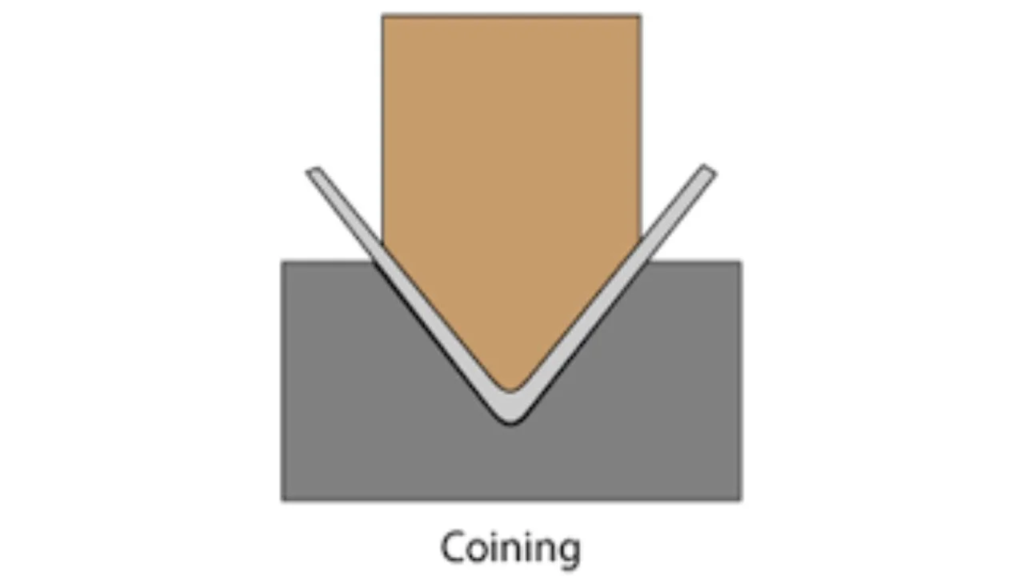
Coining results in intricate details and very precise tolerances. The press applies a tremendous force to plastically deform the aluminum. The metal, as it is flowing, goes into the die cavity and it takes on the exact surface topology of the tool. This method helps to prevent springback and produces very smooth surfaces.
Deep Drawing Mechanics
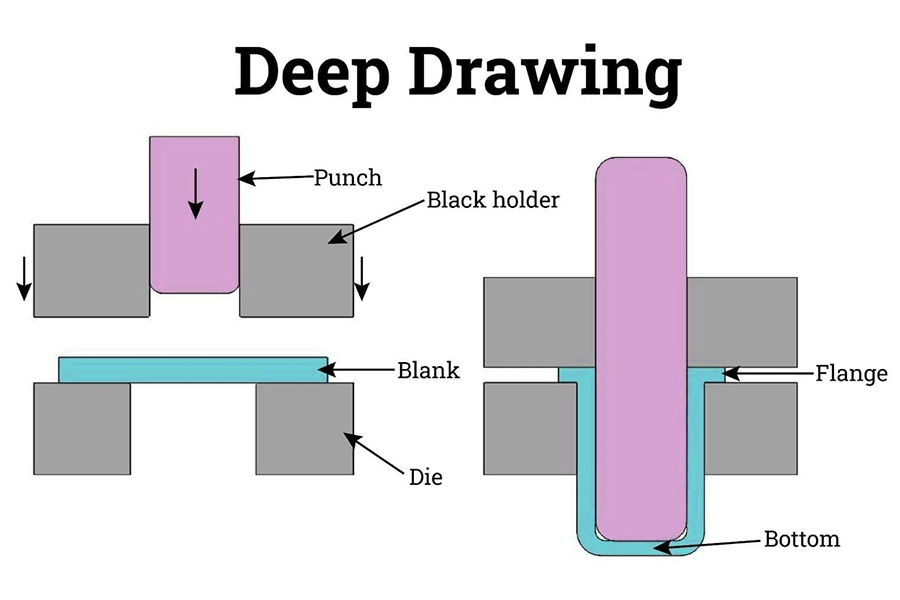
Deep drawing helps to form three, dimensional shapes such as cans, cups, or pans. A punch forces a flat aluminum blank into a die cavity. The depth of the draw is greater than the part’s diameter. The material flows radially. Aluminum’s ductility makes it perfect for this, but lubrication is a must to avoid tearing.
Embossing and Surface Texture
Embossing involves creating a raised or recessed design on the metal surface without cutting it. The die stretches the material slightly. Manufacturers use it for branding, reinforcing ribs, or tactile indicators.
Advanced Stamping Operations
High, volume manufacturing means that a product runs through a process very frequently and requires meeting a high demand. Also, the product needs to be produced in automation and speed. Single, station dies are usually not capable of fulfilling the above requirements and frequently fail in such cases.
1. Progressive Die Technology
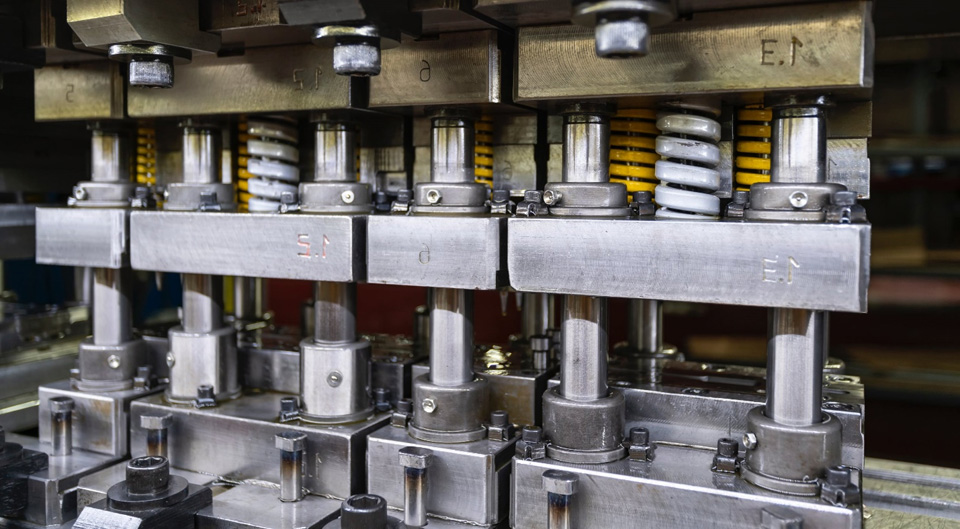
Creative progressive die is a method of stamping that uses a system of continuous feed. An aluminum coil is passed through a single die with several stations. At each station, a different operation (cutting, bending, punching) is done as the strip moves on. At the final station, the finished part is separated. This way the production can be made very fast while the work done is meticulous to the extent of tolerance.
2. Transfer Die Systems
Transfer die stamping is mainly used for larger components. After that, a mechanical arm or robot transfer finger picks up the aluminum component and places it into the next die station. This enables manufacturers to create parts with complex geometries that cannot be supported by the continuous strip of a progressive die.
3. Fine Blanking for Precision
Fine blanking is a method that totally avoids the broken and torn area on the edge of the cut. It utilizes a V, ring stinger to apply pressure on the sheet before cutting. The result is a perfectly sheared, clean edge. Designers frequently use this technique to manufacture aluminum metal stamping parts that are a part of the mechanical components being in motion such as gears or latches.
Critical Considerations: Springback Management
Subtitle: Overcoming the Elasticity of Aluminum
One of the most challenging scientific problems in aluminum metal stamping is “springback.” It is known that aluminum has a lower modulus of elasticity than steel. When the stamping press opens, the aluminum tries to go back into its original shape. It yields the elastic stress that was stored during the deformation.
Such a phenomenon changes the final size of the parts. Suppose you bend aluminum at 90 degrees, it can still rebound up to 92 degrees. Tooling engineers have to make up for this. They use the “over-bending” methods. They bend the metal beyond the intended angle, which then becomes the correct specification after the springback. Determining the exact springback factor involves both high, tech simulation software and material testing.
Lubrication and Tribology
Subtitle: Managing Friction and Heat Generation
Tribology is the study of friction, wear, and lubrication. In aluminum metal stamping, friction is the adversary. Aluminum equally tends to bond with steel. When exposed to heat and pressure, the atoms of aluminum tend to adhere to the steel tool. This causes adhesive wear or galling.
Therefore, the use of special lubricants becomes a must for the operators to prevent this.
- Synthetic Lubricants: These create a powerful film that isolates the tool from the workpiece.
- Viscosity Management: The oil should be sufficiently thick to resist the force but not too thick to hinder the oil from flowing in the complicated die cavities.
- Heat Dissipation: The lubricant is also a coolant that gets rid of the heat resulting from plastic deformation.
Troubleshooting Common Defects
Even when using precise tools, problems still come up. Knowing why the problem happened is very important for controlling the process.
Adhesive Galling
As was mentioned, aluminum adheres to the tool. This causes rough surface finishes and parts that are torn.
Solution: Coat the tool steel with Physical Vapor Deposition (PVD) coatings such as Titanium Nitride (TiN) or Diamond, Like Carbon (DLC). Also, increase the amount of lubricant used.
Oxide Build Up
Aluminum oxide is a ceramic. Therefore, it is harder than the metal it covers. When it chips off, it behaves like abrasive grit. Hence, it wears out the tool quickly.
- Solution: Tools must be serviced and cleaned thoroughly and properly. Tool steel of very high quality (e.g. carbide) is resistant to wear.
Cracking and Splitting
When force is too much for aluminum to hold, it breaks. This is typical in deep drawing and sharp bending.
- Solution: There is a higher ductility (O, temper) alloy to be used. The bend radius can be increased. The grain direction of the metal should be properly aligned with the bend line.
Slug Pulling
At times the scrap metal (slug) that is ejected refuses to fall down the die and instead sticks to the punch face. This can be a problem because the punch will force the slug against the fresh sheet, thus damaging both the part and the tool.
- Solution: Incorporate vacuum systems in the die. Attach shear angles to the punch face.
Capability in Aluminum Metal Stamping
Producing top-level parts demands a collaborator of metallurgical knowledge. A skilled maker is aware of the subtle differences between the 5052 and the 6061 alloys. They have the facilities to create dies that consider spring, back and thermal expansion. Regardless of whether the job is done with the help of the fast, moving progressive dies or the complicated deep drawing process, having know, how in aluminum metal stamping is a way of guaranteeing that the end item complies with the strict industry standards.
FAQs
What is aluminum metal stamping?
Aluminum metal stamping is a type of cold, forming process. It operates by using dies and hydraulic or mechanical presses to cut, bend, and shape aluminum sheet metal into accurately made components.
What is the main reason engineers choose aluminum for stamping instead of steel?
One of the main reasons engineers opt for aluminum is the metal’s outstanding strength, to, weight ratio, its good corrosion resistance by nature, and high thermal conductivity. It enables the production of lighter final goods without compromising their durability.
How do you decide on the right alloy to use in a project?
It is necessary to evaluate the application. To prioritize corrosion resistance, use the 5xxx series. For those structural parts that require heat treatment, use the 6xxx series. For general use, 1xxx or 3xxx series are most suitable.
Can stamped aluminum be anodized?
Of course. Anodizing allows you to harden the surface, make it more resistant to corrosion, and also blow color into it. Anyway, stamping lubricants have to be totally cleaned off before anodizing.
Does aluminum stamping require special lubricants?
Definitely. Since aluminum usually gets galling (sticks) to steel tooling, it is necessary to use lubricants featuring high film strength and friction modifiers. For the ease of cleaning, synthetic, oil, free lubricants are generally favored.
Can standard presses handle aluminum fabrication?
Yes, both standard mechanical and hydraulic presses are suitable. However, the force curves and speeds might have to be changed. It is often necessary to use faster stamping speeds with aluminum to take advantage of its plasticity.
How does tooling for aluminum differ from steel?
The tooling for aluminum stamping requires larger clearances (normally 10, 15% of material thickness) to avoid problems with shearing of the material. Besides that, the tools should be of a higher polish level and have special coatings to prevent material adhesion.
Conclusion
Aluminum metal stamping is a combination of heavy machinery and material science working together. It takes aluminum, a very light and widely available metal, and turns it into the essential parts that make our cars run, keep our gadgets safe, and help construct our buildings.
Being successful in metal stamping aluminum is no luck of the draw. It involves pinpointing the right alloys, tightly designing the dies to handle the springback, and strictly controlling the lubrication. As the industries shift their main focus towards cutting down the weight and being more eco, friendly, the demand for the high, precision stamped aluminum parts will definitely rise.
More Links For Reference
- The Aluminum Association: https://www.aluminum.org (Authority on aluminum standards and data).
- PMA (Precision Metalforming Association): https://www.pma.org (Industry standards for metal stamping).
- ASM International: https://www.asminternational.org (Materials information society for alloy data).
- MatWeb: http://www.matweb.com (Database for material properties of specific aluminum grades).
Comments
Latest Posts
Related Blogs
Senyo’s blog is focused on sharing our extensive knowledge of prototype manufacturing. Through our articles, we aim to support you in refining your product design and navigating the complexities of rapid prototyping more effectively.