Blow Molding vs. Injection Molding: Choose the Right Process
Table of Contents
Introduction
Overview of plastic manufacturing methods
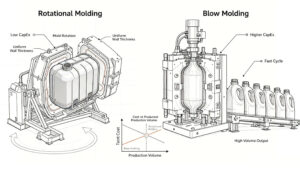
Plastic molding is the process of converting plastic raw materials into parts, using various molding methods to make plastic raw materials into parts with the desired shape, size, and performance. The main methods of plastic molding include injection molding, blow molding, extrusion molding, and rolling molding,
In addition, common plastic molding processes include compression molding, rotary molding, vacuum molding, casting molding, enamel molding, casting molding, foam molding, injection compression molding, winding molding, etc. This article focuses on explaining the molding processes of injection molding and blow molding.
Importance of selecting the right molding process
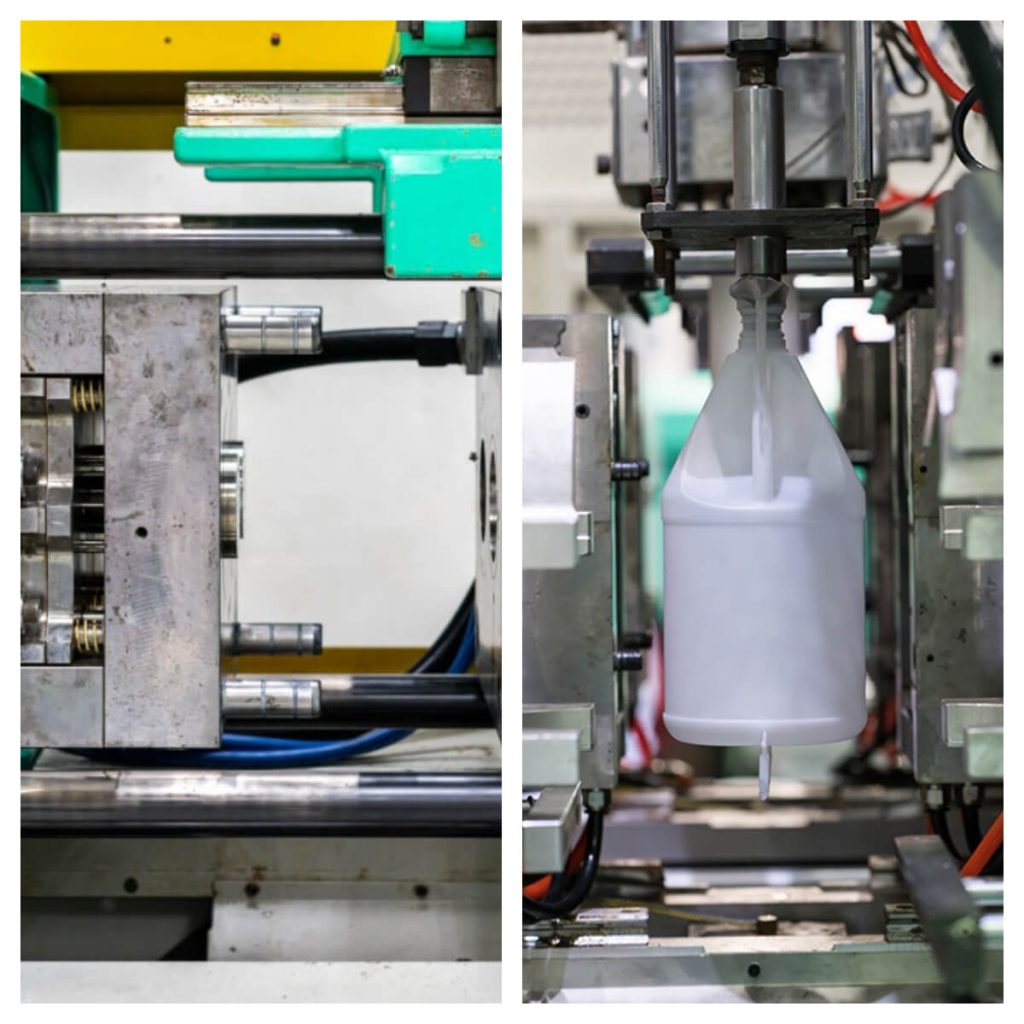
Choosing the right plastic molding process is crucial as it directly affects the quality, production efficiency, and cost of the product. Different molding processes are suitable for different product requirements and production environments. Choosing the appropriate process can ensure stable product quality, high production efficiency, and controllable costs.
Firstly, different plastic molding processes have different characteristics and applicable ranges. For example, injection molding is suitable for mass production of plastic products with complex shapes and precise dimensions, while blow molding is generally used for producing bottles and cans due to molding limitations. Choosing the right process can fully utilize the performance of materials and meet the design requirements of products.
Secondly, the correct molding process can significantly improve production efficiency and product quality. For example, the injection molding process is fast, suitable for large-scale production, and can provide highly complex and precise part designs. Choosing the appropriate process can reduce production cycles, lower scrap rates, and thus improve overall production efficiency.
In addition, the correct molding process can also reduce production costs. For example, certain molding processes may require higher mold costs, but can reduce subsequent processing time and material waste, thereby lowering overall costs in the long run. Choosing the appropriate process can optimize resource allocation and reduce unnecessary expenses
What is Blow Molding vs Injection Molding?
Blow Molding
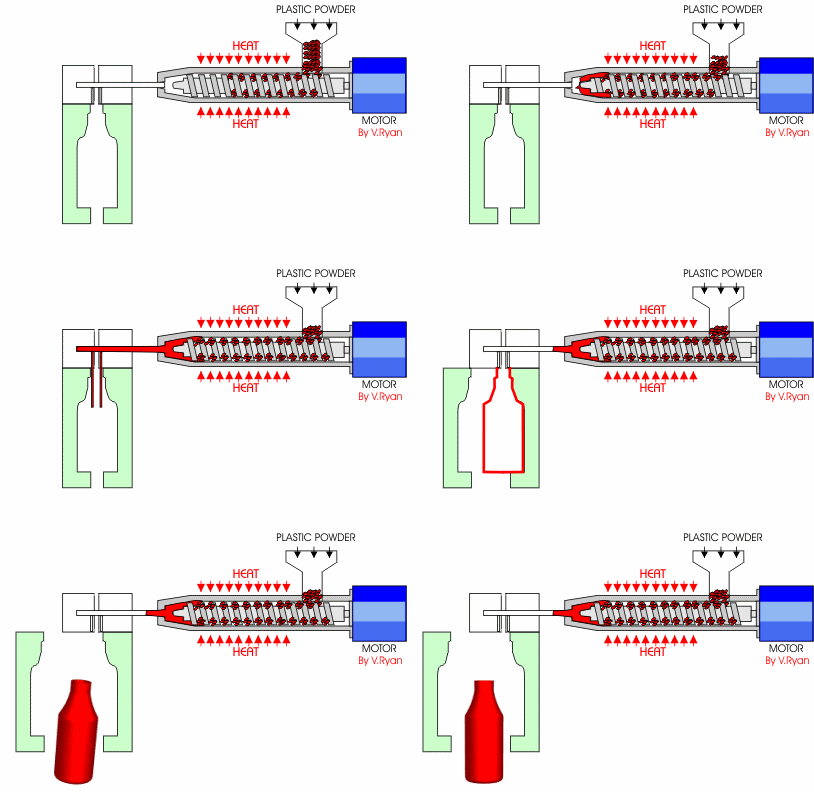
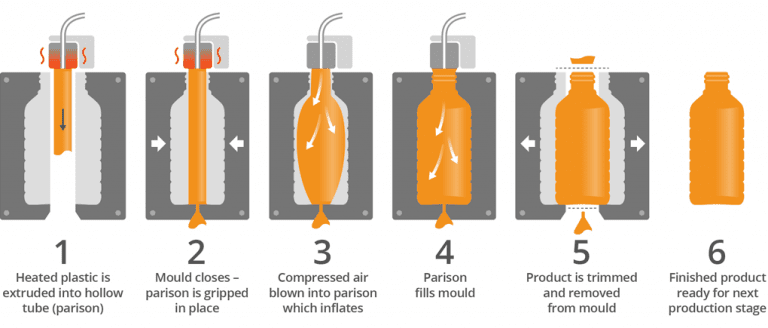
Blow molding (also called extrusion blow molding) is the process of extruding plastic pellets into a molten fluid of a certain shape through an extruder, and then processing them into plastic products of the desired shape through a mold. Finally, injecting a certain pressure of air into the mold to expand the plastic into a molded product is a processing method.
Common Materials Used
Blow molding is mainly used for materials such as polyethylene (PE), polypropylene (PP), polyvinyl chloride (PVC), polycarbonate (PC), acrylonitrile butadiene styrene copolymer (ABS), and thermoplastic elastomers (TPE). These materials have good physical and chemical properties and are suitable for the production of various blow molded products
Typical Application
Blow molding technology is widely used in the production of plastic containers, such as beverage bottles, cosmetic bottles, food packaging bottles, plastic buckets, etc. In addition, blow molding technology is widely used in the production of toys, pipes, building materials, medical supplies, and other fields.
Injection Molding
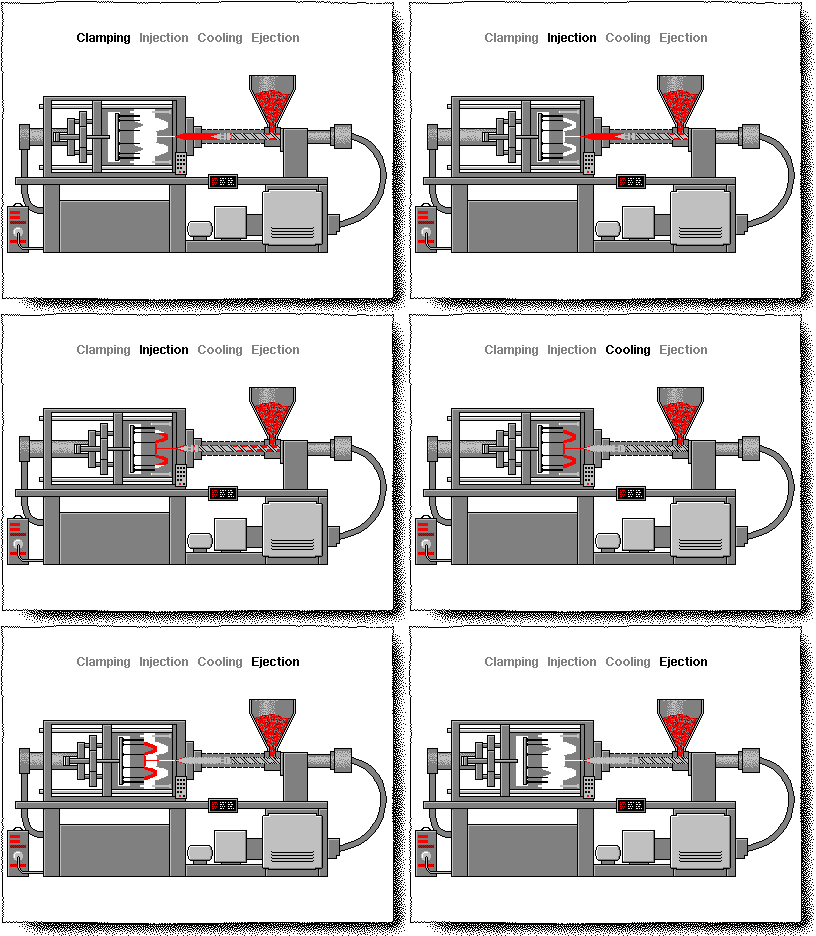
Injection molding is a method of shaping industrial products, mainly using thermoplastic or thermosetting plastics as raw materials. Injection molding can be achieved through injection molding machines and molds. Molten plastic raw materials are pressed into the mold to form, cooled and solidified, and then demolded to obtain the desired plastic product.
Common Mateials Used
The most suitable and common types of plastics for injection molding include polyethylene (PE), polypropylene (PP), polycarbonate (PC), acrylonitrile butadiene styrene copolymer (ABS), nylon (PA), polyethylene (POM), polycarbonate (PC), and methyl methacrylate (PMMA)
More information,pls. go for injection molding materials.
Common Application
Injection molding has the advantages of fast molding speed, high production efficiency, and high product accuracy, and is therefore widely used in fields such as automobiles, electronics, home appliances, and medical devices.
Blow Molding vs. Injection Molding: Key Differences
| Feature | Blow Molding | Injection Molding |
|---|---|---|
| Process | Air is blown into a heated plastic preform to create hollow objects. | Molten plastic is injected into a mold to form solid parts. |
| Products | Hollow items like bottles, containers, and tanks. | Solid items like automotive parts, toys, and electronics casings. |
| Mold Structure | Typically single or two cavity molds,can’t be high cavitation | Two-part or multi-part molds, often complex. |
| Cost | Lower mold cost, suitable for high-volume production of simple hollow shapes. | Higher mold cost, better for complex, intricate parts with high precision. |
| Materials Used | PET, HDPE, PVC, Polypropylene. | ABS, Polycarbonate, Nylon, Polyethylene, Polypropylene. |
| Advantages | Efficient for lightweight, hollow objects; cost-effective for large runs. | High precision, capable of producing intricate and solid parts with consistency. |
| Disadvantages | Limited to hollow parts; less control over wall thickness. | Higher cost; molds are more expensive and complex to design. |
Which Process Is Right for Your Project, Blowing Molding vs. Injection Molding?
Choosing between blow molding vs. injection molding depends largely on the specific requirements of your project, including the type of product you want to create, the desired production volume, and your budget constraints. Below are some considerations to help you make the right decision.
When to Choose Blow Molding
Blow molding is the ideal choice if your project involves producing large quantities of hollow, lightweight products, such as:
- Plastic bottles for beverages or household products
- Fuel tanks for automotive applications
- Cosmetic containers, such as shampoo or lotion bottles
- Water or oil drums
- Large plastic storage tanks
Blow molding is also preferable if you need to produce high volumes of products quickly and cost-effectively. It is especially well-suited for industries such as food and beverage, pharmaceuticals, and consumer goods, where large numbers of containers are required.
When to Choose Injection Molding
Injection molding is the right choice if your project requires the production of solid, detailed parts with high precision and complexity. It is commonly used for:
- Automotive components, such as dashboards, engine covers, and housings
- Electronic devices and enclosures
- Medical devices, including syringes and diagnostic equipment
- Toys and consumer products with intricate details
- Industrial parts and mechanical components
Injection molding is also ideal for projects that demand tight tolerances, durable materials, and complex designs. While the initial investment may be higher, injection molding provides the precision and versatility needed for producing high-quality, long-lasting parts.
Blow Molding vs. Injection Molding: Energy Efficiency
Injection molding and blow molding are both plastic molding processes, but they have significant differences in energy efficiency and waste. The energy consumption of injection molding process is mainly concentrated in power drive, barrel heating, and plastic drying heating, which account for more than 95% of the total energy consumption of injection molding processing. In contrast, the energy consumption of blow molding process is mainly concentrated in the heating and stretching process, but its overall energy consumption is lower because blow molding does not require maintaining high temperature material cylinder and drying process like injection molding.
Energy Efficiency Optimization in Injection Molding Process
In injection molding process, energy consumption can be significantly reduced through technological innovation. For example, the optimization of the power drive system is the key to energy saving in injection molding machines, and modern servo energy-saving systems have dominated the market, providing precise control and fast response, with significant energy-saving effects. In addition, the improvement of the barrel heating system and plastic drying heating system is also an important energy-saving direction. By adopting efficient and energy-saving heating products and intelligent technologies such as expert systems and machine learning, the energy efficiency of the production process can be further optimized.
Energy efficiency optimization in blow molding process
In blow molding process, measures such as reasonable mold design, control of inflation ratio, and avoidance of sharp edges can effectively reduce energy waste and improve production efficiency. In addition, adopting efficient heating methods and control technologies such as infrared heating and temperature monitoring systems can significantly improve the energy efficiency of blow molding processes.
Overall, injection molding processes face more challenges in terms of energy efficiency and waste, but through technological innovation and optimization measures such as servo energy-saving systems and intelligent control, energy consumption can be effectively reduced. In contrast, blow molding technology has natural advantages in energy efficiency, but it still needs to be further improved through fine design and efficient heating methods to enhance its energy efficiency. In the future, with the continuous advancement of technology, both injection molding and blow molding processes will develop towards a greener and more efficient direction
Hybrid Solutions:Injection Blow Molding(IBM)
In some cases, manufacturers may choose to combine blow molding and injection molding to manufacture more complex products. For example, injection blow molding (IBM) is a hybrid process that combines the precision of injection molding with the ability to produce hollow products through blow molding. This technology is most commonly used to manufacture PET mineral water bottles and medicine bottles, or plastic bottles with more complex features such as threaded necks or handles.
Hybrid solutions can provide a win-win situation, offering manufacturers more design flexibility and functionality while maintaining the cost-effectiveness of traditional blow molding and injection molding methods.

Pros
- Plastic bottles are molded in one go from raw materials to finished products, with high automation and no need for manual secondary processing, saving labor. They are also hygienic and comply with GMP requirements for pharmaceutical packaging, making them particularly suitable for producing pharmaceutical bottles
- The product has a beautiful appearance, accurate bottle mouth size, and stable plastic bottle weight
- Plastic products are made by one-time blow molding of injection molded embryos, with no waste at the bottle mouth and bottom, and a smooth and well sealed bottle mouth.
- Suitable for producing high-end and exquisite plastic hollow products, such as cosmetic bottles, baby bottles, space cups, light bulbs, etc.
Cons
The process is complex, the mold processing is difficult, and it is not easy to master
There are many mold components, long production and processing cycles, and high costs.
Not suitable for use with multiple varieties and normally only for small batches of products.
Conclusion
Both blow molding vs. injection molding are vital manufacturing processes that cater to different needs within the plastic production industry. Blow molding is the go-to process for producing hollow, lightweight products in high volumes, while injection molding excels at creating complex, solid parts with tight tolerances and intricate designs. By understanding the strengths and limitations of each process, manufacturers can make informed decisions that optimize production efficiency, cost-effectiveness, and product quality.
Ultimately, the choice between blow molding and injection molding depends on your specific project requirements, including product shape, material needs, production volume, and budget. For many applications, combining the two processes or opting for hybrid solutions may offer the best results, ensuring that the final product meets both functional and aesthetic goals. Whether you’re producing simple containers or complex mechanical components, selecting the right molding process is critical to the success of your manufacturing efforts.
Comments
Latest Posts
Related Blogs
Senyo’s blog is focused on sharing our extensive knowledge of prototype manufacturing. Through our articles, we aim to support you in refining your product design and navigating the complexities of rapid prototyping more effectively.