Unlocking Precision and Efficiency: Your Guide to Choosing the Best Injection Molding Company
Table of Contents
Conclusion
In the demanding world of industrial manufacturing, the quality and consistency of your plastic components are paramount. Plastic injection molding offers a versatile and efficient solution for producing high-quality, complex plastic parts, but success hinges on partnering with the best injection molding company. This comprehensive guide will explore the key factors to consider when selecting an injection molding partner, empowering you to make informed decisions and ensure your project’s success. As one of the best injection molding company Manufacturing plants for products, we’re committed to providing the expertise and insights you need to navigate the complexities of plastic injection molding.
- Injection molding is a versatile and efficient process for producing high-quality, complex plastic parts for various industrial applications.
- Choosing the right injection molding company is critical for project success, impacting part quality, production efficiency, and overall costs.
- Assess injection molding companies based on their capabilities, expertise, experience, quality control systems, communication, and value-added services.
- Design for Manufacturability (DFM) is essential for optimizing plastic part designs for efficient and cost-effective injection molding.
- The injection molding industry is constantly evolving, with trends like Industry 4.0, automation, advanced materials, and sustainability shaping the future of the field.
- Quality control measures are paramount in injection molding, ensuring consistent part quality and minimizing defects.
- Effective communication and collaboration with your injection molding partner are crucial for a smooth and successful project.
- Injection molding offers significant advantages for industrial manufacturing, including cost-effectiveness, scalability, and the ability to produce complex geometries with high precision.
- Injection molding services can include everything from custom molding to automotive molding and silicone injection molding
- Partnering with a top-tier injection molding company, like best injection molding company Manufacturing plants for products, provides access to expertise, technology, and a commitment to quality that ensures your project’s success.
As a leading full-service custom plastic injection molding company, we are dedicated to providing our customers with the highest quality injection molded parts, exceptional service, and innovative solutions. Contact us today to discuss your injection molding project and request a quote. Let us be your trusted partner in transforming your plastic product concepts into reality. We are a manufacturing company dedicated to plastics engineering and building strong customer relationships. Learn about our injection molding services Discover our injection molding tools Explore multi cavity injection molding See how overmolding and insert molding can enhance your designs. Understand rapid injection molding for faster prototyping.

Why is Choosing the Right Injection Molding Company So Critical?
The injection molding process, while seemingly straightforward, involves a complex interplay of factors – mold design, material selection, machine parameters, and quality control. The injection molding company you choose plays a pivotal role in managing these complexities and directly impacts the outcome of your project. A subpar partner can lead to:
- Poor Part Quality: Inconsistent dimensions, defects, and compromised material properties.
- Production Delays: Inefficient processes, tooling issues, and communication breakdowns can cause significant delays.
- Increased Costs: Rework, scrap, and project delays translate to higher overall costs.
- Compromised Functionality: Poorly injection molded parts may not meet performance requirements, leading to product failures.
- Missed Market Opportunities: Delays in production can mean missing critical market windows and losing out to competitors.
Choosing the right injection molding company, on the other hand, ensures:
- High-Quality, Consistent Parts: Precise mold design, expert material selection, and rigorous quality control result in plastic parts that meet your exact specifications.
- Efficient Production and On-Time Delivery: Streamlined processes, well-maintained injection molding machines, and effective project management ensure timely delivery of your parts.
- Cost-Effectiveness: Optimized mold designs, efficient production, and minimized defects translate to lower overall costs.
- Expert Engineering Support: A reputable injection molding company provides valuable design and engineering expertise, helping you optimize your plastic part design for manufacturability.
- Long-Term Partnership: The right injection molding partner becomes a valuable extension of your team, providing ongoing support and expertise for future projects.
Selecting the right injection molding company is not just a procurement decision; it’s a strategic partnership that can significantly impact your product’s success and your bottom line.
What Key Capabilities Should You Look for in an Injection Molding Company?
When evaluating injection molding companies, it’s essential to assess their capabilities across a range of critical areas. A comprehensive set of capabilities demonstrates the company’s ability to handle your project from start to finish, ensuring quality, efficiency, and on-time delivery.
Here are key capabilities to look for:
- Design and Engineering Expertise:
- In-house design and engineering team with experience in plastic part design and injection mold design.
- Proficiency in Design for Manufacturability (DFM) principles to optimize part designs for efficient injection molding.
- Expertise in material selection, ensuring the chosen plastic resin meets your part’s functional and performance requirements.
- Ability to provide rapid prototype services for design validation and testing.
- Mold Making Capabilities:
- In-house mold making capabilities, including CNC machining, EDM, and other precision machining techniques.
- Experience in building various types of injection molds, including single-cavity, multi-cavity, hot runner, and insert molding molds.
- Ability to create molds with tight tolerances and complex geometries.
- Expertise in tool steel selection and heat treatment for mold longevity.
- Injection Molding Capabilities:
- A range of injection molding machine sizes and tonnages to accommodate various part sizes and production volumes.
- Experience with a wide variety of plastic resins, including engineered plastics.
- Capabilities for specialized injection molding processes, such as overmolding, insert molding, and two-shot molding.
- Scientific molding expertise to optimize injection molding parameters for consistent part quality and efficient cycle times.
- Quality Control and Inspection:
- A robust quality management system (QMS) in place, ideally with ISO 9001 certification.
- Comprehensive inspection equipment, including CMMs (Coordinate Measuring Machines), optical comparators, and other metrology tools.
- In-process quality control checks and final part inspection to ensure dimensional accuracy and defect-free parts.
- Material testing and certification to verify the properties of the plastic resins used.
- Value-Added Services:
- Assembly and secondary operations, such as pad printing, sonic welding, and heat staking.
- Packaging and labeling services.
- Inventory management and warehousing.
- Supply chain management and logistics support.
A full-service custom plastic injection molding company that offers a comprehensive range of these capabilities can streamline your project, reduce lead times, and provide a single point of contact for all your plastic injection molding needs.
How to Evaluate the Expertise and Experience of an Injection Molding Company
Expertise and experience are crucial indicators of an injection molding company‘s ability to deliver high-quality results and handle the complexities of your project. Don’t just take their word for it; dig deeper to assess their true level of expertise.
Here’s how to evaluate the expertise and experience of an injection molding company:
- Years in Business and Industry Focus: How long has the company been in the injection molding industry? Do they specialize in serving specific industries (e.g., automotive, medical, consumer products)? Experience in your specific industry can be a significant advantage.
- Engineering Team Qualifications: Inquire about the qualifications and experience of their engineering team. Do they have engineers with expertise in plastic part design, mold design, tool making, and injection molding process optimization? Look for certifications or specialized training in relevant areas.
- Case Studies and Examples of Past Work: Request case studies or examples of similar projects they have completed. This will give you a tangible sense of their capabilities and the quality of their work. Look for projects that demonstrate their ability to handle complex geometries, tight tolerances, and challenging plastic materials.
- Customer Testimonials and References: Ask for references from past clients, and check online reviews and testimonials. This can provide valuable insights into the company’s customer service, communication, and overall reliability.
- Technical Capabilities and Problem-Solving Skills: During your discussions with the company, assess their technical understanding of injection molding principles and their ability to offer solutions to potential design or manufacturing challenges. Do they ask insightful questions about your project and offer proactive suggestions for improvement?
- Investment in Technology and Training: A company that invests in the latest injection molding equipment, mold making technology, and ongoing training for their employees demonstrates a commitment to continuous improvement and staying at the forefront of the industry.
- Design for Manufacturability (DFM) Expertise: Does the company offer DFM analysis and feedback on your plastic part design? A strong understanding of DFM principles is a hallmark of an experienced injection molding partner.
- Scientific Molding practices: Using principles of scientific molding ensures a robust and controlled process.
By thoroughly evaluating these factors, you can gain a clear picture of the injection molding company‘s expertise and experience, allowing you to make an informed decision and choose a partner that is well-equipped to handle the demands of your project. Remember, expertise and experience are key to minimizing risks and ensuring successful outcomes.
What Quality Control Measures Should You Expect from a Best Injection Molding Company?
Quality control is not just a buzzword; it’s the cornerstone of successful plastic injection molding. A top-tier injection molding company will have a robust and comprehensive quality management system (QMS) in place, encompassing every stage of the manufacturing process, from initial design review to final part inspection.
Here are the quality control measures you should expect from a top injection molding company:
- ISO 9001 Certification (or Equivalent): ISO 9001 is an internationally recognized standard for quality management systems. Certification demonstrates a commitment to consistent quality, process control, and continuous improvement. Look for this certification as a baseline indicator of a company’s quality commitment.
- Documented Processes and Procedures: A well-defined QMS includes documented processes and procedures for all aspects of the injection molding operation, from mold design and mold making to injection molding machine setup, material handling, and part inspection.
- Incoming Material Inspection: Quality control begins with verifying the quality and properties of incoming raw materials (plastic resins, colorants, etc.). This includes checking material certifications and ensuring they meet the required specifications.
- First Article Inspection (FAI): When a new mold is used or a new production run starts, a thorough FAI is performed. This involves inspecting the first few injection molded parts to verify that they meet all dimensional, functional, and aesthetic requirements before proceeding with full production.
- In-Process Inspection: Regular inspections are conducted throughout the injection molding process to monitor part quality and identify any potential issues early on. This may involve visual inspections, dimensional checks using gauges or calipers, and monitoring of injection molding machine parameters.
- Advanced Inspection Equipment: Top injection molding companies invest in advanced inspection equipment, such as:
- Coordinate Measuring Machines (CMMs): For precise dimensional measurements of complex geometries and tight tolerances.
- Optical Comparators: For visual inspection and comparison of part dimensions to CAD data.
- Vision Systems: Automated inspection systems using cameras and image processing software to detect defects.
- Statistical Process Control (SPC): SPC techniques are used to monitor and control the injection molding process, identifying and addressing any variations that could lead to defects. Data is collected and analyzed to ensure the process remains within established control limits.
- Material Testing: Testing of plastic resin properties (e.g., melt flow index, tensile strength) to ensure they meet the required specifications.
- Traceability and Documentation: Maintaining detailed records of all quality control activities, including inspection results, testing data, material certifications, and corrective actions. Traceability systems should allow for tracking of individual parts or batches back to their production data and material sources.
- Corrective and Preventive Action (CAPA) System: A robust CAPA system is essential for addressing any quality issues that arise, identifying root causes, and implementing corrective actions to prevent recurrence.
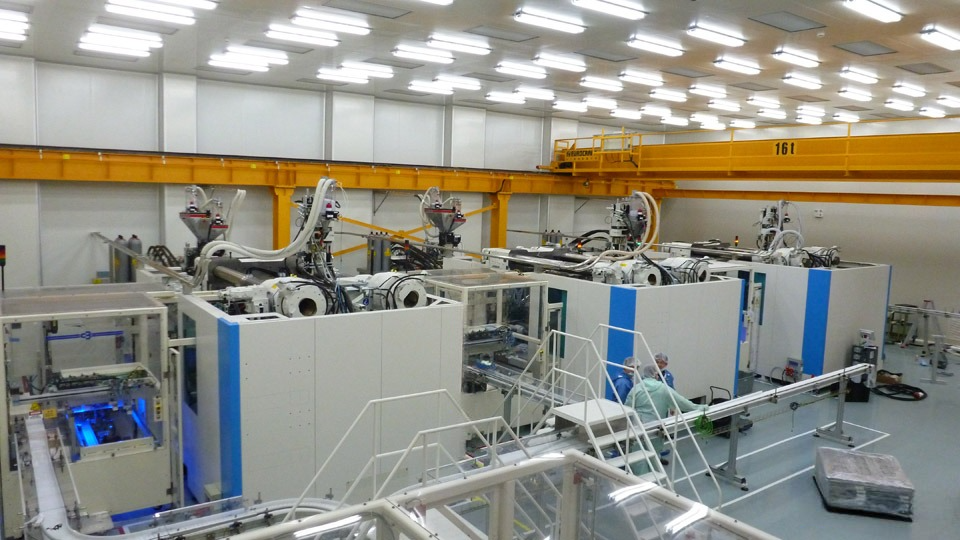
- Cleanroom environment: For some industries, it is best that the molding is done in a cleanroom.
A top injection molding company will not only have these quality control measures in place but will also foster a culture of quality throughout their organization, empowering all employees to be responsible for maintaining the highest standards. Quality should be ingrained in every aspect of their operation.

How to Communicate Effectively with Your Injection Molding Partner
Effective communication is the cornerstone of any successful business relationship, and it’s particularly crucial when working with an injection molding partner. Clear, consistent, and proactive communication ensures that your project stays on track, expectations are aligned, and potential issues are addressed promptly.
Here are tips for communicating effectively with your injection molding partner:
- Establish Clear Communication Channels: From the outset, define the preferred communication channels (email, phone, video conferencing, project management software) and designate primary points of contact on both sides.
- Provide Comprehensive Project Information: Share all relevant project information upfront, including:
- Detailed 3D CAD models and 2D drawings of your plastic part.
- Complete material specifications.
- Dimensional tolerances and surface finish requirements.
- Functional and performance requirements.
- Target production volume and timeline.
- Any specific quality control requirements or standards.
- Be Proactive and Responsive: Don’t wait for problems to arise. Proactively communicate any changes to your design, schedule, or requirements. Respond promptly to inquiries from your injection molding partner.
- Use Visual Aids: Whenever possible, use visual aids like drawings, sketches, or photos to clarify your requirements or explain any issues. Visuals can often communicate more effectively than words alone.
- Ask Questions and Seek Clarification: Don’t hesitate to ask questions if you don’t understand something. It’s better to clarify any uncertainties early on than to discover misunderstandings later in the project.
- Document Everything: Keep a written record of all key communications, decisions, and agreements. This documentation can be invaluable for resolving any disputes or misunderstandings that may arise.
- Schedule Regular Progress Updates: Establish a regular schedule for progress updates, whether it’s weekly calls, email summaries, or online project tracking. Regular updates keep everyone informed and help to identify and address any potential roadblocks.
- Be Respectful and Collaborative: Treat your injection molding partner as a valued collaborator, not just a supplier. Foster a respectful and collaborative relationship built on mutual trust and open communication.
- Address Issues Promptly and Constructively: If any issues or concerns arise, address them promptly and constructively. Work together with your injection molding partner to find solutions and keep the project moving forward.
- Provide Feedback: Provide feedback on the injection molding partner’s performance, both positive and constructive. This helps them to continuously improve their services and better meet your needs.
Effective communication is a two-way street. By following these tips and fostering a collaborative relationship with your injection molding partner, you can significantly enhance the success of your project and build a strong, long-term partnership.
What are the Latest Trends in the Injection Molding Industry?
The injection molding industry is constantly evolving, driven by technological advancements, changing market demands, and a growing focus on sustainability and efficiency. Staying informed about the latest trends is crucial for both injection molding companies and their customers to remain competitive and leverage the most advanced solutions.
Here are some of the key trends shaping the injection molding industry:
- Industry 4.0 and Smart Manufacturing: The integration of digital technologies, such as the Internet of Things (IoT), artificial intelligence (AI), and data analytics, is transforming injection molding. Smart injection molding machines equipped with sensors and connectivity enable real-time monitoring, predictive maintenance, and closed-loop process control, optimizing efficiency and quality.
- Automation and Robotics: Automation is playing an increasingly significant role in injection molding, with robots being used for tasks like part removal, material handling, and assembly. Automation increases efficiency, reduces labor costs, and improves consistency.
- High-Precision and Micro Molding: The demand for smaller, more precise plastic parts, particularly in industries like medical devices and electronics, is driving advancements in high-precision injection molding and micro-molding technologies. This requires specialized injection molding equipment, mold making techniques, and process control.
- Advanced Materials: The development of new and improved plastic resins, including high-performance polymers, bio-based plastics, and composite materials, is expanding the applications of injection molding. These advanced materials offer enhanced properties like increased strength, heat resistance, chemical resistance, and biocompatibility.
- Sustainable Injection Molding: Sustainability is a growing concern across all industries, and injection molding is no exception. Companies are adopting more sustainable practices, such as using recycled plastics, reducing energy consumption, minimizing waste, and designing for recyclability.
- Additive Manufacturing (3D Printing) for Tooling: 3D printing is increasingly being used to create mold components, particularly for complex geometries, conformal cooling channels, and rapid prototype injection mold inserts. This allows for faster mold making, greater design freedom, and optimized mold performance.
- Scientific Molding: Scientific molding principles, which emphasize a data-driven approach to process optimization and precise control of injection molding parameters, are becoming more widely adopted. This leads to improved part quality, reduced scrap rates, and increased efficiency.
- Reshoring and Nearshoring: There’s a growing trend towards reshoring (bringing manufacturing back to the home country) and nearshoring (moving manufacturing to nearby countries) in some regions. This is driven by factors like supply chain disruptions, rising transportation costs, and a desire for greater control over production.
- Customization and Personalization: The demand for customized and personalized plastic products is increasing. Injection molding, particularly when combined with technologies like 3D printing, is well-suited for producing customized parts and short-run production.
These trends are reshaping the injection molding industry, making it more efficient, precise, sustainable, and responsive to the evolving needs of various industries. Injection molding companies that embrace these advancements and adapt to the changing landscape will be best positioned for success in the future. As a forward-thinking manufacturing company ourselves, we, best injection molding company Manufacturing plants for products, are continually integrating these trends to provide the best solutions.
Case Studies: Highlighting Success in Industrial Applications with Injection Molding
Real-world examples can often illustrate the benefits and capabilities of a technology more effectively than abstract explanations. Here are a few brief case studies showcasing how injection molding has delivered success in various industrial applications:
Case Study 1: Automotive Industry – Lightweighting with Metal-to-Plastic Conversion
- Challenge: An automotive manufacturer needed to reduce the weight of a vehicle component (a bracket) to improve fuel efficiency without compromising strength or durability. The original component was made from stamped steel.
- Solution: The manufacturer partnered with an injection molding company specializing in engineered plastics. They redesigned the bracket for injection molding using a high-strength, glass-fiber-reinforced nylon plastic resin. The injection mold was designed with optimized wall thickness and strategically placed ribs for added stiffness.
- Results:
- Significant weight reduction (over 50%) compared to the steel component.
- Improved fuel efficiency of the vehicle.
- Reduced material costs.
- Faster production cycle times with injection molding compared to stamping.
- Excellent strength and durability, meeting all performance requirements.
Case Study 2: Medical Device Industry – High-Precision Micro Molding
- Challenge: A medical device company required a miniature plastic component with extremely tight tolerances and intricate features for a new diagnostic device. The part was too small and complex for traditional machining.
- Solution: They collaborated with an injection molding company specializing in micro-molding. The company utilized a high-precision injection molding machine and a precisely crafted injection mold made with advanced CNC machining and EDM techniques.
- Results:
- Successful production of the micro-plastic part with all required features and within the specified tight tolerances.
- Consistent part quality and high production yields.
- Enabled the development of a new, innovative medical device.
- Demonstrated the capabilities of micro-molding for complex, miniature components.
Case Study 3: Consumer Product Industry – Rapid Prototyping and Fast Time-to-Market
- Challenge: A consumer products company wanted to quickly launch a new handheld electronic device. They needed to validate the design, test ergonomics, and get market feedback before committing to full-scale production.
- Solution: They utilized rapid prototyping services from an injection molding company. The company created prototype molds using 3D printing and CNC machining, allowing for rapid production of prototype parts in various materials and colors.
- Results:
- Fast turnaround time for prototype parts (within days).
- Enabled multiple design iterations based on user feedback and testing.
- Early identification and resolution of design flaws.
- Significantly reduced time to market for the new product.
- Successful product launch with strong market acceptance.
These case studies demonstrate the versatility and power of injection molding across diverse industrial applications. They highlight how injection molding companies, when equipped with the right expertise, technology, and commitment to quality, can deliver innovative and cost-effective solutions that meet the demanding requirements of various industries. Whether it’s lightweighting in automotive, achieving micro-precision in medical devices, or accelerating time to market for consumer products, injection molding remains a critical manufacturing process.
FAQs
What is the difference between an injection molding company and a mold maker?
An injection molding company typically offers a broader range of services, including mold design, mold making, plastic injection molding, and often value-added services like assembly and packaging. A mold maker primarily focuses on designing and building the injection molds themselves but may not offer injection molding services. Many injection molding companies have in-house mold making capabilities.
What are the typical lead times for injection molding projects?
Lead times vary significantly depending on the complexity of the mold, the order quantity, and the injection molding company‘s workload. Mold making can take anywhere from a few weeks to several months. Production time depends on the injection molding cycle time and the number of parts required.
How much does it cost to get parts injection molded?
The cost of injection molded parts depends on several factors, including:
- Mold cost: The initial investment in the injection mold.
- Material cost: The price of the plastic resin used.
- Production cost: The cost of running the injection molding machine, including labor, energy, and overhead.
- Order quantity: Larger quantities typically result in lower per-part costs due to economies of scale.
- Finishing and assembly costs: If any secondary operations are required.
What is scientific molding?
Scientific molding is a data-driven approach to injection molding that emphasizes precise control of process parameters and thorough documentation. It involves using sensors and data analysis to optimize the injection molding process for consistent part quality, reduced defects, and improved efficiency.
Can injection molding be used for prototyping?
Yes, injection molding can be used for prototyping, although it’s typically more cost-effective for larger prototype quantities or when the final production method will be injection molding. Rapid prototype injection molding, using simplified molds and faster tooling methods, is often used for prototyping. 3d printed parts are also used for prototypes.
Comments
Latest Posts
Related Blogs
Senyo’s blog is focused on sharing our extensive knowledge of prototype manufacturing. Through our articles, we aim to support you in refining your product design and navigating the complexities of rapid prototyping more effectively.