CNC Rapid Prototyping: Something You need To know
Table of Contents
In today’s fast-paced market competition, rapid prototyping has become a key link for companies to launch new products. CNC machining technology, as an important part of it, is widely used for its high precision, high efficiency, and flexibility. CNC machining allows designers to directly convert design drawings into solid models, quickly verifying the feasibility of design solutions and shortening product development cycles.
Reasons To Use CNC Machining For Prototyping
High Precision For CNC Rapid Prototyping
CNC machining can achieve very high precision and dimensional consistency, suitable for component manufacturing that requires strict dimensions and geometric shapes, and can produce parts with high complexity and precision requirements., Reduced errors and waste. This is crucial for creating prototypes that require high precision.
Rapid Manufacturing For CNC Rapid Prototyping
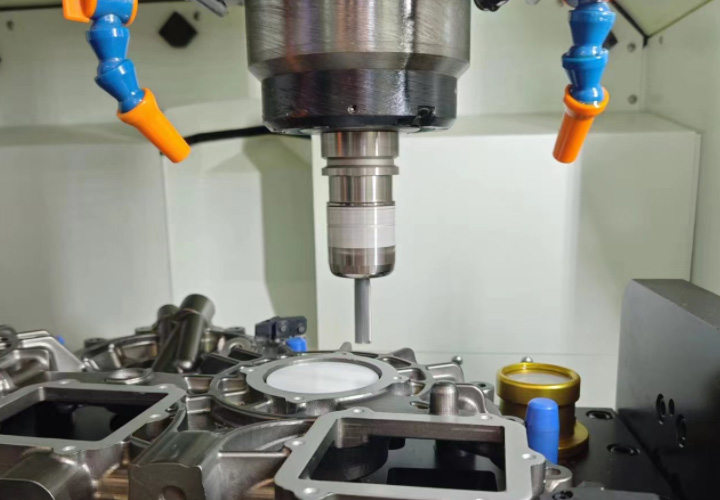
CNC machine tools can achieve automated operations, reducing manual steps and thus improving production efficiency. At the same time, due to the ability of CNC machining centers to complete multiple machining tasks simultaneously, it can also reduce the clamping and replacement time of workpieces, further improving production efficiency. CNC machining can also achieve multi axis linkage, efficiently machining complex surfaces and shapes, greatly shortening the production cycle, thereby improving the speed and efficiency of cnc rapid prototyping production.
Flexibility For CNC Rapid Prototyping
CNC machine tools can process a variety of different materials, including metals, plastics, ceramics, etc. Suitable for producing small batches or small to medium-sized components, with strong flexibility. It is also possible to quickly replace different tools and fixtures to meet the prototype machining needs of various shapes and sizes.
Digital Control For CNC Rapid Prototyping
CNC machine tools use digital control systems, which can control the machining process through computer programming and achieve 24-hour uninterrupted machining operations, thereby improving production efficiency and reducing production costs. In addition, CNC machining can also achieve automatic detection and recognition of workpieces through automated detection technology, thereby ensuring the quality and stability of workpieces
Shortages Of CNC Machining For Prototyping
Material Limitation For CNC Rapid Prototyping
CNC machining requires selecting materials that are suitable for processing. It is not suitable for processing high hardness materials such as tungsten steel, excessively soft materials such as silicone rubber, or brittle materials such as glass.
Machine Limitation For CNC Rapid Prototyping
The processing range of CNC machining equipment is limited, and for larger prototypes, larger machines are required, which requires investment in larger machines. For prototypes with very complex, intricate, and tortuous geometric shapes, CNC machining may require extremely complex tool paths and machining programs to achieve, while for smaller products, more precise machines may be required, thereby increasing production difficulty and costs.
High Labor Cost For CNC Rapid Prototyping
CNC machining requires the use of specialized CAD/CAM software for programming, which requires certain skills and experience. Designers need to possess corresponding skills and knowledge. CNC machining equipment contains many precision components and sensors, which require regular maintenance and upkeep after prolonged operation. This requires technicians to have certain maintenance and debugging capabilities. CNC machining also requires engineers who understand software operations. The drill bits, lathes, cutting tools, milling machines, and other types of equipment in the mechanical workshop are controlled by software, and engineers who understand the working principles of software and equipment are required, resulting in relatively high labor costs.
High Operating Cost For CNC Rapid Prototyping
Although CNC machining has high manufacturing efficiency, its equipment and operating costs are relatively high, especially for the production of small batches and individual prototypes, which can lead to high costs. CNC machining also consumes a large amount of energy and materials, and generates waste and wastewater during the machining process, requiring additional proper treatment to meet environmental protection requirements.
Step-by-step Processes For CNC Rapid Prototyping
Design Concept
The design concept phase is crucial in the rapid prototyping process. In this phase, product designers or engineers will generate and evaluate multiple design alternatives. These alternatives may address aspects such as feature dimensions and positioning, manufacturing and assembly processes, and testing protocols. After thoroughly exploring all design concepts, the most promising and efficient options will be chosen for progression to the next stage.
Generate 2D/3D Files
The CNC rapid prototyping production process requires 3D drawings created from CAD design. The selected design is converted into these 3D drawings, which detail all dimensions, features, and aesthetic specifications of the final product. In addition, 2D files are often used to specify tolerance ranges, which helps with precise assembly of functional products.
Production Sequence
When there are 3D drawings, the process of CNC rapid prototyping manufacturing can be determined. Simultaneously develop a series of manufacturing steps for CNC machining. This step may include various processes such as CNC cutting, turning, cutting, milling, and drilling
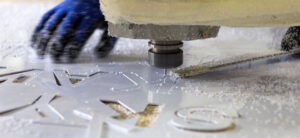
CNC engraving: using cutting tools to engrave and cut on the surface of materials, suitable for making flat or curved prototypes.
CNC milling: By rotating the cutting tool, excess material is removed from the surface of the material, suitable for making prototypes of complex shapes and structures.
CNC molding: The process of making various metal molds such as injection molds and die-casting molds, used for mass production of prototypes that require plastic or metal forming.
CAM
By writing an appropriate CNC program, the 3D CAD model can be converted into machine tool operation instructions, which can accurately define the geometry, size and machining characteristics of parts, and generate the corresponding machine tool operation instructions, which can guide the machine tool to rotate, translate, cut, drill and other actions, and realize multi axis linkage and complex motion trajectory.
CNC programming is also used to write detection and measurement programs to ensure accuracy and quality in the processing process. By embedding measurement instructions in the CNC program, various dimensions can be detected automatically and fed back to the operator in real time.
Production(Prototypes)
Prepare the CNC program, which will be loaded into the control panel of the CNC machine. After the workpiece is installed, the machine will enter operation mode and begin the CNC rapid prototyping process. This involves several production steps, ultimately resulting in the prototype of the desired product. A prototype can be a virtual model or a fully functional, visually accurate physical object. If the prototype requires mechanical linkages and interconnected components, these components are usually machined separately and then assembled. Or the prototype may require secondary processing, and other production steps will be carried out after CNC completion.
Testing
Testing is an important stage in CNC rapid prototyping, aimed at verifying the functionality of the product and identifying any potential errors or malfunctions. This process evaluates various factors such as functionality, compatibility, durability, and overall performance. Generally speaking, engineers will prepare multiple solutions. If the existing prototype does not meet the necessary requirements, alternative design solutions will be chosen for CNC machining to test the same functionality.
Given the professional skills required for CNC rapid prototyping, such as process recognition, CNC programming, and operation, it is recommended to rely on experts in this field. SENYO company specializes in high-precision CNC machining of industrial products, with CNC rapid prototyping as its core service. Our products include parts optimization, material selection, and precision prototyping.
Application of CNC Rapid Prototyping
Consumer Electronics Products
For consumer electronics products, CNC rapid prototyping technology can be used to quickly produce prototypes of shells and internal structural components for functional testing and appearance evaluation. This method can help companies quickly adjust their design plans to ensure the quality and user experience of the final product.
Automotive Components
In the automotive industry, CNC rapid prototyping technology can be used for prototyping instrument panels, interior parts, and other components for ergonomic testing and safety assessment. They need to test these prototypes before mass production to see if they can work properly and be installed well in cars. This method not only saves costs, but also accelerates the development progress of new car models.
Medical Industry
For the medical device industry, CNC rapid prototyping technology can be used to manufacture customized medical device prototypes, such as surgical guides, prosthetics, etc. Due to its involvement with life, there is almost no room for error, and the prototype undergoes rigorous testing and adjustment to ensure the safety and effectiveness of the final product.
Conclusion
Many people are not aware that CNC machining is the ideal prototyping method for projects. It is fast, accurate, and versatile because it is suitable for almost any solid material. There is no minimum quantity, so one part can be as easy as making a thousand. CNC rapid prototyping is one of the most direct methods for prototyping.
If you need sturdy mechanical parts with complete functionality and precise tolerances, you will need to consider CNC machining – essentially complete production quality.
With the continuous advancement and innovation of technology, the application prospects of CNC machining in rapid prototyping are very broad. In the future, CNC machining will become more intelligent and automated, combining artificial intelligence and big data analysis to achieve a more efficient and accurate prototyping process. This will further promote product innovation and enhance market competitiveness.
Comments
Latest Posts
Tags
Related Blogs
Senyo’s blog is focused on sharing our extensive knowledge of prototype manufacturing. Through our articles, we aim to support you in refining your product design and navigating the complexities of rapid prototyping more effectively.