Liquid Silicone Rubber Injection Molding: A Comprehensive Guide
Table of Contents
Conclusion
Liquid Silicone Rubber (LSR) injection molding is rapidly becoming a preferred manufacturing process for a wide range of applications, thanks to LSR’s unique properties and the versatility of the injection molding process. This guide provides a comprehensive overview of liquid silicone injection molding, covering everything from material properties and process details to design considerations and industry applications. Whether you’re a design engineer exploring material options or a seasoned manufacturer seeking to expand your capabilities, this article offers the knowledge you need to leverage the benefits of LSR injection molding. As a leading provider in liquid silicone rubber injection mold technology, we’re here to illuminate the path to success with this versatile material.
- LSR Injection Molding is a precision process that enables the creation of high-quality, flexible, and durable parts, making it ideal for various industries like medical devices, automotive, and consumer goods.
- Temperature and Pressure control are critical in ensuring high-quality parts during the molding process.
- Advantages of LSR include superior biocompatibility, temperature resistance, and design flexibility.
- Future Trends in LSR injection molding will likely focus on automation, customization, and sustainability.
Ready to explore the possibilities of Liquid Silicone Rubber (LSR) injection molding for your next project? Contact Senyorapid today to discuss your requirements, request a quote, and discover how our expertise and advanced capabilities can help you bring your innovative designs to life. We offer comprehensive injection molding solutions, from design and prototyping to mold making and high-volume production, all tailored to meet the unique demands of LSR manufacturing. Let us be your trusted partner in LSR injection molding.
Explore our injection molding services Learn about our injection molding tools Discover the benefits of multi cavity injection molding See how overmolding and insert molding can enhance your LSR parts. Understand our rapid injection molding capabilities manufacturing.

What is Liquid Silicone Rubber (LSR) and Why Choose it for Injection Molding?
Liquid Silicone Rubber (LSR) is a two-part, platinum-cured silicone elastomer that is supplied in a liquid form. Unlike traditional solid silicone rubber, LSR has a low viscosity, allowing it to flow easily into intricate mold cavities under relatively low pressure. This makes it ideal for the injection molding process, enabling the creation of complex shapes, thin walls, and fine details with exceptional precision and consistency.
Here’s why LSR is a standout choice for injection molding:
- Exceptional Biocompatibility: LSR is inherently biocompatible, making it a preferred material for medical devices, implants, and applications requiring skin contact. It’s non-toxic, hypoallergenic, and resistant to bacteria growth.
- Wide Temperature Range: LSR exhibits remarkable thermal stability, maintaining its properties across a wide temperature range, from extremely low temperatures to high heat (typically -50°C to 200°C, with some grades exceeding this range). Silicone can withstand a wide range of temps.
- Chemical Resistance: LSR is highly resistant to a broad range of chemicals, solvents, acids, and bases, making it suitable for applications in harsh environments or those requiring exposure to various substances.
- Excellent Electrical Insulation: LSR is an excellent electrical insulator, making it ideal for electrical connectors, insulators, and components requiring high dielectric strength.
- UV and Ozone Resistance: LSR exhibits superior resistance to degradation from UV radiation and ozone exposure, ensuring long-term performance in outdoor or UV-intensive applications.
- Flexibility and Elasticity: LSR is inherently flexible and elastic, retaining its properties even after repeated stretching or compression. This makes it ideal for seals, gaskets, diaphragms, and other components requiring flexibility and resilience.
- Water Repellency: LSR is hydrophobic, meaning it repels water. This property is advantageous for applications requiring water resistance or sealing.
- Optical Clarity (Specific Grades): Certain grades of LSR offer excellent optical clarity, making them suitable for lenses, light guides, and other optical applications.
- Colorability: LSR can be easily pigmented to achieve a wide range of colors, allowing for aesthetic customization and product branding.
The unique combination of these properties makes LSR a versatile and high-performance material choice for a wide array of injection molded parts, offering advantages that are difficult to match with other rubber materials or thermoplastics. Liquid silicone rubber has demonstrated superior performance in many applications. Silicone rubber has demonstrated superior resistance in others.
How Does the Liquid Silicone Rubber (LSR) Injection Molding Process Work?
The liquid silicone rubber injection molding process, while sharing some similarities with thermoplastic injection molding, has distinct characteristics due to the unique properties of LSR materials. Understanding the LSR injection molding process is crucial for both design engineers and manufacturers.
Here’s a step-by-step overview of the liquid silicone injection molding process:
- Material Preparation: LSR is typically supplied as a two-part liquid system: Part A (containing the platinum catalyst) and Part B (containing the crosslinker). These components are kept separate until just before injection.
- Metering and Mixing: A specialized molding machine, often called an LSR-specific injection molding press, precisely meters the two LSR components in the correct ratio (usually 1:1) and mixes them thoroughly. This mixing initiates the curing (crosslinking) process. The machine is extremely important.
- Injection: The mixed liquid silicone rubber is then injected into the heated mold cavity under controlled pressure. Unlike thermoplastics, which are melted before injection, LSR is injected as a liquid at a relatively low temperature.
- Curing (Vulcanization): The mold itself is heated (typically to temperatures between 150°C and 200°C) to accelerate the curing or vulcanization process. This heat activates the crosslinking reaction, causing the liquid silicone rubber to solidify and take the shape of the mold cavity. This injection process step is very different compared to thermoplastic.
- Mold Opening and Part Ejection: Once the silicone is fully cured, the mold opens, and the finished LSR part is ejected, either manually or automatically. The injection mold is built to allow easy part removal.
- Post-Curing (Optional): Some LSR parts may undergo a post-curing process in an oven to further enhance their mechanical properties and ensure complete crosslinking.
Key Differences from Thermoplastic Injection Molding:
- Material State: LSR is injected as a liquid, while thermoplastics are melted before injection.
- Mold Temperature: LSR molds are heated to cure the material, whereas thermoplastic molds are typically cooled to solidify the plastic.
- Curing Process: LSR undergoes a chemical crosslinking reaction (vulcanization) to solidify, while thermoplastics simply cool and harden.
- Equipment: LSR injection molding requires specialized equipment, including a metering and mixing system, a heated mold, and often a cold runner system to prevent premature curing of the LSR in the runners.
The liquid silicone injection molding process is highly automated and precise, allowing for the production of complex LSR parts with consistent quality and tight tolerances. The nature of LSR makes it very appealing.
What are the Key Components of a Liquid Injection Molding Machine?
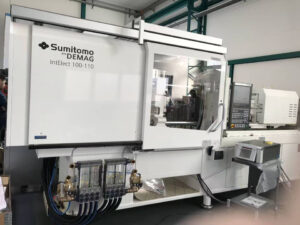
A liquid injection molding machine (injection moulding machine), also known as an LIM machine, is a specialized piece of equipment specifically designed to handle the unique requirements of processing liquid silicone rubber (LSR). Unlike standard injection molding machines used for thermoplastics, LIM machines incorporate several key features to manage the two-part liquid nature of LSR materials and the heat-activated curing process.
Here are the key components of a liquid injection molding machine (components of a liquid injection molding setup):
Material Supply System (Pumps):
- Two Separate Pumps: LIM machines have two separate pumps, one for each component (Part A and Part B) of the LSR material. These pumps precisely meter the two components in the correct ratio (typically 1:1).
- Plunger or Piston Pumps: These pumps are designed to handle the viscous liquid LSR and deliver it at a consistent rate.
- Ratio Control: Precise control of the pump ratio is essential for ensuring proper curing and consistent material properties.
Metering Unit:
- Precise Metering: The metering unit accurately measures and dispenses the two LSR components in the exact proportions required for the curing reaction.
- Ratio Monitoring: The metering unit often includes sensors to monitor the ratio of the two components and ensure it remains within specified tolerances.
Static or Dynamic Mixer:
- Thorough Mixing: A static mixer (a series of internal elements that divide and recombine the material stream) or a dynamic mixer (with moving parts) is used to thoroughly mix the two LSR components just before injection. This mixing initiates the curing process.
- Preventing Premature Curing: The mixer is designed to prevent premature curing of the LSR before it enters the mold.
Injection Unit:
- Screw or Plunger: The injection unit can utilize either a reciprocating screw (similar to thermoplastic injection molding) or a plunger to force the mixed LSR into the mold. Plunger systems are often preferred for LSR due to the material’s low viscosity.
- Nozzle: The nozzle connects the injection unit to the mold‘s runner system.
- Cold Runner System (Typically): Most LIM processes use a cold runner system. Unlike hot runner systems used in thermoplastic injection molding, a cold runner system keeps the LSR in the runners cool to prevent premature curing. The mold itself is heated, but the runners are not.
Clamping Unit:
- Mold Clamping: The clamping unit holds the two halves of the injection mold securely together under high pressure during the injection and curing process. This clamping force counteracts the pressure of the LSR being injected.
- Precise Alignment: The clamping unit ensures precise alignment of the mold halves to prevent flash (excess material) and ensure dimensional accuracy of the LSR parts.
Heated Mold:
- Temperature Control: Unlike thermoplastic molds, which are typically cooled, LSR molds are heated to accelerate the curing (vulcanization) process. The mold temperature is carefully controlled to ensure uniform curing and optimal LSR part properties.
- Electric Heating: Electric heating cartridges are commonly used to heat the LSR mold.
- Conformal Cooling (Sometimes): While the overall mold is heated, some LSR molds may incorporate conformal cooling channels in specific areas to manage heat distribution and optimize cycle times.
Control System:
- Precise Process Control: The LIM machine’s control system precisely monitors and controls all aspects of the injection molding process, including metering ratios, injection pressure, injection speed, mold temperature, curing time, and clamping force.
- Data Acquisition and Monitoring: Advanced control systems can collect and display real-time process data, allowing for monitoring of process parameters and identification of any deviations.
These specialized components work together to ensure the precise metering, mixing, injection, and curing of liquid silicone rubber, enabling the production of high-quality LSR parts with consistent properties and tight tolerances. The liquid injection molding process requires specialized injection molding equipment.
What are the Advantages of Liquid Silicone Rubber (LSR) Injection Molding?
Liquid Silicone Rubber (LSR) injection molding offers a unique combination of material properties and processing advantages that make it a preferred manufacturing method for a wide range of applications, particularly those demanding high performance, biocompatibility, and design flexibility.
Here are the key advantages of LSR injection molding:
Exceptional Material Properties:
- Biocompatibility: LSR is inherently biocompatible, making it ideal for medical devices, implants, and applications requiring skin contact.
- Wide Temperature Resistance: LSR maintains its properties across a broad temperature range (-50°C to 200°C or higher), making it suitable for both extreme cold and high-heat environments.
- Chemical Resistance: LSR exhibits excellent resistance to a wide range of chemicals, solvents, acids, and bases.
- Electrical Insulation: LSR is an excellent electrical insulator, making it suitable for electrical connectors, insulators, and components.
- UV and Ozone Resistance: LSR is highly resistant to degradation from UV radiation and ozone exposure.
- Flexibility and Elasticity: LSR is inherently flexible and elastic, retaining its properties even after repeated stretching or compression.
- Water Repellency: LSR is hydrophobic, repelling water and making it suitable for sealing applications.
- Optical Clarity (Specific Grades): Some LSR grades offer excellent optical clarity.
Process Advantages:
- Fast Cycle Times: The curing process for LSR is relatively fast, leading to short cycle times and high production throughput.
- High Precision and Consistency: LSR injection molding allows for the production of parts with tight tolerances and excellent repeatability, ensuring consistent part quality.
- Complex Geometries: The low viscosity of LSR allows it to flow easily into intricate mold cavities, enabling the creation of complex shapes, thin walls, and fine details.
- Minimal Flash: LSR typically produces parts with minimal flash (excess material), reducing the need for secondary trimming operations.
- Automation: The LSR injection molding process is highly automated, reducing labor costs and improving efficiency.
- Clean Process: LSR is a clean material to process, with minimal outgassing or volatile organic compounds (VOCs) released during molding.
- Overmolding and Insert Molding: LSR is well-suited for overmolding onto other materials (plastics, metals) and for insert molding applications.
Design Advantages:
- Design Freedom: The ability to mold complex shapes and fine details offers significant design freedom.
- Undercuts: LSR‘s flexibility allows for the molding of parts with undercuts (features that would normally prevent ejection from a rigid mold) without requiring complex side actions in the mold.
- Thin Walls: LSR can be molded into very thin walls, enabling lightweight and compact designs.
- Colorability: LSR can be easily pigmented to achieve a wide range of colors.
The combination of these material, process, and design advantages makes LSR injection molding a highly versatile and attractive manufacturing solution for a growing number of applications, particularly in industries like medical devices, automotive, electronics, and consumer products. LSR offers a unique set of benefits that are difficult to match with other materials or processes.
What are the Common Applications of Liquid Silicone Rubber Injection Molding?
The unique properties of Liquid Silicone Rubber (LSR), combined with the precision and efficiency of the injection molding process, make LSR injection molding the preferred manufacturing method for a diverse range of products and components across various industries.
Here are some common applications of Liquid Silicone Rubber (LSR) injection molding:
- Medical Devices and Healthcare: LSR‘s biocompatibility, chemical resistance, and ability to be sterilized make it ideal for a wide array of medical applications:
- Seals and Gaskets: For medical devices, equipment, and tubing.
- Diaphragms and Valves: Used in pumps, respirators, and other fluid-handling devices.
- Catheters and Tubing: LSR‘s flexibility and biocompatibility make it suitable for various medical tubing applications.
- Implants: Certain grades of LSR are used for short-term and long-term implantable devices.
- Surgical Instruments: LSR can be overmolded onto surgical instruments for improved grip and ergonomics.
- Drug Delivery Components: LSR is used in microfluidic devices and drug delivery systems.
- Molded silicone gasket
- Automotive: LSR‘s temperature resistance, chemical resistance, and durability make it well-suited for various automotive applications:
- Seals and Gaskets: For engines, transmissions, and other automotive systems.
- Connectors and Housings: For electrical and electronic components.
- Vibration Dampers: LSR‘s elasticity helps to absorb vibrations and reduce noise.
- Airbag Components: Certain LSR grades are used in airbag systems.
- Electronics: LSR‘s electrical insulation properties, flexibility, and water resistance make it a good choice for:
- Connectors and Seals: For electronic devices and cables.
- Keypads and Buttons: LSR provides a soft-touch feel and durability.
- Encapsulation of Electronic Components: LSR can protect sensitive electronics from moisture, dust, and vibration.
- Consumer Products: LSR‘s versatility and ability to be molded into complex shapes make it popular for a range of consumer goods:
- Kitchenware: Spatulas, bakeware, food storage containers (due to its heat resistance and food-grade compliance).
- Baby Products: Nipples, pacifiers, teethers (due to its biocompatibility and softness).
- Personal Care Items: Hairbrushes, cosmetic applicators, and other products requiring a soft touch.
- Wearables: Watch straps, fitness tracker bands (due to its flexibility and skin-friendliness).
- Sporting Goods: Goggles, swim caps, and other equipment requiring water resistance and flexibility.
- Industrial Applications: LSR is used in various industrial settings due to its durability, chemical resistance, and temperature resistance:
- Seals and Gaskets: For machinery, pumps, and valves.
- O-Rings: Used for sealing in various industrial equipment.
- Keypads and Buttons: For industrial controls and equipment.
- Vibration Dampers: To reduce noise and vibration in machinery.
- Cable Insulation: LSR provides excellent electrical insulation for industrial cables.
These are just a few examples, and the applications of LSR injection molding continue to expand as new LSR materials are developed and designers discover the versatility of this unique manufacturing process. The ability to produce LSR parts with complex geometries, tight tolerances, and a wide range of properties makes it a valuable solution for numerous industries. You can see samples of liquid silicone injection molded products in many sectors.
What are the Key Design Considerations for LSR Injection Molding?
Designing parts for Liquid Silicone Rubber (LSR) injection molding requires careful consideration of the material’s unique properties and the specific characteristics of the LSR injection molding process. While LSR offers significant design freedom, adhering to certain design guidelines will ensure optimal manufacturability, part quality, and performance.
Here are key design considerations for LSR injection molding:
Wall Thickness:
- Uniform Wall Thickness: While LSR is more forgiving than thermoplastics regarding variations in wall thickness, striving for relatively uniform wall sections is still good practice. This promotes even curing and minimizes the risk of defects.
- Thin Walls: LSR can be molded into very thin walls (down to 0.010 inches or even less), enabling lightweight and compact designs.
- Thick Sections: While LSR can handle thicker sections better than many thermoplastics, excessively thick areas can still lead to longer cure times and potential shrinkage issues.
Draft Angles:
- Less Critical than Thermoplastics: LSR‘s flexibility and low shrinkage often allow for parts to be ejected with minimal or even zero draft angles. However, adding a small draft angle (0.5 to 2 degrees) can still aid in part ejection and reduce stress on the mold.
- Consider Undercuts: LSR‘s flexibility makes it possible to mold parts with undercuts (features that would normally prevent ejection from a rigid mold) without requiring complex side actions in the mold. However, the design of undercuts should still be carefully considered to ensure easy part removal.
Radii and Fillets:
- Generous Radii: Use generous radii and fillets at corners and edges to reduce stress concentrations and improve the flow of the LSR during the injection process.
- Sharp Corners: While LSR can fill sharp corners more easily than thermoplastics, avoiding excessively sharp corners is still recommended for optimal mold filling and part strength.
Parting Line:
- Strategic Placement: Carefully consider the location of the parting line (where the two mold halves meet) to minimize its visibility on aesthetically important surfaces and to facilitate part ejection.
- Flash Considerations: LSR tends to produce less flash (excess material) than thermoplastics, but the parting line design should still aim to minimize flash formation.
Gating:
- Gate Location: The gate (where the LSR enters the mold cavity) should be located to promote even filling of the cavity and minimize weld lines or air traps.
- Gate Type: Various gate types can be used for LSR, including edge gates, submarine gates, and pin gates. The choice depends on the part geometry and aesthetic requirements.
- Cold Runner Systems: LSR injection molding typically uses cold runner systems to prevent premature curing of the material in the runners.
Venting:
- Adequate Venting: Proper venting in the mold design is crucial to allow air to escape from the mold cavity as the LSR is injected. Inadequate venting can lead to air traps, short shots, or burn marks.
Material Shrinkage:
- Lower Shrinkage than Thermoplastics: LSR generally has lower shrinkage than thermoplastics, but shrinkage still needs to be considered in the mold design. The specific shrinkage rate depends on the LSR grade and molding process parameters.
Overmolding and Insert Molding:
- Excellent Adhesion: LSR exhibits excellent adhesion to many other materials, making it ideal for overmolding onto plastics, metals, and other substrates.
- Design for Bonding: When designing for overmolding or insert molding, consider features that promote mechanical interlocking or bonding between the LSR and the substrate.
Tolerances:
- Tight Tolerances Achievable: LSR injection molding can achieve tight tolerances, but it’s important to specify realistic tolerances based on the part design, LSR material, and molding process capabilities.
Collaborating with an experienced LSR injection molding specialist or mold maker early in the design process is highly recommended. They can provide valuable design for manufacturability (DFM) feedback and ensure that your LSR part is optimized for efficient and high-quality production.
How Does LSR Injection Molding Differ from Thermoplastic Injection Molding?
While both LSR (Liquid Silicone Rubber) injection molding and thermoplastic injection molding share the fundamental principle of injecting a molten material into a mold to create a part, there are significant differences between the two processes due to the distinct properties of LSR and thermoplastic materials.
Here’s a comparison of LSR injection molding and thermoplastic injection molding:
| Feature | LSR Injection Molding | Thermoplastic Injection Molding |
|---|---|---|
| Material State | LSR is injected as a two-part liquid. | Thermoplastics are melted into a viscous liquid before injection. |
| Mold Temperature | LSR molds are heated (typically 150-200°C) to cure (vulcanize) the material. | Thermoplastic molds are typically cooled to solidify the plastic. |
| Curing Process | LSR undergoes a chemical crosslinking reaction (vulcanization) upon heating, resulting in a thermoset material that cannot be remelted. | Thermoplastics solidify upon cooling and can be repeatedly melted and reshaped. |
| Injection Pressure | LSR typically requires lower injection pressure due to its low viscosity. | Thermoplastics often require higher injection pressure, especially for thin-walled parts or complex geometries. |
| Shrinkage | LSR generally has lower shrinkage than thermoplastics. | Thermoplastics exhibit higher shrinkage rates, which need to be carefully considered in mold design. |
| Cycle Time | LSR often has faster cycle times due to the rapid curing process. | Cycle times for thermoplastics depend on the material, part thickness, and cooling time. |
| Flash | LSR tends to produce less flash than thermoplastics. | Flash can be more of a concern with thermoplastics, requiring careful mold design and process control. |
| Undercuts | LSR‘s flexibility allows for molding parts with undercuts more easily than with rigid thermoplastics. | Undercuts in thermoplastic parts often require complex side actions in the mold. |
| Equipment | LSR injection molding requires specialized equipment, including a metering and mixing system, a heated mold, and often a cold runner system. | Thermoplastic injection molding uses standard injection molding machines with heated barrels and typically cooled molds. |
| Material Cost | LSR materials are generally more expensive than many common thermoplastics. | Thermoplastics offer a wider range of material costs, with some being very cost-effective. |
| Applications | LSR is preferred for applications requiring biocompatibility, high temperature resistance, chemical resistance, and flexibility. | Thermoplastics are used in a vast range of applications, from consumer products and packaging to automotive and industrial components. |
| Runner system | The nature of LSR often requires a cold runner system. | Thermoplastics often use a hot runner system. |
Understanding these key differences is crucial for choosing the appropriate injection molding process for your specific application and for designing parts and molds that are optimized for the chosen material and process. While thermoplastic injection molding is more widely used overall, LSR injection molding offers unique advantages for applications demanding the specific properties of silicone rubber.
What are the Challenges of Working with Liquid Silicone Rubber (LSR)?
While Liquid Silicone Rubber (LSR) offers numerous advantages, working with this material also presents some unique challenges compared to traditional thermoplastics. Understanding these challenges is essential for successful LSR injection molding.
Here are some of the key challenges of working with LSR:
- Specialized Equipment: LSR injection molding requires specialized equipment, including:
- Metering and Mixing System: Accurate metering and thorough mixing of the two-part LSR components are crucial for proper curing and consistent material properties. Standard injection molding machines are not equipped for this.
- Heated Mold: LSR molds must be heated to cure the material, unlike thermoplastic molds, which are typically cooled.
- Cold Runner System (Typically): To prevent premature curing of the LSR in the runners, a cold runner system is often used, adding complexity to the mold design and tooling.
- Material Handling: LSR is a two-part liquid system that requires careful handling and storage to prevent contamination or premature curing. The two components must be kept separate until just before injection.
- Mold Design Considerations: LSR mold design presents some unique challenges:
- Venting: Proper venting is crucial to allow air to escape from the mold cavity as the LSR is injected. LSR‘s low viscosity can make it prone to trapping air.
- Shrinkage: While LSR has lower shrinkage than many thermoplastics, it still needs to be accounted for in the mold design.
- Flash: While LSR tends to produce less flash than thermoplastics, minimizing flash formation still requires careful mold design and precise tooling.
- Curing Process: LSR cures through a chemical crosslinking reaction (vulcanization) that is activated by heat. Controlling the curing process is critical for achieving optimal material properties and preventing defects.
- Material Cost: LSR materials are generally more expensive than many common thermoplastics, which can impact the overall cost of LSR parts, especially for high-volume production.
- Post-Curing (Sometimes Required): Some LSR parts may require post-curing in an oven to achieve optimal mechanical properties and ensure complete crosslinking. This adds an extra step to the manufacturing process.
- Limited Material Options Compared to Thermoplastics: While the range of LSR materials is growing, it’s still more limited compared to the vast array of thermoplastic resins available.
- Process Sensitivity: LSR injection molding can be a bit more sensitive and may demand high levels of process control to ensure high quality parts.
Despite these challenges, the unique properties and advantages of LSR often outweigh the difficulties, particularly for applications where its biocompatibility, temperature resistance, chemical resistance, and flexibility are essential. Working with an experienced LSR injection molding specialist who understands these challenges and has the expertise and equipment to overcome them is crucial for successful LSR part production.
How is LSR Used in the Medical Device Industry?
Liquid Silicone Rubber (LSR) has become a cornerstone material in the medical device industry, playing a vital role in a wide range of applications. Its unique combination of biocompatibility, chemical resistance, flexibility, and durability makes it an ideal choice for many critical medical components.
Here’s a closer look at how LSR is used in the medical device industry:
- Biocompatibility: LSR is inherently biocompatible, meaning it’s non-toxic, non-allergenic, and does not react adversely with living tissues. This makes it suitable for implantable devices, components that come into contact with bodily fluids, and devices used in direct patient care. This is perhaps the most significant reason for its widespread use in medical applications.
- Sterilization Compatibility: LSR can withstand various sterilization methods commonly used in the medical industry, including autoclaving (steam sterilization), ethylene oxide (EtO) gas sterilization, and gamma radiation sterilization. This ensures that LSR components can be safely sterilized without compromising their properties or performance.
- Chemical Resistance: LSR exhibits excellent resistance to a wide range of chemicals, including disinfectants, cleaning agents, and bodily fluids. This is crucial for medical devices that need to maintain their integrity and functionality in demanding environments.
- Flexibility and Elasticity: LSR‘s inherent flexibility and elasticity make it ideal for components that need to conform to body contours, flex repeatedly, or provide a soft, comfortable interface with the patient.
- Durability and Long-Term Performance: LSR is a durable material that can withstand repeated use, sterilization cycles, and exposure to harsh environments, making it suitable for long-lasting medical devices.
- Wide Temperature Range: LSR maintains its properties across a wide temperature range, making it suitable for medical devices that may be exposed to both low and high temperatures.
- Water Resistance: LSR is hydrophobic and resists damage or swelling from water.
Specific examples of LSR applications in the medical device industry include:
- Seals and Gaskets: LSR is widely used for seals and gaskets in medical devices, equipment, and tubing, providing reliable fluid-tight seals and preventing leaks.
- Diaphragms and Valves: LSR‘s flexibility and chemical resistance make it ideal for diaphragms and valves used in pumps, respirators, and other fluid-handling medical devices.
- Catheters and Tubing: LSR‘s biocompatibility and flexibility make it suitable for various medical tubing applications, including catheters, drainage tubes, and IV lines.
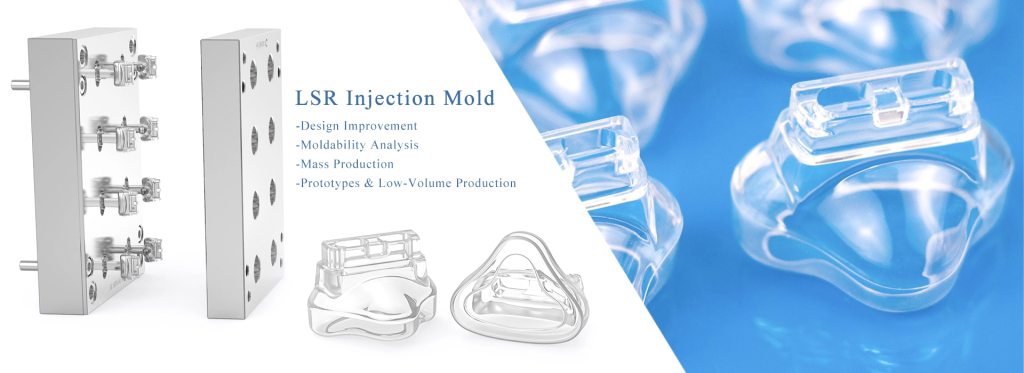
- Respiratory Masks and Components: LSR is used in respiratory masks, anesthesia masks, and other respiratory care devices due to its softness, comfort, and ability to create a tight seal.
- Implantable Devices: Certain grades of LSR are used for short-term and long-term implantable devices, such as pacemaker leads, cochlear implants, and drug delivery systems.
- Surgical Instruments: LSR can be overmolded onto surgical instruments to provide improved grip, ergonomics, and electrical insulation.
- Drug Delivery Components: LSR is used in microfluidic devices, drug-eluting devices, and other components for controlled drug delivery.
- Wound Care Products: LSR‘s softness and biocompatibility make it suitable for certain wound care applications.
The medical device industry places stringent demands on materials and manufacturing processes, and LSR injection molding meets these demands exceptionally well. Its unique combination of properties, coupled with the precision and efficiency of the injection molding process, makes LSR a critical material for advancing healthcare technology and improving patient outcomes.
What are the Key Differences Between Liquid Silicone Rubber (LSR) and Other Rubbers?
Liquid Silicone Rubber (LSR) belongs to the broader family of rubber materials, but it possesses distinct characteristics that set it apart from other common types of rubber, such as natural rubber, EPDM, nitrile rubber, and others. Understanding these differences is crucial for selecting the appropriate rubber material for a specific application.
Here’s a comparison of LSR with other common rubber materials:
| Feature | Liquid Silicone Rubber (LSR) | Natural Rubber (NR) | EPDM (Ethylene Propylene Diene Monomer) | Nitrile Rubber (NBR) |
|---|---|---|---|---|
| Base Material | Synthetic, inorganic polymer (silicone) | Natural, derived from the sap of rubber trees | Synthetic, copolymer of ethylene, propylene, and a diene | Synthetic, copolymer of acrylonitrile and butadiene |
| Temperature Range | Wide temperature range (-50°C to 200°C or higher for some grades) | Moderate temperature range (-50°C to 80°C) | Good temperature range (-40°C to 150°C) | Moderate temperature range (-30°C to 120°C) |
| Chemical Resistance | Excellent resistance to a broad range of chemicals, solvents, acids, and bases | Limited resistance to oils, solvents, and ozone | Good resistance to weathering, ozone, and some chemicals | Excellent resistance to oils, fuels, and solvents |
| Biocompatibility | Inherently biocompatible, widely used in medical devices | Can cause allergic reactions in some individuals | Generally not biocompatible | Generally not biocompatible |
| UV/Ozone Resistance | Excellent | Poor | Excellent | Poor |
| Flexibility/Elasticity | Excellent, retains properties even after repeated stretching/compression | Excellent elasticity and resilience | Good elasticity and resilience | Moderate flexibility and elasticity |
| Tear Strength | Good to excellent, depending on the specific grade | High tear strength | Moderate tear strength | Moderate tear strength |
| Abrasion Resistance | Good to excellent, depending on the specific grade | Good abrasion resistance | Moderate abrasion resistance | Good abrasion resistance |
| Processing | Primarily processed through liquid injection molding (LIM) | Typically processed through compression molding, transfer molding, or extrusion | Can be processed through compression molding, transfer molding, extrusion, and calendering | Commonly processed through compression molding, transfer molding, and extrusion |
FAQs
What is the cost of an LSR injection mold?
LSR mold costs are influenced by factors like mold size, complexity, number of cavities, tooling material, and required tolerances. LSR molds tend to be more expensive than molds for some thermoplastics due to the specialized equipment and processes involved (e.g., cold runner systems, heated molds).
Can LSR be overmolded onto other materials?
Yes, LSR exhibits excellent adhesion to a wide range of materials, including many plastics (like polycarbonate, PBT, and nylon), metals (like aluminum and stainless steel), and glass. This makes it ideal for overmolding applications, creating parts with integrated soft-touch grips, seals, or multi-material components.
Is LSR injection molding suitable for high-volume production?
Absolutely. LSR injection molding is very well-suited for high-volume production. The fast cure times, automated process, and durability of LSR molds allow for efficient and cost-effective production of large quantities of parts.
What are the typical tolerances achievable with LSR injection molding?
LSR injection molding can achieve relatively tight tolerances, although they are generally not as tight as those achievable with high-precision thermoplastic injection molding. Typical tolerances for LSR parts range from +/- 0.005 inches to +/- 0.025 inches, depending on the part size, geometry, and LSR material grade.
Is LSR recyclable?
Unlike thermoplastics, LSR, as a thermoset material, cannot be melted and re-molded. However, some specialized recycling processes for silicone rubber are emerging, and research into more sustainable LSR materials is ongoing.
Comments
Latest Posts
Related Blogs
Senyo’s blog is focused on sharing our extensive knowledge of prototype manufacturing. Through our articles, we aim to support you in refining your product design and navigating the complexities of rapid prototyping more effectively.