Optimizing Injection Molding Tolerances for Plastic Parts
Table of Contents
Conclusion
In the world of plastic injection molding, injection molding tolerances are critical for ensuring that molded parts meet exact specifications. The term “tolerance” refers to the allowable deviation from the desired dimensions of a molded part, and it plays a crucial role in determining the overall functionality, fit, and quality of the finished product. Whether you’re producing high-precision medical components or consumer goods, mastering injection molding tolerances can significantly impact your product’s performance and cost efficiency.
This article will explore the ins and outs of injection molding tolerances, including how they are defined, the factors that influence them, and best practices for optimizing injection molding processes. If you want to improve the quality and consistency of your injection molded parts, understanding these tolerances is essential. This comprehensive guide is a must-read for manufacturers, engineers, and anyone involved in the injection molding industry.
Understanding Injection Molding Tolerances
Injection molding tolerances refer to the allowable variations in the dimensions, shape, and features of a molded plastic part. These tolerances are critical in ensuring the fit, function, and overall quality of the final product. Tight tolerances are essential for parts that require precise dimensions, such as those used in medical devices, electronics, and high-performance applications.
Injection molding tolerance standards are typically specified in terms of linear dimensions, angular measurements, and surface finishes. Understanding these standards and how they apply to your specific part requirements is the first step in achieving consistent, high-quality results.
Factors Affecting Injection Molding Tolerances
Numerous factors can influence the achievable tolerances in injection molding, including:
Mold Design: The design and construction of the mold play a crucial role in determining the attainable tolerances. Factors such as mold material, cooling system, and gate placement can all impact the final part dimensions.
Material Selection: The choice of plastic material can significantly affect the part’s dimensional stability and ability to hold tight tolerances. Factors like shrinkage, warpage, and flow characteristics must be considered.
Process Parameters: Variables such as injection pressure, melt temperature, and cooling time can all influence the final part dimensions and tolerances.
Environmental Conditions: Factors like temperature, humidity, and air quality in the manufacturing environment can also impact the consistency of the molding process and the resulting part tolerances.Understanding how these factors interact and their relative importance in your specific application is crucial for optimizing injection molding tolerances.
Achieving Optimal Tolerance Standards

To achieve the optimal tolerance standards for your injection-molded parts, you’ll need to carefully consider the following strategies:
Mold Design Optimization: Employ advanced mold design techniques, such as simulation software and finite element analysis, to predict and mitigate potential tolerance issues.
Material Selection and Characterization: Thoroughly evaluate and select the most suitable plastic material based on its dimensional stability, flow properties, and other relevant characteristics.
Process Optimization and Control: Implement robust process control strategies, including real-time monitoring and feedback systems, to maintain consistent process parameters and minimize variations.
Measurement and Verification: Establish a comprehensive quality control system with precise measurement techniques and statistical process control methods to ensure consistent part tolerances. By adopting these strategies, you can consistently produce injection-molded parts that meet or exceed the most stringent tolerance requirements.
Mold Design Considerations for Tight Tolerances
The design of the injection mold is a critical factor in achieving tight tolerances. Key considerations include:
Mold Material Selection: Choosing the right mold material, such as tool steel or aluminum, can significantly impact the mold’s dimensional stability and ability to maintain tight tolerances.
Cooling System Design: An efficient and well-designed cooling system is essential for controlling part shrinkage and warpage, which can directly affect part dimensions.
Gate Placement and Design: The location and design of the gate(s) can influence the flow of the molten plastic, affecting part fill and dimensional consistency.
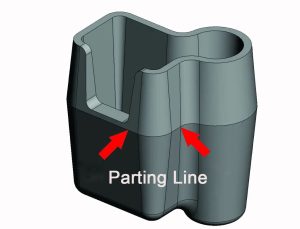
Parting Line and Ejection System: Careful attention to the parting line and ejection system can help minimize part deformation and maintain tight tolerances.By incorporating these mold design principles, you can create injection molds that consistently produce parts within the desired tolerance range.
Material Selection and Its Impact on Tolerances
The choice of plastic material is a crucial factor in determining the achievable tolerances in injection molding. Factors to consider include:
Shrinkage and Warpage Characteristics: Different materials exhibit varying degrees of shrinkage and warpage, which can directly impact part dimensions and tolerances.
Melt Flow and Viscosity: The material’s flow characteristics can affect how the molten plastic fills the mold cavity, influencing dimensional consistency.
Thermal Stability: The material’s ability to maintain dimensional stability under varying temperature conditions is essential for maintaining tight tolerances.
Filler and Reinforcement Content: The addition of fillers or reinforcements can alter a material’s shrinkage and warpage behavior, affecting part tolerances.By carefully selecting the appropriate plastic material and understanding its unique characteristics, you can optimize your injection molding process to achieve the desired tolerance levels.
Process Control Strategies for Consistent Injection Molding Tolerances
Maintaining consistent process parameters is crucial for producing injection-molded parts within tight tolerances. Key strategies include:
Real-Time Monitoring and Feedback: Implement advanced monitoring systems that track critical process variables, such as temperature, pressure, and flow rate, and provide real-time feedback to the control system.
Statistical Process Control (SPC): Utilize SPC techniques, such as control charts and capability analysis, to identify and address any variations in the process that could impact part tolerances.
Predictive Maintenance: Employ predictive maintenance strategies to proactively identify and address potential issues with the injection molding equipment, ensuring consistent performance and part quality.
Operator Training and Engagement: Ensure that your production team is well-trained in best practices for injection molding and empowered to identify and address any tolerance-related issues.By implementing these process control strategies, you can minimize process variations and consistently produce injection-molded parts that meet or exceed the desired tolerance requirements.
Measuring and Verifying Injection Molding Tolerances
Accurate measurement and verification of part tolerances are essential for ensuring the quality and consistency of your injection-molded products. Key techniques include:
Coordinate Measuring Machines (CMMs): Utilize advanced CMM technology to precisely measure part dimensions and compare them to the specified tolerances.
Optical Measurement Systems: Employ non-contact optical measurement techniques, such as laser scanning and photogrammetry, to quickly and accurately assess part geometry and surface features.
Statistical Sampling and Analysis: Implement a robust sampling and statistical analysis plan to monitor the process capability and identify any trends or variations in part tolerances.
Validation and Documentation: Establish a comprehensive quality control system that includes detailed documentation of the measurement and verification processes, as well as the resulting data and analysis.By adopting these measurement and verification techniques, you can ensure that your injection-molded parts consistently meet the required tolerance standards.
Troubleshooting Common Tolerance Issues
Despite best efforts, injection molding tolerance issues can still arise. Common problems and their potential causes include:
Dimensional Variations: Caused by factors such as inconsistent melt temperature, uneven mold cooling, or material shrinkage.
Part Warpage: Resulting from uneven cooling, residual stresses, or material anisotropy.
Surface Defects: Caused by issues like mold wear, contamination, or improper melt flow.
Inconsistent Part Weight: Stemming from problems with the injection process, such as inconsistent shot size or fill pattern.By understanding the potential causes of these tolerance issues, you can develop targeted strategies to identify and address the root problems, ensuring consistent part quality.
Optimizing Tolerances for Specific Part Geometries
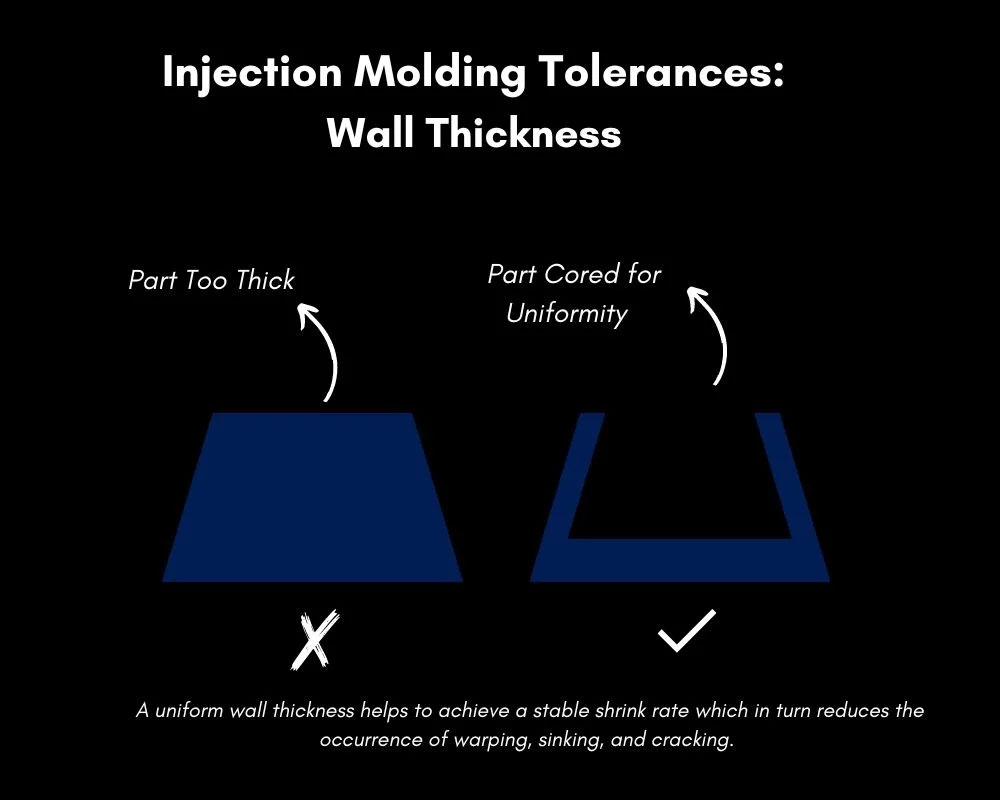
Different part geometries present unique challenges when it comes to achieving tight tolerances. Strategies for optimizing tolerances include:
Complex Shapes: Employ advanced mold design techniques, such as conformal cooling, to ensure even cooling and minimize warpage in intricate part geometries.
Thin-Walled Parts: Select materials with low shrinkage and high dimensional stability, and optimize the injection and cooling parameters to maintain tight tolerances.
Ribbed or Textured Surfaces: Carefully design the mold to ensure consistent melt flow and minimize surface defects that could impact dimensional accuracy.
Tight Clearances: Utilize precision machining and assembly techniques, as well as high-accuracy measurement methods, to verify and maintain the required tolerances.By tailoring your approach to the specific part geometry, you can consistently achieve the desired tolerance levels and deliver high-quality injection-molded products.
Injection Molding Tolerances Case Studies and Best Practices
To illustrate the principles discussed in this article, let’s explore a few real-world case studies and best practices for optimizing injection molding tolerances:
Case Study 1: Precision Medical Device Components A leading medical device manufacturer needed to produce intricate plastic components with extremely tight tolerances to ensure proper fit and function. By implementing a comprehensive mold design optimization process, carefully selecting a dimensionally stable material, and employing advanced process control strategies, the manufacturer was able to consistently produce parts that met the stringent tolerance requirements, resulting in improved product performance and reduced manufacturing costs.
Case Study 2: Automotive Sensor Housings An automotive supplier faced challenges in maintaining the tight dimensional tolerances required for their sensor housings, which were prone to warpage and dimensional variations. By optimizing the mold cooling system, implementing real-time process monitoring, and utilizing statistical process control techniques, the supplier was able to significantly improve the consistency of their part tolerances, leading to reduced scrap rates and increased customer satisfaction.
Best Practices Summary:
- Thoroughly understand the tolerance requirements and specifications for your application
- Optimize mold design and material selection to minimize dimensional variations
- Implement robust process control strategies, including real-time monitoring and feedback
- Establish a comprehensive quality control system for accurate measurement and verification
- Continuously monitor and troubleshoot tolerance issues to identify and address root causes
- Tailor your approach to the specific part geometry and application requirements
By adopting these best practices, you can consistently produce injection-molded parts that meet or exceed the most stringent tolerance standards, delivering high-quality products and gaining a competitive edge in the market.
FAQs
What are the typical tolerance ranges for injection-molded parts?
Achievable tolerance ranges can vary widely depending on the part geometry, material, and manufacturing process. Generally, tolerances of ±0.05 mm to ±0.25 mm are considered standard, while tolerances as tight as ±0.01 mm can be achieved for precision applications.
How can I optimize my mold design to improve part tolerances?
Key mold design considerations include selecting the appropriate mold material, implementing an efficient cooling system, strategically placing gates, and carefully designing the parting line and ejection system. Utilizing simulation software and finite element analysis can help predict and mitigate potential tolerance issues.
What role does material selection play in achieving tight tolerances?
The choice of plastic material can significantly impact the achievable tolerances. Factors like shrinkage, warpage, melt flow, and thermal stability must be carefully evaluated to select the most suitable material for your application.
How can I maintain consistent process parameters to ensure tight tolerances?
Implementing real-time monitoring and feedback systems, utilizing statistical process control techniques, and employing predictive maintenance strategies can help you maintain consistent process parameters and minimize variations that could impact part tolerances.
What are the best practices for measuring and verifying injection molding tolerances?
Coordinate measuring machines, optical measurement systems, and statistical sampling and analysis are all essential tools for accurately measuring and verifying part tolerances. Establishing a comprehensive quality control system is crucial for ensuring consistent part quality.
Comments
Latest Posts
Related Blogs
Senyo’s blog is focused on sharing our extensive knowledge of prototype manufacturing. Through our articles, we aim to support you in refining your product design and navigating the complexities of rapid prototyping more effectively.