
A Clear-cut Overview to Chrome Plating Innovation
Table of Contents
Chrome plating is an important surface area ending up modern technology. Manufacturers utilize it to improve the practical and aesthetic homes of steel and plastic parts. The process entails using a slim layer of chromium onto a substrate. This finishing supplies exceptional corrosion resistance, increased surface hardness, and a refined, reflective surface. Industries from auto to aerospace rely on chrome plating for high-performance parts. This overview describes what chrome plating is, exactly how it functions, and its different applications.

What is Chrome Plating?
So, what is chrome plating? At its core, chrome plating, or chromium electroplating, is an electrochemical procedure. It transfers a layer of chromium onto a workpiece, known as the substratum. The primary goals are to enhance the item’s sturdiness and visual charm. For instance, a part produced via [CNC machining] could go through chrome plating to accomplish a hard, wear-resistant surface area. The resulting chromium layer protects the underlying material from rust, reduces rubbing, and simplifies cleansing. Its convenience makes it a staple in modern-day production.
A Brief History of Chromium Plating
The tale of chrome plating starts in the very early 20th century. Scientists first acknowledged chromium’s possibility as a safety metal covering. Industrial application expanded in the 1920s after a dependable technique for electroplating chromium onto steel was established. This was a major leap ahead from older strategies like nickel plating. Suppliers could currently generate parts that were not only dazzling in appearance however additionally exceptionally resistant to use and deterioration. The technology progressed over decades, branching into distinctive types like hard and decorative chrome to satisfy certain commercial demands.
The Chrome Electroplating Process Explained
The chrome plating procedure adheres to a series of precise, controlled stages. Each action makes certain the final chromium layer is consistent, resilient, and well-adhered to the substrate.
- Surface Preparation (Degreasing): The process begins with rigorous cleaning. We must remove all surface area impurities like oils, dirt, and oxides from the component. Professionals use chemical cleaners and ultrasonic bathrooms to attain an immaculate surface.
- Surface Activation: After cleansing, the component enters an activation bathroom. This bathroom normally consists of a water down acid option. It microscopically etches the surface area, which promotes a solid bond in between the substrate and the subsequent steel layers.
- Base Layer Application: A layer of nickel is generally used prior to the chromium. This nickel undercoat offers a smooth, corrosion-resistant foundation. It is an essential action for both decorative and practical plating, enhancing the last high quality of the chrome surface.
- Chromium Plating Bath: The part is submersed in a bathroom containing a chromic acid solution. We then apply a direct electrical current. This present causes chromium ions in the service to down payment onto the part’s surface, forming the chrome layer.
- Rinsing and Drying: After layering, we completely rinse the component to remove all residual bath chemicals. The part is after that dried and, if necessary, brightened to accomplish its last luster.
- Quality Inspection: A last inspection validates the plating quality. We check for defects such as blisters, cracks, or irregular density. Just components that satisfy stringent high quality standards proceed to assembly or delivery.
Core Methods of Chromium Deposition
2 main methods control the market: trivalent and hexavalent chrome plating. A 3rd, divalent chromium, is an emerging technology. The selection of method depends upon the preferred finish, performance requirements, and ecological considerations.
- Trivalent Chrome Plating: Trivalent chrome plating makes use of chromium in its trivalent (Cr ³ ⁺) state. This method is considerably much less harmful than its hexavalent equivalent, making it a much more eco-friendly choice. It is widely made use of for decorative applications, such as [vehicle prototyping] (https://senyorapid.com/automotive-prototyping/) components and consumer goods, where it produces a constant, appealing finish with great deterioration resistance.
- Hexavalent Chrome Plating: Hexavalent chrome plating is the conventional technique. It makes use of chromium in its hexavalent (Cr ⁶ ⁺) state. This procedure is renowned for producing an exceptionally difficult, long lasting, and bright finish. It is the criterion for tough chrome applications where premium wear resistance is vital, such as on commercial molds, [injection molding tools] (https://senyorapid.com/injection-molding-tools/), and hydraulic cyndrical tubes. Nonetheless, hexavalent chromium is a recognized health hazard, and its usage is subject to strict health and safety guidelines.
- Divalent Chromium Plating: Divalent chromium plating makes use of Cr TWO ⁺ ions. This method is still greatly in the research and development phase. It holds guarantee for higher energy effectiveness and an also reduced ecological effect than trivalent plating. While not yet widely embraced, it stands for a potential future instructions for the market.
Comparison of Plating Methods
| Feature | Trivalent Chrome Plating | Hexavalent Chrome Plating | Divalent Chromium Plating |
|---|---|---|---|
| Chromium State | Cr³⁺ | Cr⁶⁺ | Cr²⁺ |
| Environmental Risk | Low | High (Carcinogenic) | Very Low (Experimental) |
| Primary Use | Decorative | Hard/Functional | Emerging |
| Finish Brightness | Good to Excellent | Superior, Mirror-like | Good |
| Wear Resistance | Moderate | Excellent | Under evaluation |
| Regulatory Burden | Low | High | Low |
Common Materials for Chrome Plating
Chrome plating is a versatile procedure relevant to a vast array of materials. Here, we detail one of the most usual substrates and the particular preparation they require for optimal results.
Steel: As a strong and affordable ferrous metal, steel is a suitable prospect for hard chrome applications. It is often utilized for commercial components that need high wear resistance. Preparation entails rigorous degreasing to remove oils, adhered to by an acid bathroom. The acid etches the surface, getting rid of rust and scale while producing a micro-profile that improves the mechanical bond with the chrome layer.
Stainless Steel: Stainless steel includes chromium, which gives it its characteristic rust resistance by developing a passive oxide layer. To plate over this, the passive layer need to be eliminated. This is generally attained with a customized acid activation process, commonly a “nickel strike.” This short plating step deposits a slim, energetic layer of nickel, which acts as a best adhesive bridge for the subsequent layers of nickel and chrome.
Aluminum: Plating light weight aluminum is challenging due to its high sensitivity. It creates a challenging oxide layer almost quickly upon direct exposure to air. To conquer this, we utilize a multi-step process. Initially, the part is cleaned up and deoxidized. Then, it goes through a “zincate process,” which deposits a thin layer of zinc onto the surface area. This zinc layer avoids re-oxidation and gives a base that is responsive to nickel and chrome plating. This makes it possible to chrome plate light-weight light weight aluminum parts for auto prototyping and ornamental applications.
Brass and Copper: These copper alloys are superb substratums for ornamental chrome plating. Their surfaces are relatively simple to prepare. The process typically includes mechanical buffing to create a smooth, brilliant surface, complied with by cleansing and a short acid dip to eliminate any kind of tarnish or light oxidation. A nickel undercoat is after that applied to boost illumination and rust resistance prior to the last chrome coating.
Plastic (ABS): Plating on plastic requires a completely different technique, as plastics are not electrically conductive. We use a particular quality of plastic, Acrylonitrile Butadiene Styrene (ABS), which can be chemically etched. The etching process develops a microporous surface area. The component is then immersed in a service that transfers a conductive metallic layer, typically copper or nickel. Once it has this conductive “skin,” the plastic component can be electroplated with chrome just like a steel component.
Zinc Die-Cast: Zinc die-cast components are common in vehicle and consumer hardware. Like aluminum, zinc is a responsive steel. Prep work entails complete cleaning adhered to by a copper strike. This initial copper layer is essential due to the fact that it acts as an obstacle, safeguarding the zinc substrate from the highly acidic chrome plating bathroom, which would certainly otherwise strike and dissolve it.
Titanium: Although less common, titanium can additionally be chrome plated for specialized industrial and aerospace applications. Layering titanium is complicated as a result of its exceptionally secure and resistant passive oxide layer. It needs hostile and extremely specialized etching and activation treatments to prepare the surface for correct attachment.
Preparation Process Summary
The right preparation is non-negotiable for quality chrome plating. The following table summarizes the key steps required for different materials.
| Material | Key Preparation Step | Reason for Special Preparation | Common Applications |
|---|---|---|---|
| Steel | Acid Etching | Removes rust and scale; activates the ferrous surface for a strong bond. | Industrial machinery, tools, hydraulic cylinders. |
| Stainless Steel | Nickel Strike | Breaks down the passive chromium oxide layer to ensure adhesion. | Food-grade equipment, marine hardware. |
| Aluminum | Zincate Process | Prevents rapid re-oxidation and creates a receptive surface for plating. | Automotive wheels, decorative trim, aerospace parts. |
| Brass & Copper | Buffing & Acid Dip | Creates a smooth, bright surface and removes tarnish for a flawless finish. | Plumbing fixtures, musical instruments, decorative items. |
| Plastic (ABS) | Chemical Etching & Metallization | Creates a conductive surface on a non-conductive material. | Car grilles, emblems, appliance handles. |
| Zinc Die-Cast | Copper Strike | Protects the base metal from attack by the acidic chrome plating bath. | Door handles, faucets, small mechanical parts. |
Types of Chrome Plating Finishes
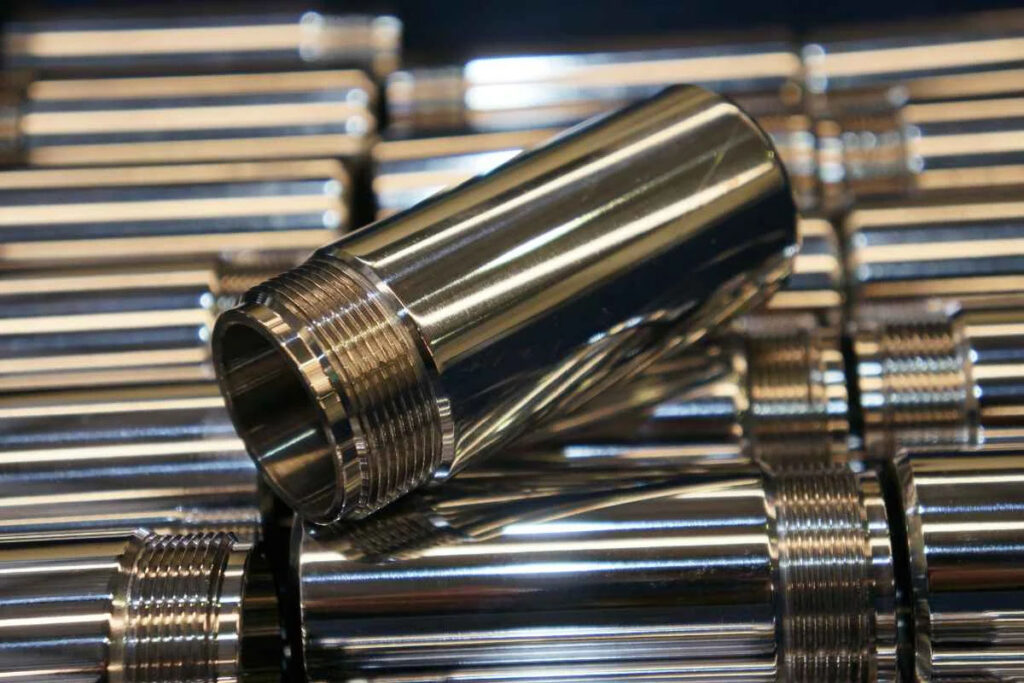
Chrome plating is not a one-size-fits-all remedy. Different types provide certain buildings tailored to numerous applications.
- Decorative Chrome: Focuses on looks. It applies a slim chrome layer over a nickel base to produce a brilliant, mirror-like coating. It is common on auto trim, faucets, and furniture.
- Hard Chrome: Focuses on feature. It uses a thick, dense layer of chromium to raise surface firmness, reduce rubbing, and enhance wear resistance. It is utilized on industrial parts like pistons, rollers, and molds.
- Thin Dense Chrome: A specialized kind of tough chrome that gives a really dense, smooth, and crack-free layer. It offers excellent rust resistance and reduced friction, perfect for precision parts in aerospace and [medical device prototyping] (https://senyorapid.com/medical-device-prototyping/).
- Black Chrome: Produces a distinct, non-reflective black finish. It is made use of for attractive purposes and in applications where light reflection need to be lessened, such as on optical instruments and photovoltaic panels.
- Satin Chrome: Delivers a matte or brushed coating rather than a reflective one. This sophisticated appearance is popular for architectural hardware, interior cars and truck components, and high-end customer items.
- Composite Chrome: This sophisticated method installs difficult bits like diamond or silicon carbide into the chromium matrix. The outcome is a composite finish with exceptionally high wear resistance, used for cutting tools and high-stress engine components.
The Future of Chrome Plating
The chrome plating industry is constantly progressing, driven by ecological policies and technological innovation. One of the most significant fad is the action away from hexavalent chromium. Research concentrates heavily on enhancing trivalent chrome procedures to match the solidity and shade of standard hexavalent chrome. New additives and bathroom chemistries are making trivalent remedies a lot more viable for practical applications. Furthermore, improvements in composite and alloy plating are opening up brand-new opportunities. These next-generation finishes guarantee also better toughness and specialized buildings, making sure chrome plating remains a relevant and important modern technology for decades to find.### Compatible Substrate Materials
Chrome plating can be applied to a wide range of substrates. The preparation process, however, must be adapted to the specific material to ensure proper adhesion.
| Material | Preparation Process |
|---|---|
| Steel | The surface is degreased and then acid-etched to activate it for plating. |
| Stainless Steel | Requires a specific acid activation (a Wood’s nickel strike) to break down its passive oxide layer. |
| Aluminum | Undergoes a zincate process, where a layer of zinc is applied to facilitate adhesion of the nickel and chrome layers. |
| Brass & Copper | Typically requires buffing and cleaning, followed by a light acid dip before the nickel undercoat is applied. |
| Plastics (ABS) | A multi-step chemical process etches the plastic, then deposits a conductive layer of copper or nickel before plating. |
| Zinc Die-Cast | Requires careful cleaning and a copper undercoat to protect the zinc from the acidic chrome bath. |
Chrome Plating vs. Alternative Finishes
Chrome plating is one of many finishing options. Its suitability depends on the project’s specific requirements for durability, appearance, and cost.
| Finishing Technique | Key Advantage | Best Use Case | Key Disadvantage |
|---|---|---|---|
| Chrome Plating | Extreme hardness and wear resistance. | Industrial parts, high-end decor. | Environmental concerns (Hexavalent). |
| Nickel Plating | Excellent corrosion resistance, uniform coating. | Intricate parts, electronics. | Softer than hard chrome. |
| Powder Coating | Wide color variety, durable, eco-friendly. | Architectural elements, consumer goods. | Cannot match chrome’s hardness or luster. |
| Anodizing | Integral to the part, good corrosion resistance. | Aluminum parts (e.g., smartphone bodies). | Limited to certain metals, less durable. |
| Zinc Plating | Excellent, low-cost corrosion protection. | Fasteners, hardware, structural steel. | Lacks decorative appeal and hardness. |
Conclusion
Understanding chrome plating is crucial to leveraging its complete potential. From its fundamental function in securing commercial machinery to its usage in creating spectacular consumer products, this technology supplies an effective mix of durability, rust resistance, and aesthetic allure. The process is a precise science, calling for cautious control over chemicals, electrical currents, and prep work. By choosing the right technique and type of chrome finish, designers and designers can substantially extend the life expectancy and boost the worth of their elements. As the innovation remains to progress toward even more sustainable techniques, its location in modern-day manufacturing is secure. For tasks needing durable and aesthetically attractive coatings, chrome plating remains an unparalleled option. For additional information on personalized production services, browse through [Senyorapid] (https://senyorapid.com/).
Comments
Latest Posts
Related Blogs
Senyo’s blog is focused on sharing our extensive knowledge of prototype manufacturing. Through our articles, we aim to support you in refining your product design and navigating the complexities of rapid prototyping more effectively.