Manufacturing Revolution with Rapid Prototyping Aluminum
Table of Contents
The major factor for survival in the industrial world which is changing very fast is to be at the forefront through the use of innovation and by being efficient. Industrial applications are developing with the help of rapid prototyping aluminum in a very different way than before. They can have all three success factors, i.e. speed, precision and material versatility, at once. This article goes in-depth into the world of rapid prototyping services for aluminium, explaining its benefits, applications, and the potential for changing your prototype manufacturing process. Know how aluminum rapid prototyping can help you achieve shorter development cycles, lower costs, and better prototype parts in the field of industrial engineering. If you want to know the reason why this technology has become a strategic imperative for industrial application success rather than just a niche option, keep reading.
What is Rapid Prototyping Aluminum and Why is it Essential for Industrial Applications?
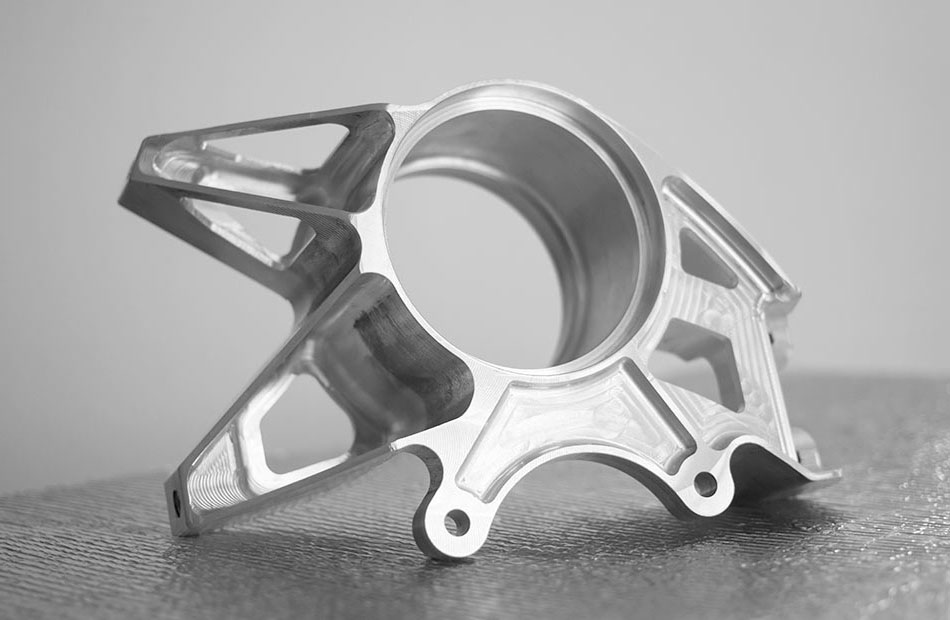
Rapid prototyping aluminium is basically the fast creation of aluminium prototypes through the use of innovative manufacturing techniques. Consider a scenario where you have a CAD file that depicts a complicated industrial component and within a matter of days, you hold a physical aluminium prototype in your hand that is ready to go through testing and evaluation. The technology used in rapid prototyping aluminium makes it possible to skip the long stages of prototyping that are normally done by tooling and manufacturing for weeks or even months. Aluminum is machined using a CNC machine, while 3D printing is used for creating either a pattern or a metal part, and rapid tooling is applied for the production of a casting. It is actually about the conversion of design and ideas from digital into real and tangible aluminum parts but in a way that humans could hardly imagine is there any.
So, why is it only so crucial to be utilized for industrial applications? The industrial sector is all about the constant struggle to improve efficiency, cut down costs, and innovate faster. Thus, rapid prototyping is what enables engineers, manufacturers, and designers to:
- Test and validate designs quickly: Recognizing design faults and to enhance performance through testing can be done very early in the development process long before expensive full-scale production is carried out.
- Reduce lead times: The product development lifecycle is greatly shortened thus, the time to market is accelerated, and as a result, the competitive advantage is gained.
- Create functional prototypes: Aluminum is a good source of mechanical properties, therefore, it is a perfect material for fabricating prototype parts that can be subjected to testing and can simulate real-world operating conditions .
- Minimize risks: Design problems identified early through the use of prototyping significantly lessen the chances of having rework and product failure in the future.
Simply put, rapid prototyping aluminium is an innovation and efficiency lever that has been instrumental in the industrial application sector, which is why it is still holding sway over the market. The process manufacturing is transferred from being a rigid to more agile and responsive to market demands.
What are the Key Benefits of Using Aluminum for Industrial Prototypes?
Aluminium is a popular choice of material to develop industrial prototypes primarily because it has a unique combination of properties that make it environmentally friendly and suitable for a wide range of demanding applications. The use of aluminum in your rapid prototypes is very beneficial in terms of performance, cost and manufacturing flexibility.
Those are the main advantages of using aluminum for industrial prototypes:
Lightweight Strength: Aluminium is known for its lightness relative to its strength. Aluminum parts are comparatively much lighter than steel components, but at the same time, they keep their good structural integrity. This is very important in the industrial applications where requirements of weight reduction are critical for efficiency, performance, or to make things more portable, as in the case of aerospace, automotive, and robotics industries.
Perfect Corrosion Resistance: Aluminum releases by itself a layer of protection against any corrosion that might be caused by moisture or a destructive agent on its surface. This layer makes aluminum prototypes suitable to be equipped in applications that are exposed to very strong and constant natural conditions, humid places, or environments where corrosive substances are present, thus ensuring durability and stability for a long period of time. Corrosion resistance is a very important factor in many industrial areas.
High Thermal Conductivity:
One of the best conducts of heat is Aluminium, hence, making it an ideal material in industrial prototypes that need to let the acquired heat out easily such as heat sinks, electronic enclosures, and components in engines and machinery.
Good Machinability: Aluminium alloys are normal to machine without any difficulties, which makes them an ideal material for CNC machines used in fast prototyping. This machinability allows for accurate tolerances, complex design features and smooth surface finish which are necessary to make functional prototype parts. Machine aluminum is a very productive method.
Recyclability:
Aluminum is a material that can be recycled many times, thus that its usage aligns with sustainability objectives and can eventually lead to the reduction of material costs. The use of aluminium as a prototyping material makes the manufacturing process more environmentally friendly.
Versatility in Manufacturing Processes:
Aluminum is a material that can undergo a variety of manufacturing processes such as CNC machining, casting (sand casting, die casting, investment casting), sheet metal fabrication, and even 3d printing (direct metal laser sintering or 3d printing of patterns for casting). The versatility in processing methods for aluminum gives manufacturers and designers the freedom of selecting the most economically beneficial and time-saving rapid prototyping method suitable for their needs.
Cost-Effectiveness: When compared with other engineering metals such as titanium, the price of aluminum is quite reasonable, if not cheap, which makes it very suitable for protoyping projects to be done, a great idea, especially when there are numerous iteration or the size of prototype parts is large. Aluminum rapid prototyping offers very good value.
All these benefits together make aluminum an ideal material to work with when creating industrial prototypes and with this material, you have a very good balance of performance, cost and manufacturing flexibility across a pretty extensive range of industrial applications. Most of the time choosing aluminum is the way to go to get the best results.
What are the Common Rapid Prototyping Techniques for Aluminum Industrial Prototypes?
The use of various specialized prototyping techniques is the main factor that brings about such quick turnaround times for aluminum industrial prototypes of experiments in industrial design. These methods incorporate different approaches to manufacture, each having its own set of advantages in terms of speed, design complexity, material properties, and cost.
| Technique | Description | Advantages | Industrial Applications |
|---|---|---|---|
| CNC Machining (Aluminum CNC Machining) | Subtractive process using CNC machines to precisely cut and shape aluminum blocks into the desired prototype geometry. | High precision and accuracy, excellent surface finish, wide range of aluminum alloys can be used, ideal for functional prototypes requiring tight tolerances and complex geometries. | Functional prototypes and parts for machinery, equipment, aerospace components, automotive parts, robotics, enclosures, housings, and precision tooling. |
| Direct Metal Laser Sintering (DMLS) | Additive manufacturing technique where a laser selectively fuses aluminium powder layer by layer to build the prototype directly from a CAD model. | Enables creation of highly complex shapes and intricate internal features that are impossible with subtractive methods, lightweighting potential through lattice structures, on-demand manufacture. | Complex industrial prototypes, lightweight components with internal channels or optimized geometries, customized parts, aerospace and automotive applications. |
| Rapid Tooling for Aluminum Casting | Utilizes rapid tooling methods (e.g., 3D-printed patterns or CNC machined molds) to accelerate the creation of molds for aluminum casting processes like sand casting or investment casting. | Faster and more cost-effective than traditional tooling for casting, allows for prototypes and parts with casting material properties, suitable for larger prototypes and moderate volumes. | Prototype castings for engine components, pumps, housings, structural parts, applications where casting is the intended final production process. |
| Sheet Metal Fabrication | Forming aluminium parts from sheet metal through processes like cutting, bending, stamping, and welding. | Cost-effective for thin-walled aluminum parts, good for enclosures, brackets, and structural components, relatively fast turnaround. | Enclosures, brackets, panels, chassis, housings for industrial equipment, electronics, and appliances, structural prototypes. |
The best selection of prototyping methods is determined by the detailed features of an industrial prototype that might be the shape, material properties, tolerances, quantity of prototype parts, budget, and lead time. In most cases, a hybrid of these means is employed to the full extent of capability and to get the results desired.
How Does CNC Machining Excel in Rapid Prototyping Aluminum for Industrial Applications?
One of the most industrial applications of rapid prototyping is the CNC machine machining aluminum, which is often termed aluminum CNC machining. Its outstanding precision and accuracy, versatility, and the sheer capability of making functional prototypes directly from real aluminum alloys is what makes it a first choice of engineers, manufacturers, and designers.
The reasons why aluminum CNC machining is the best for industrial rapid prototyping are:
Unmatched Precision and Accuracy: CNC machines are known for their ability to manufacture items with extremely close tolerances and high dimensional accuracy. This is very important for industrial prototypes that have to be an exact representation of the final production parts and go through strict functional testing to verify that they fit, can be assembled and work correctly. High strength components can be easily made.
Excellent Surface Finish: CNC machining produces aluminum parts that have great surface finishes in comparison to the traditional methods and some additive manufacturing techniques. The surface finish is not just for the looks but also for the functionality of the surfaces that require smoothness, accurate mating, or certain surface treatments like anodizing or polishing.
- Wide Range of Aluminum Alloys: CNC machining is capable of handling a large number of aluminum alloy types, whereby the engineers can choose the exact alloy that will meet the mechanical properties, corrosion resistance, and other performance requirements of the industrial prototype. The alloy can be chosen to achieve the desired performance.
- Robust Material Properties: The CNC machine parts retain the full mechanical properties of the original aluminum block. This is a considerable advantage over some additive prototyping methods where material properties might be slightly different from the wrought alloys. The full strength and the integrity of the aluminum are kept.
- Versatility in Geometry: DMLS might be the best for extremely complex internal geometries, but CNC machines are still very powerful when it comes to producing a vast range of external and moderately complex internal features with great precision. The use of 5 axis CNC further allows for more geometric possibilities.
- Scalability to Production: CNC machining is not only a process for the production of prototypes; it’s also one of the major manufacturing processes for production parts. The ability to go from prototyping to low-volume production or even mass production without changing the process is the main benefit of using CNC machining as the prototyping technique.
In case the industrial applications require high precision and accuracy, excellent surface finish, a wide aluminum alloy selection, robust material properties, and a smooth path to production, then aluminum CNC machining is usually the most reliable and the preferred way of doing rapid prototyping of aluminum. In fact, it’s a workhorse of industrial prototyping.
How is 3D Printing Used for Rapid Prototyping Aluminum of Industrial Components?
Even as CNC machining holds its ground as the major player, the 3d printing game has been changing fast, with the technology now becoming essential in the industrial components of rapid prototyping aluminum and offering unique capabilities that complement traditional manufacturing techniques. The use of 3d printing in aluminum rapid prototyping is mainly through two routes: direct metal 3d printing and indirect 3d printing for the casting of patterns and tooling.
3d printing has been implemented to drastically speed up the project of producing industrial aluminum components.
Direct Metal 3D Printing (DMLS/SLM): Direct Metal Laser Sintering (DMLS) and Selective Laser Melting (SLM) are by nature additively manufacturing techniques that innately 3d print metal parts, including alu, layer by layer. A powerful laser is guided to selectively fuse or melt aluminium powder as per the CAD file, thus making the prototype right from scratch.
- Advantages: DMLS/SLM frees the designer from limitations of extremely complex shapes and internal features for deep geometrical intricacies that would be impossible or at least very hard to manufacture by subtractive means such as CNC machining. What is more, there can be internal channels, lattice structures, and highly customized geometries. Besides, it is a great tool for lightweighting because it allows for optimal designs with less material use. Prototypes are built with the utmost design freedom.
- Applications: Complex industrial prototypes, lightweight components for aerospace and automotive, parts with conformal cooling channels, customized tooling, and low-volume production of intricate aluminum parts.
3D Printing for Casting Patterns and Rapid Tooling: there is no limit to what can be printed with 3d printing the use of patterns for sand casting and investment casting and rapid tooling inserts or even the entirety of the mold for short-run aluminum casting are some of them.
- Advantages: In this indirect method, the speed and design freedom of 3d printing are combined with the great characteristics of materials and the cost-effectiveness of traditional casting processes. It cuts out the whole lead time and cost of pattern and tooling making for aluminium casting substantially. The casting workflow is expedited by 3D printing.
- Applications: Prototype castings for engine components, pumps, housings, structural parts, and applications where the final production process will be casting.
It should be noted that the direct metal 3d printing of aluminum is a relatively new concept and is still in the process of refinement. It also has limitations in material properties and is more expensive when compared to wrought aluminum. However, it provides unrestricted design freedom and is on its way to becoming a major player in industrial applications. The subsequent industrial transformation will revolve around both the direct and indirect 3d printing technologies which would be instrumental in making 3d printing a substantial and flexible force in the field of aluminium rapid prototyping.
What Role Does Rapid Tooling Play in Aluminum Casting for Industrial Applications?
Rapid tooling serves as one of the most important enablers of rapid prototyping along with aluminium when casting methods are employed for industrial applications. Generally, tooling (molds for casting) is a very time-heavy and costly procedure, that might take several weeks or even months of lead time and requires a substantial amount of money. On the contrary, Rapid tooling techniques are created with the sole intention of cutting drastically this lead time and cost, thus making aluminum casting a more viable and affordable option for the manufacture of prototypes and low-volume production.
How fast tooling is essential to aluminum casting for industrial uses:
- Accelerated Mold Creation: Rapid tooling uses the power of technologies such as CNC machine machining, 3d printing (for patterns or direct mold creation), and other advanced manufacturing processes to create molds for casting much faster than traditional methods. The whole idea of rapid tooling revolves around this one factor – the time saving of the process is hugely increased.
- Reduced Tooling Costs: The manufacturing processes involved in rapid tooling are normally less costly than fabricating traditional steel molds, especially in cases of complex geometries or low-volume runs. The savings on tooling costs that occur due to this especially, make aluminum casting accessible to the areas of prototyping and short-run production.
- Design Flexibility and Iteration: With the help of rapid tooling, the designers can make their concepts more quickly, and in a much cheaper way by using the cost-effective design iterations. If a design change is necessary, a fresh mold can be made in a jiffy with the help of rapid tooling techniques, thus enabling quick changes and refinements during the prototyping process. The availability of such flexibility is very important when it comes to the optimization of designs.
- Bridge to Production: By using rapid tooling, one can help the transition from prototyping to full-on production become a lot smoother. This technology lets one create prototype castings that are very close to the production parts, thus allowing a complete testing and validation phase before going high-volume production tooling. The use of rapid tooling facilitates the process of going from mass production to big scale production.
- Materials and Processes Mimic Production: With rapid tooling, one can utilize the same casting processes and aluminum alloys or very similar ones that are intended for full-scale production. This guarantees that the prototype castings will have the same material properties and performance characteristics as the production parts. The implementation of casting techniques stays at one level.
- Variety of Casting Methods: One can perform rapid tooling with a number of different aluminum casting methods such as sand casting, investment casting, or even die casting (for short-run applications) thus allowing the ultimate flexibility in the selection of a suitable casting process for a particular industrial application.
Rapid tooling is merely not about the acceleration of the production of molds; it is, rather, a way of making the whole aluminum casting process more agile, responsive, and cost-effective to industrial applications and, as a consequence, the leading enterprises are empowered to innovate faster, validate designs more rigorously, and at the same time, have the ability to launch high-quality aluminum parts to the market with greater efficiency. This is a vital transition point between rapid prototyping and production.
How Do Aluminum Prototype Castings Differ from Machined Prototypes?
Prefabricated aluminum prototype castings and machined prototypes (generally from CNC machining) are equally good sources for rapid prototyping aluminium in industrial applications. Nevertheless, they vary substantially in their manufacturing process, obtainable geometries, material properties, as well as cost and lead time factors. It is important to comprehend these distinctions in order to pick the best prototyping method that meets your requirements.
Here’s a comparison of aluminum prototype castings versus machined prototypes:
| Feature | Aluminum Prototype Castings (using Rapid Tooling) | Machined Prototypes (CNC Machining) |
|---|---|---|
| Manufacturing Process | Casting: Molten metal is poured into a mold and solidifies. | Subtractive: Material is removed from a solid aluminum block. |
| Geometric Complexity | Can achieve more complex internal geometries and features, especially with investment casting. | Excellent for external features and moderately complex internal features. |
| Material Properties | Properties can be slightly different from wrought aluminum due to the casting process. | Retains full mechanical properties of the original wrought aluminum alloy. |
| Surface Finish | Generally rougher surface finish, often requiring post-processing. | Excellent surface finish directly from the machine. |
| Tolerance | Wider tolerances compared to machining. | Tighter tolerances and higher precision. |
| Lead Time | Faster than traditional tooling for casting, but generally slower than machining for simple geometries. | Faster for simple to moderately complex geometries, especially for single parts. |
| Cost | Cost-effective for multiple prototype parts or complex geometries where casting is the intended production process. | Cost-effective for single parts or low volumes, especially for simpler geometries. |
| Scalability to Production | More direct path to full-scale production if casting is the chosen production process. | Smooth transition if CNC machining is also used for production. |
In summary:
- Choose aluminum prototype castings when:
- The final production process will be casting.
- You need to create complex internal geometries.
- You need multiple prototype parts (making tooling more cost-effective).
- Slightly wider tolerances and rougher surface finishes are acceptable (or post-processing is planned).
- Choose machined prototypes (CNC) when:
- You need the highest precision and accuracy and tight tolerances.
- You require excellent surface finish directly from the machine.
- You need the full mechanical properties of wrought aluminum.
- You need a single prototype or a small number of prototype parts with relatively simple to moderate complexity.
- CNC machining is also the intended production process.
Often, a combination of both casting and machining is used during the product development process, leveraging the strengths of each prototyping technique for different stages or components.
What Industries Rely Heavily on Rapid Aluminum Prototyping for Industrial Applications?
Rapid prototyping aluminum has gone a long way in becoming a vital resource across the majority of industries, in particular, those which have complex industrial applications that need that the parts are lightweight, strong, and corrosion-resistant. The power to very swiftly manufacture real aluminum prototypes effectively by-passes quite a number of steps in the chain of innovative work, lowers the developing costs.
Here are some industries that rely heavily on rapid prototyping aluminium for industrial applications:
- Aerospace Industry: The aerospace industry is a major adopter of rapid prototyping aluminium. Weight reduction, high strength, and corrosion resistance are paramount in aircraft and spacecraft design. Rapid prototyping is used extensively for:
- Aircraft components (brackets, housings, structural elements)
- Satellite components
- Drone structures and components
- Engine parts (prototyping and testing)
- Wind tunnel models
- Automotive Industry: The automotive industry utilizes rapid prototyping aluminium to accelerate vehicle development and improve fuel efficiency through lightweighting. Applications include:
- Engine components (prototype castings and machined parts)
- Chassis components
- Suspension parts
- Body panels (prototyping and testing)
- Interior components
- Tooling for production
- Industrial Machinery and Equipment: Manufacturers of heavy machinery, robotics, and automation equipment rely on rapid prototyping aluminium for developing and testing robust and efficient components. Uses include:
- Housings and enclosures for machinery
- Brackets and structural components
- Robot arms and end-effectors
- Gears and mechanical components
- Custom tooling and fixtures
- Robotics: The robotics industry demands lightweight yet strong components for robot arms, chassis, and other structural elements. Aluminum rapid prototyping is essential for:
- Robot structural components
- End-of-arm tooling (grippers, sensors)
- Custom enclosures for electronics
- Prototyping and testing of new robotic designs
- Energy Sector: The energy sector, including renewable energy and oil & gas, utilizes rapid prototyping aluminium for various applications requiring corrosion resistance, strength, and lightweight properties. Examples include:
- Components for solar panels and wind turbines
- Housings for electrical equipment
- Downhole tooling (prototyping and testing)
- Components for pipelines and processing equipment
- Defense and Military: The defense industry leverages rapid prototyping aluminium for developing and testing lightweight, durable, and high-performance equipment. Applications include:
- Unmanned aerial vehicles (UAVs)
- Vehicle components
- Weapon systems components
- Protective gear and enclosures
These are just a few examples, and the applications of rapid prototyping aluminium continue to expand as manufacturing technologies advance and more industries recognize its benefits in accelerating innovation, reducing costs, and improving product performance in demanding industrial applications. It’s a versatile and essential technology for modern industrial engineering.
What are the Key Considerations When Choosing a Rapid Prototyping Aluminum?
It is a very important step, picking out the best rapid prototyping service provider to take care of your aluminum industrial application needs. Your ideal partner should not only have the right prototyping methods and equipment, but should also have knowledge of aluminum, be aware of the particular requirements of industrial applications, and be willing to commit to quality, speed, and customer satisfaction.
Here are the most important things to consider when selecting a fast metal-forming.
Prototyping Technologies Offered: Make sure the provider has the exact methods of rapid prototyping that you require. For example, if it is an aluminum CNC machine you want, or a DMLS (3d printing) or rapid tooling for aluminum casting (sand casting, investment casting, etc.) or sheet metal fabrication. A broad capability set will be beneficial for you.
- Aluminum Alloy Expertise: The company should be able to demonstrate the ability to work on the different aluminum alloys that are typically used in industrial applications (i.e., 6061, 7075, 5052, A356, etc.) and be able to recommend the best alloy for you based on your specific requirements. Knowing the alloy inside and out is the main thing.
- Precision and Tolerance Capabilities: In many cases, industrial applications are the ones where precision and tolerance play a very important role. Find out what tolerances the service provider can achieve and what quality control measures they have in place to confirm that they are capable of fulfilling your requirements with respect to dimensional accuracy. High precision is most likely a must.
- Surface Finish Capabilities: Finding out what the provider’s capabilities are in terms of achieving the required surface finish on your aluminum prototypes will be helpful. This could mean the use of certain machining capabilities, a post-process option (e.g., polishing, anodize), or even the inherent surface finish characteristics of the selected prototyping technique (e.g., casting).
- Lead Time and Turnaround Time: Talk about the regular lead and turnaround times for aluminum prototypes. If the provider can meet your project milestones and deliver the speed you require for rapid prototyping, then you are good to go. Fast delivery is one of the most important things in rapid prototyping.
- Design for Manufacturability (DFM) Support: A good fast prototyping service provider will not only provide you with DFM feedback and support but will also assist you in optimizing your designs for efficient and cost-effective production irrespective of whether it is done through machining, casting, or any other method. The DFM knowledge is of great help to you.
- Quality Management System: Find out about the provider’s quality management system and their QMS certifications (e.g., ISO 9001). An advanced quality system will be the guarantee for a stable quality of your prototypes and the accurate following of the set industry standards. Quality is the most important thing.
- Customer Service and Communication: Decide on a supplier who is good at customer service, communicates clearly, and is willing to work closely with you during the entire prototyping process. Timely communication is very important for a hassle-free and successful project.
- Cost and Value: While cost is something to be considered, the main focus should be on the total value. Also, think of a provider’s qualities such as their expertise, quality, speed, capability, and their being a means to the end in the efficient achievement of your prototyping goals. The lowest price is not always the best value.
Such an assessment of these factors and consequently opting for a rapid prototyping service provider who meets your exact requirements of the aluminium industrial application is the way to go. This will strengthen and facilitate your relationship, enabling you to speed up your product development, lower your risks, and allow you to put high-quality aluminum parts on the market faster and more efficiently. Be prudent in selecting your prototyping partner.
How Does Rapid Prototyping Reduce Costs in Industrial Manufacturing?
On the other hand, the industrial manufacturing can be significantly cost-reduction as a result of a well-run accelerated development program. The points of rapid development, early locating of errors, ceiling the design of the product as well as reducing the risk are frequently converted into pretty big money savings spread over the whole product life cycle.
Rapid prototyping leads to cost-reduction in industrial manufacturing in the following ways:
- Reduced Time to Market and Faster Revenue Generation: Companies using advanced rapid prototyping can swiftly bring their industrial products to market and thus, generate revenues quickly. Thus, they get back their development costs and the profitability of the business increases. The cost saving due to faster market entry is very substantial.
- Early Detection and Prevention of Costly Design Flaws: Producing functional aluminum prototypes in the early stage of the design process makes it possible to find and fix design faults, functional limitations, and manufactureability issues in the technical areas before investing in expensive tooling or full-scale production. The price to fix errors in a design during mass production is many times that of doing it during prototyping. Early error detection is very important for cost savings.
- Optimized Designs for Manufacturability and Material Usage: Through rapid prototyping, design optimization can be done in an iterative manner. The engineers will be able to perfect their designs to make them more manufacturable, consume less material, and even simplify the assembling process, hence, in the future, the production cost per unit will be greatly reduced. Optimized designs cut manufactureing expenses to a minimum.
- Reduced Tooling Costs (Especially with CNC and 3D Printing): The use of rapid prototyping methods such as CNC machine aluminum and 3D printing (DMLS or for patterns) almost always result in the removal or significant reduction of the need for costly tooling (molds, dies) in the first steps of creating the products. This is a very important cost saving, especially in the case of short volume prototyping or iterative design changes. The reduction in tooling costs is a substantial advantage.
- Minimized Risks of Product Failure and Rework: With the help of rapid prototyping, the risks of product failure, rework which is costly, or production delays due to unforeseen issues are minimized through comprehensive testing and validation. The savings thus brought in are very large and they also act as a shield against losses. Risk mitigation is one of the major factors that saves costs.
- Improved Supply Chain Efficiency: There are also instances where rapid prototyping may allow for more localized or on-demand solutions in manufacturing, thus indirectly contributing to cost savings by cutting down on transportation expenses, inventory costs, and supply chain complexities.
Although there is a concern about an investment that must be made for the rapid prototyping services initially, the question of how cost-effective is rapid prototyping aluminum as a strategy for industrial manufacturing can be answered by pointing out the long-term cost benefits of accelerated development, risk reduction, improved design quality, and streamlined manufacturing processes. It is a wise investment that returns quite well throughout the product lifecycle.
FAQs
What is the typical lead time for aluminum rapid prototypes for industrial applications?
Lead time is different from one case to another as it depends on the intricate details, the method of prototyping, and the supplier, however, in most cases, metal prototypes can be made within few days up to a few weeks, which is substantially quicker than traditional methods. Usually, CNC machining is the quickest, then DMLS, while rapid tooling for casting is a bit longer.
What aluminum alloys are best suited for rapid prototyping in industrial applications?
Typical selections are 6061 (general-purpose, good machinability and weldability), 7075 (very strong, used in the aerospace industry), 5052 (good corrosion resistance and weldability), and A356 (for casting applications). The most suitable alloy is determined by the exact use and the mechanical properties needed.
Can rapid aluminum prototypes be used for functional testing in industrial settings?
Indeed, without a doubt. Aluminum rapidly prototyped parts mainly through CNC machining and a casting done with rapid tooling are working one, and they are made from the real aluminum alloys; therefore, they are the best kind of parts to be used for rigorous functional testing, performance validation, and closely simulating the real-world operating conditions in industrial applications.
What is the typical tolerance achievable with rapid aluminum prototyping for industrial parts?
Tolerance capabilities are different for each prototyping method. CNC machining is able to provide the closest tolerances (in most cases within +/- 0.005 inches or better, and in some cases even stricter with high precision machining). DMLS is a process that can achieve reasonable tolerances, whereas casting with rapid tooling typically results in more broadly defined tolerances, however, the latter can still be used in a great number of industrial applications.
How do I ensure the quality of rapid aluminum prototypes for industrial use?
First, a company offering rapid prototyping services that has a robust quality management system (for example, ISO 9001 certification), considerable experience in industrial applications, and well-defined quality control procedures should be selected. Go over your details as far as tolerance, surface finish, and material are concerned and also ask for some sample parts or case studies to check out their ability.
Comments
Latest Posts
Related Blogs
Senyo’s blog is focused on sharing our extensive knowledge of prototype manufacturing. Through our articles, we aim to support you in refining your product design and navigating the complexities of rapid prototyping more effectively.