Top 10 Techniques for Sheet Metal Assembly in Fabrication
Table of Contents
Sheet Metal Assembly Techniques: A Comprehensive Overview
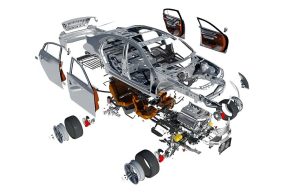
Sheet metal assembly is a key aspect of metal manufacturing, where individual metal components are combined together to create complex products and structures. Whether in the automotive, aerospace, electronics, or construction industries, proper assembly techniques can greatly affect the strength, durability, and cost-effectiveness of the final product.
There are various assembly methods for sheet metal parts, and choosing the appropriate sheet metal assembly method can improve assembly efficiency and ensure product quality
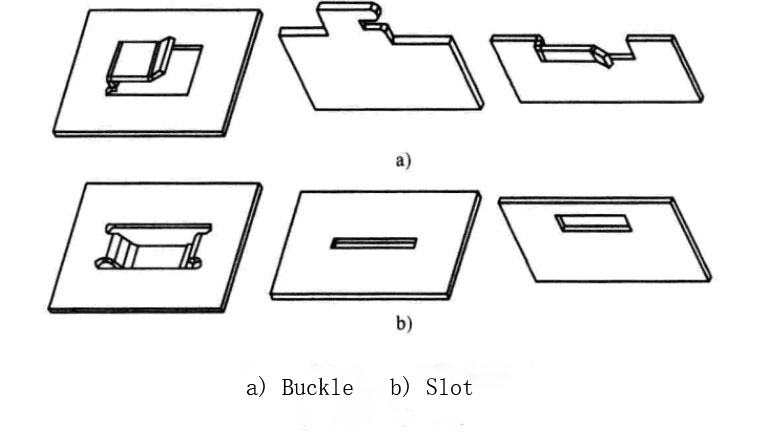
1. Sheet Metal Assembly-Buckle
Buckle connection is a tool free assembly method that achieves quick connection between parts by designing specific buckle structures. Suitable for assembly of lightweight sheet metal parts. Unlike the snap fit assembly of plastic parts, most sheet metal does not have elasticity (except for stainless steel SUS301), and sheet metal assembly cannot be completely completed by snap fit.
Pros
- Low cost
- Able to quickly assemble and disassemble
Cons
- Cannot completely fix the parts, often requires coordination with other assembly methods.
2. Sheet Metal Assembly-Riveting
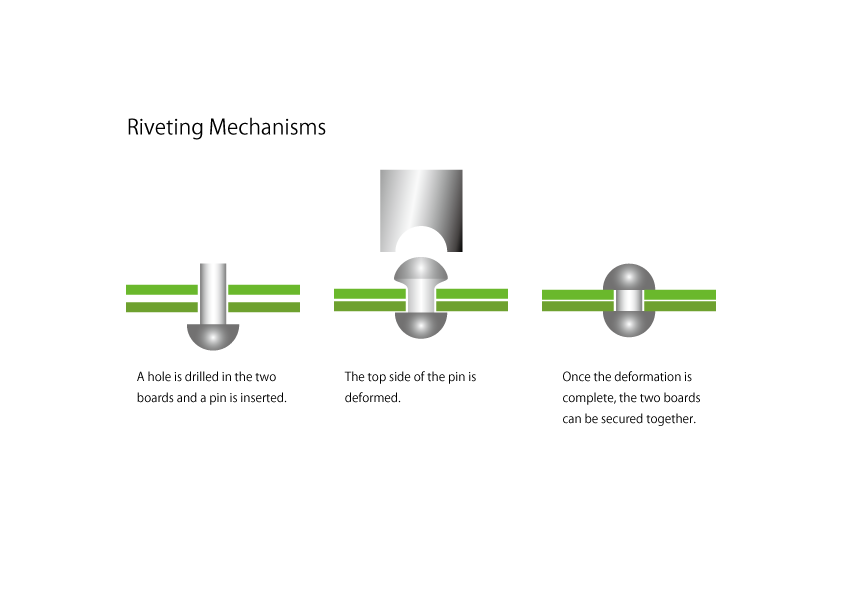
Riveting is one of the oldest and most reliable methods of sheet metal assembly. Riveting assembly is the process of inserting a pull nail into the corresponding hole of two parts, using a pull nail gun to pull the rod until it breaks, causing the outer pull nail sleeve to deform and expand beyond the diameter of the hole, thus achieving the purpose of assembling the two parts. Riveting has strong shear resistance and is suitable for applications that do not require disassembly.
Riveting is especially useful for applications where welding is impractical, such as joining different metals that cannot be welded together, or in scenarios where heat-sensitive components are involved.
Various types of rivets include solid, blind, and semi-tubular rivets. Blind riveting, for example, allows for single-sided access, making it ideal for assemblies with limited access to one side. Riveting is extensively used in constructing aircraft, ships, and automobiles, where high strength and permanence are required.
Pros
- Easy to operate and flexible
- No need for positioning, can automatically locate
- Can be reworked
Cons
- It is necessary to add counterholes on the product, which may increase the punching process
- The tail of the riveting will protrude from the plane, which may affect other parts
- Riveting cannot be used in limited space, and if the reveting gun is obstructed by other features, it may cause the nail to pull off center
3. Sheet Metal Assembly- Fastening (Bolts, Screws, Nuts)
Mechanical fasteners like bolts, screws, and nuts offer an easy-to-disassemble method of assembly. This is particularly useful in cases where periodic maintenance, repairs, or replacements are necessary. Fasteners are versatile and can be used across a wide range of materials and thicknesses.
For sheet metal assembly, self-tapping screws are commonly used. These fasteners cut their own threads into the metal, making them highly effective for joining thin sheets without needing pre-threaded holes. Bolted assemblies, on the other hand, offer higher strength for thicker sheets or larger structures.
Pros
- Safe and reliable, can be disassembled repeatedly
- Lower cost, no need for positioning
- Small batch production can be handmade
Cons
- The number of disassembly cycles is limited, and frequent disassembly can easily lead to fastening damage and scrap of the workpiece, increasing costs.
4. Sheet Metal Assembly- Clinching
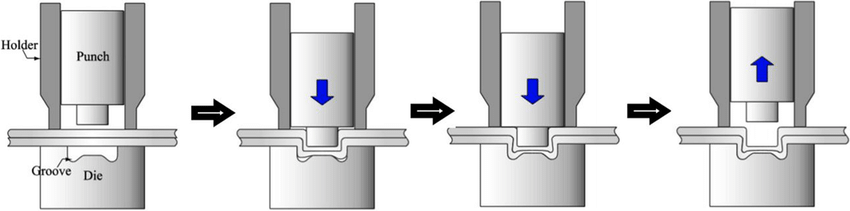
Clinching is a mechanical fastening method used to join two or more layers of sheet metal without the need for heat, adhesives, or additional fasteners. The process involves deforming the materials together by using a punch and die. The result is an interlocking joint formed through material deformation, creating a strong bond between the metal sheets.
This process is particularly advantageous for sheet metal assembly components made of different materials, thicknesses, or coated surfaces, where traditional welding or riveting methods might not be ideal.
Pros
- The most economic way to fasten the metals in sheet metal assembly
- No components,just cold forming
- No fumes,no sparks and no heat effects
- Can fasten different materials
Cons
- The completed surface is not smooth
- If a very high installation strength is required, it is difficult to achieve
5. Sheet Metal Assembly- Welding
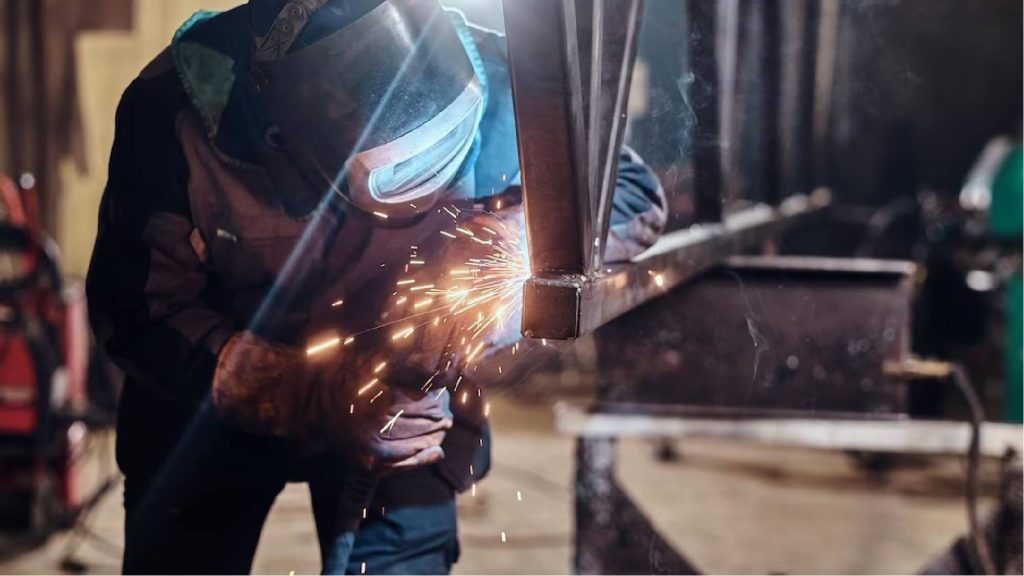
As one of the most important mehold for sheet metal assembly,welding is a technology that fixes multiple sheet metal materials together through fusion welding, and it is a very important process in modern industrial manufacturing. Sheet metal welding is widely used in fields such as automotive, electronics, mechanical manufacturing, aerospace, and has become an indispensable part of modern manufacturing. At present, there are several commonly used welding methods in sheet metal welding, including:
1. MIG (Metal Inert Gas) Welding: Commonly used for joining thicker sheets, MIG welding provides strong, durable welds.
2. TIG (Tungsten Inert Gas) Welding: TIG welding offers precise control and is preferred for thin sheets and critical welds requiring high-quality finishes.
3. Spot Welding: Frequently used in the automotive industry, spot welding involves applying heat and pressure to localized points, creating a weld at small spots between the sheets.
This process is particularly advantageous for assembling sheet metal components made of different materials, thicknesses, or coated surfaces, where traditional welding or riveting methods might not be ideal.
Pros
- High structural strength and good sealing performance
- Simplify processing and sheet metal assembly procedures
- High material utilization rate
Cons
- The welded product cannot be disassembled. If there is an error, the scrapped parts will increase the cost
- There are certain technical barriers and high requirements for welding technicians
- Welding is not suitable for all sheet metal materials
6. Sheet Metal Assembly- Adhesive
Sheet metal assembly of adhesive is a technique of bonding two or more different materials together. The principle is mainly to use chemical substances or physical interactions to form a certain adhesive force between two or more different materials and materials of different shapes (such as curved surfaces, edges, etc.). There are two commonly used methods for sheet metal adhesive: one is hot melting, which involves heating the adhesive material to melt it and then drying and solidifying it; Another type is chemical reaction, which uses chemical reactions to form a glue layer and form a strong bond after drying.
Pros
- Reduce the overall weight of the assembled parts
- Good bonding and sealing
- Cleaner, smoother appearance
- Allow for joining different materials
Cons
- Requires time to cure or set, which can slow down the production process.
- Require extensive surface preparation
- Difficult to disassemble without damaging the materials
- Have lower shear strength compared to mechanical fasteners
- May pose health and safety risks to workers
7. Sheet Metal Assembly- Hemming
Hemming is another sheet metal assembly technique where the edges of one sheet are folded over the edge of another, effectively locking them in place. It is typically used in automotive body panels, appliance parts, and similar applications where sharp edges need to be concealed, and where a neat, finished appearance is desired.
The hemming process can be executed using various machines like press brakes or roller hemmers, providing a clean, aesthetically pleasing joint while maintaining structural integrity.
8. Sheet Metal Assembly-Locking and Seaming
Seaming is a technique primarily used in applications like roofing, ductwork, and containers, where edges of two metal sheets are folded over each other to create a seam. The process forms a tight, mechanical lock that holds the sheets together without the need for fasteners or adhesives.
Seaming is commonly used in the creation of cylindrical parts, such as cans or tubes, where the edges of the metal sheets are overlapped and folded to form a durable, continuous connection. It can be done using manual tools or automated machines in large-scale production settings.
Locking assembly is a mechanical joining method in which tabs are punched or cut into one sheet and folded into corresponding slots on another sheet. This technique is a simple, cost-effective way to assemble parts without welding, riveting, or adhesives. Locking tabs are typically used in lightweight applications, such as enclosures, cases, or housing for electronics.
The process is often automated for high-volume production and is an ideal solution for products that require easy disassembly for maintenance or recycling
9. Sheet Metal Assembly-Crimping
Crimping is another mechanical joining process that involves folding the edges of the metal sheets together to form a secure connection. This technique is widely used in ductwork, electrical enclosures, and roofing applications, where sheet metal is formed into specific profiles for joining without additional fasteners.
Crimping is simple and requires minimal equipment, making it a low-cost solution. It is suitable for non-structural or low-load-bearing applications where the aesthetics of the joint are not a priori
10. Sheet Metal Assembly-Snap-Fit Joints
Snap-fit joints are an efficient assembly method where one metal part is designed with a flexible, interlocking feature that “snaps” into a corresponding feature on another part. This technique is widely used in consumer electronics, appliances, and lightweight automotive components, where fast assembly without tools or fasteners is critical.
Snap-fit joints are ideal for high-speed production and reduce assembly time and costs, but they are generally used in applications with light to moderate loads, as excessive stress could cause the joint to fail.
Conclusion
Choosing the right sheet metal assembly technique depends on several factors, including the materials involved, the intended use of the final product, the production volume, and cost considerations. Traditional methods like riveting and welding remain staples of heavy-duty and permanent assemblies, while modern techniques like adhesive bonding and laser welding offer new possibilities for lighter, more precise, and automated assembly lines.
Understanding the advantages and limitations of each technique allows manufacturers to create efficient, high-quality products that meet the demands of today’s diverse industries.
Comments
Latest Posts
Related Blogs
Senyo’s blog is focused on sharing our extensive knowledge of prototype manufacturing. Through our articles, we aim to support you in refining your product design and navigating the complexities of rapid prototyping more effectively.