
Sheet Metal Forming: Techniques, Processes, and Applications
Table of Contents
What is Sheet Metal Forming?
Sheet Metal Forming, also called sheet metal fabrication is a manufacturing process used to shape metal sheets into precise shapes and sizes. This is achieved through various techniques such as curling, bending, stamping, deep drawing, shearing, and stretching. These methods shape the metal into the desired shape while maintaining its inherent physical properties, ensuring that the strength and integrity of the material are maintained throughout the entire process.
Typical Sheet Metal Products
- Metal Desk
- File Cabinets
- Appliances
- Beverage Cans
- Car Parts
- Round cup-shaped or box-shaped parts
- Pot and Pans
- Containers
- Industrial Housing
- Parts for electronic devices
Applications For Sheet Metal Forming
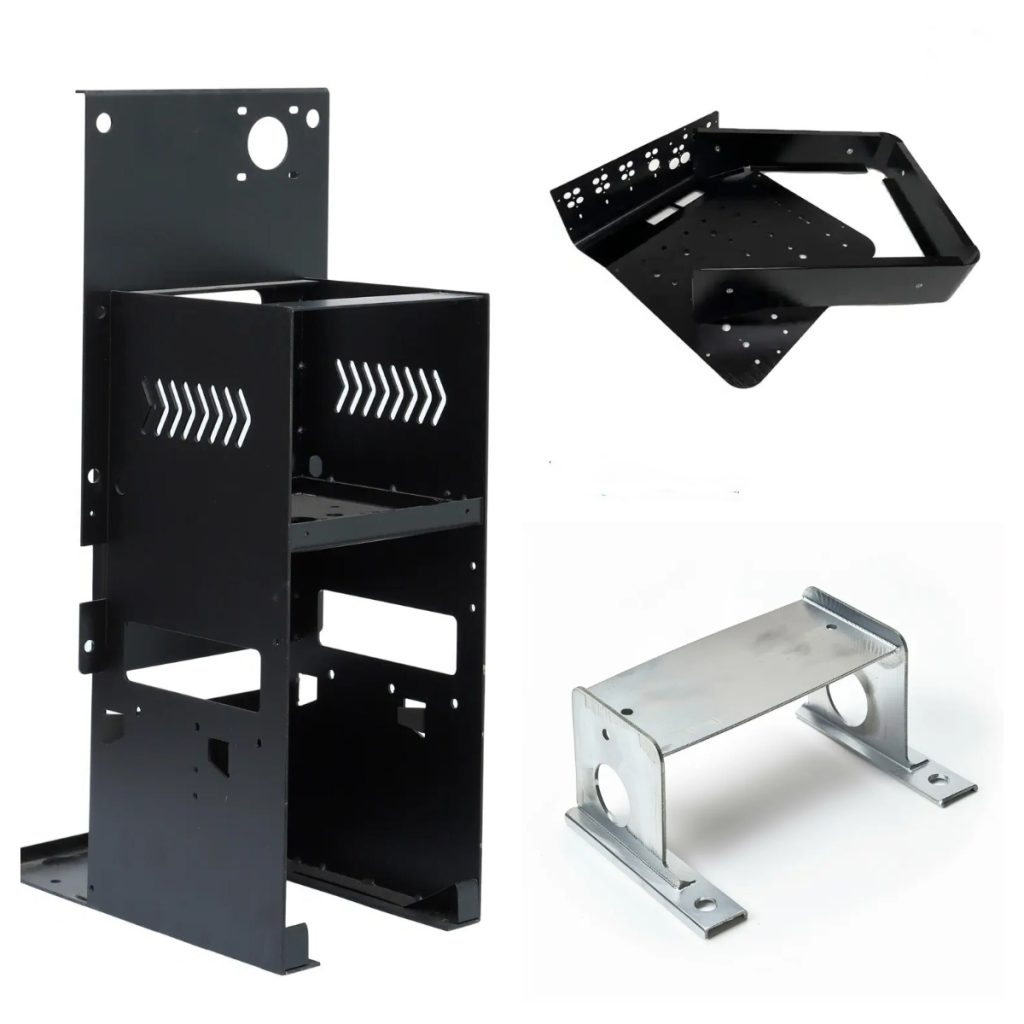
Sheet metal forming, as an important metal processing technology, has a wide range of applications in the production and manufacturing of various industries. Through sheet metal processing technology, precise processing and rapid production of metal sheets can be achieved, meeting the needs of various complex structures and appearance designs, and improving the overall structure and performance of products.
Automotive Industry
As an important component of automobiles, sheet metal forming parts play a crucial role in the automotive industry. The car body, doors, hood, trunk, and other parts of a car are made up of various shapes of sheet metal parts. Sheet metal forming parts not only provide good protective functions, but also beautify the appearance of the car, enhance its overall performance and structural strength. Sheet metal forming parts can also be customized according to different needs to meet the requirements of different car models and styles.
Home Appliance Industry
In the home appliance industry, sheet metal forming parts also play a huge role. Various household appliances, refrigerators, washing machines, microwaves, etc. require sheet metal parts to manufacture shells, panels, and other components. Sheet metal parts not only provide necessary structural support and protection, but also enhance the appearance and texture of products, while improving market competitiveness.
Electronic Industry
Sheet metal forming parts are also an indispensable part of the electronic manufacturing industry. Various electronic devices, such as computers, smartphones, tablets, etc., require sheet metal forming parts to manufacture components such as casings, screen stands, heat sinks, etc. Sheet metal forming parts can effectively protect the internal components of electronic devices, while also providing necessary heat dissipation and support functions to ensure the normal operation and service life of the equipment
Industrial Manufacturing
In the manufacturing industry, sheet metal forming parts are very common. Due to the customizable appearance and diverse surface treatments of sheet metal parts, many exterior parts such as the outer cover of injection molding machines and the shell of equipment are sheet metal parts. The application of automation equipment is particularly extensive. In order to extend the service life of machines, many structural and functional components are treated with rust and corrosion prevention methods, such as anodizing and spraying. This is one of the important features of sheet metal parts.
Aerospace Industry
In the aerospace industry, sheet metal forming parts are widely used to manufacture aircraft bodies, engine components, missile satellites and other equipment, ensuring the structural stability and safety of aircraft.
The Process of Sheet Metal Forming
1. Shearing
Punching and blanking
Punching and blanking are the most usual shearing operations.
Punching: the sheet with hole is the final part and the sheared slug is discarded.
Blanking: the slug is the final part and the rest is scrap.

2. Laser Cutting
As a very important role in sheet metal forming,Laser cutting is a technique that uses high-power lasers to accurately cut shapes on metal plates. During this process, the metal plate is fixed on the bed of the laser cutting machine. The computer numerical control system guides the laser beam to perform precise and clean cutting according to pre programmed design.
Laser cutting processing replaces traditional mechanical knives with invisible light beams, which has high precision, fast cutting, is not limited to cutting patterns, and saves materials through automatic typesetting. This method is very suitable for applications that require complex shapes, patterns, or metal plate holes. Laser cutting has found a foothold in industries such as electronics, medicine, aerospace, automotive, and semiconductor.
Laser cutting can be applied to various metals, including steel, stainless steel, aluminum, and copper.
Laser cutting is renowned for its high precision, versatility, and repeatability, requiring minimal post-processing and resulting in minimal material waste.
For more information, please refer to our sheet metal forming- laser cutting guide.
3. Metal Bending
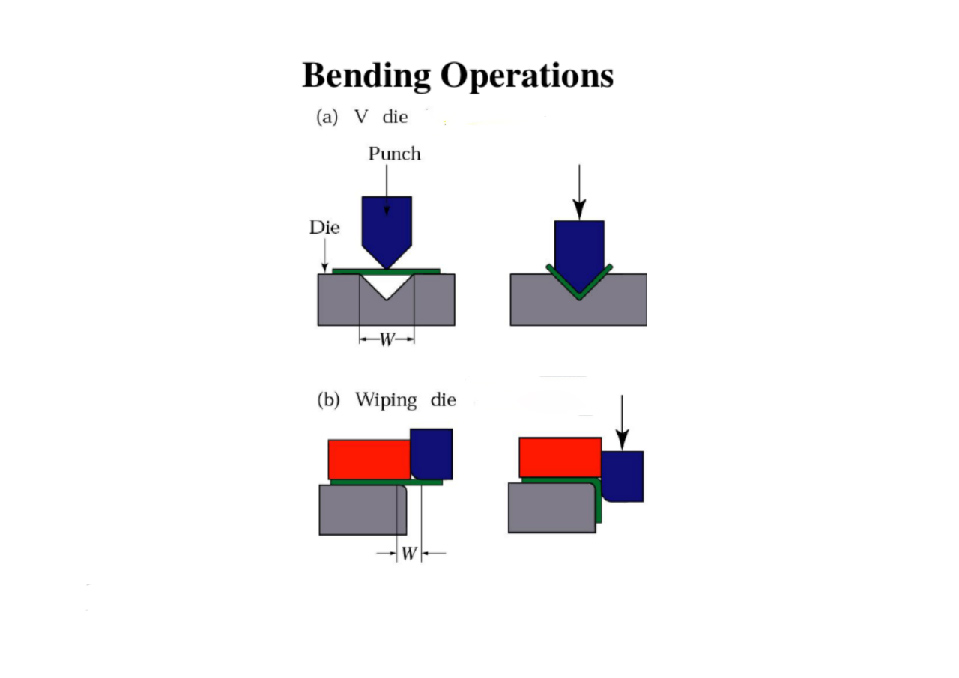
The basic principle of metal bending in sheet metal forming is to apply pressure to the metal sheet through the upper and lower molds on the bending machine, causing it to undergo elastic deformation and plastic deformation, ultimately forming the desired bending angle and shape. It requires precision equipment and professional skills, which are crucial for enhancing the functionality and aesthetics of the product.
Bending creates specific shapes and structures that are functionally suitable for their environment and purpose, making it a fundamental and essential technology in modern manufacturing.
More details pls. refer to sheet metal forming- metal bending service.
4. Metal Stamping
Stamping is an important process for sheet metal forming through stamping. The specific process is as follows: after passing through a press machine, the sheet metal is stamped using a stamping die to form the required convex and concave shapes, in order to achieve material manufacturing and processing. Therefore, stamping is mainly used for the processing and production of large quantities of light steel plates, electrical metal parts, and automotive components.
5. Deep Drawing Metal Stamping
Deep drawing stamping is a manufacturing process that forces a metal plate into a mold, using the mold to stretch the material into its final shape. Its main advantage is the ability to quickly and effectively create complex shapes. This type of stamping may be an ideal choice as it can adapt to almost any design constraints, and deep stamped parts are more durable than stamped parts because they wear less during production.

6. Surface Finishing
The surface treatment methods for sheet metal forming processing mainly include six methods: polishing, silk polishing, sandblasting, baking paint, electroplating, anodizing, etc. When we perform surface treatment on sheet metal forming processing, we need to choose the corresponding surface treatment method based on the characteristics of different materials of sheet metal forming parts.
Materials for Sheet Metal Forming
Commonly used sheet metal forming materials include:
Cold Rolled Sheet Metal: This is the most basic type of sheet metal forming, widely used across various applications. It serves as a substrate for other materials but is relatively susceptible to rust.
Electroplated Galvanized Sheet: This sheet is commonly used as a base material for electroplating and is produced through chemical reactions.
Hot Dip Galvanized Sheet: Created by immersing a cold plate in a molten zinc solution to form a protective zinc layer, this sheet is widely used and involves a physical change process during production.
Hot Rolled Plates: These are lower-end materials with a tendency to rust, typically with a thickness greater than 3mm. They are commonly used in the manufacturing of hinge products.
SD Steel Plate: Known for its excellent rust and corrosion resistance, this material is used in applications such as outdoor air conditioner installation brackets.
Stainless Steel and Stainless Iron: Typically available in grades like SUS304 and SUS430, these alloy materials offer excellent rust and corrosion resistance with an attractive surface finish in sheet metal forming. They are often used for exterior components, such as refrigerator doors and gas stove surfaces.
Aluminum Zinc Plated Sheet: Similar to electroplated zinc sheets but with an added metallic aluminum element, this sheet features a smooth, aesthetically pleasing surface and is commonly used for exterior components, such as the back steel plates of certain refrigerators.
Aluminum Plate or Aluminum Alloy Plate: Also known as aluminum sheets in sheet metal forming, these are characterized by their low density and anti-corrosive properties. Typical applications include refrigerator water trays and evaporator fins.
The Advantage and Disadvantage For Sheet Metal Forming
The Advantages
1. High Processing Accuracy: Sheet metal forming technology delivers greater precision compared to traditional mechanical methods.
2. Increased Processing Efficiency: Utilizing advanced CNC machinery and automated production lines, sheet metal processing achieves significantly higher efficiency than conventional mechanical techniques. which can greatly shorten the processing cycle and save production costs.
3. Lightweight and High Strength: Components produced through sheet metal forming technology are lightweight yet strong and highly resistant to corrosion. This makes it ideal for products that require reduced weight while enhancing durability and extending service life.
4. Optimal Material Utilization: Sheet metal forming technology makes effective use of materials such as metal sheets, steel strips, and eco-friendly plastics. This approach maximizes material use and helps conserve resources.
The Disadvantages
1. Expensive equipment required: Sheet metal forming processing requires large CNC cutting equipment and automated production lines, which are expensive and have relatively high maintenance costs.
2. Precision is affected by materials: Due to the different compositions and hardness of different types of materials, the precision of sheet metal materials will be affected during the processing.
3. Insufficient effective cutting length: Due to the problem of insufficient effective cutting length during machining and cutting, when machining thick plates, the second best option will be to reduce machining accuracy, greatly increasing production difficulty.
Conclusion
The advantages of sheet metal forming technology are mainly reflected in cost, precision, quality, resource conservation, and lightweight aspects. Although it still has some disadvantages, overall, sheet metal forming technology has a wide range of applications and prospects.
Comments
Latest Posts
Tags
Related Blogs
Senyo’s blog is focused on sharing our extensive knowledge of prototype manufacturing. Through our articles, we aim to support you in refining your product design and navigating the complexities of rapid prototyping more effectively.