The Evolution and Utility of Silicone Rapid Prototyping
Table of Contents
It used to cost a lot and take a long time to turn a digital product idea into a physical product. However, Silicone Rapid Prototyping has entered the scene. This technology has essentially changed the way we make everything from medical devices to wristbands for smartwatches. In short, it allows for the production of fully functional silicone prototype parts within days rather than weeks.
The technology came about as a result of the big boom in CAD (Computer, Aided Design) towards the end of the 20th century and has been developing steadily since then. Nowadays, with technologies such as Inkbit’s Vision, Controlled Jetting, we are capable of producing not merely ‘look, like’ models but rather high, quality, multi, material prototypes that function exactly as the final product.
A Brief History Of Silicone Rapid Prototyping
The Early Days
The narrative goes back to the late 1900s. As computers started to handle complex 3D designs, the manufacturing industry faced the challenge of finding the right pace with it. The 1980s witnessed the first introduction of the 3D printer, a groundbreaking innovation that freed engineers from the weeks of manual carving and modeling.
The Silicone Shift
By the time the new millennium rolled in, plastic prototypes could no longer satisfy the demand for reality. Besides the “feel” and the durability of the materials like rubber used products; the industries intensely required these qualities too. The manufacturers leaned more and more on the use of silicone in creating prototypes that were not only visually accurate but also “felt” right. FINIS, Inc. is one such example which took the standard filament printing as a base to new heights through advanced Stereolithography (SLA) with Silicone 40A Resin. It was quite a revolutionary plus breaking step because it made possible the testing of their swimwear gear in water.
Where We Are Now (2026)
We have entered an era where prototyping overlaps with production. Educational establishments and design workshops are, by all means, taking parts creationthey are getting close to parts that are functionally isotropic (strong in all directions) with multi, material printing.This trend speaks for itself, indeed: additive manufacturing has moved far beyond the stage of test, only, it is serving as the means of creating really usable, end, use parts.
Why Silicone Rapid Prototyping? The Science Behind the Material
Silicone is not simply one material; it is a group of top performers. More specifically, Liquid Silicone Rubber (LSR) is the main feature for several reasons:
Firstly, it is both tough and kind to you: LSR is chemically neutral. It can be UV light, ozone, acids, and extreme temperature (from, 90C to over 250C) resistant without any damage. Besides, it is hypoallergenic, so it is suitable for skin contact and medical implants.
Mechanical Memory: You can extend it, rotate it, and squeeze it. Owing to a property named “low compression set, ” silicone returns to its original form, which is why it is used for non, metal gaskets and buttons.
Electrical Insulation: It is naturally opposed to electric fields, therefore, it is spotted as an insulating material for wires and inside consumer electronics.
The Toolkit: Materials and Methods
The Materials
Pure Silicone: The go, to for seals, baking molds, and wearables. Its antimicrobial and handles heat like achampion.
Resin: Used in 3D printing for high, detail, rigid parts (like device housings). Its precise but requires more cleanup and curing time.
The Hybrid Approach: Mixing the hard nature of resin with the soft one of silicone, engineers can fabricate complex mechanisms, for example, soft robotics grippers that need a hard skeleton but a soft touch.
The Processes
There is not a single “correct” way to prototype with silicone. Your decision will be based on your cost, time, and quantity of parts needed.
3D Printing: The Agile Artist. This technology fabricates parts by adding layers one after another, therefore, it allows to create intricate geometries which normally cannot be made by molding. It is the best method for producing work of low volume but high complexity. If you require two highly detailed parts by the next day, it is the method that you should go for.
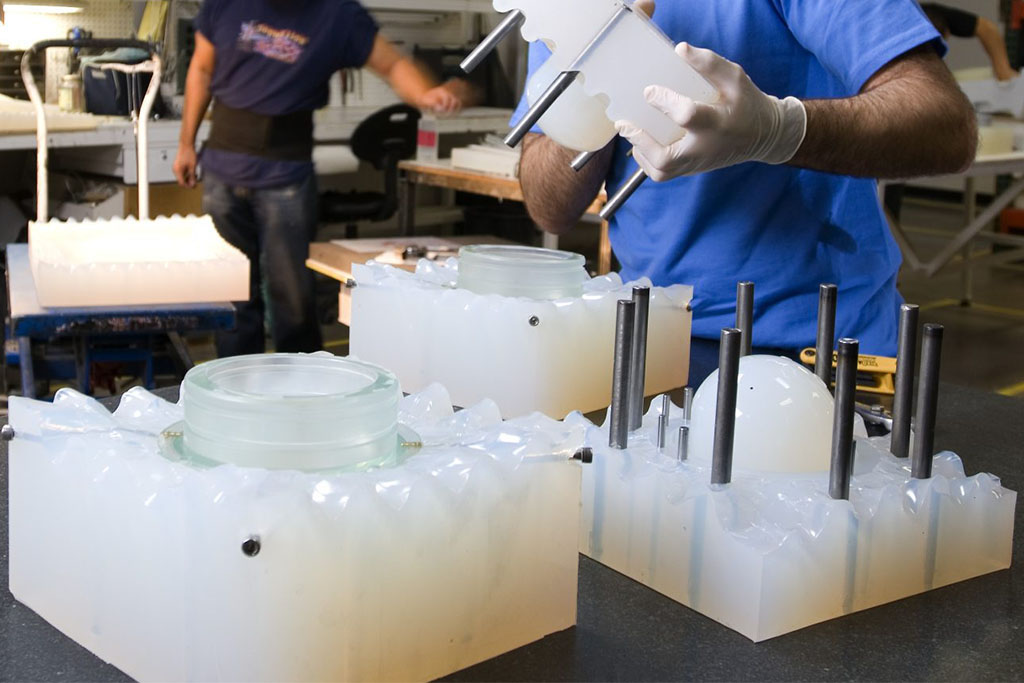
Vacuum Casting: The Bridge Builder. It is also called Urethane Casting and between a single 3D print and the mass production it is the perfect compromise. Firstly, a master pattern is 3D printed. The silicone mold is formed by pouring the silicone around the master and then under the vacuum, the liquid silicone is pulled in the mold to remove the air bubbles.
- What for? It produces great surface finish and is very cost, efficient for “short runs” (normally 20 to 50 parts). It is excellent when you have to create only a limited batch for marketing or user testing purposes.
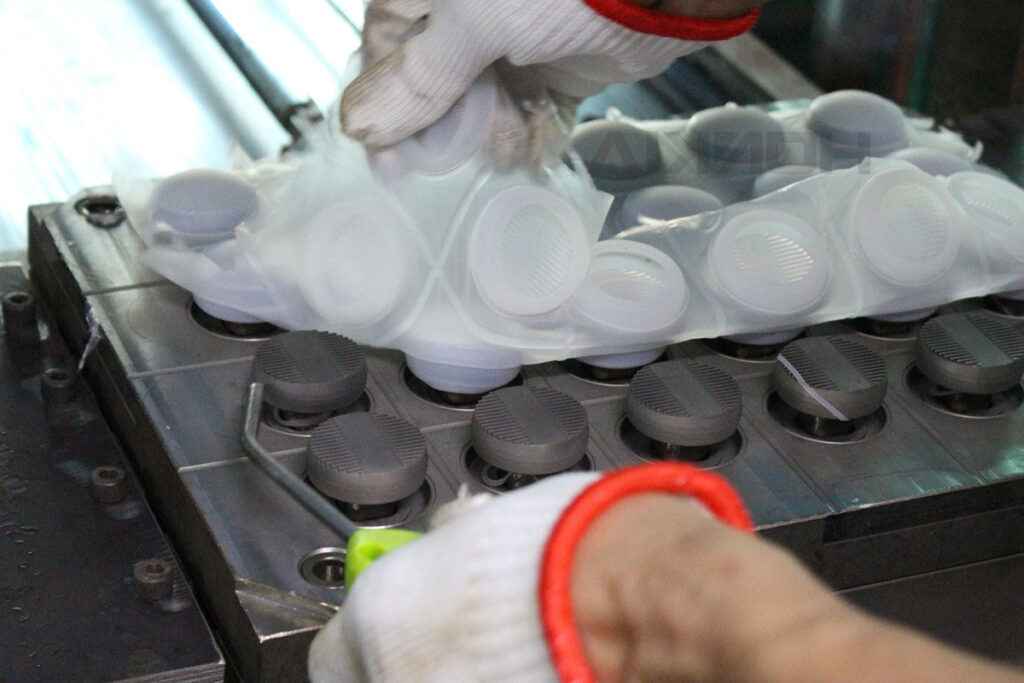
Silicone Compression Molding:The Reliable Classic.Think of this as a waffle maker. A pre-weighed piece of silicone gum is laid into the heated, open mold cavity. The mold is closed with high pressure, pushing the silicone to take the shape of the mold.
- Why use it?It is less complicated and cheaper than injection molding. It is perfect for simple shapes such as gaskets, O-rings, and seals. If you want a strong part made of very hard material but without paying for complex injection machinery, this is the way.
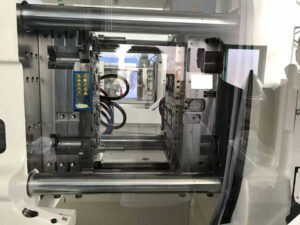
Injection Molding:The Heavy Lifter.Liquid silicone is injected into a closed mold at high pressure and heat. It provides tremendous accuracy and is suitable for mass production.
- Why use it?Even though it entails a considerable initial cost for the metal molds, it is the only feasible method for producing thousands of identical, flawless parts.
Applications For Silicone Rapid Prototyping: Who is Using This?
Medical Sector: The bio compatible quality of silicone has made it a material of choice for breathing tubes, catheters, and long, term implants such as pacemakers.
Consumer Goods: Are you wearing a fitness tracker? Then you probably have silicone on your skin. Its comfort and endurance are the main reasons for its use in wearables.
Industrial:There are silicone gaskets and vibration dampers that ensure the proper functioning of the engine of your car or the inside of heavy machinery.
Soft Robotics:Multi-material printing has made it possible for us to fabricate “overmolded” parts like a hard plastic handle with a soft silicone griping a single print cycle.
The Pros and Cons For Silicone Rapid Prototyping
The Good News
- Fail faster, succeed sooner: If you make a $50 prototype, you can detect design problems at once and thus avoid the costly mistake of $50, 000 steel moulds.
- Better communication: Handing a physical prototype to an investor is way more convincing than showing a 3D render.
- Agility: Need to change the design? Just save the new file and print. Re-tooling? No Need.
The Challenges
- Upfront costs: High, quality silicone prototyping (especially molding) is still an investment even if it isnt as expensive as full production.
- Complexity: Curing silicone is a chemical balancing act. If the temperature is changed or the mix is wrong, the part will not work.
- Material limitations: Silicone is very versatile but it is not steel. So, it has certain load, bearing limits.
The Future of Silicone Rapid Prototyping
The industry doesn’t seem to slow down. We are heading to hybrid manufacturing where metal, plastic, and silicone are tightly integrated into single components. At the moment, scientists are inventing new silicone blends that are tougher and more heat, resistant.
Sustainability is grabbing the spotlight as well. Because of rapid prototyping, there is less waste material, and the focus has shifted toward making silicone products that can be recycled or repurposed more easily after their usage.
Conclusion: The New Standard of Creation
Silicone rapid prototyping has evolved from being a solely experimental step to a strategic manufacturing asset. It is no longer just about checking if a part can be fitted but rather about ensuring that a product performs, lasts, and succeeds before mass production is started.
From the accuracy of 3D printing to the long, lasting nature of compression molding, the wide range of methods presently available gives designers the power to pick the exact right tool for the task. Although there are still issues with the cost and curing accuracy, the advantages speed, flexibility, and risk mitigation greatly outbalance the disadvantages. Looking at the time of multi, material integration and environmental, friendly initiatives, silicone prototyping is still a major link, thus, allowing the creators to grasp the technology of the future in their hands today.
FAQs
Is silicone rapid prototyping expensive?
The answer varies depending on the method. 3D printing is very economical when making only one piece. Compression molding is also a cheap way for batch parts since the tooling is less complicated. On the other hand, prototyping with Injection molding needs metal tooling which is very costly, so it is the most expensive method at the beginning.
What is the difference between Vacuum Casting and Injection Molding?
Vacuum casting is done with elastomeric silicone molds and is perfect for small batch production (20, 50 parts) as the molds have a limited life. Injection molding makes use of hard metal molds which can produce thousands/millions of parts and thus needs a very large initial investment.
Can silicone prototypes be used as functional end, use parts?
Absolutely. Nowadays Liquid Silicone Rubber (LSR) together with parts produced via compression molding have the same mechanical properties as the mass, produced parts. Thus, they may even be used for field testing as well as the final consumer use in low, volume runs.
How long does it take to make a silicone prototype?
It depends on the technique used. A 3D printed part can be produced and delivered within 24~48 hours. Making a master and mold by vacuum casting may take 3~5 days. The metal tools are machined in compression or injection molding, which typically takes 1~2 weeks.
Is silicone safe for medical devices?
Most definitely. Medical grade silicone has excellent bio compatibility, is non allergenic, and bacteria resistant. It is the most trusted material in the industry for skin or bodily fluid, contacting devices such as catheters, mask seals, and implants.
What is the major obstacle in silicone 3D printing?
That would be the curing stage. In contrast to plastic which melts and rehardens, silicone cures through a chemical reaction. It is a technical challenge to keep the reaction under control during the printing process so that the part will not lose its shape by sagging and stay figure solid, although innovations like Vision, Controlled Jetting are addressing this.
External References
For those looking to dive deeper into the technologies and standards mentioned, here are some helpful resources:
- ASTM International – Additive Manufacturing Standards
- Link: https://www.astm.org/committee-f42
- Why it matters: ASTM sets the global standards for testing and materials in additive manufacturing.
- Inkbit – Vision-Controlled Jetting Technology
- Link: https://inkbit3d.com/technology
- Why it matters: A leader in multi-material and silicone 3D printing innovations.
- Protolabs – Guide to Silicone Injection Molding
- Link: https://www.protolabs.com/services/injection-molding/liquid-silicone-rubber-molding/
- Why it matters: A comprehensive resource on the industrial process of molding LSR.
Comments
Latest Posts
Related Blogs
Senyo’s blog is focused on sharing our extensive knowledge of prototype manufacturing. Through our articles, we aim to support you in refining your product design and navigating the complexities of rapid prototyping more effectively.