Something You Need Know About Melting Point Of Titanium
Table of Contents
Engineers prize titanium. It offers a rare combination of high strength, low density, and exceptional corrosion resistance. However, one physical property dictates its processing and application more than any other. That property is the Melting Point of Titanium.
In this guide, we analyze the thermal characteristics of this transition metal. We explore why it resists heat, how alloys differ from pure grades, and what this means for manufacturing.
Defining the Melting Point of Titanium
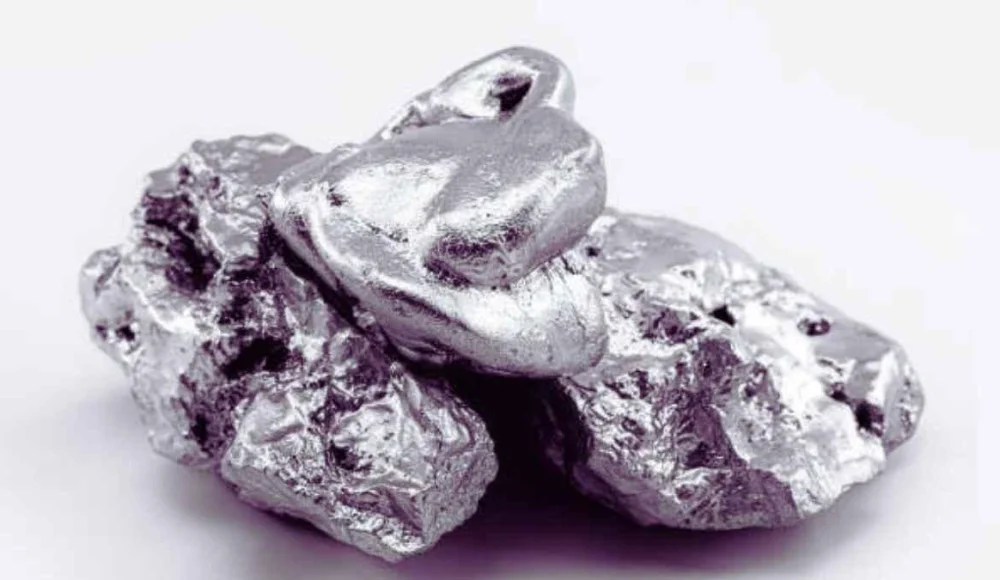
We should start by figuring out the baseline information. The scientific community has agreed on certain limits for the melting point of commercially pure (CP) titanium.
- Melting Point in Celsius: 1668°C (± 10°C)
- Melting Point in Fahrenheit:3034°F(± 18°F)
- Melting Point in Kelvin: 1941 K
There are some older publications that mention 1725C. The difference is usually due to the purity of the sample that was tested. Oxygen and nitrogen contaminants have a considerable impact on the thermal limit. For modern engineering calculations, 1668C is the reference temperature for Grade 2 pure titanium.
With this temperature, titanium can be considered a metal with refractory, like properties. It is still very heat resistant compared to aluminum or steel. This property is what makes it suitable for the use in high, performance environments.
The Atomic Physics Behind the Heat Resistance
Why does titanium need so much energy to heat until it becomes liquid?
The energy of titanium comes from the arrangement of its atoms in the crystal lattice and the way the atoms are bonded. Titanium is element number 22 in the periodic table. It is a relatively light metal (atomic mass 47.87 u). But the atoms form a hexagonal close, packed (HCP) crystal structure at room temperature (Alpha phase).
Strong Interatomic Bonding
The bonds between titanium atoms are exceptionally strong. This is because of the high number of valence electrons in the bonding. Four valence electrons are used by titanium in the metallic bonding. Tighter bonds must be given more kinetic energy to break. Heat is the source of this energy. Since the bonds fiercely resist being pulled apart, the material stays solid even at very high temperatures.
Low Thermal Expansion
Titanium has a low coefficient of thermal expansion (about 8.6 m/mK). The atoms do not vibrate or move very much when the material is heated. The stability thus obtained gives more strength to the lattice structure. It does not allow the material to break its bonds until the Melting Point of Titanium is reached.
Variables Altering the Melting Temperature
The temperature of 1668°C refers to the melting point of titanium in its purest form. Often, purity is 99 or 99.9%, and the remainder is made up of a couple of impurities or interstitial elements, so the exact melting temperature varies from batch to batch.
Purity Levels and Interstitial Elements
Impurities in a metal are usually interstitial elements. They sit between the atoms of a metal in the lattice.
- Oxygen and Nitrogen: Both elements stabilize the alpha phase. By way, they do not change the melting point significantly but they do increase the metal’s strength. Yet, they also make the metal more brittle.
- Hydrogen: This element decreases the melting point and it will diffuse very rapidly making the material embrittlement.
Alloying Composition and Phase Shifts We combine titanium with other metals to increase the strength of the material. These are called alloys. Thus, the addition of the metals changes the Melting Point of Titanium.
- Aluminum (Alpha Stabilizer): Aluminum raises the beta transus temperature. The alloy can serve for higher temperatures as it is now thermally stable.
- Vanadium (Beta Stabilizer): Vanadium lowers the transformation temperature.
Consequently, common alloys melt at different ranges than pure titanium.
Table 1: Melting Ranges of Common Titanium Alloys
| Titanium Grade | Common Name | Composition | Melting Range (°C) | Melting Range (°F) |
|---|---|---|---|---|
| Grade 1-4 | Commercially Pure (CP) | ~99% Ti | 1660 – 1670 | 3020 – 3040 |
| Grade 5 | Ti-6Al-4V | 6% Al, 4% V | 1604 – 1660 | 2920 – 3020 |
| Grade 7 | Ti-Pd | Ti + 0.15% Pd | 1660 – 1670 | 3020 – 3040 |
| Grade 23 | Ti-6Al-4V ELI | Extra Low Interstitial | 1604 – 1660 | 2920 – 3020 |
| Ti-5Al-2.5Sn | Grade 6 | 5% Al, 2.5% Sn | 1590 – 1650 | 2894 – 3002 |
Note: Most alloys melt at slightly lower temperatures than pure titanium. This phenomenon is known as melting point depression.
Comparative Data: Titanium vs. Industrial Metals
To understand the value of titanium, we must compare it to its competitors.
Titanium sits in a “sweet spot.” It offers a higher melting point than steel but weighs significantly less. It does not match the extreme heat resistance of Tungsten. However, Tungsten is too heavy for aerospace structures.
Table 2: Melting Point Comparison of Structural Metals
| Metal | Melting Point (°C) | Melting Point (°F) | Density Comparison |
|---|---|---|---|
| Aluminum | 660 | 1220 | Lighter than Ti |
| Bronze | 913 | 1675 | Heavier than Ti |
| Copper | 1085 | 1984 | Heavier than Ti |
| Stainless Steel (304) | 1400 – 1450 | 2550 – 2640 | Heavier than Ti |
| Titanium (Pure) | 1668 | 3034 | Baseline |
| Zirconium | 1855 | 3371 | Heavier than Ti |
| Tantalum | 3017 | 5463 | Much Heavier |
| Tungsten | 3422 | 6192 | Much Heavier |
The data shows that the Melting Point of Titanium exceeds stainless steel by over 200°C. This allows titanium components to survive in environments where steel would weaken or fail.
The Beta Transus: A Critical Thermal Threshold
This chapter explains the specific metallurgy that happens to titanium before melting.
First of all, engineers must not forget that titanium changes its structure far before melting. The very first such a point is the Beta Transus Temperature.
Pure titanium at room temperature has a Hexagonal Close, Packed (HCP) structure. This is the Alpha phase. When titanium is heated to about 882°C (1620°F), the atoms rearrange. They obtain a Body, Centered Cubic (BCC) structure). This is the Beta phase.
It is essential for these two reasons the transformation:
- Heat treatment:Fabricators heat titanium close to beta transus point to change microstructure. This method changes ductility and strength.
- Limit of use:Although the melting point of titanium is 1668°C, the material becomes weaker significantly above the beta transus. Hence, the feasible limit of operation is often much lower than the actual melting point.
Manufacturing Implications of High Melting Points
The high thermal resistance of titanium makes fabricating it a distinct challenge. Senyorapid experts handle these challenges every day.
Casting and Smelting Challenges
Working with liquid titanium is a tough job. The metal is extremely reactive when it is molten. It likes to absorb oxygen and nitrogen from the air.
If titanium takes in these gases, the Melting Point of Titanium changes, and the metal gets brittle. It is no longer suitable for structural applications. As a result, foundries have to employ Vacuum Arc Remelting (VAR) or Electron Beam Melting (EBM). These operations are done in a vacuum. They stop contamination from the atmosphere.
Standard refractory crucibles cannot hold titanium. Molten titanium destroys ceramic liners. Makers have to use specially designed water, cooled copper crucibles to hold the melt. This increases the price of raw titanium material.
Machining and Heat Dissipation
The high melting point is one of the main causes of machining difficulties. You may think that a high melting point makes machining easier. It is actually the opposite that is true.
Titanium has very low thermal conductivity. It is not a material that transfers heat quickly.
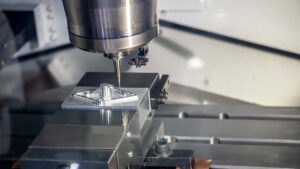
A cutting tool hits the titanium. Friction heats up the area. The heat stays at the cutting edge because titanium is not able to conduct it away. The tool overheats and fails quickly. Fabricators are obliged to use high, pressure coolants. We also apply very slow cutting speeds. We are very careful with the material so that it is not work, hardened.
Applications Driven by Thermal Stability
Industries choose titanium most of the time just because it can take a lot of heat.
Aerospace and Jet Propulsion:Jet engines work at very high temperatures. Compressor blades compress air, so the temperature rises. Titanium’s melting point allows these blades to keep their shape. Aluminum blades would melt. Steel blades would be too heavy. Titanium alloys (like Ti, 6Al, 4V) give the required weight and strength.
Missile and Rocket Construction :Rockets generate a lot of friction heat while going through the atmosphere and during the return. The skin of the missile gets very hot. Titanium does not lose its toughness when the temperature suddenly increases.
Industrial Heat Exchangers: Heat exchangers are used in power plants and chemical refineries. The devices transfer heat between liquids or gases. Titanium is resistant to both the high temperature of the steam and the corrosive nature of the fluids (like seawater). The high melting point assures that the tubes will not change their shape due to thermal expansion.
Refractory Applications:Titanium can be considered a refractory metal in some cases. It is very resistant to wear and deformation at temperatures where it is commonly known that other metals soften. Therefore, it is the most suitable metal as a lining or protective shield for industrial furnaces that operate at a very high temperature.
FAQs
Which metal ranks highest in melting point compared to Titanium?
Tungsten holds the record for metals at 3422C. This is roughly double the Melting Point of Titanium. However, Tungsten is nearly four times denser than titanium.
Does the high melting point make titanium expensive to process?
Yes. One cannot smelt titanium in open air. The high melting point demands a massive energy input. Besides that, the requirement of vacuum environments (Vacuum Arc Remelting) increases the production costs drastically as compared to steel or aluminum.
Should I rely solely on melting point for high, temperature selection?
No. The melting point is the point of absolute failure. One must consider “Creep Strength” and “Oxidation Resistance” as well. Titanium oxidizes rapidly above 600C. Although it won’t melt until 1668C, it may become brittle and crack long before that if exposed to oxygen.
What is the danger of titanium powder regarding its melting point?
Solid titanium blocks are safe. But titanium powder has a very large surface area. It can ignite at temperatures much lower than the Melting Point of Titanium. This is a pyrophoric hazard. Powder should be stored in an inert gas to prevent explosions.
Does pressure affect the density and melting point?
Under normal manufacturing conditions, it does not.However, in high-pressure physics, extreme compression forces atoms closer together. This can theoretically elevate the melting point and density, but this is not relevant to standard sheet metal fabrication.
Conclusion
The Melting Point of Titanium is 1668°C. Beyond being a mere number on a datasheet, this value signifies a power.
Such a high heat limit is what keeps titanium going in environments where other metals are getting damaged. It is what makes supersonic flights possible. It is what makes the deep, sea exploration possible. It is what makes high, temperature chemical processing possible.
Nonetheless, this characteristic is one that requires a lot of care. It is one that compels the use of vacuum technologies and specially designed machining strategies by manufacturers. Knowing these heat dynamics is what really helps us in making the correct material selection for the right work.
Comments
Latest Posts
Related Blogs
Senyo’s blog is focused on sharing our extensive knowledge of prototype manufacturing. Through our articles, we aim to support you in refining your product design and navigating the complexities of rapid prototyping more effectively.