3D Printing for Automotive: The Future of the 3D Print Car
Table of Contents
Conclusion
Are you a product developer in the automotive industry looking for revolutionary ways to prototype and manufacture car parts? 3D printing for automotive is changing the game. This article explores the transformative power of 3d print and how it’s being used to create the 3d printed car of the future. Learn how this innovative technology can lead to faster design cycles, lighter car components, and unprecedented design freedom. Discover how 3d print is driving innovation in the automotive industry.
3d printing for automotive is rapidly transforming the industry. The ability to 3d print complex geometries, prototype quickly, and create lightweight parts offers significant advantages for product developers. As technology continues to advance, we can expect to see even greater adoption of 3d printing in the automotive industry, leading to more innovative and efficient automotive applications. You can count on us to provide you with the best 3d.
Here’s what you need to remember:
- 3d printprovides unparalleled automotive design freedom and the creation of complex parts.
- 3d printingis ideal for prototype and low-volume production of car parts.
- 3d printing materialsrange from thermoplastics to metal alloys, each suited for specific applications.
- Several 3d printing technologies, such as FDM, SLA, and SLS, are used in the automotive industry.
- 3d printingis a valuable tool for product developers seeking to innovate and create car part.
- You can print partswith us, such as prototype parts and production parts.
- If you want to print files, don’t hesitate to contact us today.
Ready to embrace the future of 3d printing for automotive? Contact us today to explore how 3d printing can transform your projects! We can help you with automotive applications and bring your 3d-printed car ideas to life. Contact us for 3d-printed car, prototype, car model, car design. Explore our services and our dedication to 3d printing.

What is 3D Printing and How is it Used in the Automotive Industry?
3d print, also known as additive manufacturing, is a revolutionary process that builds three-dimensional objects layer by layer from a digital design. Instead of removing material like in traditional manufacturing methods, additive manufacturing adds material, giving engineers incredible design flexibility. This technology is rapidly transforming the automotive industry.
3d printing for automotive is used extensively for various applications, including prototype development, creating car part tooling, and even producing 3d-printed car components. The ability to quickly create and test designs makes 3d print an invaluable tool for product developers. For automotive design teams, additive manufacturing enables rapid iteration and the ability to explore a wider range of designs.
How Can I Use 3D Printing to Prototype and Create Parts for My Car Model?
3D printing offers an efficient way to visualize and test your car model designs. You can use 3d printing to quickly prototype new parts, making adjustments before investing in expensive tooling. This is especially valuable for product development.
The process typically involves:
- Designing Your Model: You create a 3D model of your car model using CAD software.
- Converting to a Printable Format: The design is saved as an stl or print files. These stl files tell the printer how to build the object layer by layer.
- Printing: The printer uses the design print files to build the part, layer by layer. You can choose a range of 3d printing materials depending on your needs.
3d printing lets you create customized car part with complex geometries, quickly, and with a relatively low initial investment. Think of it as a streamlined process that empowers your team.
What are the Key Advantages of Using 3D Printing for Automotive Applications?
The benefits of integrating 3d print into your automotive manufacturing workflow are numerous:
- Rapid Prototyping: 3d print allows for quick and cost-effective prototype creation, accelerating the product development cycle. You can iterate on designs faster than with traditional methods.
- Design Freedom: Additive manufacturing enables the creation of complex geometries and internal structures that are impossible or difficult to produce using traditional manufacturing. You can create unique designs for car part.
- Cost-Effectiveness: For prototype and low-volume production, 3d print can be more cost-effective than traditional manufacturing.
- Lightweight Parts: 3d printing can create lightweight parts, improving fuel efficiency and performance.
- Customization: 3d printing allows for the production of customized parts tailored to specific customer needs.
- Reduced Waste: Additive manufacturing uses only the material needed to create the part, reducing material waste compared to subtractive methods.
- Save time and money: When used in design and manufacturing, and in the process, you save time and money.
Which 3D Printing Materials Are Best for Car Parts?
Choosing the right 3d printing materials is crucial for achieving the desired performance characteristics of your car part. Some common materials include:
- Thermoplastics: Materials like acrylonitrile butadiene styrene (ABS) and nylon are popular choices for prototype parts due to their durability and versatility. They are relatively easy to print parts and provide a good balance of strength and flexibility.
- Carbon Fiber : Carbon fiber is a great choice to produce parts that require high strength-to-weight ratios. Carbon fiber is often used 3d for car components.
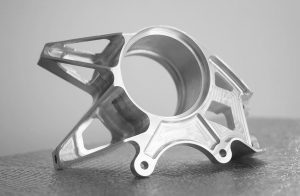
- Metal Alloys: Metal 3d is being used more frequently. For high-performance applications, metal 3d printing with aluminum, titanium, or steel alloys can create strong, durable 3d printed parts. These are ideal for applications where resistance to high temperatures and loads is critical.
- Plastic: Plastic is a good option for 3d print.
The best material will depend on the specific application, the required mechanical properties, and the operating environment of the car part. Consider the temperature and pressure resistance, as well as the potential for corrosion and wear.

What are the Different 3D Printing Technologies Used in the Automotive Industry?
Several 3d printing technologies are used in the automotive industry. Each has its strengths and weaknesses. Some of the most popular include:
- Fused Deposition Modeling (FDM): FDM is one of the most common and affordable 3d printing technologies. It works by extruding thermoplastic filament layer by layer.
- Stereolithography (SLA): SLA uses a laser to cure liquid resin, creating highly detailed parts with smooth surfaces.
- Selective Laser Sintering (SLS): SLS uses a laser to fuse powdered materials, such as nylon or carbon fiber. It is capable of printing complex geometries and is ideal for creating functional prototype.
- Direct Metal Laser Sintering (DMLS) / Selective Laser Melting (SLM): These technologies use lasers to melt metal powders, creating strong, durable 3d printed parts. They are great for producing 3d-printed car parts.
Selecting the right 3d printing process will depend on your specific requirements, car design, the desired material, and the level of detail needed.
What Design Considerations Should I Keep in Mind When 3D Printing Car Parts?
Designing 3d printable parts requires careful consideration of several factors. Understanding these factors helps ensure the success of your printing process.
- Orientation: The orientation of the part on the printer build platform affects its mechanical properties and surface finish.
- Support Structures: Overhanging features often require support structures to prevent them from collapsing during the printing process.
- Layer Thickness: The layer thickness impacts print time, surface finish, and the level of detail.
- Material Properties: Consider the material’s strength, flexibility, and temperature resistance when designing your part.
- stl files: Remember to convert your designs to a stl or other compatible print files.
These factors can save time and money down the line, so plan accordingly.
What are Some Real-World Examples of 3D-Printed Cars and Car Parts?
The automotive industry is full of examples of innovative uses of 3d print.
Here are some notable examples:
- 3d-printed car : There are many car manufacturers that are 3d printing complete vehicles. For instance, first fully 3d printed is something to keep in mind.
- 3d-printed parts: 3d-printed parts are commonly used for prototyping and creating low-volume production parts.
- Race cars: Race cars often use 3d printing to create customized airbox and other car part to improve performance.
- Luxury cars: Luxury cars are 3d printing to produce personalized interior components and custom trim pieces.
- Replacement parts: 3d printing is being used to create replacement parts, even for older vehicles, keeping classic cars on the road.
- Custom parts: Custom parts are 3d printing to create unique body panels and other aesthetic components.
- 3d-printed parts are also often used for interior components, like dashboards and consoles.
- Scale model: 3d printing also allows you to create scale models to help the car manufacturer test their designs.
These examples showcase the versatility and potential of 3d printing for automotive.
Can 3D Printing be Used for Mass Production of Cars?
While 3d printing is incredibly useful for prototype and low-volume production, it’s not yet suitable for the mass production of entire vehicles. However, 3d printing plays a key role in automotive manufacturing as a tool for creating 3d printed parts.
The speed and cost of 3d printing are not yet competitive with traditional methods for mass production. However, the technology is constantly evolving, and we may see advancements that make it more viable in the future. For instance, large format 3d printers are making it possible to print parts faster.
The latest 3d printers, which are capable of printing large objects, are great for creating 3d printed end-use parts.
What are the Limitations of 3D Printing in Automotive Manufacturing?
Despite its many advantages, 3d printing has some limitations:
- Production Speed: The printing process can be slower than traditional manufacturing methods, which limits its use for mass production.
- Part Size: 3d printers have a limited build volume, which restricts the size of the parts that can be printed. Many car components are still too large to print in a single piece.
- Material Selection: While the range of 3d printing materials is expanding, it’s still limited compared to the materials available for traditional manufacturing.
- Cost: 3d printing can be more expensive than traditional methods for high-volume production. For instance, hundreds of thousands of dollars is a cost to consider.
- Post-Processing: 3d printed parts often require post-processing, such as support removal, surface finishing, and heat treatment, which can add to the overall cost and time.
How Do I Get Started with 3D Printing for Automotive?
Getting started with 3d printing in the automotive industry is easier than you might think. Here’s how:
- Start Small: Begin with simple car part designs and use 3d printing for prototype or custom parts.
- Choose the Right Materials: Select the materials that meet your specific requirements.
- Find the Right Printer or Service Provider: You can either invest in your own 3d printer or work with a printer service provider.
- Learn the Basics: Educate yourself on 3d printing technologies, printing process, and design and manufacturing process. Consider taking a course or workshop.
- Experiment: Don’t be afraid to experiment with different designs, materials, and printing process.
Consider working with Senyorapid for your 3d print needs. We can assist you in all phases of the product development cycle. Senyorapid offers a comprehensive range of services, including 3d printing for automotive parts. We will bring to every step the best 3d printers. We can help you turn your car design ideas into reality. We are also 3d printer experts and can produce even the most complex parts.
FAQs
What is the best 3d printing technology for producing lightweight parts?
FDM and SLS are great choices for lightweight applications because you print parts with thermoplastic materials.
Can I 3d print a whole car?
While 3d printing to produce an entire car is not yet common, it is certainly something people would print! However, many cars many 3d printed parts.
What are the most common 3d printing materials used in the automotive industry?
Thermoplastics like ABS, nylon, and carbon fiber, and various metal alloys (aluminum, titanium, steel) are common choices.
How does 3d printing compare to traditional manufacturing?
3d printing excels at prototype, customization, and low-volume production, while traditional manufacturing methods are generally more efficient for high-volume mass production.
Can 3d printing improve the performance of race cars?
Absolutely. 3d printing allows for the creation of customized, high-performance parts, like airbox, that can improve aerodynamics and overall performance.
Comments
Latest Posts
Related Blogs
Senyo’s blog is focused on sharing our extensive knowledge of prototype manufacturing. Through our articles, we aim to support you in refining your product design and navigating the complexities of rapid prototyping more effectively.