(Thermoplastic Elastomers )TPE Injection Moulding
Table of Contents
TPE injection molding gets talked about just as if it were one material. It is not. It is a family members of materials with different chemistries, various processing habits, and very different end-use efficiency. The typical string is straightforward: these materials act like rubber in operation, however they refine like thermoplastics in the mold.
That is why TPE shows up everywhere from grasps and gaskets to boots, flexible real estates, and overmolded comfort functions .It is additionally why product choice matters a lot. Pick the wrong household and the part can creep, crack, shrink too much, or appear looking inadequate. Choose the right one and you obtain a part that really feels right, runs well, and stands up.
For broader plastics plan and circularity context, the OECD Global Plastics Outlook and the UNITED STATE EPA plastics sources work referrals. For present market insurance coverage, PlasticsToday tracks manufacturing and material fads.
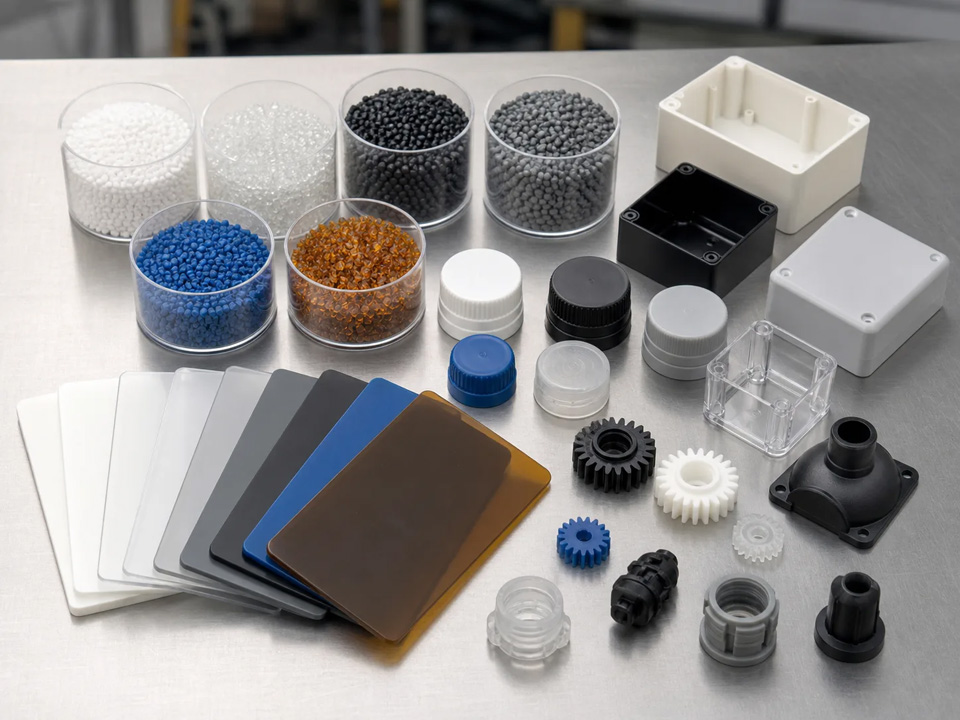
What TPE Injection Molding Actually Is
Thermoplastic elastomers are a bridge between rubber and plastic. Typical rubber is crosslinked throughout treating, which provides it elastic actions but makes it tough to recycle. TPEs are different. They soften with warm, flow into the mold, harden as they cool, and can be reshaped again later on
That gives you a practical benefit in production:
- Faster processing than numerous thermoset rubbers.
- Reprocessability.
- Reduced waste possibility.
- Easier support for shot molding and overmolding,Not every “soft” material is a good TPE candidate, though. The household split issues.
The Key TPE Family Members
The 6 households below cover the majority of the real-world choices engineers make when specifying a TPE
| Family | Best Fit | Watch Out For |
|---|---|---|
| TPV | Seals, boots, grommets, under-hood parts | Not clear, and the feel is generally matte |
| TPU | Wear-resistant parts, outdoor parts, protective cases | Must be dried before molding; it can also be expensive |
| TPO | Cost-sensitive tough parts, automotive interiors | Lower density, less clear on performance balance than higher-end families |
| SBC | Soft-touch grips, buttons, knobs, gel-like inserts | Softest and most flexible, but properties depend heavily on formulation |
| COPE | High-temperature flexible parts, boots, bumpers, prosthetics | Needs the right grade if creep or heat exposure are concerns |
| PEBA | Medical, sports, electronics, high-flex applications | Higher-end material selection, so cost and availability matter |
A few useful general rules:.
- If you need abrasion resistance, TPU is frequently the initial household to examine
- If you need a soft feel and tidy grasp, SBC qualities are typically appealing
- If the part sees warmth and repeated flexing, deal or PEBA might be a much better starting point than a generic soft material
- If the component is a seal or under-hood flexible element, TPV is typically a practical alternative
Where TPE Injection Molding Functions Finest
TPE is a strong fit when the component requires both adaptability and repeatable manufacturing. Usual applications include:.
- Soft-touch holds.
- Seals and gaskets.
- Flexible housings.
- Overmolded convenience layers.
- Boots and grommets.
- Medical and wearable elements [1] That combination issues because a great deal of parts do not fail on strength alone. They fail on ergonomics, seal integrity, or exhaustion life. TPE is frequently chosen to address specifically that issue.
Design Regulations That Matter
This is the component that generally chooses whether a TPE program goes smoothly or comes to be a spiral of test shots.
Maintain wall surface density as consistent as you can. Uneven density slows cooling in some areas and produces warping, sink, or spaces. Core out unneeded mass as opposed to leaving thick strong sections in the part
Add draft early. A common starting factor for injection formed parts is 1 to 2 levels, with more draft if the surface area is distinctive . TPE parts are not forgiving when draft is ignored.
Plan the gate and runner system with purpose. Entrance position influences fill, pressure, weld lines, and cosmetics. If the flow front needs to battle the geometry, the component will tell you.
Do not think every TPE molds the same way. TPE reduce resistance can be meaningfully more than even more dimensionally secure materials, with Protolabs keeping in mind diminish tolerance can reach 0.025 in./ in. for much less steady materials like TPE. That is not a small information. It changes just how you make fits, breaks, and sealing sides.
Dry the material when the grade requires it. TPU is the noticeable example right here; it must be dried out prior to molding.Skip that step and you are welcoming cosmetic concerns and unpredictable processing.
TPE vs. Thermoset Rubber
| Question | TPE | Thermoset Rubber |
|---|---|---|
| Can it be remelted? | Yes | No |
| Can it be reprocessed? | Yes | Generally no |
| Injection molding friendly? | Yes | Less so |
| Good for soft-touch parts? | Yes | Yes |
| Easier to recycle? | Often more practical to recycle or reprocess | Harder to rework |
That is the real tradeoff. Thermoset rubber can be the much better selection in some secured or high-heat applications, however if you want manufacturing performance and repeatability, TPE typically has the cleaner production story.
Choosing the Right Production Method
For early-stage components, rate issues. If you need to examine fit, really feel, and geometry rapidly, fast TPE shot molding is the obvious starting factor.
If you are still contrasting shapes or confirming a soft-touch concept prior to complete tooling, TPE prototype casting can aid you examine the component before dedicating to manufacturing tooling.
When the design is steady and the demand is actual, multi-cavity TPE injection molding becomes the bar that matters. More cavities, much better cycle effectiveness, reduced cost per component. That is the factor where device economics start to improve materially.
And if the part is mosting likely to live for a long period of time in production, the top quality of the device matters as high as the resin. Good TPE injection molding tools are what make repeatability feasible.
Common TPE Injection Molding Problems and Fixes
| Problem | Likely Cause | Practical Fix |
|---|---|---|
| Sink marks | Thick sections, heavy bosses, thick ribs | Core out mass, use ribs intelligently |
| Warping | Uneven thickness, uneven cooling, shrink mismatch | Normalize wall thickness and transitions |
| Short shots | Long flow paths, thin walls, poor gate placement | Rework geometry, gate location, or wall design |
| Flash | Poor shutoff or parting line issues | Improve shutoffs and review tool split lines |
| Jetting | Material enters open space too fast | Adjust gate geometry and flow behavior |
When TPE Injection Molding Is the Wrong
TPE is not the global response for every versatile part. If the part needs extreme chemical resistance, really high heat stability, or a details regulative account, one more material family might be a better fit If the design has tight dimensional demands and extremely reduced reduce resistance, you require to be conservative about product choice and geometry.
That is where experience repays. The most effective TPE choice is seldom the softest one. It is the one that balances hardness, flex life, chemistry, appearance, and manufacturability for the actual usage situation.
Practical Selection List
Before you freeze the material, ask these inquiries:.
- Does the component need soft touch, sealing, or flexible recuperation?
- Will it see heat, oils, UV, or duplicated flex?
- Does it need clarity, matte coating, or shade stability?
- Is overmolding part of the style?
- Can the geometry be built without thick sections or complicated release attributes?
- Is the program headed toward low-volume validation or high-volume production? If you can address those honestly, the material choice obtains much easier.
FAQs
What is the major advantage of TPE over rubber?
TPE can be built, remelted, and recycled like a polycarbonate while still behaving like rubber being used.
Which TPE household is best for wear resistance?
TPU is frequently the initial family members to inspect when abrasion, tear resistance, and sturdiness matter.
Do TPE components require unique molding treatment?
Yes. Wall surface density, draft, gate placement, reduce, and drying out can all impact the outcome.
Is TPE helpful for overmolding?
Yes. TPE is widely used in overmolded components, specifically for grips, seals, and soft-touch functions.
What should I check initially when developing a TPE component?
Begin with material family members, wall surface density, draft, flow path, and whether the component needs drying out before molding
Comments
Latest Posts
Related Blogs
Senyo’s blog is focused on sharing our extensive knowledge of prototype manufacturing. Through our articles, we aim to support you in refining your product design and navigating the complexities of rapid prototyping more effectively.