What Does CNC Stand For? A Modern Industrial Guide
Table of Contents
Introduction
Precision is what defines modern manufacturing today. As technology gets smaller yet more powerful, there is almost no room left for mistakes. The top companies in the market are not only recognized by their products but also by the very high standards they produce. The specific acronym CNC is what constitutes the core of this industrial power.
Though the engineers and procurement managers refer to the term on a daily basis, they seldom understand the extent of its meaning and the complexity of its application.
What does CNC stand for? The answer is Computer Numerical Control. Nevertheless, this explanation is just a bit of what is entailed. It indicates a complete change from manual work to automated, digitally precise work. It is the means of transition from a digital design to a real, working product.
This article serves as a complete resource regarding CNC technology. We will learn about its definitions, its operations, and the role that it is indispensable in the sectors that are very sensitive like aerospace and medical devices manufacturing.
By using this technology companies like Senyorapid can produce the components that are necessary to let innovation take its course.
Unpacking the Acronym: The Definition of CNC
Defining manufacturing of tomorrow requires understanding the core technology first. What is the full form of CNC? It is Computer Numerical Control as per the mention. Scientifically, it is a step towards total machine tool automation by a programmed computer that follows the commands in the given sequence.
Compared to this, the difference in technology is huge between the new and the “old school” methods of manufacturing. Before, a human operator had to manually move the levers, buttons, and wheels to help the cutting tool. The output quality depended on the operator’s skill, physical condition, and eyesight. Getting exactly the same results from one hundred parts was almost impossible.
CNC technology gets rid of such fluctuations. It does so by adding a digital “brain” to the machine’s “muscle.” A computer reads the design file and changes it into numerical coordinates. The machine executes these coordinates with absolute precision. This automation is very repeatable. The first component made on a Monday morning is identical to the thousandth component made on a Friday afternoon. Due to such consistency, CNC has become the core technology for modern mass production and high-precision prototyping.
The Fundamental Principle: Subtractive Manufacturing
Understanding the method of material manipulation is necessary for comprehending how CNC is working. CNC machining is mainly a “subtractive” manufacturing process.
Consider a sculptor with a block of marble. The sculptor removes pieces that are not needed to reveal the statue inside. CNC machining operates on the same principle, but with metals and high-performance plastics. The process starts with a solid block of material, which is most probably called a “blank” or “workpiece.” The machine makes use of sharp cutting tools to take off the layers of material until the desired shape is the only one left.
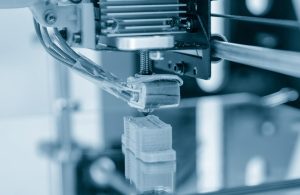
In essence, this is a fundamental difference from “additive” manufacturing, which is most commonly referred to as 3D printing. Additive processes create an object layer by layer from scratch. Both technologies use digital input, but their applications are different. Subtractive manufacturing has better structural integrity and surface finish. It is still the most used method for making functional, load-bearing parts.
Table 1: Comparative Analysis of Manufacturing Methodologies
| Feature | CNC Machining (Subtractive) | 3D Printing (Additive) |
|---|---|---|
| Core Mechanism | Removes material from a solid block using cutting tools. | Deposits material layer by layer to build geometry. |
| Material Compatibility | Metals (Titanium, Steel, Aluminum), Wood, Plastics, Foams. | Thermoplastics, Photopolymers, Sintered Metal Powders. |
| Tolerance/Precision | Extremely High (±0.001mm to ±0.05mm). | Moderate (Dependent on layer height and nozzle size). |
| Surface Quality | Superior; smooth finishes achievable directly off the machine. | Rougher; layer lines are often visible without post-processing. |
| Structural Integrity | Isotropic; consistent strength in all directions. | Anisotropic; often weaker along the Z-axis (layer adhesion). |
| Primary Use Case | Functional prototypes, end-use parts, molds, high-stress components. | Rapid visual prototypes, complex internal geometries, lightweighting. |
The Digital Workflow: From Virtual to Physical
The first part of the answer to the question “What is CNC short for?” is not just about one device but rather the operations that are involved. The operations then show the machine how to use the command it has received. Briefly, all the operations can be divided into four major steps.
1. CAD: The Digital Blueprint
The initial stage is Computer-Aided Design or CAD. Engineering draftsmen make use of the aid of the CAD system software to produce either 2D or 3D design of the workpiece required. This design is treated as a final one because it has all the necessary mathematical data, features, and dimensions of the model enclosed. In the manufacturing world of today, a CAD file serves as a blueprint and the latter is virtual.
2. CAM: The Strategy
The machine is unable to carry out its function by just “looking” at a CAD model. The digital model is to be converted. This is done in Computer-Aided Manufacturing (CAM) software. The CAM programmer is like a general who plans the attack. They describe the tools the machine will be using. They even specify the speed of the cutter and the route it will take. The program finds the most effective method of extracting the material without the product or the cutting tool being destroyed.
3. G-Code: The Language
The instructions to be taken by the machine are penned down by the CAM software. The actual file is known as “G-Code”. G-Code is the language understood by any CNC machine. It comes in the form of a text file. This text file is very explicit in nature and therefore the machine is very capable of following the instructions. Thus, there is a zero chance of the machine misinterpreting the movement requests.
4. Execution: The Automated Reality
The operator puts the G-Code into the CNC machine’s controller. In addition, the raw material is fastened to the worktable. When the program is run, the machine goes through with the order depicted in the code. The axes are powered by robust servo motors. At the same time spindle rotation at thousands of revolutions per minute is carried out as well. The whole process from manually cutting the metal block into the desired chunk is now taken over by the machine. The shift of the operator from being the mere laborer to the role of process manager is thus completed.
The Critical Role of Material Science in CNC
To fully grasp the concept of precision manufacturing, we need to extend our understanding beyond the machine and consider the material as well. The material aspect adds an indispensable scientific layer to the whole operation.
One of the conditions for successful CNC machining is a thorough knowledge of material science. The machine does not perform the same operations on aluminum as on hardened steel. Each material has a “machinability rating” unique to it. This rating determines how the cutting tool will interact with the substrate. As an example, soft metals such as aluminum can be very sticky. They are likely to stick to the cutting tool if the heat generated is too high. This situation requires certain cutting fluids and high rotational speeds to be able to remove the chips effectively.
On the other hand, cutting superalloys such as Inconel or Titanium is different altogether. These materials store heat instead of giving it away to the chips. This situation creates a lot of thermal stress on the cutting tool. In case the programmer does not change the feed rates and cutting speeds accordingly, the tool will fail in a very destructive way. Locations like Senyorapid are equipped with engineers who have metallurgy as their area of specialization. They make changes in the CNC parameters according to the atomic structure and thermal properties of the material. In this way, the structural integrity of the final part is still there despite the cutting process being quite forceful.
Primary Types of CNC Processes
The phrase “CNC Machine” is a single reference that might comprise different machinery that are geometrically and functionally configured differently.
CNC Milling
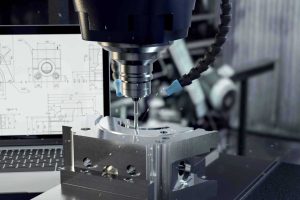
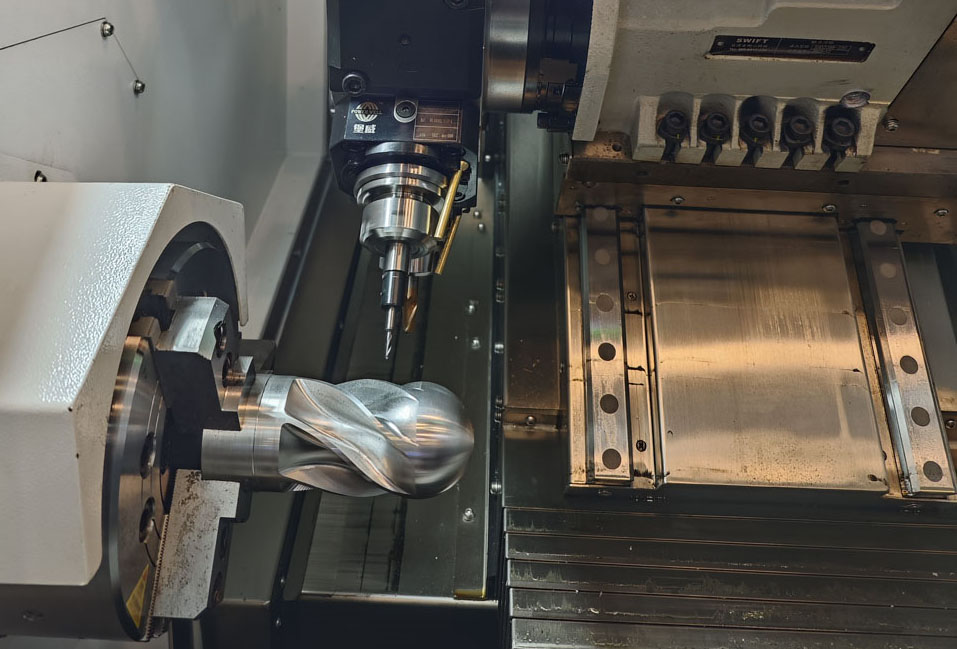
Milling refers to the utilization of the most common CNC process. The production of table-mounted workpieces is the typical function of a milling machine, where the machine tool is the one performing the operation and not the workpiece. A rotary cutting tool hence machine moves on the workpiece to take off the required material at a very high speed. In their basic form, these machines operate on three axes (X, Y, and Z). In fact, 5-axis milling machines can change the orientation of the part by tilting and rotating it. Thus, the tool can be reckoned to be approaching the part from no less than any angle. Complex shapes such as turbine impellers or bones for prosthetics can be produced by means of these geometrical shapes.
CNC Turning
Turning is basically opposite to milling. It involves lathes or turning centers where the workpieces are rotated at a very high speed and the cutting tools are kept at rest. The tools linearly move against the parts that are spinning. Cylindrical parts are perfect candidates for this process so as to be produced. It yields such components as shafts, pins, bolts, and spacers. Quite a few turning centers which are modern can be said to possess “live tooling” capabilities. This is to say the machine can halt the rotation of the part and use small milling tools to drill holes or cut flats, hence, two processes combined in one.
Electrical Discharge Machining (EDM)
There are some materials which are beyond the capability of conventional cutting tools. Here, the role of EDM becomes clear. EDM rather than using mechanical force, it uses thermal energy. The machine produces a very short and rapid series of electrical sparks between the electrode and the workpiece. These sparks vaporize the metal in a highly controlled manner. Producers go for the use of EDM when they have to cut highly complicated shapes into very hard tool steel. The most common applications of the industry involve the production of injection mold cavities that can be filled with molten plastic to produce the desired parts.
The Human Element in Automated Manufacturing
Although CNC stands for computer control, the human element is still what separates a good part from a perfect part.
It is totally wrong to assume that CNC machining is a “push-button” technology of some kind. The computer only controls the movement, but the human is still in charge of the logic. A skilled machinist has to prepare the machine with absolute accuracy of the level of a micron. They also must ensure that the raw material is not only square but also that it is tightly clamped. In case the workpiece is vibrating during the cut, the surface finish will be affected negatively.
Besides that, the machinist has to keep track of the tool wear. As a cutting tool gets dull, the dimensions of the part change slightly. The operator must make “offsets” i.e. very small changes to the program, to take care of this wear. This, however, requires experience and intuition. The closeness of the precise machine and the skilled operator is what determines the output’s quality. At Senyorapid, this mixture of advanced robotics and the human expertise is what makes us successful.
Pushing the Boundaries: Precision and Tolerances
Typically, a tolerance of ±0.1mm is seen as acceptable in general manufacturing. Nevertheless, extremely important industries are not satisfied with this and demand “precision manufacturing” instead, which means tolerances can be as small as ±0.001mm (1 micron).
The question is why? Just imagine a semiconductor manufacturing robot. It is a machine that picks and places microchips onto a circuit board. Even if the robot’s parts are off by a tiny fraction of a hair, the chip will not be placed correctly, and the product will be defective. Another example could be an aerospace fuel valve. The situation where the seal is not tight can lead to fuel leaks at high altitude which, in turn, can result in a disaster.
To be able to get that precision, one has to have a controlled environment. Changes in temperature affect the size of metal as it expands or contracts. That is why CNC facilities of the highest quality are found in rooms with controlled temperatures. Moreover, they utilize very precise measuring instruments, for example, Coordinate Measuring Machines (CMM), to double-check the dimensions.
Senyorapid is committed to attaining such precision. To the full extent, we are allowed to use machines capable of Optical Profile Grinding and Mirror EDM. These are the techniques that enable us to get surface finishes that are so flawless in appearance that they can be compared to mirrors (Ra ≤ 0.1μm). Not many have this capability. It is what makes the difference whether a standard machine shop can be your partner in high-precision manufacturing or not.
Industry Applications of CNC Technology
The versatility of CNC machining renders it present in almost all sectors of the contemporary industry.
Aerospace The aerospace industry is a major consumer of structurally strong but light materials. The occurrence of failure is ruled out. Structural parts are milled by CNC machines from one solid aluminum and titanium metal pieces. By doing this, the entire metal grain structure remains unchanged, thus, the strength is at its maximum level.
Medical Devices
Biocompatibility and high accuracy are the main factors that drive the medical market. Surgical instruments, bone screws, and orthopedic implants are the products of CNC machines. PEEK (a high-performance plastic) and Grade 23 Titanium are the most commonly used materials. The surface finish should be perfect in order to avoid bacterial colonization.
Automotive
The automotive industry is the major consumer of CNC technologies. The latter are used for both prototyping and mass production of engine blocks and transmission gears. by CNC operations, the complex housings for electric motors and battery cooling systems that are the reason behind the popularity of EVs can be manufactured.
Tooling and Mold Making
It is a “hidden” industry that is going to be revealed once all the others will be disclosed. The plastic parts made through injection molding cannot do without their metal mold counterparts. These molds are usually made of steel that has been hardened. CNC machining is used to make the mold cavity. The quality of the machined mold will be the quality of millions of the plastic parts it is made to produce.
Table 2: CNC Applications by Sector
| Industry | Key Requirements | Common Components | Typical Materials |
|---|---|---|---|
| Aerospace | High strength-to-weight ratio; extreme reliability. | Landing gear parts, turbine blades, fuselage ribs. | Titanium, Inconel, Aluminum 7075. |
| Medical | Biocompatibility; sterilization resistance; micro-tolerances. | Bone plates, spinal implants, surgical robots. | Titanium, Stainless Steel 316L, PEEK. |
| Automotive | Durability; heat resistance; high-volume consistency. | Pistons, cylinder heads, EV motor housings. | Aluminum alloys, Steel, Carbon Fiber. |
| Electronics | Thermal conductivity; miniaturization. | Heat sinks, enclosures, RF shielding. | Copper, Aluminum, Brass. |
| Mold Making | Extreme hardness; wear resistance; surface finish. | Injection molds, die-casting dies, stamping tools. | Hardened Tool Steels (H13, S7, P20). |
Selecting the Right CNC Partner
Knowing what CNC means is just the beginning. The next step is to find a partner that can carry out the process. Not every machine shop is the same. While choosing a manufacturing partner, procurement teams need to consider several criteria.
Equipment Portfolio
Is the vendor equipped with 5-axis capabilities? do they have Swiss-style lathes for producing small, intricate parts? A short equipment list is synonymous with a small design space for your engineers.
Quality Control Certifications
Identify ISO 9001:2015 certification as a quality indicator. This documentation signifies that the company adopts a standard quality management system. Inquire about their inspection protocol. Do they inspect all the parts or just a randomly selected sample?
Engineering Support
A real partner provides Design for Manufacturability (DFM) guidance. They should scrutinize your CAD files and recommend changes. This not only helps in reducing costs but also enhances the functionality of the part. Senyorapid is committed to being a consultant, not just a vendor.
Capacity and Lead Time
Are they able to scale? You might require one prototype today and 5,000 units next month. A strong partner will have the capacity to move forward with your project.
Conclusion
So, What does CNC stand for?? A Computer Numerical Control is what it is, technically. However, CNC is a lot more in the practical world of industry. It means the power of creating a tangible product out of a digital dream with a very high level of precision around one micron. It means the power to make essential medical implants that help in saving lives and the components of the aerospace industry that are responsible for the global connectivity.
The term CNC refers to the combination of computer science, material physics, and mechanical engineering. It does away with the restrictions that come with manual manufacturing. It is a tool that companies can use to come up with new ideas without worrying about production limitations. In future, when technology will be even more advanced, CNC will be still quicker, more accurate, and more necessary for our existence. If there are people who want to use this power, a partnership with experts like Senyorapid is the right way to go in order to be sure that the product is up to the tough standards of the modern market.
Comments
Latest Posts
Related Blogs
Senyo’s blog is focused on sharing our extensive knowledge of prototype manufacturing. Through our articles, we aim to support you in refining your product design and navigating the complexities of rapid prototyping more effectively.