Unlocking Manufacturing Precision: What is CNC Turning?
Table of Contents
Conclusion
What is CNC turning? From automotive components to aerospace parts, CNC turning centers have transformed how we produce precision components. This comprehensive guide will take you through everything you need to know about CNC turning machines, their operations, benefits, and applications in today’s manufacturing landscape.
- CNC turning machines automate the turning process using computer numerical control, providing exceptional precision and consistency compared to manual lathes.
- The basic turning process involves a rotating workpiece and a stationary cutting tool that removes material to create the desired shape.
- There are various types of CNC turning machines, including horizontal turning centers, vertical turning centers, and multi-axis turning centers, each suited for different applications.
- Common turning operations include straight turning, facing, taper turning, threading, and grooving, which can be combined to create complex parts.
- CNC turning differs from CNC milling in that the workpiece rotates while the cutting tool remains relatively stationary.
- Key components of a CNC turning machine include the bed, headstock, tailstock, tool turret, CNC control panel, and coolant system.
- CNC turning can process a wide range of materials, including various metals, plastics, and exotic alloys, with the appropriate cutting tools and parameters.
- Advantages of CNC turning include superior precision, consistency, productivity, and the ability to create complex parts in a single setup.
- When selecting a CNC turning service, consider their technical capabilities, quality control processes, experience with your materials, and communication practices.
- CNC turning is essential across numerous industries, including aerospace, automotive, medical, oil and gas, and consumer electronics.
- The future of CNC turning includes greater automation, artificial intelligence integration, multi-tasking capabilities, and sustainability improvements.

What is a CNC Turning Machine and How Does it Work?
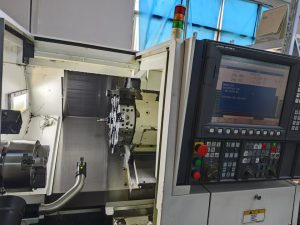
A CNC turning machine, also known as a CNC lathe, is a sophisticated piece of equipment that performs turning operations with exceptional precision and consistency. Unlike conventional lathes that require manual operation, CNC turning machines rely on computer numerical control systems to automate the turning process.
The basic principle behind a CNC turning machine involves rotating a workpiece while a cutting tool moves along various axes to remove material and create the desired shape. The machine interprets programmed instructions to control the cutting tool’s movement, cutting speed, and depth of cut. This automation ensures remarkable precision that would be difficult to achieve manually.
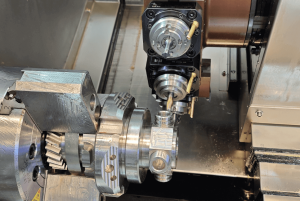
During the turning process, the workpiece is held in a chuck or collet and rotates at high turning speed while the cutting tool removes material. The CNC control panel manages all aspects of this machining operation, from the positioning of the tool turret to the rotation speed of the workpiece.
What Are the Different Types of CNC Turning Machines?
The world of CNC turning machines is diverse, with specialized equipment designed for various manufacturing needs:
Horizontal Turning Centers: The most common type, where the lathe machine is oriented horizontally. These are versatile machines suitable for a wide range of turning operations.
Vertical Turning Centers: In these machines, the workpiece is mounted vertically. They’re particularly useful for large, heavy workpieces that would be difficult to balance horizontally.
Multi-axis Turning Centers: These advanced machines can move the cutting tool in multiple directions simultaneously, allowing for complex contours and shapes to be machined in a single setup.
Swiss-type Lathes: Specialized for producing very small, high-precision parts, Swiss-type CNC lathes are commonly used in watchmaking, medical device manufacturing, and electronics.
Each type of CNC turning machine offers different capabilities, and manufacturers select the appropriate machine based on the specific requirements of their turning operations.
What Are the Most Common CNC Turning Operations?
The versatility of CNC turning machines allows for various turning operations that shape materials with incredible precision:
Straight Turning: The most basic operation where the cutting tool moves parallel to the rotation axis to create cylindrical shapes. This turning operation creates a uniform diameter across the workpiece.
Facing: This involves the cutting tool moving perpendicular to the rotation axis to create a flat surface on the end of the workpiece.
Taper Turning: Taper turning involves gradually reducing the diameter of the workpiece at a consistent angle, creating conical shapes. This is commonly used for components that need to fit together precisely.
Threading: A specialized turning operation that creates external or internal threads on cylindrical surfaces. The machining process requires precise synchronization between the spindle rotation and the tool movement.
Grooving and Parting: Operations that cut narrow channels into the workpiece or separate the finished part from the stock material.
These different turning operations allow for the creation of complex components with various features, all achievable on a single CNC turning center with the right programming and setup.
How Do CNC Turning Machines Compare to CNC Milling Machines?
Understanding the difference between CNC turning and CNC milling is essential for choosing the right machining process for your project:
The fundamental difference between CNC turning and CNC milling lies in how material is removed. In CNC turning, the workpiece rotates while the cutting tool remains relatively stationary. Conversely, in CNC milling, the cutting tool rotates while the workpiece remains fixed.
CNC turning is ideal for creating cylindrical parts with features that are symmetrical around a central axis. The turning process excels at producing round components quickly and efficiently. CNC milling machines, on the other hand, excel at creating non-cylindrical parts with complex features on multiple faces.
Many modern manufacturing facilities utilize both turning and milling capabilities, either through separate machines or combination turning centers that incorporate milling features. This hybrid approach offers maximum flexibility in the machining process.
What Are the Key Components of a CNC Turning Machine?
Understanding the anatomy of a CNC turning machine helps appreciate its capabilities:
The Bed: The foundation of the machine that supports all other components and absorbs vibration during the cutting process.
Headstock: Contains the spindle and motor that rotate the workpiece at precisely controlled speeds.
Tailstock: Provides additional support for long workpieces to prevent deflection during machining operations.
Tool Turret: Houses multiple cutting tools that can be rotated into position as needed, eliminating the need for manual tool changes.
CNC Control Panel: The brain of the machine that interprets programmed instructions and coordinates all machine movements.
Coolant System: Delivers cutting fluid to reduce friction and heat during the turning process, extending tool life and improving surface finishes.
These components work together seamlessly under computer control to execute precision turning operations. The sophistication of modern CNC turning centers allows for incredible accuracy and repeatability in the manufacturing process.
What Materials Can Be Used in CNC Turning?
The versatility of CNC turning extends to the wide range of materials that can be machined:
CNC turning can process numerous materials, each requiring specific cutting tools, speeds, and feeds for optimal results. Common materials include various grades of steel, aluminum, brass, copper, titanium, and plastics. Each material presents unique challenges in the turning process.
For instance, stainless steel requires slower turning speeds and specialized cutting tools to manage heat build-up, while aluminum can be machined at higher speeds but may have issues with chip control. The right material for CNC turning depends on the application requirements, including strength, weight, corrosion resistance, and cost considerations.
Modern cutting tools feature advanced coatings and geometries designed for specific materials, allowing CNC turning machines to process even exotic alloys and composites efficiently. This adaptability makes CNC turning a cornerstone of modern manufacturing.
What Are the Advantages of CNC Turning Over Manual Lathes?
The shift from conventional manual lathes to CNC turning machines has transformed manufacturing in numerous ways:
CNC turning offers remarkable advantages, including exceptional precision with tolerances often measured in microns. The automation of the turning process eliminates human error and fatigue, ensuring consistent quality across large production runs. Once programmed, CNC turning centers can operate continuously, dramatically increasing productivity.
The flexibility of CNC turning allows for quick changeovers between different parts simply by loading new programs, making small batch production economically viable. Advanced CNC turning centers can perform multiple operations in a single setup, reducing handling time and improving dimensional accuracy between features.
Additionally, the subtractive manufacturing process of CNC turning produces parts with excellent surface finishes that often require minimal post-processing. These benefits explain why CNC turning has largely replaced manual turning operations in modern manufacturing environments.
How to Choose the Right CNC Turning Service for Your Project?
Selecting the appropriate CNC turning service requires careful consideration of several factors:
When evaluating CNC turning services, assess their technical capabilities, including the types of turning centers they operate and the complexity of parts they can produce. Review their quality control processes, certifications, and typical tolerances they achieve.
Consider their experience with your specific materials and industry requirements. A provider specializing in aerospace components will have different expertise than one focused on automotive parts. Evaluate their programming capabilities and whether they offer engineering support to optimize your designs for the turning process.
Don’t overlook factors like lead times, minimum order quantities, and communication practices. The best CNC turning services act as manufacturing partners, offering insights to improve both your product design and manufacturing efficiency.
What Industries Rely Heavily on CNC Turning?
CNC turning has become an essential manufacturing process across numerous industries:
The aerospace industry relies on CNC turning for creating precision components like shafts, fittings, and specialized fasteners that must meet stringent safety and performance standards. In automotive manufacturing, CNC turning produces engine components, transmission parts, and steering system elements in high volumes with exceptional consistency.
The medical device industry uses CNC turning to fabricate surgical instruments, implant components, and diagnostic equipment parts that require both precision and biocompatibility. Oil and gas companies depend on CNC turned parts for downhole tools, valves, and connection systems that must withstand extreme conditions.
Consumer electronics benefit from CNC turning for small, precise components in cameras, smartphones, and computer peripherals. This widespread adoption across industries highlights how CNC turning is a cornerstone technology in modern precision manufacturing.
What's the Future of CNC Turning Technology?
he evolution of CNC turning technology continues to accelerate, with several emerging trends:
Automation is expanding beyond the machining operation itself to include material handling, quality inspection, and even adaptive machining that can adjust parameters in real-time based on sensor feedback. Integration of artificial intelligence is enabling smarter CNC turning centers that can optimize cutting parameters, predict tool wear, and schedule maintenance proactively.
Multi-tasking turning centers that combine turning, milling, grinding, and even additive manufacturing capabilities are becoming more common, allowing complete parts to be manufactured in a single setup. Digital twins of CNC turning machines allow for virtual simulation and optimization of the turning process before cutting any material.
Sustainability concerns are driving innovations in dry machining techniques and more efficient cutting strategies that reduce energy consumption and waste. As these technologies mature, CNC turning will continue to offer greater precision, efficiency, and capability to manufacturers across all industries.
FAQs
What Are Common Applications of Metal Rapid Prototyping?
Metal rapid prototyping is a manufacturing process that allows for the swift creation of metal prototypes using advanced technologies like 3D printing and CNC machining.
How does metal rapid prototyping differ from plastic prototyping?
Metal rapid prototyping generally offers greater strength and durability compared to plastic prototypes, making it suitable for functional testing in demanding applications.
What are the main advantages of using sheet metal in prototyping?
Sheet metal is cost-effective, versatile, and allows for quick production of prototypes with precise dimensions.
How can I choose the right prototyping method for my project?
Consider factors such as design complexity, material requirements, and intended use when selecting a prototyping method.
What industries benefit from metal rapid prototyping?
Industries such as aerospace, automotive, and medical devices frequently utilize metal rapid prototyping for its precision and efficiency.
Comments
Latest Posts
Related Blogs
Senyo’s blog is focused on sharing our extensive knowledge of prototype manufacturing. Through our articles, we aim to support you in refining your product design and navigating the complexities of rapid prototyping more effectively.