What Is Insert Molding? Process, Considerations & Applications
Table of Contents
Insert molding looks easy from the exterior.
Place a steel part in a mold. Instill plastic around it. Pop out a completed part.
Wonderful and tidy, suitable?
Well… yes and no. The idea is simple. The implementation is where things obtain interesting. A small insert adjustment, a bad shutoff, a resin that decreases likewise challenging around brass, or a thread loaded with flash can transform an outstanding design right into a scrap container trouble fast.
That’s why we such as insert molding when it’s prepared early– not covered in after the style is currently cold up.
What Is Insert Molding?
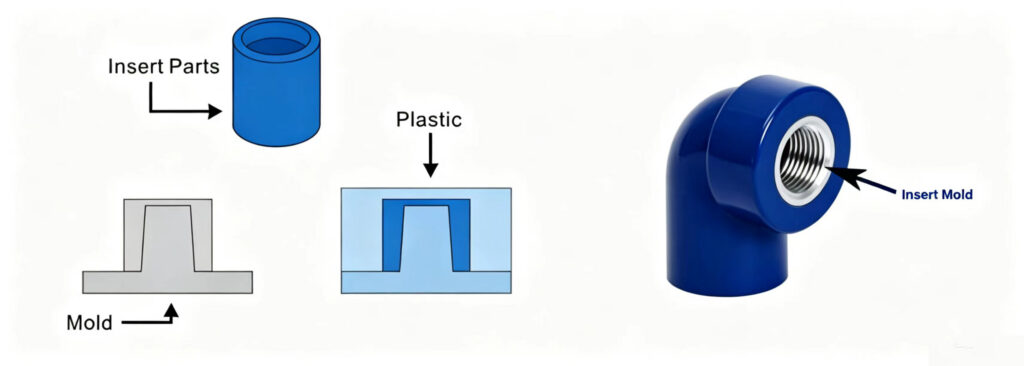
Insert molding is a plastic shot molding procedure where a different part is placed inside the mold and mold prior to product is infused. The molten plastic moves around the insert, cools, and safeguards it into the finished part.
The insert is typically steel, however not constantly. You can mold around:
- Brass threaded inserts
- Stainless-steel pins
- Copper electrical get in touches with
- Magnets
- Bushings
- Shafts
- Filters
- Ceramic components
- Various other shaped plastic components
- Sensors or electronic modules, when the procedure allows it
The result is a single bundled component as opposed to 2 or 3 components assembled later on.
That’s the large visitor destination.
You get the stamina, conductivity, put on resistance, or threading capability of the insert– plus the form, insulation, light weight, and design flexibility of plastic.
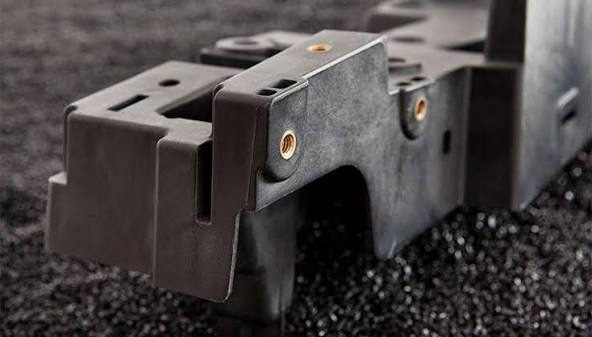
A common instance? A plastic real estate with brass strings built in place. The client sees a clean shaped element. The engineer sees one much less assembly step, much less loose parts, and far better pull-out stamina when the design is done properly.
Precisely How the Insert Molding Refine Features
The insert molding treatment complies with the precise very same common physics as injection molding, however with one additional need: the insert requires to stay especially where you position it.
That seems evident.
It is also where lots of issues start.
1. Place prep job
Prior to molding, inserts are sought:
- Proper dimensions
- Tidy surface areas
- No oil, layering flakes, burrs, rust, or contamination
- Correct string high quality
- Appropriate alignment features
- Establish traceability, if asked for
If the insert is filthy, bonding and retention endure. If it has burrs, it may harm the mold and mildew. If it is a little out of specification, the mold and mildew and mold might not close easily.
Small steel parts can generate big molding troubles.
2. Location loading
The insert is placed right into the mold and mildew by hand, robotic, dish feeder, slide, or tailor-made automation.
For low-volume builds, hand loading can make sense. It keeps tooling set you back down and provides the team versatility. For high-volume components, automation commonly pays for itself by minimizing misloads, cycle variant, and driver exhaustion.
And listed below’s a hard-earned guideline: if an insert can be packed backward, someone will at some point load it backwards.
Use poka-yoke features anywhere possible.
3. Mold and mildew closing and insert capture
When the insert is filled, the mold and mildew shuts and holds the insert in position. This might require:
- Core pins
- Magnetic holding
- Vacuum help
- Spring-loaded functions
- Limited shutoffs
- Unique nests
- Thread-protection pins
The mold has to suffer the insert without harming it. It additionally has to prevent material from flooding locations that have to remain clean, such as inner strings or electrical call zones.
4. Plastic shot
Molten plastic enters into the tooth decays under pressure and flows around the insert. The resin must fill the dental caries without pressing the insert out of place.
Entrance location matters below.
If the melt front bangs right into one side of a little insert, you could acquire insert activity, uneven encapsulation, knit lines, thaw marks, or areas. Often the feedback is an entry modification. Periodically it’s insert assistance. In many cases it’s worldly thickness.
Commonly, it’s all 3.
5. A/c and shrinkage
As plastic cools, it diminishes around the insert. That reducing can help lock the insert in place, nonetheless it can likewise create stress and anxiety.
Metal and plastic rise and acquire in different ways. A huge steel insert inside a glass-filled nylon body behaves in different ways than a little brass insert inside ABS.
This is where material alternative gives up being a directory workout and becomes real layout.
6. Ejection and analysis
After cooling down, the mold and mildew and mildew opens and ejects the ended up part. The element is examined for:
- Put position
- Blink
- Short shots
- sink marks
- splits
- string sanitation
- pull-out endurance
- torque resistance
- electrical connection, if required
- aesthetic concerns
For substantial production, do not wait till full-rate manufacturing to specify these checks. Construct them right into the task from the initial day.
Why Use Insert Molding?
The simple option: fewer setting up actions.
The much better answer: mass performance with much less handling.
Insert molding can replace screws, adhesives, press-fitting, ultrasonic welding, laying, and hands-on sub-assembly. That does not recommend it regularly wins. Nevertheless when the layout fits the process, it can be a really solid activity.
Key benefits
Stronger threaded attributes:Plastic strings break or strip under repeated use. Molded-in brass or steel strings supply you much better torque resistance and longer life span.
Reduced setting up labor:Rather than molding a plastic body, obtaining an insert, sending out both to assembly, and pressing the insert later on, you integrate the operation.
Far better repeatability:A properly built mold and mold places the insert in a set placement each cycle. That can improve placement over hand-operated assembly.
Smaller part size:Put molding can remove fastener supervisors, clips, braces, and adhesive locations.
Enhanced electrical feature: Contact, terminals, pins, and bus bars can be developed right into properties for adapters, sensors, switches, and battery-related components.
Cleanser thing format:No revealed bolts. No adhesive squeeze-out. No loosened up equipment rattling inside the property
Insert Molding vs Overmolding vs Two-Shot Molding vs Setting Up
Individuals blend these terms at all times. Fair adequate– the procedures connect.
Nonetheless they are not the same.
| Technique | What Happens | Best For | Watch-Outs |
|---|---|---|---|
| Insert molding | Plastic is formed around a pre-placed insert | Steel strings, get in touches with, pins, bushings, shafts, magnets | Place shift, flash, inadequate retention, stress breaking |
| Overmolding | A second item is formed over a base component | Soft holds, seals, takes care of, vibration pads | Item bonding, surface area preparation, included tooling |
| Two-shot molding | 2 items are formed in one device cycle using an unique mold and mildew and mold | High-volume multi-material elements | Higher device cost, advanced molding arrangement |
| Post-mold setting up | Components are developed individually, after that signed up with later | Low quantity, design modifications, uncomplicated products | Labor cost, placement variation, loosened components |
If you require both remedies under one work strategy, it makes good sense to contrast overmolding and insert molding early, prior to the mold and mildew and mold layout locks you right into one guidelines.
Common Insert Molding Products
There is no “finest plastic for insert molding.”
There is simply one of the most efficient plastic for the work.
A port real estate near cozy and current has various requirements than a visual take care of with a brass string. A medical element could require biocompatibility and traceability. An automobile under-hood part may call for warmth, chemical, and vibration resistance.
Typical plastic materials
| Product | Why It’s Made use of | Normal Insert Molding Use |
|---|---|---|
| ABDOMINAL | Terrific look, very easy handling, fair strength | Real estates, manages, client components |
| COMPUTER SYSTEM | Difficult, clear grades offered, good influence toughness | Safety and security covers, device housings |
| PC/ABS | Equilibrium of stamina and processability | Electronic devices housings, auto interiors |
| PA/ Nylon | Solid, wear-resistant, outstanding with glass fill | Gears, braces, under-hood parts |
| PBT | Good dimensional stability and electrical houses | Connectors, picking up systems, electric housings |
| PPS | High heat and chemical resistance | Automotive, electric, industrial components |
| PEEK | High performance, high temperature, chemical resistance | Aerospace, scientific, high-end industrial components |
| TPE/ TPU | Versatile, grip-friendly, securing practices | Soft-touch areas, seals, safety locations |
Typical insert items
| Place Product | Why Designers Choose It | Notes |
|---|---|---|
| Brass | Easy to tools, good degeneration resistance, great threading | Truly typical for threaded inserts |
| Stainless steel | Solid, rust immune | Good for medical, marine, or harsh use |
| Carbon steel | Strong and budget friendly | May need plating or layer |
| Copper | Conductive | Made use of in terminals and electric telephone calls |
| Aluminum | Light-weight, machinable | Requirements care with stamina and put on |
| Ceramic | Warmth and electric buildings | Delicate; help throughout molding matters |
The worldwide plastic shot molding market is still large and growing. Grand Sight Study reported a USD 183.84 billion market size in 2024 and jobs advancement from 2025 to 2030, which link what numerous shops are seeing: even more demand for molded parts that integrate plastic, steel, and electronic devices in tighter bundles. You can assess the marketplace data from Grand View Research Study.
Insert Molding Design Standards That Save Genuine Cash Money
This is the element we desire a great deal even more groups managed earlier.
A thing can look best in CAD and still be unpleasant to mold and mildew. Insert molding punishes odd format options. It compensates plain, practical detail.
Give the insert a mechanical lock
Do not depend just on plastic diminishing.
Use insert features such as:
- Knurls
- Grooves
- Problems
- Flats
- Cross openings
- Hex shapes
- Ridges
- Shoulders
These functions help withstand pull-out and turning. For threaded inserts, torque resistance matters similarly as long as pull force.
A smooth round pin developed right into plastic may look penalty. After that the extremely initial remedy technician tightens up a screw and the insert spins.
Keep wall density controlled
Not enough plastic over the insert can fracture. Way excessive plastic can sink, warp, or terrific unevenly.
An outstanding beginning variable is to preserve adequate plastic around the insert for flow, durability, and stress control. Accurate numbers depend upon resin, insert kind, wall surface area thickness, and anticipated load.
For glass-filled items, take care around sharp metal sides. Rigid plastics can be less forgiving than you expect.
Add distances where plastic satisfies metal
Sharp edges produce stress and anxiety.
If the insert has a hard side and the plastic reduces around it, splits can start there. Consist of periods when the style allows it. Damage sharp steel edges. Get rid of burrs.
This is very easy task, yet it matters.
Guard strings and sensible area
If material enters into a string, you may need to chase after the thread later on– or ditch the component.
Use core pins, caps, or appropriately designed shutoffs to safeguard:
- Internal strings
- Bearing area
- Electric connect with faces
- Optical area
- Sensing unit areas
- Sealing faces
A wonderful moldmaker will absolutely ask where plastic is made it possible for to go and where it is not enabled to go.
Solution that simply.
Think about heat transfer
Steel steals warm from liquified plastic.
Huge metal inserts can cool off the resin also quickly, creating brief shots, weaved lines, inadequate surface coating, or weak bonding. Pre-heating inserts may aid sometimes. Gateway adjustments might assist additionally.
Nevertheless do not assume. Examine it.
Control insert resistances
Loosened insert resistances make mold and mildew design harder. They can furthermore harm tooling.
If an insert differs too much from set to establish, the mold and mold may see:
- Poor fit
- Blink
- smashed inserts
- mold wear
- incomplete closing
- part-to-part variant
Specify insert resistances with the molding procedure in mind, not just the vendor’s basic pamphlet range.
Prepare for analysis
Add datums. Include gauge-friendly attributes. Keep dimension access in mind.
If the illustration claims the insert area need to be held firmly yet there is no reasonable method to determine it, you are inviting debates later.
Usual Insert Molding Issues and Simply How to avoid Them
Insert molding flaws typically originate from four sources: part style, tool design, process setups, or insert quality.
In many cases all 4 shake hands.
| Trouble | What It Appears like | Likely Develop | Avoidance |
|---|---|---|---|
| Put change | Insert is off-center or slanted | Weak help, negative entrance area, high injection stress | Better fixturing, entryway modification, decreased circulation imbalance |
| Blink around insert | Slim plastic movie near insert | Poor shutoff, insert resistance variation, mold wear | Much better shutoff style, tighter insert specs, device upkeep |
| Breaking close to insert | Plastic splits after cooling down or make use of | Anxiousness, sharp edges, product shrinkage, wrong product | Consist of span, improve wall surface area layout, testimonial product selection |
| Short shot | Plastic does not fully fill around insert | Steel cooling down effect, blocked flow, reduced melt temperature degree | Preheat insert, adjust entrance, tune procedure |
| Sink marks | Depressed areas near thick locations | Unequal wall surface thickness, poor packing | Core out thick locations, enhance product packaging |
| Poor pull-out endurance | Place pulls free under whole lots | Smooth insert, poor encapsulation, weak product | Add knurls, grooves, problems, much better resin |
| Thread contamination | Plastic inside string | Weak string protection or bad shutoff | Use core pins, caps, improved mold and mildew fit |
| Melt marks | Dark marks near insert | Air entraped around insert | Better airing air vent, slower fill in trouble zone |
If your part has high loads, duplicated screw cycles, protecting requirements, or safety-related usage, examination pull-out pressure and torque early. Do not wait on production instances to discover the insert geometry is likewise smooth.
Insert Molding Applications
Insert molding appears anywhere developers call for plastic to do greater than just cover area.
Automotive and EV elements
Automotive teams use insert molding for ports, noticing units, properties, brackets, terminals, bus bars, threaded installs, and under-hood components.
EV development includes even more need for portable electric tools. IEA’s Worldwide EV Assumption 2025 reported that electric cars and truck sales exceeded 17 million systems in 2024, above 20% of international cars and truck sales. A lot more EVs imply even more ports, billing elements, battery-related housings, thermal components, and electronics product packaging. Resource: IEA Worldwide EV Expectation 2025.
Medical devices
Clinical insert molding is made use of for medical tools, analysis properties, fluid-path parts, handheld tools, needle-related assemblies, and components that require steel stamina in a designed body.
For united state medical tool jobs, quality-system expectations altered in a deliberate methods. FDA’s upgraded Top quality Checking System Guideline lines up much more very closely with ISO 13485:2016 and works on February 2, 2026. If you source medical designed components, carrier controls, traceability, validation, and paperwork are qualified to really early focus. See the FDA High quality System regulation web page.
Electronic devices and ports
This is among the terrific locations.
Insert molding is made use of for:
- USB and payment adapters
- incurable blocks
- buttons
- call service providers
- noticing system properties
- LED aspects
- cable settings up
- battery contact
- antenna parts
The plastic shields. The steel conducts. The mold and mold waits where it belongs.
Consumer products
You’ll discover insert shaped components in takes care of, handles, home device elements, gadget real estates, wearable gadgets, video camera installs, components, and threaded plastic aspects.
The purchaser might never ever know an insert is within. They simply observe that the item actually feels strong and the screw does not strip after 2 uses.
Industrial and aerospace components
Industrial parts frequently need wear resistance, threaded steel attributes, electric training courses, or chemical-resistant resin. Aerospace applications might utilize high-performance plastics like PEEK, PEI, PPS, or loaded nylon, relying on the demand.
Below, documents and repeatability lug genuine weight. Inexpensive tooling mistakes come to be costly exceptionally rapidly.
Insert Molding Rate: What As A Matter Of Fact Drives the Price?
Insert molding is not immediately cost-effective.
It can decrease general cost, yes. However the part needs to confirm the tooling, packing method, insert cost, procedure development, and premium checks.
Key set you back motorists
Gadget ins and out Put nests, shutoffs, slides, lifters, core pins, and protection attributes all include expense.
Place price A straightforward brass insert rates much less than a precision-machined stainless shaft or split electrical phone call.
Packing method Hand loading is less expensive to begin. Automation costs added in advance yet can reduce labor and mistakes at amount.
Cycle time Place filling adds time. Cooling around metal can additionally impact cycle time.
Scrap danger If the insert is pricey, every bad shot wounds a great deal more.
Evaluation requires Medical, auto, aerospace, and electric components might require a great deal more checks, fixtures, and documentation.
Cost-fit table
| Manufacturing Phase | Best Manufacturing Path | Why It Works |
|---|---|---|
| Idea screening | 3D printing, machining, or spreading out | Quick understanding before mold spend |
| Early useful models | design plastic injection molding | Real product, shaped geometry, much better exam information |
| Short-run market launch | rapid shot molding | Faster tooling and reduced in advance threat |
| Look or soft-part trials | vacuum casting service | Valuable before committing to tough tooling |
| Complete production | multi-cavity shot molding | Decreased system price at greater quantity |
| Enduring program | Hardened manufacturing mold and mildew | Much better device life and repeatability |
If you are still modifying the insert, material, or part geometry, do not hurry right into costly production tooling. Usage models to eliminate uncertainty.
Tooling for Insert Molding
Fantastic insert molding starts with good tooling. No surprise there.
Nevertheless insert molding tools have a couple of included job compared with standard shot mold and mildews. They ought to put the insert, safe functional places, allow repeatable loading, survive wear from metal-to-tool phone call, and release the ended up part without flexing or drawing the insert.
That’s a lot to ask from a block of steel.
What the mold needs to take care of
- Put location
- Area help throughout shot
- String or call defense
- Venting near steel associates
- Component ejection without insert damages
- Thermal equilibrium
- Operator or robot access
- Misload avoidance
- Device usage from repetitive insert contact
If your job has limited insert-location needs, hang out on tooling analysis. The least expensive mold quote can wind up being just one of the most expensive choice if it blinks around every insert.
For manufacturing work, purpose-built shot molding devices are usually the distinction between “we made samples” and “we can supply this part every week without dramatization.”
Prototype, Bridge, or Production: Which Course Fits?
Not every insert formed component should go directly to a multi-cavity production mold.
That’s specifically how teams thaw budget plans.
Use prototype tooling when…
- The design is not iced up
- You require molded material activities
- You require pull-out or torque exams
- You require consumer instances
- You need to compare insert designs
- You are not prepared for a big tool investment
Design molds help you discover with actual item and genuine molding stress.
Use quick tooling when…
- The style is mostly secure
- You need components swiftly
- You call for bridge manufacturing
- The marketplace home window problems
- You mean to reduce threat prior to a high-volume device
This is typically the practical happy medium.
Use manufacturing tooling when…
- Quantities are high
- Item and insert style are verified
- Quality checks are specified
- Cycle time concerns
- Automation is intended
- The task has a long term life
And if amount is high sufficient, a multi-cavity mold and mildew and mildew can lower system price significantly. Just make certain the insert filling technique can maintain.
Guidebook Loading vs Automated Insert Loading
This is simply one of those choices that looks like an expense problem however is in fact a threat question.
Hands-on loading
Manual packaging works well for models, small sets, huge inserts, or elements where automation is unworthy the plan price.
Pros:
- Decreased beforehand price
- Adaptable
- Great for short runs
- Easier to adjust throughout development
Cons:
- Slower cycle time
- A lot more operator variant
- Greater possibility of misloads
- Harder to range
Automated filling
Automation can make use of robotics, feeders, sensing units, trays, and individualized end-of-arm devices.
Pros:
- Better repeatability
- Lower labor per part at quantity
- Lowered misload danger
- A lot more steady cycles
- Less difficult production tracking
Drawbacks:
- Greater in advance cost
- More setup task
- Area conversation requires to match
- A lot less flexible of format adjustments
For a brief design run, hands-on loading might be clever. For many port real estates, automation might be the only logical option.
Insert Molding Style List
Before you release the illustration, ask these inquiries.
- Does the insert have knurls, grooves, apartments, or various other retention functions?
- Can the insert hold up against both pull-out and turning?
- Exists sufficient plastic around the insert?
- Are sharp insert sides damaged or radiused?
- Are threads secured from resin?
- Can the insert be filled up just one method?
- Is the insert resistance affordable for molding?
- Will eviction press the insert out of place?
- Are vents put near trapped-air areas?
- Is the product suitable with the insert item, warm, and great deals?
- Are analysis techniques defined?
- Has pull-out and torque screening been prepared?
- Is handbook or automated filling selected based upon quantity?
- Is the tool created for wear from steel inserts?
Release this listing. Put it beside the CAD station. It will absolutely save someone an excruciating tooling modification.
When Insert Molding Is a Negative Concept
Yes, there are times we would push back.
Insert molding could not be the best process if:
- Quantities are likewise reduced to warrant tooling
- The insert layout is still changing weekly
- The insert can not endure molding warmth or stress
- The part needs routine fixing or insert substitute
- The insert resistance is as well loosened up
- The plastic wall surface around the insert is too slim
- The setting up is much better offered by press-fitting after molding
- The job can decline the scrap cost of not successful insert shots
There is no embarassment in picking a different path. Excellent production is not concerning compeling one process right into every part. It concerns choosing the process that acts well under actual production stress and anxiety.
A Practical Sourcing Prepare For Insert Molded Components
If you are getting insert formed components, don’t send out just an activity records and ask for a price.
Send the full story.
What to show to your supplier
- 3D CAD documents
- 2D illustration with resistances
- Place material and surface
- Place supplier information, if taken care of
- Product top quality or efficiency needs
- Annual amount estimate
- Prototype quantity
- Pull-out and torque demands
- Aesthetic needs
- Governing or traceability requires
- Checking out demands
- Target manufacturing day
- Establishing context
And ask for DFM reactions before reducing steel.
A good distributor needs to evaluate weak insert retention, poor wall surface thickness, risky gateways, vague resistances, and hard-to-inspect measurements. If they just estimate the data without questions, be careful.
FAQs
Is insert molding the like overmolding?
No. Insert molding puts an insert, frequently steel, right into a mold and instills plastic around it. Overmolding typically mold and mildews a 2nd product over an existing part, usually for grip, protecting, supporting, or appearance.
Can you put mold steel into plastic?
Yes. Steel insert molding is among one of the most common variants of the process. Brass, stainless-steel, carbon steel, light weight aluminum, and copper inserts are typically formed right into plastic parts.
What is the most significant trouble in insert molding?
Put movement is amongst the greatest stress. Flash around inserts, divided plastic, weak retention, and thread contamination are furthermore normal. Most of these troubles can be reduced through much better insert geometry, tooling, entrance style, and treatment control.
Is insert molding more economical than assembly?
Often. It can decrease establishing labor, bolts, adhesives, and top quality problems. But it includes tooling ins and out and insert-loading job. The expense advantage depends upon quantity, insert cost, scrap risk, and how much setting up it changes.
What plastics operate best for insert molding?
ABS, PC, PC/ABS, nylon, PBT, PPS, TPE, TPU, and PEEK can all be used, depending on the component’s stamina, warmth, chemical, look, and governing demands. There is no one-size feedback.
Comments
Latest Posts
Related Blogs
Senyo’s blog is focused on sharing our extensive knowledge of prototype manufacturing. Through our articles, we aim to support you in refining your product design and navigating the complexities of rapid prototyping more effectively.