Is Metal Machining Hard To Learn For Industrial Beginners?
Table of Contents
Introduction to Modern Manufacturing
The current industrial world is very dependent on metal machining for its precision.
This is a subtractive manufacturing method that basically reshapes raw material into parts that can be used it. The method is the foundation of industries such as aerospace engineering and medical device fabrication.
In the past, machinists were manually operating equipment. Hand wheels and levers were used to control cutting tools By machinists.Today, the field is mostly under the control of computer numerical control (CNC). Efficiency is enhanced by the use of automation. But still, the human factor is very important. A skilled operator is needed to a machine.
Many beginners regard metal machining as an impenetrable fortress. They are intimidated by complex code, high-speed spindles, and tight tolerances. They pose a fundamental question: Is this a trade that is too difficult to be learned? The response is not straightforward. It needs knowledge of physics, math, and logic. However, this is not an impossible challenge. With the correct method, the difficulty can be overcome. This article is about the learning curve in metal machining. We will discuss the scientific principles, skills required, and the journey from novice to expert.
The Science Behind Metal Machining
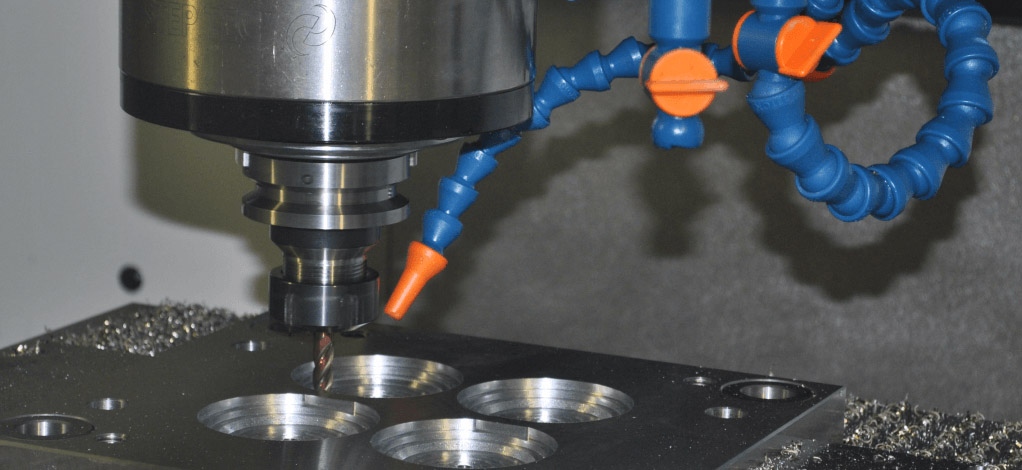
Metal machining is not merely cutting. It is a deliberate material failure. A cutting tool imposes shear stress on the workpiece. This stress goes beyond the metal’s shear strength. The material deforms and detaches in the form of a chip. This operation creates heat and force. The machinist has to control these factors.
Winning depends on knowing the “machining triangle.” It means the interaction between the machine, the tool, and the workpiece. If the tool is overly soft, it will break. If the machine is not rigid enough, it will vibrate. If the workpiece is unstable, dimensions will drift. Physical interactions are something that beginners must understand. They must also realize that steel behaves differently from aluminum. They must figure out how the rotational speed changes the surface finish. This is physics being used. It is the groundwork of the profession.
Assessing the Difficulty: The Learning Curve
Is metal machining hard? The level of difficulty varies depending on where you are coming from. A person with high spatial aptitude will pick up the skills quicker. A person who is logical will understand programming more quickly. The initial part of the curve is very steep. One has to get used to a completely new vocabulary. Words like “feed rate,” “chip load,” and “backlash” are new and unfamiliar to a person who has no idea.
Nevertheless, the curve becomes less steep after a while. Technologies of today are very helpful to the learner. Simulation software enables one to make errors in the virtual environment. Visual interfaces help to understand complex codes easily. The metalworking industry is divided into different skills. A student learns setup, then operation, then programming. They do not go through everything at the same time. This modular method of learning makes metal machining available to everyone.
It is a game of patience. If you are impatient, the trade will not be kind to you.
The Evolution from Manual to Digital
In order to really grasp the challenge, the methods have to be compared. Manual machining is all about touch. The operator senses the cutting through the handles. CNC metal machining is all about information. The operator inputs the numbers. The machine carries out the command.
Changing to digital removes some physical obstacles. However, it brings in mental ones. A manual machinist visually follows the cutting tool. A CNC machinist visually follows the code. The problem is the bridge between two different things. A novice has to see the tool’s movement in his mind when it is not there right away. This definitely involves a change of thought. It also requires putting confidence in the figures.
Step-by-Step: The Pathway to Proficiency
Mastering metal machining follows a logical progression. Trying to skip steps will most likely result in crashes. A crash can cause damage to costly parts of the machine. It can also harm the person using the machine. Hence, a well-organized approach is absolutely necessary.
1. Academic Foundations
That journey is started in a classroom. That may be a vocational school or an online course. The main focus is on the theory. Students get knowledge on trigonometry. They work out angles and tangent points by themselves. They also learn metallurgy. They get to know why heat treatment makes a metal part easier or harder to machine. This theoretical framework is a support for all the practical work.
2. The Language of The Technical Drawings
Engineers use drawings to convey their ideas. A machinist ought to be able to interpret them. This is the plan for the finished product. It shows the size, shape, and tolerance of the feature. We call this Geometric Dimensioning and Tolerancing (GD&T).
GD&T is a set of symbols describing the features that are parallel, perpendicular, and the position. A learner must be able to recognize these symbols correctly. An incorrect interpretation of a symbol can lead to a scrap part. Learning GD&T is compulsory. It is a guarantee that the metal machining process will produce a functional component.
3. Introduction to G-Code
While computers are the ones that control the machines, humans provide the instructions. The most widely used language is G-code. It is a language for programming based on coordinates. When a machine receives a “G01” instruction, it knows that it has to move in a straight line. Spindle is turned on a injection “M03” by the machine.
Firstly, learners are afraid of coding. On the other hand, G-code is quite logical. It is arranged in a series. It also follows a Cartesian coordinate system (X, Y, Z). An operator who knows how to read G-code can carry out troubleshooting. They are able to locate an error before it takes place. It is the syntax of metal machining.
4. Computer-Aided Manufacturing (CAM)
Wildly metal Turning industries are not hand-typing G-code anymore. Most work is done by software. Computer-aided manufacturing (CAM) tools convert 3D models to G-codes. The user may pick a tool, and specify the cutting method; then the program will generate the path.
Mastering CAM is an entirely different skill. It requires someone to be literate in using computers. One also has to be knowledgeable in the machining strategy to grasp the concept. The user has to tell the software the method of cutting. By only doing the math the software is not capable of directing the work. A newbie has to learn how to effectively guide the software.
5. Hands-On Interaction
Theory is supposed to be tested through practice. The student comes to the machine with a learning attitude. They are taught how to put in the raw material correctly. They are taught how to secure the material using vices and clamps. This is called “workholding”. If workholding is not done properly, then the piece will vibrate. This affects the precision of the work.
After that the student sets the “offsets”. The machine must be informed about the location of the part. It should also be given the length of the tool. These are zero points. The importance of correct setting of them cannot be overemphasized. This is the very moment when the digital program is synchronized with the real world.
The Role of Material Science in Metal Machining
Material science is a critical aspect that is most of the time ignored by newly metal workers. Metal machining is not a uniform process. Different metals have different crystalline structures. These structures are what determine how the metal will react to the cutting tool. As an example, aluminum is soft and sticky. It also has good heat conductivity. Nevertheless, it is likely to be stuck to the cutting edge. This is what is called built-up edge (BUE). So as to machine aluminum, operators must use high speeds and sharp, polished tools.
On the other hand, titanium is a superalloy. It has very low thermal conductivity. The heat is retained at the cutting zone instead of being dissipated through the chip. This is the reason why titanium burns out tools very fast. Titanium machining is done with slow speeds and high-pressure coolant. Hardened steels are yet another problem. They are penetration resistant. They demand ceramic or cubic boron nitride (CBN) tooling. A novice in metal machining should be like a metallurgist at a basic level. They have to change their plan according to the material. This introduces the complexity level, but at the same time, the trade becomes more intellectual.
Comparative Data: Manual vs. CNC Metal Machining
The following table illustrates the operational differences between traditional methods and modern CNC approaches in metal machining.
| Feature | Manual Metal Machining | CNC Metal Machining |
|---|---|---|
| Control Method | Hand wheels, Levers, Lead Screws | Computer Program (G-Code) |
| Precision Consistency | Dependent on Operator Skill/Fatigue | High Repeatability (Micron Level) |
| Complexity of Shapes | Limited to Simple Geometries | Unlimited (3D Surfaces, Contours) |
| Production Speed | Slow (One part at a time) | Fast (Automated, Batch processing) |
| Skill Requirement | Tactile Feel, Mechanical Aptitude | Programming Logic, System Management |
| Best Application | Repair work, Simple prototypes | Mass production, Aerospace parts |
| Cost Setup | Low | High |
Common Misconceptions About the Trade
Metal machining is a frequently misunderstood process by outsiders, and these myths keep the talent away. We need to dispel them.
Myth 1: It is a field that demands Advanced Calculus. It is true that there is some math involved, but the complex calculations are done by the software. A machinist should be good at algebra and geometry. They do not need to derive equations from scratch every day. Practical math is what is mostly used.
Myth 2: It is Dirty, Dark Work. The image is very much an old one. Today’s machine shops are more like research centers. They are comfortable because they are air-conditioned. They are hygienic. Accuracy requires a certain level of environment. Dust and dirt particles can make measurements wrong. The metal machining shop of today is a modern tech facility.
Myth 3: Robots Will Replace Machinists. The level of automation is going up. Nevertheless, robots do not have the ability to problem-solve. They are not able to find the cause of a chatter mark. They cannot figure out the best way to make a unique prototype. The position becomes that of a manager instead of an operator. The machinist is the one who controls the robots. The human brain is still the main factor in metal machining.
Essential Skills for the Modern Machinist
To do metal machining successfully, a person has to develop a certain set of skills. These abilities are the bridge connecting the idea and the final product.
Technical Drawing Literacy
It has been said several times, but its significance cannot be overstated. It makes no sense to produce something if you have no mental image of it. Understanding cross-sections and detailed views is absolutely essential.
Measurement and Inspection
A machinist has to demonstrate the correctness of his work. To do so, they employ calipers, micrometers, and gauges. They measure to the thousandth of an inch (0.001”) or the micron. They need to be aware of thermal expansion. A part that is warm measures differently than if it were cold. Metal machining at its finest is defined by the minute attention to detail that here is shown.
Problem Solving and Logic
Things don’t always work out as planned. A drill breaks. A surface finish is bad. A dimension is off from the specification. The machinist takes the role of a detective. They consider the different factors. Is the speed too high? Is the coolant concentration low? Is the tool dull? Following a systematic troubleshooting process is part of their everyday work.
Adaptability
Technology keeps on changing. New alloys are being developed. New cutting tool coatings are being launched. A professional in metal machining stays committed to learning throughout his/her life. They adjust to the new software versions. They accept new machining techniques such as high-efficiency milling (HEM).
Advancing in the Field
The beginner is not a beginner forever. Metal machining has various different career paths.
- Setup Machinist: Concentrates on getting the machine ready for production runs. Requires a very high level of technical knowledge.
- CNC Programmer: Goes to the office. Codes the program by using CAM software. Creates the mental image of the process by the virtual way.
- Manufacturing Engineer: Makes the workflow more efficient. Invents the fixtures. Chooses the tooling systems.
- Quality Control Inspector: Checks the output. Expert in metrology and validation.
Each promotion requires more profound knowledge. The learning never stops. The basis is still the understanding of metal cutting physics.
A Partner in Precision: Senyorapid
Metal machining can be quite a challenge for product developers and engineers. A lot of money needs to be spent on machines and the cost of training is not negligible either. This is the point at which specialized service providers take over.
Outsourcing to a dedicated prototyping and manufacturing partner is a way to overcome the entry barrier. These companies, like Senyorapid, are experts in dealing with such issues. Senyorapid has highly skilled machinists who have already undergone the learning curve. Moreover, they work with the latest multi-axis machines. Besides, they are very familiar with material science and programming logic.
Generally, when a client asks for a medical device prototype or an automotive component, what they want is absolute precision right away. They cannot wait for an internal team to get trained. Senyorapid is the one who meets this need. They make the physical product from a 3D model with a very high level of precision. Additionally, they are in charge of tooling, workholding, and quality control. As a result, the client can concentrate on designing and innovating while metal machining is done by the experts at Senyorapid.
Comments
Latest Posts
Related Blogs
Senyo’s blog is focused on sharing our extensive knowledge of prototype manufacturing. Through our articles, we aim to support you in refining your product design and navigating the complexities of rapid prototyping more effectively.