Product Development with Rapid Prototyping Injection Molding
Table of Contents
In a fiercely competitive environment such as modern manufacturing, the ability to quickly and cheaply confirm your designs often separates those who advance from those who remain stagnant. This article focuses on the prototype injection mold and rapid prototyping injection molding, a combination that is said to have a transformative effect. We talk it over how these technologies can streamline product development so that engineers can test injection molded part designs in production, grade materials.
This guide is a complete look at optimizing your tooling strategy, starting with understanding the injection mold’s subtleties and then moving on to the various rapid injection molding services available. Why you should read this article: If you are an essential element in the process of bringing a physical product to market, it is necessary to understand the transition from a digital design to a physical plastic part. This post breaks down the rapid injection molding process and shows how rapid tooling can be both lead time and money, saving.
Learning the parts of an injection mold, gaining insight into prototype injection molding services, and learning how to use mold parts and injection molding services to lower your risk will be some of the things you accomplish. This exploration of prototyping injection molding technology will provide you with the knowledge regardless if you are a startup or an established enterprise, to
What is a Prototype Injection Mold and How Does it Differ from Production Tooling?
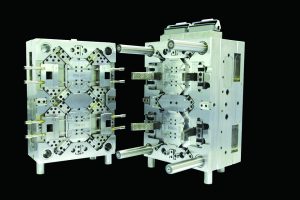
A prototype injection mold is essentially a travel companion tool with low, volume plastic parts production as its primary function. In short, it serves test and validation purposes. Prototype mold versus production tooling could not be more different. Production tools are heavy, duty, are built for millions of cycles, and take a few months to make. On the other hand, prototype molds are all about speed and budget.
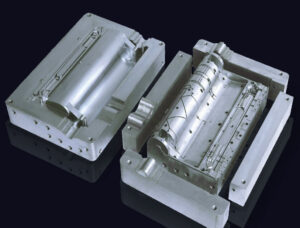
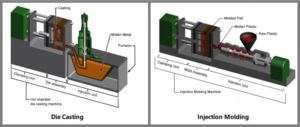
The basic operation remains the same: molten plastic is forced into a mold cavity to yield the desired part. Still, the injection mold’s build varies substantially. Prototype molds are generally fabricated from aluminum or softer types of steel, which can be machined quicker and more easily than the hardened steel used for production molds.
Understanding the difference between a rapid prototyping injection mold and a production mold is key to managing your budget wisely. A production injection mold will feature intricate cooling channels, automated side, actions, and several cavities to increase the output. Conversely, a prototype tool may use hand, loaded inserts or simplified mold design strategies to minimize complexity. This lean tactic gives molding professionals the freedom to quickly cut the mold, thus, delivering functional parts that will enable engineers to validate the part design thus, before steel mold A, class fabrication that is expensive and time, consuming is committed.
Why Get Started with Rapid Prototyping Injection Molding for Product Development?
Getting started with rapid prototyping injection molding is a very smart move for any product development process. The main reason is risk mitigation. In a traditional workflow, finding a design flaw after cutting a hard steel injection mold can be a financially disastrous situation. Rapid prototyping injection molding gives you the chance to locate such issues very early.
By making a rapid prototype injection mold, designers get the opportunity to test fit, form, and function with the actual injection molding materials. If a snap, fit is too tight or a wall is too thin, not only can the mold be changed, but also a new mold can be cut at a cost that is only a small percentage of reworking production tooling.
Also, rapid prototyping injection molding means changing to a mindset that focuses on iterative design. Previously, the high cost of the injection mold would have made engineers very cautious. Now with rapid tooling, teams have the freedom to be more creative. They can make as many variations of a mold as they wish to test different features or ergonomics. This adaptability is very important in consumer electronics or medical devices industries where user feedback on the plastic product is the most important. The ability to have a molded prototype in hand that feels exactly like the final product is what enables better decision, making and shortens the product development cycle.
How Does the Rapid Prototyping Injection Molding Service Accelerate the Process?
A service specifically aimed at rapid prototyping injection molding is all about getting things done quickly. Traditional injection molding techniques may suffer from delay due to the administrative work and queue times at the machine shop. On the other hand, rapid prototyping injection molding services are known for their use of automated quoting engines and proprietary software that help in simplifying not only the molding design process but also fabrication. Once you upload the CAD file, the system evaluates the geometry to figure out how the part can be manufactured and also automatically creates a toolpath for machining the injection mold.
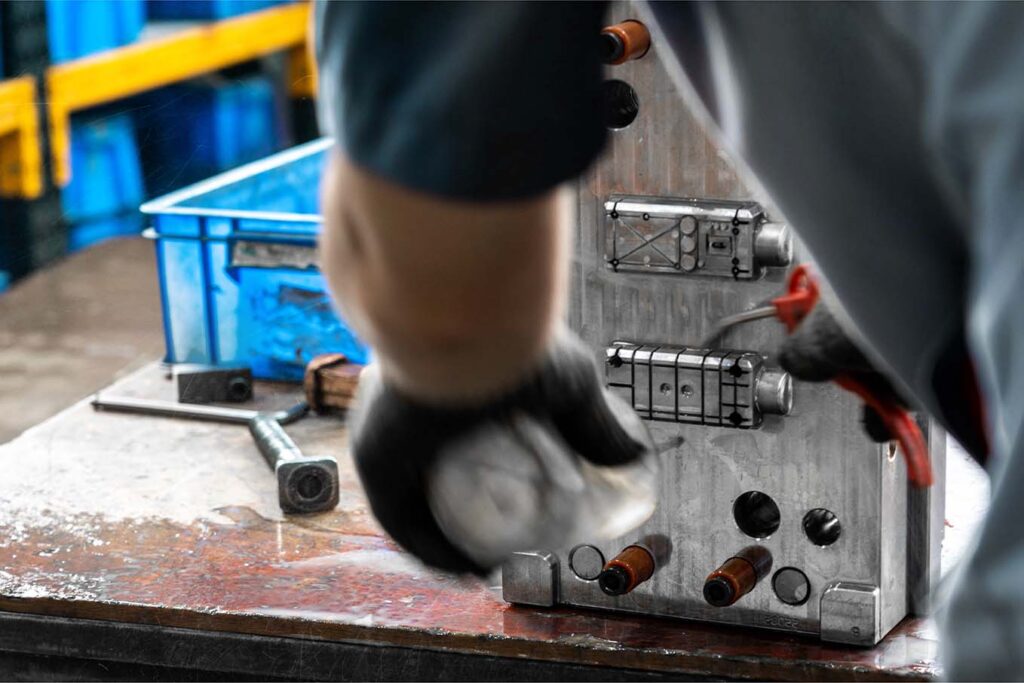
This automation, in fact, completely changes the lead time which used to be a matter of weeks now it is only a few days. The speed up also results from the machine setup and mold standardization. A number of rapid prototyping injection molding providers have been known to implement a Master Unit Die (MUD) system. The mold base in this configuration, the heavy standardized frame which holds the mold in the injection molding machine, is the one which is shared. The manufacturer is only left with a task of machining the core and cavity inserts which are specific to your part. Thus, the whole process of manufacturing an entirely custom mold base for each project is done away with.
Through the concentration of the active mold parts only, the rapid prototyping injection molding service is able to have a rapid turnover of projects. Faster does not mean that the quality of the process itself is compromised. The plastic still has to be heated and injected under high pressure, the mold still has to be clamped with a lot of force. What is different is the efficiency of tooling creation. By means of high, speed CNC machining or even 3d printed inserts, rapid molds can be created allowing manufacturers to verify their concepts practically instantly.
What Materials are Used in Rapid Prototyping Injection Molding of Plastic Parts?
A massive library of plastics is one of the biggest benefits of rapid prototyping injection molding. Compared to 3D printing that is limited to a particular type of photopolymers or filaments, an injection mold is capable of processing thousands of different thermoplastics. For example, if your part needed the flexibility of Polypropylene (PP), the strength of Polycarbonate (PC), or the chemical resistance of Acetal (POM), a quick prototype injection mold would be able to produce it. Hence, the ability to fabricate parts from the final material is the main reason why rapid prototyping through molding is the best way for functional testing.
The injection mold has to be strong enough to endure these materials. Engineering, grade resins like glass, filled Nylon are abrasive and cause a mold surface to wear out quickly if it is not made of a harder material. Material selection for the rapid tool will be checked by the molding experts to make sure it is constructed in the right way. For instance, an injection mold for a high, temperature PEEK material needs to be made in a way that it will be able to resist thermal stress.
Thanks to the injection mold industry’s adaptability, the vast majority of thermoplastic resins used for mass production can also be used in rapid prototyping injection molding. Also, rapid injection molding provides the possibility to test injection molded plastic with specific additives, such as UV stabilizers or colorants. It is possible to run few batches of parts in different colors using the same mold to evaluate aesthetic options. This option is usually almost impossible by other prototyping methods. By using the real injection molding materials, engineers receive accurate data on the plastic part’s behavior in the actual environment.
Aluminum vs. Steel: Which Mold Material is Best for Your Prototype?
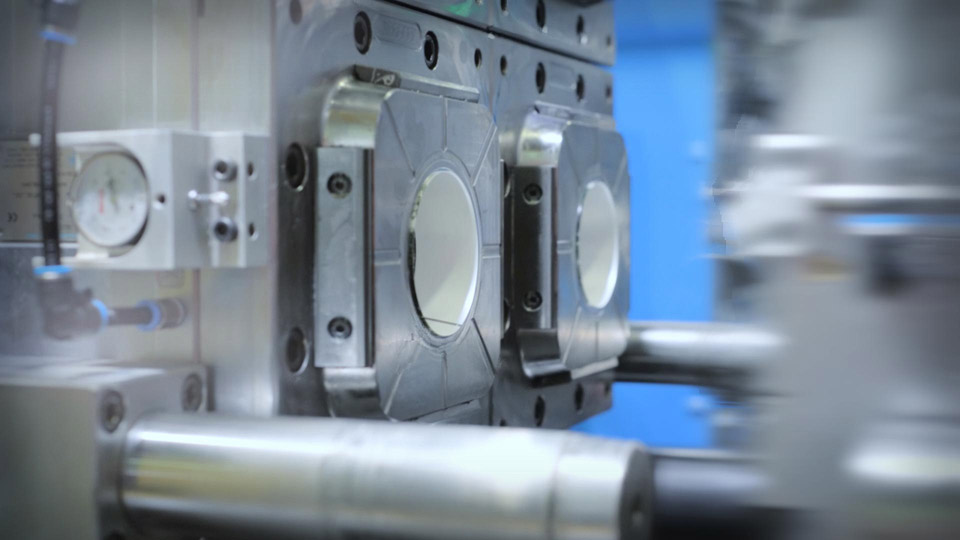
The argument of whether to use an aluminum mold or a steel mold lies at the heart of rapid tooling. Usually, an injection mold is created from a hardneded tool steel like P20 or H13 to guarantee its repetition in millions of cycles. Nonetheless, the process of cutting hardened steel is both slow and costly. Consequently, aluminum is the most preferred material when it comes to prototype injection molds. That is because aluminum is capable of quicker heat transfer than steel, and so the cycle times in the molding machine can actually be reduced to it. Above all, aluminum is much softer than steel and the machine tool follows its path much faster resulting in the production being extremely rapid as the clients are used to.
An aluminum mold can serve well for injection from a few dozen to a few thousand parts. It is both cost, efficient and adequate for most prototype to production, bridge situations. However, if the plastic part is to be made of abrasive glass, filled nylon or if it requires a mirror finish, aluminum may wear out too quickly. At such times, one can resort to using a soft steel or a semi, hardened steel mold. These mold parts provide a compromise solution similar to a step between aluminum and fully production injection molds, i.e., they are more durable than aluminum but still faster to machine than steel.
Determining the right material to make your injection mold from should be a function of your quantity and resin requirements. In case you need parts for a trade show quickly and the material happens to be a standard ABS, then an aluminum mold would be the right choice. If on the other hand, you need thousands of parts for a pilot run with an abrasive material, then a steel prototype mold would be the wiser investment.
Can Injection Molded Prototypes Match the Quality of Real Injection Parts?
A pretty common misunderstanding is that prototypes by nature are of lower quality than production parts. When rapid prototyping injection molding comes into play, this is not necessarily the case. The injection molded prototypes made from the prototype injection mold are actually real injection parts. They are even done under the same physics heat pressure, and cooling as mass produced components. For that reason, the mechanical strength of a part from a rapid tool is almost the same as one from a production mold.
Still, there can be cosmetic differences. The rapid prototype injection mold might not be equipped with the sophisticated cooling channels of the production mold, which could result in slight differences in shrink or warpage if the process is not tuned by molding experts. Moreover, the surface finish of a rapid mold is generally left as, machined or lightly blasted to save both time and money. A production injection mold would be extensively polished and textured. Rapid prototyping injection molding can get to high finishes, but it takes more time and money to the mold production.
On top of that, injection molded components from a prototype tool are a long way ahead of 3D printed or urethane cast parts when it comes to functional testing. They enable the testing of living hinges, snap, fits, and load, bearing features with trust. Injection molding makes it possible to produce parts with tight tolerances, thus the prototype is an exact representation of the final product. Therefore, molded prototypes are the gold standard when it comes to validation.
What are the Main Benefits of Rapid Injection Molding for Design Validation?
The benefits of rapid prototyping injection molding extend well beyond the simple act of getting a part in hand. One of the biggest wins is the ability to discover limitations in the design. An injection mold is quite strict; if a part has trapped geometry or lacks sufficient draft angles, the mold simply will not open or the part will not eject. By producing rapid tooling, engineers are compelled to confront these mold design constraints at the very beginning. This “Design for Manufacturing” (DFM) feedback loop is naturally rapid prototyping injection molding process.
Moreover the benefit is the validation of assembly lines. Injection molded prototypes in small batches (e.g., 50, 100 units) can be used to test the assembly fixtures and packaging lines. Standard injection molding volumes (10, 000+) are too large for this initial testing. Rapid molding gives just enough parts to verify that the plastic product can be assembled efficiently. This avoids the nightmare scenario of ordering millions of parts only to find they are not compatible with the automated assembly equipment. Last but not least, rapid prototyping injection molding is important for regulatory and safety testing.
For products that need UL listing or FDA approval, the test samples have to be made from the final production material and process. A prototype injection mold is the source of these test parts in a short time, thus allowing the certifications to be done in parallel with the fabrication of the high volume production tooling. This parallel processing is the main factor behind a significantly shorter time, to, market. Injection molding offers a degree of certainty that other prototyping methods simply cannot reach.
How to Transition from Prototype Injection Molding Services to Mass Production?
The phase of transition from prototype to production is pivotal. The design validation through the prototype injection mold is the first step, then the data gathered must be handed over to the production team. The mold design of the prototype tool is the starting point. However, there will be a production mold for sure that will be different. For example, it may have multiple mold cavities to increase throughput or have more complex cooling to stabilize dimensions.
The path to the production tool is paved with the lessons learnt in the rapid prototyping injection molding process for instance, sinking marks that appear and venting that is needed. Between the transition and the production mold, the prototype mold is often used as bridge tooling. While the steel production mold is being machined (which can take a few months), the prototype injection mold can still be used to produce molded prototypes or even low volume production parts in order to keep the supply chain moving.
Prototype injection molding services are aware of this bridge mission, which supports the customer until the high volume injection molding tooling is put into operation. In the end, a smooth hand off is the aim. The plastic part design should be finalized during the rapid prototyping injection molding phase. Any changes after the steel mold is cut are expensive. Therefore, the rapid prototyping injection molding phase is the final gatekeeper. When the switch is flipped to high volume injection molding, everything should be stable, the mold parts should be robust, and the product should be ready for the world. Injection molding is the way to scale, but rapid tooling is the way.
FAQs
What is the typical lead time for a prototype injection mold?
Lead times for a prototype injection mold are drastically shorter than those of traditional tooling. A rapid tool can be ready for the injection molding machine in as little as 1 to 15 days, by which the part complexity and the injection molding service’s workload are taken into consideration. This is a complete turnaround from the 8 to 12 weeks that are usually necessary for a steel production mold.
Can I use the same plastic materials for rapid prototyping injection molding as I do for mass production?
Yes, indeed. The greatest one among the improvements introduced by rapid prototyping injection molding is its ability to use standard, production, grade materials for injection molding. Just in case you require ABS, Polycarbonate, Nylon, or TPE, the prototype injection mold is capable of producing the same plastic resin that is intended for the final manufacturing process.
How many parts can a rapid injection mold produce?
How long a rapid injection mold will last depends on the mold materials used and the plastic’s abrasiveness. Usually, an aluminum mold can generate between 100 and 10, 000 parts. Meanwhile, a soft steel prototype tool might have a lifespan of 50, 000 to 100, 000 cycles. This turns rapid tooling into a resource that can be used for molded prototypes, pilot runs, and even the initial stages of production with a low volume of products.
Is rapid prototyping injection molding more expensive than 3D printing?
Typically, yes. The main reason is that rapid prototyping injection molding requires upfront tooling costs to create the mold, while 3D printing does not. On the other hand, the cost per part in injection molding gradually decreases as the number of parts increases. If you are going to have more than 50, 100 parts, the rapid injection molding is usually more cost, effective than 3D printing, and also, the part will have better material properties.
Can rapid injection molds handle complex geometries and undercuts?
The answer is yes, but with some limitations. Rapid molding is designed for simple “open and shut” mold structures. Nevertheless, molding professionals can attach hand, loaded inserts or simple side, actions in order to create undercuts. Although the cycle time may be longer than that of a fully automated production mold, it enables complex mold parts to be manufactured without the expensive complex automated tooling.
What happens to the mold after the prototype run is finished?
It depends on the injection molding company. With many rapid injection molding services, the mold (or the MUD inserts) is kept for a certain duration (e. g. , 1, 2 years) to allow re, orders. Since the mold is often a customers property, it can serve for future small batches or bridge tooling needs until the tool reaches the end of its life.
Can rapid prototyping injection molding be used for insert molding or overmolding?
Yes, rapid prototyping injection molding is capable of insert molding (placing a metal part into the mold before injection) and overmolding (molding one plastic over another). These processes are manually intensive in a prototype setting, as operators often hand-load the inserts or move parts between mold cavities, but it is a standard practice for validating these complex molding applications.
Comments
- Rapid Prototyping Injection Molding utilizes simplified tooling and automation to produce injection molded parts in a fraction of the time of traditional methods.
- Prototype Injection Molds are typically made from aluminum or soft steel, focusing on speed and lower cost rather than long-term durability.
- Material Reality: Unlike 3D printing, rapid injection molding uses real thermoplastic molding resins, ensuring the prototype has the exact physical properties of the final product.
- Risk Reduction: Building a prototype tool allows engineers to identify design flaws and mold issues before investing in expensive production tooling.
- Bridge Tooling: A rapid mold can serve as a bridge, supplying parts quickly while the high-volume production mold is being manufactured.
- Service & Expertise: Leveraging a specialized injection molding service grants access to molding experts and automated DFM feedback, accelerating the product development cycle.
- Scalability: The insights gained from the prototype injection mold (cooling, flow, warping) directly inform and improve the design of the eventual production injection molds.
Comments
Latest Posts
Related Blogs
Senyo’s blog is focused on sharing our extensive knowledge of prototype manufacturing. Through our articles, we aim to support you in refining your product design and navigating the complexities of rapid prototyping more effectively.