Removing Chrome Plating: A Guide for Chrome Die Maintenance
Table of Contents
Introduction
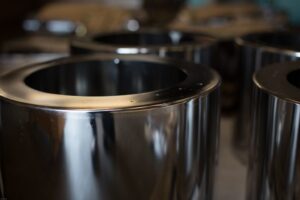
Industrial manufacturing is, to a great extent, dependent on the durability and the exactness of the tooling components. In these, the chrome die can be said to be the most important weapon in the fight, as it is used in a variety of industries, such as automotive stamping and injection molding. In order to raise the surface hardness, lower the friction, and increase the wear and corrosion resistance of the dies, manufacturers coat them with chromium plating. However, even the strongest chrome plating will wear out eventually. In order to facilitate repair or re-plating, it is necessary to remove the old plating when wear patterns, scratches, or dimensional changes have appeared.
Removing chrome from a metal substrate is either a very specific chemical or mechanical operation. It entails thorough knowledge of metallurgy so that the remaining base metal is not harmed. While do-it-yourselfers may want to take off decorative chrome from car bumpers, industrial engineers have a more complicated task. They have to remove the hard chrome from a chrome die in such a way that the die’s critical tolerances are not changed. This article delves into the scientific concepts, the removal techniques, and the safety measures taken into consideration while detaching the chrome plating with emphasis on the preservation of industrial chrome dies.
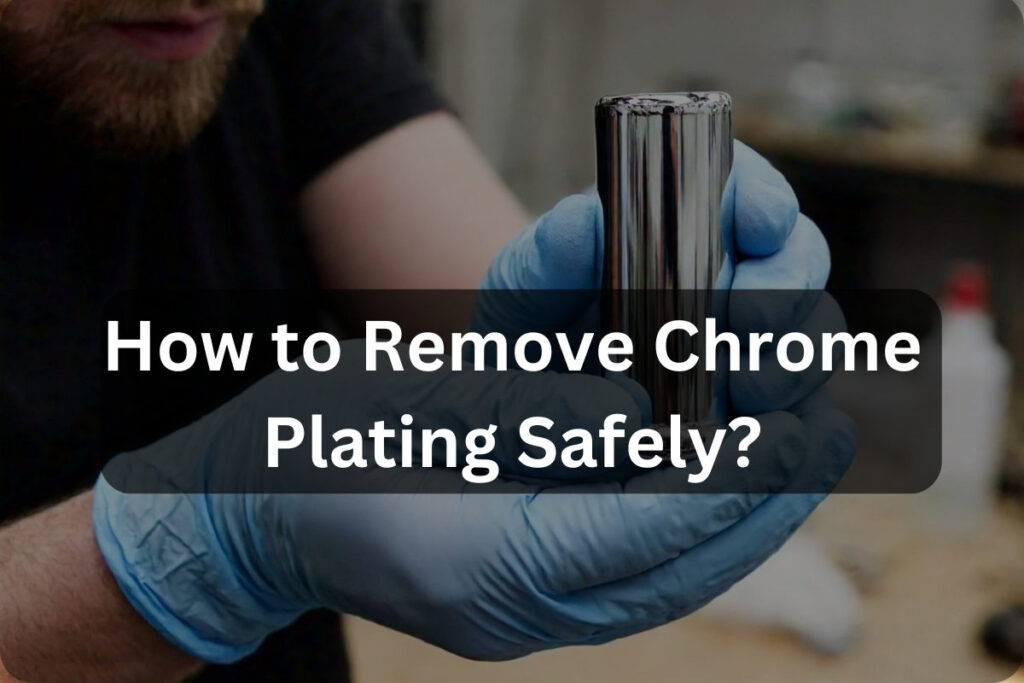
Understanding the Chrome Plating Process
In order to remove chrome effectively, it is necessary to first understand the way in which technicians put it on. Chrome plating makes use of electroplating, which is an electrochemical process that pellets a layer of chromium on a metal that conducts electricity. Technicians immerse the substrate—usually steel, aluminum or a copper alloy—into an electrolytic bath that contains chromic acid (chromium trioxide).
A direct current (DC) is run through the solution. The substrate serves as the cathode (negative electrode), whereas lead or carbon anodes (positive electrodes) are the ones that complete the circuit. The electric current reduces the chromium ions that are in the solution and are near the cathode surface, thus depositing solid metal. In this way a very strong atomic bond is achieved between the chromium and the base metal.
When talking about a chrome die, the thickness of the plating is by far much higher than that of a decorative application. The engineers have the control over immersion time and current density so as to get a “hard chrome” finish. The layer is the one that is giving the area the necessary Rockwell hardness which is going to make it able to withstand repetitive impact and high-pressure forming operations. When the layer is on the verge of failing, the stripping process should be able to either undo this bond or chemically dissolve the chromium without attacking the exact geometry of the die that is underneath.
The Imperative for Stripping Chrome Dies
Why do manufacturers remove a chrome coating from a die?
Lifecycle management is the main reason. Dies are one of the most expensive things to put your money in. It is not economically efficient to change a die completely just because its surface is worn. Thus, maintenance staff take off the old chrome, repair the steel substrate if there are any defects, and re-plate the tool.
Some of these defects may be:
- Spalling or Peeling: The chrome layer is separated from the substrate due to poor adhesion or too much surface stress.
- Wear and Galling: The chrome is worn by repetitive friction and thus the dimensional accuracy of the die is changed.
- Corrosion: The operating environment is so harsh that even the chrome layer is penetrated, and thus the base metal rusts.
- Design Changes: Engineers may need to modify the die’s geometry, so they need to remove the hard outer shell in order to machine the softer steel underneath.
Stripping takes the die back to its “green” state. At this stage, welding, polishing, and machining are possible before a new layer of chrome completes the tool up to operational specifications.
Safety Protocols and Hazard Mitigation
Removing chrome plating is a dangerous and energy-intensive process that involves the use of hazardous materials. Industrial safety standards require that all safety protocols be strictly observed. One of the features of chromium, especially hexavalent chromium in plating and stripping baths, is that it is a carcinogen that can cause cancer. It also causes serious respiratory and skin problems.
Operators should use the correct Personal Protective Equipment (PPE). Part of the gear should be acid-resistant gloves, chemical splash goggles, face shields, and NIOSH-approved respirators. To capture the exhaust from the process, facilities should install local exhaust ventilation especially for chromic acid mists and hydrogen gas released during chemical reactions.
In addition, the process results in electrical hazards. Electrochemical stripping is done using high-amperage DC rectifiers. To prevent power shocks, technicians need to turn off the power sources and check the insulation. Waste management, on the other hand, cannot be overlooked; facilities should treat the used stripping solutions as waste with hazardous materials and be in line with environmental regulations for heavy metals.
Differentiating Chrome Plating Types
Effective stripping is largely hinged upon the recognition of the type of plating. Basically, there are two main categories:
Hard Chrome Plating (Industrial)
This is what a chrome die is normally made of. Hard chrome, or engineering chrome as it is also called, varies in thickness from 0.0005 to 0.010 inches or even more. Its main features are hardness (65-70 HRC), wear resistance, and oil retention. Since the layer is both thick and dense, the process of removing hard chrome necessitates an extended, aggressive chemical immersion or high amperage electrochemical stripping. The bond strength is very strong, thus it is necessary to use powerful methods to break it.
Decorative Chrome Plating
Decorative chrome is a bright, mirror-like finish giving the product an aesthetic appeal. It is ultra-thin, usually ranging from 0.000002 to 0.00002 inches. The manufacturers typically apply it on the nickel and copper layers so that the latter can be protected from corrosion and leveling can be facilitated. The removal of decorative chrome is quicker and less harsh than that of a chrome die. Nevertheless, the nickel layers beneath are sometimes stripped separately, thus making the process more complex.
Mechanical Removal Methods
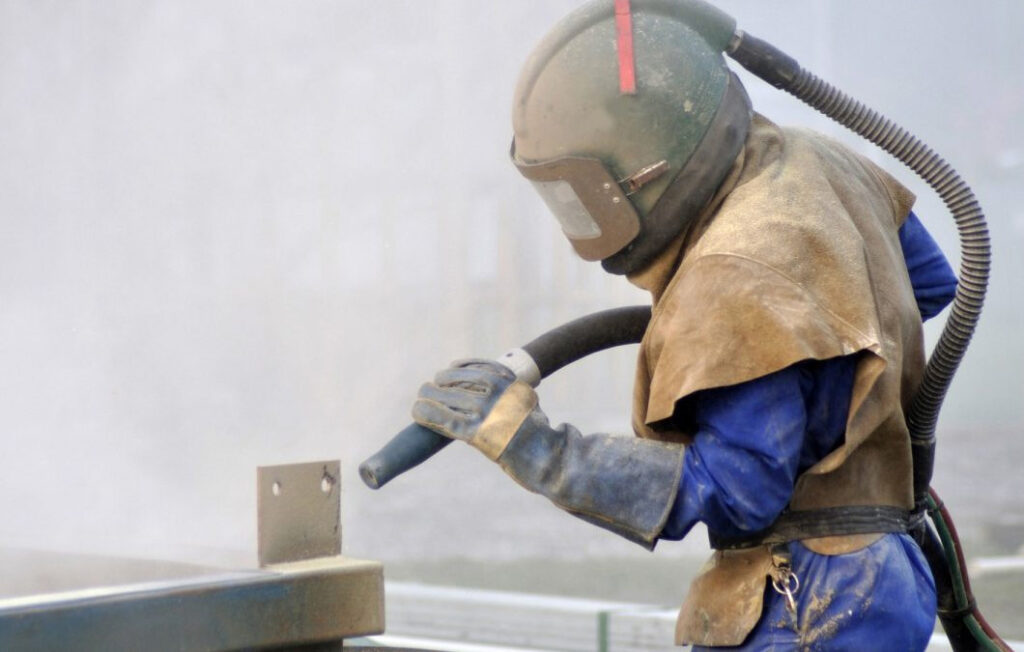
Mechanical methods use physical force to remove the chrome layer. These methods are powerful but can easily damage the underlying surface.
1. Abrasive blasting bombards the surface with one or more of the following media: aluminum oxide, glass beads, steel grit, or silicon carbide. This is done by compressed air. The energetic particles chip the brittle chrome layer, thus the surface is being ‘mechanically’ abraded.
If it is a pattern of a chrome die, the operators should be extremely careful. Over-aggressive blasting can not only remove the sharp edges of the die but also its texture or even the critical parting lines. Some technicians prefer plastic media or walnut shells for fragile surfaces, though these materials may not be very effective against thick hard chrome. Besides, blasting is great for a preparatory step or for the removal of loosely adhering or flaking chromes and is not suitable for the precision stripping of the whole die.
2. Ultrasonic Cleaning
The ultrasonic device emits high-frequency sound waves (usually 20–40 kHz) in a liquid environment. These waves create tiny cavitation bubbles around the part’s surface that, when the bubbles collapse, they do so with a very large force.
In general, ultrasonic cleaning can remove pollutants from the parts to be cleaned, however, specialized ultrasonic setups may be used in stripping operations, if they are combined with chemical solvents. The cavitation energy speeds up the chemical reaction and makes the release of chrome particles easier as the dislodged ones get into the deepest recesses of a chrome die. However, ultrasonic energy cannot be used to remove hard chrome; it is only a facilitator of the chemical methods when used alone.
Chemical Removal Methods
Chemical stripping is a method whereby the metal dissolves the chromium making it possible to do the cleaning in the most inaccessible places of the cooling channels and undercuts without the risk of any mechanical damage or abrasion.
Hydrochloric Acid Immersion
Hydrochloric acid (HCl), or muriatic acid, is a very reactive agent with chromium. It quickly changes the metal to chromium chloride, thus effectively removing the plating.
- The Procedure: Lab workers prepare a solution in water of 30% to 40% hydrochloric acid. They put the die part into a tank made of acid-resistant material.
- The Reaction: The acid starts to eat the chrome right away. Hydrogen gas bubbles are formed at a great rate showing that the process is going on.
- Substrate Considerations: HCl is very harsh. Besides removing chrome at high speed, it is also capable of corroding the steel substrate if the time of the attack is too long. In fact, it is totally inappropriate for high tensile steel that is prone to hydrogen embrittlement unless a bake-out cycle is applied immediately after.
Sodium Hydroxide (Alkaline Stripping)
Sodium hydroxide (NaOH), or caustic soda, is a good choice as a method of removal of chromed parts especially that of the ferrous metals. Normally, solutions incorporate chelating agents to ease the operation.
- The Procedure: The workers dissolve solid sodium hydroxide in water (usually 8-12 ounces per gallon) to make a highly alkaline tank.
- Material Compatibility: This technique is perfect for steel dies as sodium hydroxide will not harm the iron substrate. The process comes to a halt on its own once all the chrome has been removed.
- The Aluminum Danger: It is absolutely necessary that the workers do not perform this operation on aluminum-based dies. Sodium hydroxide rapidly dissolves aluminum resulting in the release of huge volumes of hydrogen gas while the part is being destroyed.
Electrochemical Removal (Reverse Plating)
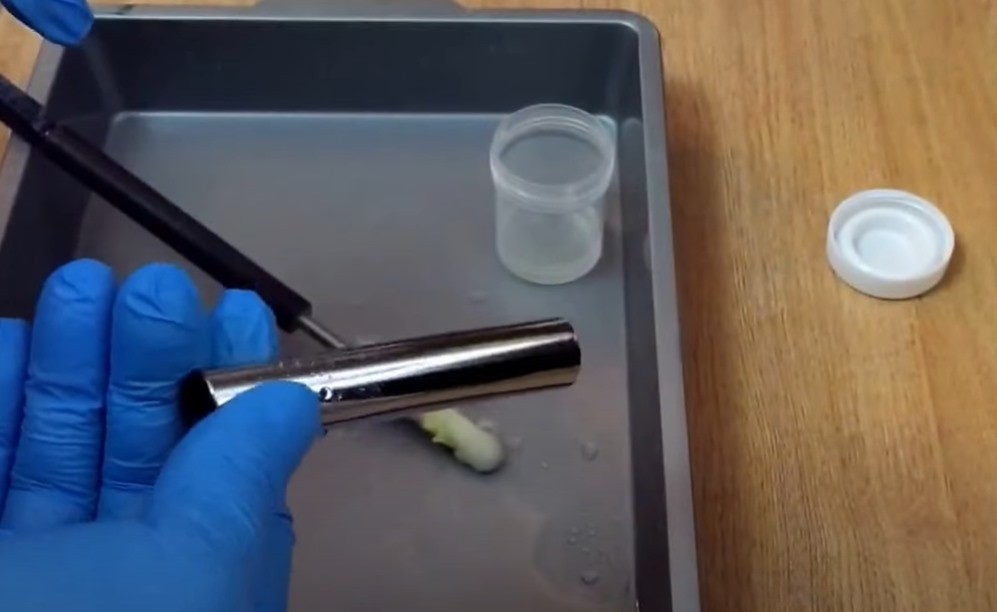
Reversal electrolysis is the preferred method by the majority of the industry for chrome dies which are of high nominal value and require maintenance. This is due to the fact that it is the fastest and most controllable by far of all the methods.
In essence, the process is a reverted plating operation. A technician immerses the die in a mixture of chromic acid and sulfuric acid but instead of attaching the cathode to the die, they connect it to the positive terminal (anode). The lead plates become the cathode.
The chromium on the surface of the die which is the source of the current gets oxidized and hence removed and dissolved in the form of chromic acid back into the solution. The benefits are substantial:
- Speed: Maximum current densities can remove a very thick hard chrome layer in a matter of minutes.
- Accuracy: The voltage can be closely watched by the operator. Opening of the voltage very often signifies the point where the last traces of chromium have been removed, thus the operator stops the intervention right away.
- Material Safety: The solution does not attack the steel substrate if it is used at the right temperature and concentration thus the die can retain its correct dimensional tolerances.
Household and Mild Removal Methods
While industrial plants are known to use potent acids and rectifiers, smaller workshops or the less significant parts might be employing milder abrasives or solvents. Typically, these are not enough for a hardened chrome die but are suitable for cosmetic-level fixes.
Baking Soda Abrasion
A mixture of sodium bicarbonate and water serves as a very mild abrasive. Manual scrubbing can help in the removal of very thin, failing decorative chrome. The process is completely safe for the person doing the work but is quite demanding in terms of labor and has little effect on engineering-grade plating.
Bleach Soaking
Sodium hypochlorite (bleach) is capable of gradually removing thin chrome plating. Nevertheless, the process is very slow and may result in pitting of certain base metals if left for a long time. This method is almost never chosen in a professional industrial environment because of the production of chlorine gas in case of a mistake and the unpredictability of the results besides the slow pace.
Comparative Analysis of Removal Methods
To assist maintenance engineers in selecting the optimal procedure for a chrome die, the following table compares the primary stripping methods based on substrate compatibility, speed, and risk profile.
| Removal Method | Primary Mechanism | Best Suited For | Risk to Substrate | Processing Speed |
|---|---|---|---|---|
| Reverse Electrolysis | Electrochemical | High-precision Steel Dies | Low (High Control) | Fast |
| Hydrochloric Acid | Chemical Dissolution | General Steel Parts | Moderate (Can pit steel) | Moderate |
| Sodium Hydroxide | Chemical Dissolution | Steel/Iron (No Aluminum) | Very Low (Ferrous only) | Slow to Moderate |
| Abrasive Blasting | Kinetic Impact | Rough Castings / Prep Work | High (Erosion risk) | Fast |
| Ultrasonic Assist | Cavitation/Chemical | Complex Geometries | Low | Moderate |
Post-Stripping Surface Treatment
The work doesn’t end here. After the technician has successfully removed the chrome from the die, the bare metal surface is very vulnerable and highly reactive. Immediate processing is required to make sure that the die is ready for the refurbishment.
Usually, the die is first rinsed thoroughly from neutralizing water baths to remove any residues of acid or caustic agents. If the surface is not neutralized, “bleed out” occurs, which is a process where chemicals trapped in metal pores that were used earlier, seep out and therefore spoil the new plating.
After that, polishers with good skills examine the substrate. They search for the original defects that led to the stripping of the die, for example, heat checks (micro-cracks) or impact damage. As the stripping has revealed the bare steel, this is the perfect moment for welding repairs. After welding, the die is sent for stress relief baking to avoid hydrogen embrittlement— a condition where small hydrogen atoms absorbed during acid stripping make the steel lattice weaker. Eventually, the die is polished to a certain Ra (Roughness Average) value, thus ready for the fresh hard chrome application.
Conclusion
Removing a chrome plating is one of the basic processes that go through the lifecycle of industrial tooling. It is a must for the manufacturing sector to keep the integrity of a chrome die during this process. Engineers, deciding on the use of aggressive hydrochloric acid, safety of the substrate by alkaline solutions, or precision of reverse electrolysis, have to select the method that is suitable for the material.
Knowing the electrochemical bonds and the metallurgy of the die, the stripping process is not considered as a destructive one, but rather a restorative one. By following very strict safety measures and using very precise control methods, manufacturers thus keep their tooling at most for a longer period of time, producing at the required high standards of modern industry.
Comments
Latest Posts
Related Blogs
Senyo’s blog is focused on sharing our extensive knowledge of prototype manufacturing. Through our articles, we aim to support you in refining your product design and navigating the complexities of rapid prototyping more effectively.