The Art of Polishing:Achieving a Flawless Surface
Table of Contents
What Is Surface Polishing?
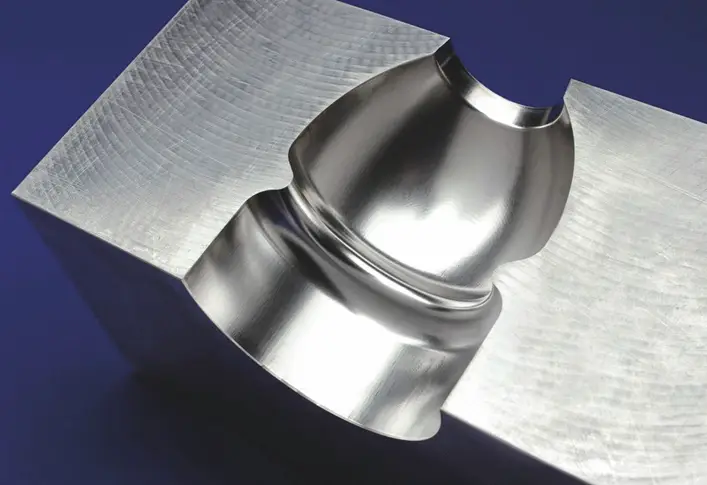
Surface Polishing is a common surface treatment process used to improve the smoothness and brightness of workpieces, making their surfaces smoother and more delicate.
Surface Polishing can not only enhance the aesthetics and aesthetic value of objects, but also extend their lifespan and durability. Through polishing treatment, impurities and unevenness on the surface of the object can be effectively removed, thereby improving the quality and performance of the object. Surface Polishing technology is widely used in the processing and manufacturing of materials such as metal, plastic, and stone.
Main functions:
- Obtain a smooth surface or mirror finish;
- Eliminate gloss (extinction);
- Eliminate surface defects of parts.
Why is Surface Polishing Important?
The importance of surface treatment and surface polishing is mainly reflected in improving the appearance quality, wear resistance, corrosion resistance, optical performance, mechanical performance, and ease of cleaning and maintenance of products.
- Improving appearance quality: Surface Polishing can make the appearance of products more beautiful. Whether it is metal products, glass, or stone, polishing can achieve the goal of improving their appearance quality.
- Increasing wear resistance: For surfaces that are prone to wear, such as bearings, gears, and cutting tools, polishing can improve their hardness and wear resistance, extending their service life.
- Improving corrosion resistance: After surface polishing, certain materials can enhance their ability to resist corrosion, especially in fields such as food processing and medical equipment. Surface polishing can make the surface cleaner, reduce the opportunity for microbial growth, and improve hygiene conditions.
- Improving optical performance: For products that require high-precision optical performance, such as lenses, mirrors, and optical instruments, polishing can improve their surface smoothness, thereby reducing phenomena such as reflection, refraction, and dispersion, and enhancing optical performance.
- Improving hand feel: For some products that come into direct contact with the human body, such as furniture, toys, and medical equipment, polishing can improve their surface feel, making them more comfortable and easy to use.
- Easy to clean and maintain: The polished surface is smoother and less prone to dirt and grease, making it easier to clean and maintain. Especially in applications such as food processing and medical equipment, polishing can make the surface cleaner, reduce the opportunity for microbial growth, and improve hygiene conditions.
In summary, surface treatment polishing plays an important role in improving product aesthetics, durability, safety, and hygiene conditions, and is therefore considered one of the important surface treatment technologies.
The Science Behind Surface Polishing
Surface Polishing is a processing technique that removes the unevenness and oxide layer on the surface of an object through various physical and chemical reactions, making it smoother, brighter, and more delicate. According to the material and required smoothness, this process can be completed using tools or manual machinery.
1. Mechanical Polishing
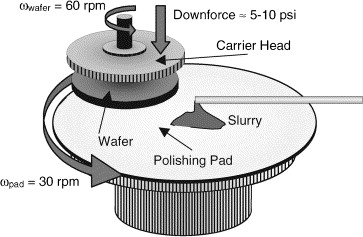
Mechanical polishing is a surface treatment method that removes small bumps and depressions on the surface of materials through mechanical friction, reducing the surface roughness of workpieces to obtain a bright and smooth surface. Mechanical polishing can be used for surface treatment of various materials such as metals, non metals, plastics, etc.
Pros
- High efficiency: Mechanical polishing can complete the surface treatment of objects in a relatively short time;
- High precision: Mechanical polishing can achieve highly accurate surface treatment effects;
- High degree of automation: Mechanical polishing can achieve automated processing through program control and other methods, reducing labor input;
- Good consistency: Mechanical polishing can achieve consistent treatment of the surface of the object, eliminating the differences that may exist in manual polishing.
Cons
Poor surface effect: Mechanical polishing may affect the surface quality of the product, such as producing foreign objects or scratches on the surface.
High initial cost: Mechanical polishing requires the purchase of polishing machines and maintenance equipment, resulting in a high initial cost.
Unable to meet special needs: Mechanical polishing cannot meet some special processing requirements, such as polishing small areas, high curvature, and complex surfaces, which require manual polishing.
2. Electrolytic Polishing:
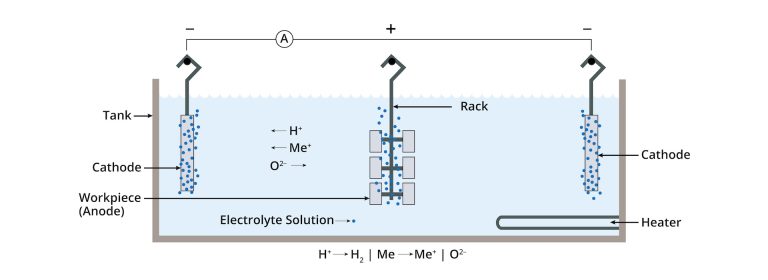
Electrolytic polishing involves placing a metal workpiece in an electrolyte and using an electric current to remove impurities and unevenness from its surface. This method is widely applied to different types of metals, such as aluminum, copper, and stainless steel, to improve their appearance and quality. Electrolytic polishing can make the metal surface smooth and shiny, and eliminate rust and dirt that may damage the surface of the workpiece. This technology is also very effective in maintaining the reliability and durability of metal parts.
Pros
- Good polishing effect: After electrolytic polishing, the surface smoothness is extremely high, with a mirror effect, which can achieve high reflectivity and effectively remove fine burrs and oxide layers on the surface of the workpiece.
- Wide applicability: Electrolytic polishing is suitable for stainless steel products of various shapes and sizes, including hard materials, soft materials, as well as thin-walled, complex shaped, and small parts and products.
- Environmental Protection: During the electrolytic polishing process, no chemical substances are used, and no pollution is generated, which is beneficial for environmental protection.
- Efficient: Short polishing time, high production efficiency, and can achieve automated production by setting parameters, reducing manual operations.
Cons
High cost: The equipment and electricity costs for electrolytic polishing are relatively high, and the investment is larger compared to mechanical polishing.
Complex electrolyte management: Electrolytes have poor universality, short service life, and strong corrosiveness, requiring proper management. At the same time, the preparation and maintenance of electrolytes also require certain professional knowledge and skills.
High operational requirements: It is necessary to strictly control parameters such as electrolyte concentration, temperature, and current density, and the operational requirements are relatively high.
Cannot remove macroscopic defects: Although electrolytic polishing can remove fine burrs and oxide layers, it cannot remove surface defects such as macroscopic scratches and pitting on the workpiece surface.
3. Chemical Polishing
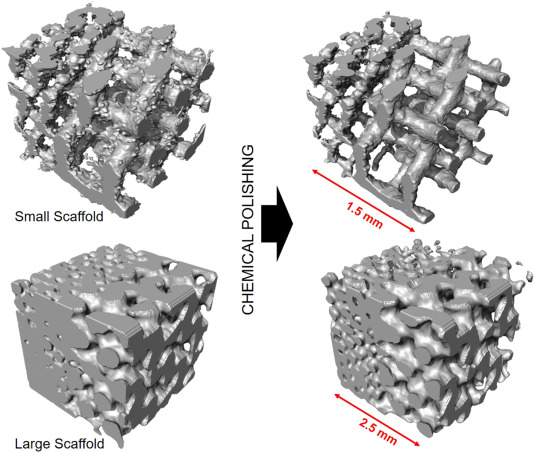
Chemical polishing is a method of selectively dissolving uneven areas on the surface of a sample through the chemical etching effect of chemical reagents, eliminating abrasion marks, and leveling the etching process. This method has simple equipment and can handle thin tubes, parts with deep holes, and complex shapes, with high production efficiency
Pros
Strong adaptability: Chemical polishing can handle complex shaped parts, achieving uniform smoothness on both internal and external surfaces. This is particularly important for complex parts that require fine surface treatment.
Easy to operate: The process of chemical polishing is relatively simple and does not require complex operating steps or professional skills, which improves production efficiency.
High production efficiency: Due to its simple operation, simple equipment, and low cost, the application of chemical polishing in production can significantly improve production efficiency.
Simple equipment and affordable price: The equipment required for chemical polishing is not complicated, the cost is low, and it is suitable for large-scale production or small business applications.
Cons
The quality of chemical polishing is not as good as electrolytic polishing.
The adjustment and regeneration of the solution used in chemical polishing are relatively difficult, which limits its application.
During the chemical polishing process, nitric acid emits a large amount of harmful yellow brown gas, which causes serious environmental pollution.
The service life of polishing solution is short, and it is difficult to adjust and regenerate the solution concentration.
In addition, there are different surface polishing methods such as ultrasonic polishing, laser polishing, and magneto-rheological finishing(MRF). Different polishing methods have different applicable scenarios and effects. Choosing the appropriate polishing method requires comprehensive consideration of workpiece material, surface quality requirements, production efficiency, and environmental safety factors. In practical applications, various polishing methods can be combined as needed to achieve the best results.
Surface Polishing Different Materials
Polishing different materials can be done using various methods, depending on the type of material and the required surface quality. Here are some common polishing methods and their applicable materials:
- Mechanical polishing: suitable for materials such as metal, plastic, ceramics, etc. Mechanical polishing mainly relies on tools such as sandpaper, grinding wheels, and wool wheels to operate, removing surface oxides and other impurities through friction, making the surface smoother. This method has low cost and simple operation, but low efficiency and is suitable for small area surface treatment.
- Chemical polishing: suitable for materials such as metals and plastics. Chemical polishing utilizes a chemical solution to react with the surface of the workpiece, removing excess material and making the surface smoother. This method has simple equipment and can polish many workpieces simultaneously, but the adjustment and regeneration of chemical solutions are difficult and may cause environmental pollution.
- Electrolytic polishing: suitable for metal materials. Electrolytic polishing utilizes the principle of electrolysis to generate chemical reactions on the metal surface through the action of electric current in the electrolyte, thereby achieving the purpose of polishing. This method can eliminate the influence of cathodic reactions and is suitable for polishing steel, aluminum, copper, nickel, and various alloys.
Surface Polishing Tools and Materials
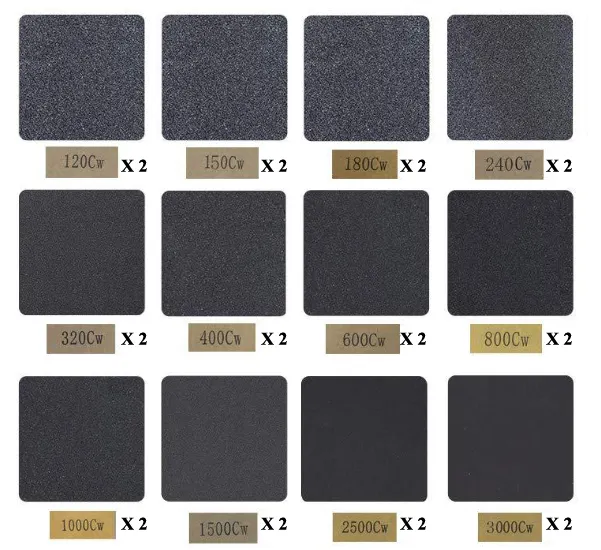
The right tools and materials are essential for achieving a flawless polish. Here’s a quick overview of the most commonly used tools and supplies:
1. Abrasives
- Sandpaper (various grits from coarse to ultra-fine)
- Polishing wheels and pads
- Abrasive media (for vibratory and tumbling machines)
2. Polishing Compounds
- Rouge (for metals)
- Diamond paste (for precision polishing)
- Cerium oxide (for glass)
- Plastic polish
3. Polishing Machines
- Rotary tools and polishers
- Vibratory tumblers
- Ultrasonic polishers
- Electropolishing units
Expert Tips for a Flawless Surface Polishing Finish
Polishing operation is a time-consuming and expensive process, and following certain rules can reduce the cost of polishing operation.
- Start with the Right Grit: Always begin with the coarsest grit needed to remove deep imperfections, then work your way to finer grits for a smoother finish.
Keep Surfaces Clean: Dust and debris can cause scratches during polishing. Make sure to clean the surface thoroughly before starting and between grit changes.
Use the Right Pressure: Too much pressure can cause scratches or even damage the material, while too little pressure won’t achieve the desired finish. Aim for consistent, moderate pressure throughout the process.
Practice Patience: Polishing is a gradual process. Rushing through the grits or skipping steps will result in an uneven or dull finish.
Test on a Scrap Piece: If you’re working with a new material or unfamiliar tool, practice on a scrap piece to avoid damaging the final product.
Finish with a Sealant: After polishing, especially for metals and wood, applying a protective sealant or wax will help preserve the shine and prevent oxidation or damage.
Conclusion
Surface Polishing technology is a sophisticated processing technique that requires mastery of certain skills and experience. Through reasonable polishing processes and precise operations, ideal polishing effects can be achieved. At the same time, the polishing process also needs to be maintained and updated in a timely manner to improve work efficiency and ensure product quality. The process and techniques of polishing technology can be adjusted and improved according to actual situations to meet the processing needs of different materials and workpieces.
Comments
Latest Posts
Related Blogs
Senyo’s blog is focused on sharing our extensive knowledge of prototype manufacturing. Through our articles, we aim to support you in refining your product design and navigating the complexities of rapid prototyping more effectively.