The Best Rapid Prototype Tooling for Your Next Project
Table of Contents
Conclusion
In the fast-paced world of product development, time and precision are of the essence. Rapid prototype tooling offers a streamlined solution for engineers and designers to bring new concepts to life quickly and efficiently. Whether you’re looking to test a design, refine features, or prepare for mass production, understanding the role of rapid prototype tooling can save time, reduce costs, and improve the overall product development process.
This article will explore the benefits, types, and techniques of rapid prototype tooling, as well as the tools that can help your team succeed in the competitive world of product development.

What is Rapid Prototype Tooling?
Rapid prototype tooling is an innovative manufacturing method that emphasizes speed and efficiency in the production of prototypes. By utilizing techniques such as additive manufacturing and CNC machining, companies can create physical parts quickly and at a lower cost compared to traditional methods.
This approach not only accelerates the prototyping process but also allows for iterative testing and feedback, ensuring that products meet quality standards before mass production.Using rapid prototype tooling can significantly reduce lead times, allowing businesses to get their products to market faster.
This efficiency is particularly beneficial in industries where time-to-market can dictate competitive advantage. By embracing this technology, companies can stay ahead of the curve and adapt to changing market demands.
Why Should You Choose Rapid Prototyping in Product Development?
The use of rapid prototyping in product development has revolutionized how companies bring new products to market. Here are some of the reasons why it’s essential to consider this approach:
Faster Time to Market
Rapid prototyping helps speed up the product development process by allowing you to test and modify designs in real time, significantly shortening the time it takes to go from concept to final product. This is particularly crucial in industries where being first to market can provide a competitive edge.Cost-Effective Testing
Instead of committing to expensive and long manufacturing processes, rapid prototyping provides a cost-efficient way to test different designs without incurring large upfront costs. This way, businesses can eliminate flawed designs early on in the product development cycle.Improved Design Accuracy
Rapid prototype tooling allows designers to create prototypes that closely resemble the final product, offering a clearer picture of how the product will perform in the real world. This enhanced accuracy helps in identifying potential issues early, leading to more refined and functional products.
What are the Different Types of Rapid Prototype Tooling?
Just like rapid prototyping, rapid tooling encompasses a variety of tooling techniques. Rapid tooling can be broadly categorized into two main types:
Direct rapid tooling: This approach involves directly creating the tool or mold using additive manufacturing techniques. This can be done by directly 3D printing the tool itself or by using additive manufacturing to create a pattern that is then used to cast the tool. Direct rapid tooling is often faster and more cost-effective for small production runs or for creating complex tool geometries. It is important to use the right manufacturing method to create the tool.
Indirect rapid tooling: This approach involves using rapid prototyping techniques to create a master pattern, which is then used to create the tool or mold through secondary processes, such as investment casting or silicone molding. Indirect rapid tooling is often preferred when the tool material needs to be more durable than what can be achieved with direct methods, or when a higher surface finish is required. Indirect rapid tooling is great when dealing with complex geometries.
Other types of rapid tooling include rapid mold, bridge tooling, and soft tooling. Soft tooling techniques are used to create molds that function as tools. There are many different rapid tooling techniques. The rapid tooling method must be selected according to the project.
How to Choose the Best Rapid Prototype Tooling Method for Your Project?
Choosing the best rapid prototype tooling method depends on several factors:
Production Volume: For very low-volume production, direct rapid prototype tooling using additive manufacturing might be the most cost-effective. For higher volumes, indirect rapid tooling or even soft tooling might be more suitable.
Material Requirements: The required material properties for the final part will influence the choice of tooling method. Some methods are limited in the materials they can process.
Complexity of the Part: Complex geometries might be easier to achieve with direct rapid tooling methods, while simpler shapes might be more efficiently produced using indirect rapid tooling.
Surface Finish Requirements: If a high-quality surface finish is crucial, indirect rapid tooling methods might be preferred.
Budget and Lead Time: Ultimately, the budget and desired lead time will play a significant role in the decision-making process.
It’s often beneficial to consult with rapid prototyping services or rapid tooling services experts who can assess your specific needs and recommend the best rapid tooling approach for your project.
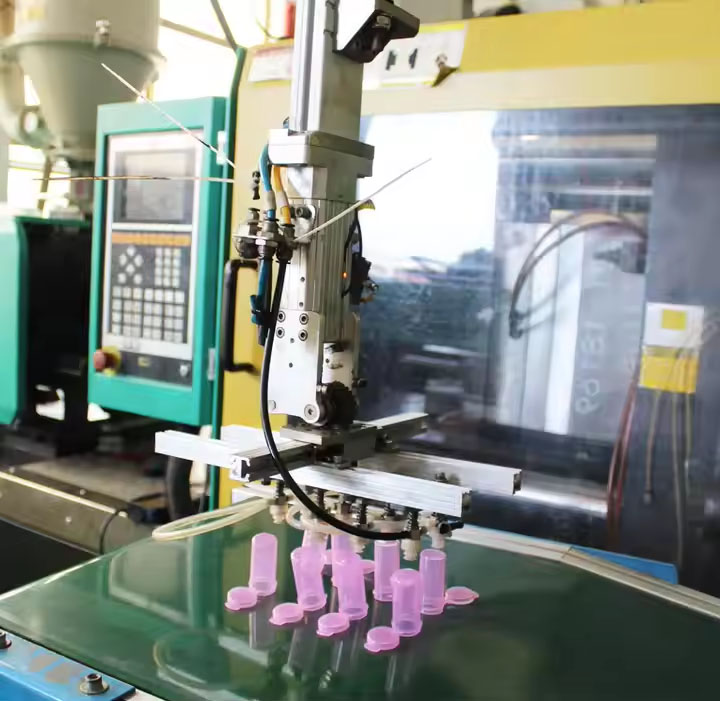
What is the Difference Between Direct Rapid Tooling and Indirect Rapid Tooling?
As mentioned earlier, direct rapid tooling involves directly creating the tool using additive manufacturing. Indirect rapid tooling, on the other hand, uses a rapid prototype as a master pattern to create the actual tool through a secondary process.
Here’s a table summarizing the key differences:
| Feature | Direct Rapid Tooling | Indirect Rapid Tooling |
| Process | Directly creates the tool using additive manufacturing. | Uses a rapid prototype as a master pattern to create the tool through a secondary process. |
| Speed | Generally faster, especially for low-volume production. | Can be slower than direct methods, but faster than conventional tooling. |
| Cost | Often more cost-effective for low volumes. | Can be more expensive than direct methods, but more cost-effective than conventional tooling. |
| Material Options | Limited by the materials compatible with the chosen additive manufacturing process. | Offers a wider range of material options. |
| Surface Finish | Can have a rougher surface finish compared to indirect methods. | Generally provides a better surface finish. |
How Does Rapid Prototype Tooling Impact the Product Development Cycle?
Rapid prototype tooling is an essential part of the product development cycle. Here’s how it impacts each stage:
Conceptualization and Design:
At the start of the product development process, rapid prototyping helps designers and engineers visualize and refine concepts. A prototype can be created in a matter of days, allowing for immediate feedback and quick modifications.Testing and Validation:
Once the prototype is created, it can be tested to ensure it meets the design specifications. This stage may involve functional testing, fit testing, and performance validation.Production Preparation:
After the prototype has been validated, the next step is preparing for mass production. Rapid prototype tooling often helps in creating the necessary molds or tools for injection molding or other manufacturing processes.
How Can Rapid Prototyping Services and Rapid Tooling Services Benefit Your Business?
Partnering with companies that offer rapid prototyping services and rapid tooling services can provide numerous benefits for your business:
Expertise and Experience: These companies have specialized knowledge and experience in rapid prototyping and rapid tooling techniques, ensuring that you get the best rapid results for your project. They can help you choose between the different rapid prototyping methods or between the different rapid tooling methods.
Access to Advanced Technology: They have access to state-of-the-art equipment and technologies, such as advanced CNC machines and additive manufacturing systems, which might not be available in-house. With their state-of-the-art equipment, they can improve manufacturing time.
Faster Turnaround Times: They can deliver prototypes and tools much faster than traditional methods, helping you accelerate your product development process. They will help you accelerate your product development process.
Cost Savings: They can help you optimize your designs for manufacturability and choose the most cost-effective rapid prototyping and rapid tooling methods. They will help you choose between rapid prototyping methods and tooling solutions.
Flexibility and Scalability: They can handle projects of various sizes and complexities, from single prototypes to low-volume production runs. This will allow you to scale up your prototype development quickly.
By leveraging the expertise and capabilities of rapid prototyping services and rapid tooling services, companies can gain a competitive edge in the marketplace. For more information, you can consult our guide on rapid injection molding and our guide on injection molding tools. We also offer 3D printing services.
Common Mistakes in Rapid Tooling and How to Avoid Them
Despite its benefits, rapid tooling can sometimes go awry if not managed properly. Here are some common pitfalls:
Overlooking Material Selection:
Choosing the wrong material for rapid prototyping can lead to inaccurate prototypes. Always ensure the material matches the intended final product.Ignoring Design for Manufacturability:
Even with rapid tooling, your prototype needs to be manufacturable. Collaborate with your tooling provider to ensure your design can be effectively produced.Underestimating Cost Considerations:
While rapid tooling is cost-effective, it’s important to balance cost savings with quality. Cutting corners on tooling methods or materials can affect the final product’s performance.
What Are the Future Trends in Rapid Prototype Tooling?
As technology evolves, so does rapid prototype tooling. Here are a few trends to watch:
- Integration of AI and Machine Learning: These technologies are streamlining the design and prototyping processes, enabling even quicker iterations.
- Sustainability: There’s a growing emphasis on environmentally friendly materials and processes in rapid tooling.
- Enhanced Materials: New materials are being developed to improve the functionality and durability of prototypes.
Staying informed about these trends will help you leverage the latest advancements in rapid prototype tooling.
FAQs
What is the difference between rapid prototype tooling and traditional tooling?
Rapid prototype tooling focuses on speed and flexibility, allowing for quicker iterations and lower costs compared to traditional tooling, which often requires more time and investment.
How can I determine the right rapid prototyping method for my project?
Consider factors such as project scope, budget, and timeline to select the most suitable rapid prototyping method.
Are there any drawbacks to using rapid tooling?
While rapid tooling is advantageous for speed and cost, it may not always provide the same level of durability as conventional methods, particularly for high-volume production.
Can rapid prototyping help reduce overall product development costs?
Yes, by identifying design flaws early and allowing for quick iterations, rapid prototyping can lead to significant cost savings throughout the product development cycle.
Summary
- Rapid prototyping is essential for quickly creating tangible models to validate designs and identify issues.
- Rapid tooling uses advanced techniques to accelerate tool creation, reducing lead times and costs.
- The advantages of rapid tooling include reduced lead times, cost savings, and greater design flexibility.
- Common rapid prototyping methods include SLA, SLS, and FDM, each with unique benefits.
- Rapid tooling techniques include direct and indirect methods, as well as soft tooling.
- Choosing the best rapid tooling method depends on production volume, material, complexity, surface finish, budget, and timeline.
- Direct rapid tooling directly creates the tool, while indirect rapid tooling uses a master pattern.
- Soft tooling is useful for low-volume runs, quick turnarounds, and design testing.
- Rapid tooling speeds up the entire product development cycle from design to manufacturing.
- Partnering with a company offering rapid prototyping services can provide expertise, advanced technology, and cost savings.
- Rapid tooling allows for the rapid fabrication of parts.
- Rapid tooling is essential for the manufacturing industry.
- Rapid prototyping is used in many different fields.
- There are special tools for rapid tooling.
- Rapid tooling is an important tool for design and manufacturing.
- There are many methods used in rapid tooling.
By implementing rapid prototyping and rapid tooling, your business can revolutionize its product development process, achieve faster time-to-market, and stay competitive in the dynamic landscape of modern manufacturing.
Comments
Latest Posts
Related Blogs
Senyo’s blog is focused on sharing our extensive knowledge of prototype manufacturing. Through our articles, we aim to support you in refining your product design and navigating the complexities of rapid prototyping more effectively.