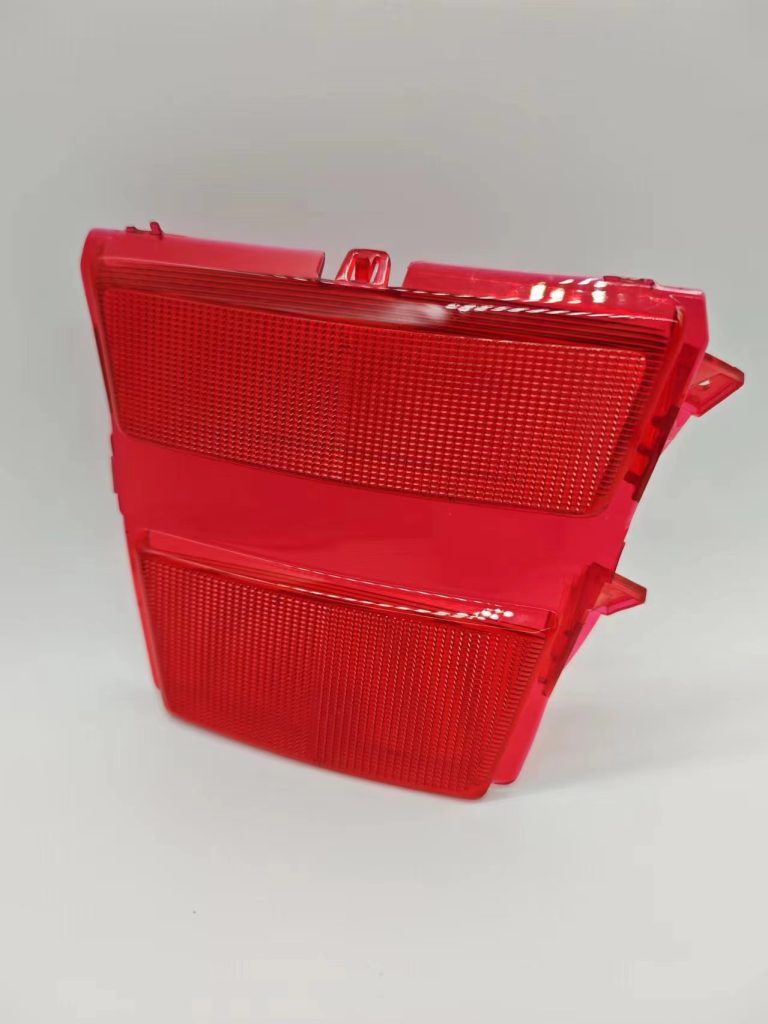
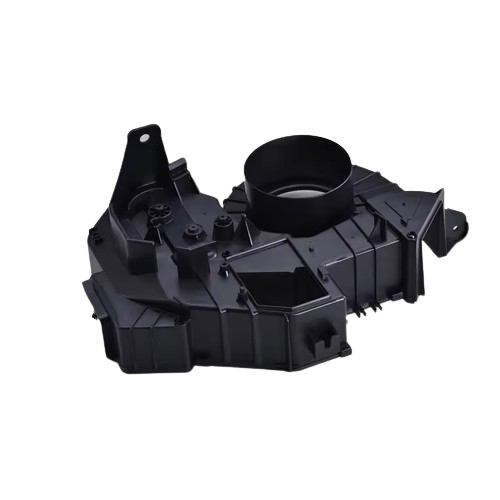

Vacuum Casting Service
Vacuum Casting Service is a low cost but reliable method for prototypes, it is quite helpful for low volume pilot test or engineering design approval.
- Can Deliver As Fast As 3 Days
- 24/7 Technical Support
- Low Volume Competitive Solution

Vacuum Casting Service Application
Vacuum Casting Service is an ideal choice for small-batch high-quality plastic prototypes. When the quantity demand cannot reach the steel mold, it can help customers achieve the fastest and most economical customization of small-batch components.

Prototypes
Due to the short manufacturing time of molds, vacuum casting service can be quickly made based on the prototypes provided by customers, and can be shipped within 3-15 working days. Compared to similar products, the injection molding cycle of injection molded parts takes several months to complete. Moreover, vacuum casting is a reliable and flexible process that can adapt to complex design development.

Low Volume Products
Vacuum molds can be used up to about 20 times, making them a good method for small batch manufacturing of shells and other semi hollow products. The surface texture is faithful to the original texture, and you can paint, polish, and machine them for more precision machining options.
Design Optimization
Due to the fast cycle and low cost characteristics of vacuum casting, it is particularly suitable for design optimization in the product development cycle, and can quickly produce samples for product validation and change
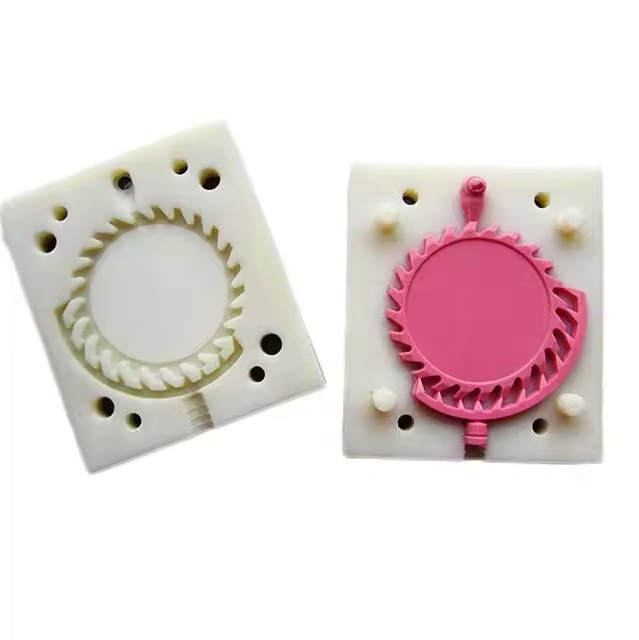
What is Vacuum Casting Service
Vacuum Casting is a method that most of the time is confused with silicone molding or prototypes molding, which is an economical alternative to small batch injection molding of plastic parts. Normally, the molds are made from CNC or 3D printed parts which serve as the prototype, are made of silicone, and the parts are made by pouring polyurethane PU material through vacuum injection molding. Composite parts can precisely reproduce the framework, intricacies, and the texture of the prototype and offer a surface that is uniform with the prototype, thus achieving the same results as injection molding production.

Advantages of Vacuum Casting Service
Compared to traditional mold manufacturing, vacuum casting service has many advantages that traditional methods cannot match.

1. High strength
The prototype parts of vacuum casting service are usually tougher than injection molded parts and have better strength than 3D printed parts. Silicone molds do not deform or shrink; High temperature resistance, reusable after mold forming; Provide convenience for product production.
2. Alternative to traditional injection molding
An injection molding process needs a costly upfront investment for mold processing, while silicone molds needed for vacuum replication are cheap and simple to make. A vacuum casting service is the best option when you want to produce high-quality prototypes or small batch production of rigid, flexible, transparent, colored, or rubbery plastic components.
3. Compare the advantages of CNC machining
Vacuum casting service is of low expense, the product production cycle is relatively short, especially for small batch processing and production. Prototypes can be replicated from the original version, whereas CNC processing requires machine tools that can be replicated one by one.
4. Selection of multiple materials
Vacuum casting service can handle multiple material types and colors, to generalize, polyurethane casting material can be made of ABS, acrylic, PC, PP, PE, PA, POM, PMMA, PVC, soft rubber, nylon, etc. Material selection is one of the advantages of which different materials can be cast in the same silicone mold without changing the mold, thus saving up to the maximum of the costs.
5. Surface treatment is possible
After vacuum casting service, if the product needs to be treated with spray painting and oil spraying to achieve the smooth and bright surface characteristics of the model, or secondary surface treatment can be carried out to meet customized requirements.
What Can Vacuum Casting Service Used For?
Automotive Industry
During the research and design process of automotive components, small batches of plastic parts are produced for performance testing, vehicle road testing, and other trial production work. Common plastic components in automobiles, such as air conditioning shells, bumpers, air ducts, rubber coated air doors, intake manifolds, center consoles, and instrument panels, can all be rapidly and in small quantities manufactured using silicone replica technology during the trial production process.
Electronic Industry
The vacuum casting service can highly reproduce the details and accuracy of the original model, making it very suitable for the production of precision models, such as electronic components, relays, circuit boards, and so on
Medical Industry
Medical device field: vacuum casting technology is also applied in the field of medical devices, such as crutches, wheelchairs, surgical instruments, and medical devices, which can be produced using vacuum casting technology
Food and Beverage Industry
The advantage of using vacuum casting to produce food grade materials is that it can accurately replicate the details and shape of food prototypes, ensuring product quality and hygiene safety, while also improving production efficiency and reducing costs.
Toy and Handicrafts
The model prepared by vacuum casting has strong creativity, high artistic and decorative properties. Therefore, it is suitable for making art models such as decorations, sculptures, toys, etc
Art Industry
The model prepared by vacuum casting has strong creativity, high artistic and decorative properties. Therefore, it is suitable for making art models such as decorations, sculptures, toys, etc.
FAQs for Vacuum Casting Services
How does vacuum vasting work?
Vacuum casting is divided into several steps
The first step is to create a prototype, which is usually printed by CNC or 3D. The surface of the prototype is sprayed with texture or mist to simulate the final mold texture of the product.
The second step is to make a silicone mold,the pouring mold is made of liquid silicone, also known as RTV mold. Inject silicone into the box and vacuum it. After the silicone rubber solidifies, take out the prototype to form a cavity, and the silicone mold is made.
The third step is to provide various polyurethane casting materials to meet your application needs
Is vacuum casting expensive?
Compared to CNC,3D printing and injection molding, the overall cost of replica production is lower for low volume products, especially 10-50 parts, price ranging from tens to hundreds of dollars. The specific cost depends on size and shape, material manufacturing process, quantity, etc
Is vacuum vasting permanent?
Vacuum Casting have the advantage of fast delivery time, low cost, and low probability of processing failure. A silicone mold can be used to produce 10-50 identical products. Significantly reduces product development costs, cycles, and risks. The disadvantage is that the mold is not resistant to acid and alkali, aging, and has a short lifespan. The surface of the mold is prone to marks, stripes, and unsmooth phenomena, and the product accuracy is average
Is vacuum casting accurate?
Generally speaking, the standard replication accuracy of products produced by compound molds is ± 0.20mm/100mm.
Pouring sample thickness: minimum 0.5mm, optimal range is 1.5mm-5mm.
Maximum pouring workpiece: 2000mmX1500mmX1200mm