CNC Machine Shop Near Me:Is CNC Machining Hard to Learn?
Table of Contents
Imagine you are looking at a shiny metal part, just maybe the part of a super powerful engine or a fine surgical tool, and you are puzzled how it was made? Most likely the answer is CNC machining. But as you get deeper into the world of Computer Numerical Control, you find a bigger question: Is CNC machining difficult to master?
If you are a hobbyist, a student, or someone who is considering a career change, the technical language may seem like a brick wall. G, code, tool offsets, spindle speeds, and CAD/CAM software… it sounds like a lot. However, here is the secret: while the machines are complicated, the way to learn them is more open than ever.
In this article, we will uncover the truth about the learning curve, the skills that you really need, and how companies like Senyorapid have transformed this complicated science into a perfected art.
Understanding the Basics: What is CNC Machining?
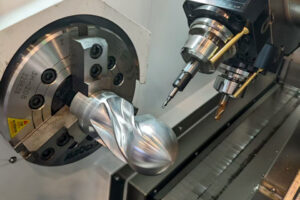
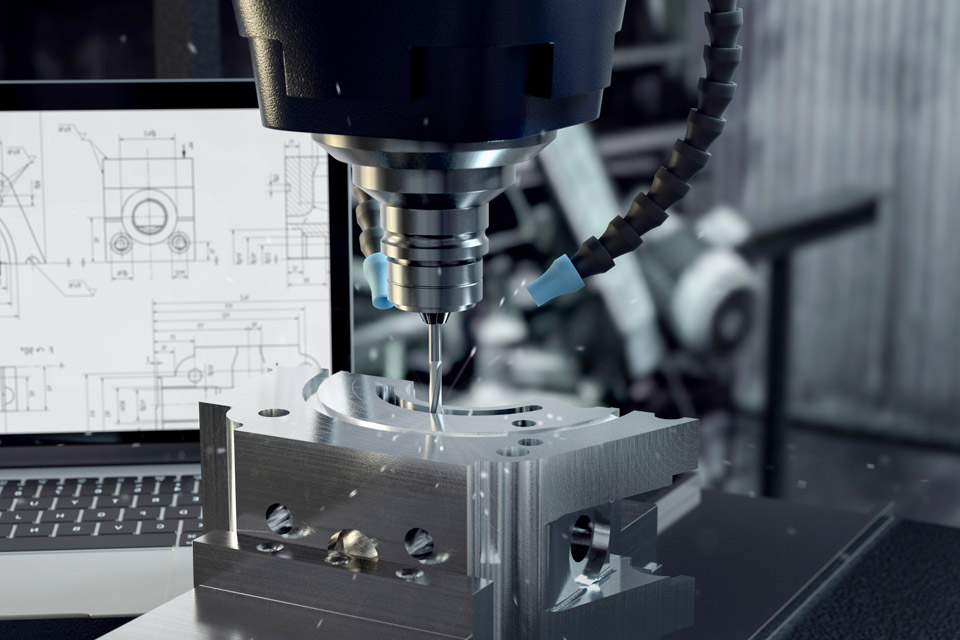
Before we even get to the difficulty of the task, we should really figure out what it is that we are doing. The most simplified explanation of CNC machining is that it is a subtractive manufacturing process. Essentially, the process involves starting with a block of material (such as aluminum, steel, or plastic) and then using high, speed cutting tools to “subtract” or remove the material until the desired shape is achieved.
The term “CNC” refers to Computer Numerical Control. In the past, a machinist had to manually operate the machines by turning the wheels and moving the levers. Nowadays, a computer is in charge of the operation. It reads a digital blueprint and directs the cutting with a precision that a human hand could never be able to accomplish.
This is the core or the main source of power for innovation of the present time. It is what made medical device prototyping possible, thus, allowing for the production of instruments that save lives and have absolutely no room for error. In addition, it is also the power unit, which is behind automotive prototyping, where the safety at high speeds is dependent on the perfect fitting of each bracket and piston.
Is It "Hard" or Just "New"?
When people ask if CNC machining is hard, they are usually asking one of three things:
- Is the math hard?
- Is the computer programming hard?
- Is the physical machine dangerous?
The truth is that CNC machining is a “layered” skill. It’s like learning to play an instrument. You can learn to play a simple song (operating the machine) in a few weeks. But becoming a virtuoso (a Master Programmer) takes years of practice.
The Operator vs. The Programmer
To understand the difficulty, you have to distinguish between two roles:
- The CNC Operator: This person loads the material, pushes the buttons, and monitors the machine. This is relatively easy to learn and is a common entry point into the industry.
- The CNC Programmer/Machinist: This person decides how the part will be cut, chooses the tools, and writes the code. This requires a deeper understanding of CNC precision machining and is where the “hard” work really happens.
The Key Skills You’ll Need to Master
If you are really determined to learn, then you will be concentrating on these four pillars:
1. Technical Drawing & Blueprints
You cant create something if you dont understand it. A blueprint is like a GPS. It shows you the sizes, the tolerances (how much margin of error you have), and the material requirements. In case you are doing industrial prototyping or a simple custom bracket, reading the map is the first step.
2. Mathematics (But Don’t Panic!)
No, you do not have to be a calculus professor. However, being good at basic geometry and trigonometry is a must. X, Y, and Z axes will be something you will be dealing with all the time. Knowledge of how angles and circles relate to each other is necessary for CNC milling and CNC turning.
3. Problem Solving
CNC machining is half metal cutting and another half puzzle solving. Why did the tool break? Why is the metal surface rough? Why did the machine stop? If you like troubleshooting, then you will actually find the “difficulty” of CNC machining to be the most rewarding part of the job.
4. The Digital Language
G, Code and CAMG, code is the instruction that the machine understands. Even though most modern machinists employ CAM (Computer, Aided Manufacturing) software to “translate” the 3D model into code, a person who can understand and alter the code by hand is on a different level than a person who is not aware of this.
Why People Look for a "CNC Machine Shop Near Me"
When companies or inventors are in the middle of a project, they often search for a cnc machine shop near me because they want a partner they can trust. They realize that while the basics of CNC can be learned, the mastery required for high-stakes projects—like robot prototyping or complex consumer product prototyping—is best left to the experts.
A local shop offers the benefit of proximity, but quality is what matters most. Whether the shop is around the corner or across the globe, they must be able to handle complex tasks like vacuum casting, sheet metal fabrication, and even deep draw metal stamping.
Breaking Down the Learning Process: Step-by-Step
If you are willing to start learning right now, here is the most efficient path:
Step 1: Learn CAD Software
Use a program such as Fusion 360 or SolidWorks first. These software packages allow you to create a part in a 3D space. Since almost all fabrication nowadays come from a digital model, this is a prerequisite skill.
Step 2: Understand Tooling
Knowing your tools is a must. A drill is not the same as an end mill. A lathe tool is not the same as a laser cutting head. Knowing exactly which tool to use for which material is the “bread and butter” of the job.
Step 3: Dive into Speeds and Feeds
It is the physics of machining.
What should be the speed of the spinning tool (Speed)? At what rate should the tool advance through the metal (Feed)? When you are too slow, you take more time than necessary. When you are too fast, the tool is broken, or, machine is damaged. This is a skill that comes from experience and “feeling” the machine.
Step 4: Explore Different Technologies
CNC is not only about mills and lathes. To a machinist who is versatile, EDM machining (cutting by using electricity), metal bending, and even how 3d printing can be used with traditional machining are familiar.
The Rewards of Mastering the Craft
Is it hard? Yes, at times. But is it worth it? Absolutely.
When you master CNC machining, you gain the power to create almost anything. You become a vital part of the supply chain for injection molding tools and multi cavity injection molding. You help build the parts that go into space, the parts that save lives in hospitals, and the parts that make our cars safer.
Furthermore, it’s a field that is constantly evolving. With the rise of rapid injection molding and overmolding and insert molding, there is always a new technique to learn and a new problem to solve.
Common Challenges Beginners Face (And How to Beat Them)
1. The “Fear” of the Machine CNC machines are powerful and loud. It’s natural to be intimidated.
- Solution: Always follow safety protocols. Start with “air cuts” (running the program without any material) to make sure your code is safe before you actually start cutting.
2. Breaking Tools Every machinist has broken a tool. It’s a rite of passage.
- Solution: Don’t get discouraged. Analyze why it broke. Was the feed too fast? Was the tool worn out? Treat every broken tool as a tuition payment for your education.
3. Software Overwhelm CAM software has a million buttons.
- Solution: Don’t try to learn everything at once. Focus on one simple project—like a 2D keychain—and learn only the buttons you need for that project. Expand from there.
The Senyorapid Advantage: Precision Without the Headache
While learning CNC machining is a fantastic personal goal, business owners and engineers often don’t have years to spend mastering the craft. They need results, and they need them now.
This is where Senyorapid changes the game. We’ve taken the “hard” out of CNC machining for our clients. With over 20 years of experience, we have mastered the nuances of custom metal stamping and high-precision CNC work so you don’t have to.
Why partner with us instead of searching for a “cnc machine shop near me”?
- Unmatched Precision: We work to a tolerance of ±0.001mm. That’s thinner than a human hair.
- Speed: We offer a 3-5 day lead time. In the world of prototyping, speed is everything.
- Flexibility: Whether you need a single prototype or a prototype plastic injection molding run, we have no minimum order quantity (MOQ).
- Expertise: Our engineers are experts in everything from metal bending to complex CNC turning.
Conclusion: Your Future in Making Things
So, is CNC machining hard to learn? It’s a challenge, yes. It requires a mix of digital tech, old-school mechanics, and constant problem-solving. But for those who love to build, it is one of the most rewarding skills on the planet.
Whether you are just starting your journey into the world of G-code or you’re an experienced engineer looking for a reliable partner to handle your medical device prototyping, remember that precision is a journey.
If you have a design ready to go and want to skip the years of trial and error, let the experts handle it. Contact Senyorapid today and let us bring your vision to life with the precision and speed your project deserves. We handle the hard part—you just focus on the innovation.
Comments
Latest Posts
Related Blogs
Senyo’s blog is focused on sharing our extensive knowledge of prototype manufacturing. Through our articles, we aim to support you in refining your product design and navigating the complexities of rapid prototyping more effectively.