Injection Mold Textures and Surface Finishing Methods
Table of Contents
The surface treatment process of molds is a crucial part of the mold manufacturing process, which not only affects the appearance quality of the mold, but also directly affects the service life, work efficiency, and product quality of the mold.
Common surface treatments for molds generally include electroplating, anodizing, electrophoresis, mold textures, vacuum coating, polishing, spraying, metal drawing, laser surface treatment, etc
This article focuses on the art of mold texture. As more and more plastic products flood our lives, people begin to realize that they do not want to see them look like “plastic” products. Therefore, the etching process for decorative molds is more in line with people’s appetite
What Is Mold Textures?
The common plastic and rubber products in daily life usually use injection or extrusion processes, where plastic is injected or squeezed into a metal mold to shape the shape we want. Therefore, if it is possible to create concave and convex patterns on the metal surface of the mold, these patterns can be transferred to the plastic and rubber product to also produce concave and convex patterns. This practice is called mold textures.
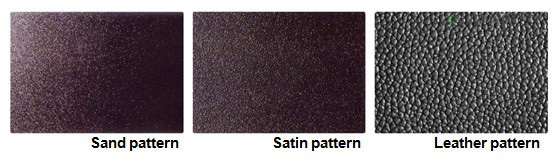
Common mold textures can be divided into physical textures such as sandblasting or chemical etching, mainly including Satin patterns, leather patterns, and geometric patterns.
Satin Pattern refers to the uniform rough surface on plastic that is commonly seen as frosted glass. Due to its texture resembling pear skin with small particles, it is named.
Leather Pattern is an attempt to simulate the texture of leather surfaces, often paired with soft plastics such as PU, and applied to car steering wheels and interior decorative panels.
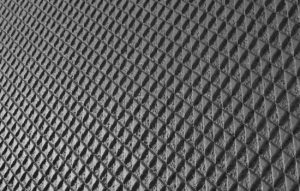
Geometric Patterns utilize the repeated arrangement of simple shapes to create visual rhythms.
Now, due to the demand for decorative plastic surfaces and the accompanying advancements in mold textures technology, texture suppliers have been able to develop patterns that simulate metal hair or carbon fiber textures, combined with spray painting or other surface treatment processes. The effect and texture that can be present are beyond imagination.
Advantages For Mold Textures
Mold Textures have many advantages, Following are the most important points
1. Enhance the appearance and texture of plastic parts, presenting products with diverse or completely new designs.
2. Improve the appearance defects of the product. Some shrinkage, bonding lines, parting surfaces, slider shapes, and other defects can be covered through texturing.
3. After mold texture and sandblasting, the surface hardness and strength of the parts have been increased to prevent scratches.
4. It is anti-slip, anti-rotation, and has a good hand feel. It is made of hemp or matte surface to prevent light reflection and eliminate eye fatigue.
5. Make demolding easier: Creating patterns can allow a small amount of air to be contained between the product surface and the cavity surface, preventing the formation of vacuum adsorption and making demolding easier.
Different Types Of Mold Textures
Mold Textures also refers to etching, which is a process of chemically etching the desired pattern onto a mold (mostly a concave mold). This article lists the most common processes such as sandblasting and the methods and key points for processing different patterns.
Injection Mold Textures-Sandblasting
Sandblasting: By using a sandblasting machine to spray high-speed abrasive (materials such as quartz sand, glass sand, aluminum sand..) onto metal or plastic surfaces, surface stains and oxides are effectively removed, and the quality and roughness of the surface are improved, thereby enhancing the decorative, functional, and service life of the product.
The Sandblasting process: Mold degreasing – sealing – sandblasting processing – removing stickers – cleaning – rust prevention
Characteristics of sandblasting:
1. Short delivery time
2. Easy maintenance
3. The price is relatively cheap
4. Can obtain detailed and uniform patterns
5. However, it should be noted that the durability of sandblasting is relatively short compared to textures.
6.Provides multiple options including full gloss, semi gloss, and matte, which may require repeated adjustments to achieve the desired effect.
Injection Mold Textures- Satin Pattern
Satin Pattern erosion is particularly common in plastic molds, as it can depict intricate textures and enhance the tactile and visual depth of products.
The satin pattern erosion process:mold degreasing – sealing – spraying acid resistant masking material – etching – sealing for sandblasting – drying – sandblasting – removing stickers – cleaning – rust prevention
Characteristics of satin pattern:
1. Short delivery time;
2. A moderate and uniform pattern can be obtained.
3. More durable than sandblasting, with 100000-200000 shots.
4. Coarse lines can hide the connecting wires and indentations.
5. Attention: Durability is lower than leather patterns and complex and narrow shapes can result in uneven patterns
Injection Mold Textures- Leather Pattern
Leather Pattern is mold and shell with leather texture and leather touch, preparation method and application
The leather pattern erosion process:mold degreasing – sealing – debinding of bite pattern processing surface – drawing graphics – baking – correcting graphics – second sealing – etching – sandblasting sealing – removing stickers – cleaning – rust prevention
Characteristics of leather pattern:
1. Durability: 100000-500000 shots;
2. Products that are not easily damaged
Attention: 1. Long processing time; 2. The price is on the high side
Leather patterns need to be transferred to the metal surface by applying transfer paper to achieve pattern transfer. Pattern transfer printing is a crucial step in leather pattern manufacturing, and its precision directly affects the presentation of the final pattern. Due to the fact that a single etching can usually only form a single depth of pattern, the process of pattern transfer and etching may need to be repeated multiple times to obtain a more detailed and multi-layered pattern effect.
Injection Mold Textures- Geometric Patterns
The concise, symmetrical, and orderly beauty presented by geometric patterns not only creates a sense of modernity, but also has a timeless charm.
The geometric pattern erosion process:
One degreasing: entire mold
Secondary degreasing: texture surface
Film cutting – coating photosensitive film – drying – pasting film – exposure – heating – correcting graphics – sealing – etching – peeling and cleaning photosensitive film – sandblasting – cleaning – rust prevention
Characteristics of geometric pattern:
1. The processing time is relatively short
2. Unable to process three-dimensional surfaces, not even repair them
3. Compared to leather patterns, repairing is relatively simple
Before choosing a mold texture technique, you need to conduct a thorough comparison of various patterns. Although sandblasting has relatively short durability, it is easy to maintain; Satin texture has moderate durability and can cleverly conceal flaws; Leather texture is more durable, but the processing is more time-consuming. The selection of mold materials is equally important, hardness, material matching, and uniform heating are all key factors determining the biting effect.
In addition, the surface texture treatment of the mold also includes EDM spark patterns, laser patterns, etc. For more information, please refer to the process wire EDM and laser cutting for reference.
Important Points For Mold Textures Process
1. The texture area of the mold should have good surface quality without welding, cracks, coatings, etc
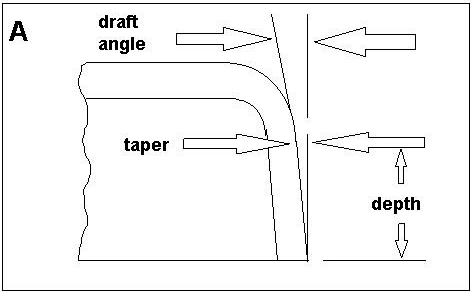
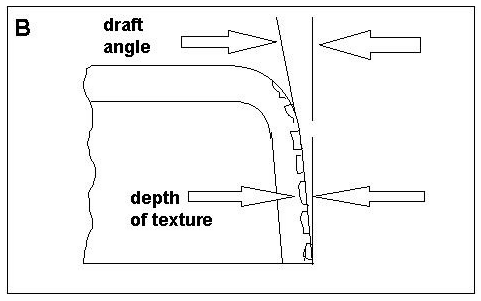
2. Demoulding draft angle: The deeper the pattern, the greater the draft angle of the product naturally needs to be, as hard plastics are more prone to demoulding and pulling, requiring a greater draft angle than soft plastics.
3. If the product requires partial mold texture, other areas that do not require texturing should be protected.
4. The textured surface should be polished to at least 800 # sandpaper, and the fine grain requirement should reach about 15um. The polishing requirement should reach 1000 # sandpaper
5. The corroded surface should not have any defects such as sand holes, spark patterns, machining tool marks, or rough polishing of the R-angle
6. The parting line of the mold should be protected in advance to avoid unnecessary flashes and other situations in the future.
The above points are the basic elements of texture processing, and may vary according to different texture requirements.
Application of Mold Texture Processing Technology
1. Automotive manufacturing industry: In the automotive manufacturing industry, the surface texture processing technology of molds is widely used to manufacture automotive interior and exterior parts, such as bumpers, dashboards, and seats. By designing specific textures, the anti slip, comfort, and aesthetics of the product can be enhanced. In addition, textures can also have aerodynamic effects, optimizing the wind resistance performance of cars.
2. Electronic and electrical industry: In the electronic and electrical industry, the surface texture processing technology of molds is mainly used to manufacture various types of shells and internal components, such as mobile phones, TV remote controls, and computer keyboards. Through precise texture design, the anti slip, operability, and aesthetics of the product can be enhanced, while improving its service life and reducing maintenance costs.
3. Medical industry: In the medical field, the surface texture processing technology of molds is mainly used in the manufacturing of medical devices, such as surgical instruments, medical bags, and medical pipe fittings. By designing specific textures, the grip performance, slip resistance, and ease of cleaning of medical instruments can be improved, while also enhancing the safety and efficiency of the medical process.
4. Construction industry: In the field of construction, the surface texture processing technology of molds can be used to manufacture building decorations, railings, doors and windows, etc. Through innovative design, various textures with artistic and practical qualities can be created, enhancing the aesthetics and usability of the building.
5. Packaging industry: In the packaging industry, the surface texture processing technology of plastic molds can be used to manufacture various packaging containers and bags. Through reasonable texture design, the load-bearing capacity and sealing performance of packaging containers can be improved, while also enhancing the anti slip and portability of packaging bags.
Other Mold Surface Finishing Methods
Polishing
Polishing is a process of removing rough parts from the surface of a mold through mechanical or chemical methods, making the surface smooth and shiny. Polishing and grinding can reduce the roughness of the mold surface and improve the appearance quality of the product.
Plating
Chemical plating is a process of depositing a layer of metal or alloy on the surface of a mold through chemical reactions, which has the advantages of uniform coating, strong adhesion, and good corrosion resistance. Chemical plating is mainly used to improve the hardness, wear resistance, and corrosion resistance of mold surfaces, such as chrome plating, nickel plating, etc
Coating
By coating a layer of special material on the surface of the mold, the wear resistance, corrosion resistance, high temperature resistance, and friction coefficient of the mold can be improved
Heat Treatment
Heat treatment refers to the process of normalizing, quenching, tempering, etc. on mold materials to obtain better mechanical and wear resistance properties, and improve the service life and stability of molds. Conventional heat treatment is generally carried out after rough machining of the mold and before precision machining.
Nitriding treatment is a process of forming a high hardness and high wear resistance nitride layer on the surface of a mold through a nitriding reaction. Nitriding treatment can significantly improve the hardness and wear resistance of the mold surface, and extend the service life of the mold.
The process flow of mold engraving mainly includes carving machine engraving, laser engraving, and electrode engraving followed by discharge machining, and other methods. The mold number, product logo, and company name commonly used for carving molds.
Conclusion
Mold textures, as a commonly used surface treatment method in mold manufacturing, is mainly used to prevent scratches and wear of mold parts, improve the surface quality and appearance of products, and thus enhance the service life and production efficiency of molds.
However, there are many methods for making mold texture patterns, and suitable methods need to be selected according to different needs. Different materials require different treatments, and attention should also be paid to cleaning work and cost issues before treatment.
Comments
Latest Posts
Tags
Related Blogs
Senyo’s blog is focused on sharing our extensive knowledge of prototype manufacturing. Through our articles, we aim to support you in refining your product design and navigating the complexities of rapid prototyping more effectively.