
Injection Molding Defects: Prevention and Solutions
Table of Contents
The Purpose
Mainly analyzing and judging the causes of defects in current injection molded products, providing references in molding machines, molds, and materials, in order to effectively control defective products and reduce production costs.
Injection Molding Defects- Silver Streaks
On the surface of the finished product, with GATE as the center, there are many silver white stripes, which are basically generated along the flow direction of the raw materials. This injection molding defects occur after the accumulation of many adverse conditions, and sometimes it is difficult to identify the real cause.
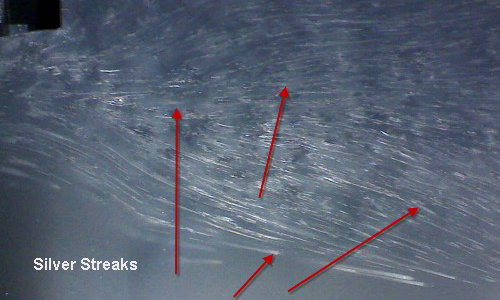
- If there is moisture or other volatile components in the raw materials and they are not fully dried, many silver streakswill be produced on the surface;
- When other raw materials are accidentally mixed into the raw material, silver streakscan also form, which are in the shape of mica or needle like, and are easily distinguished from silver streakscaused by other raw materials;
- The injection molding defect (silver streaks)is also prone to occur when the raw materials or material pipes are not clean;
- The injection time is long, and the temperature of the raw materials initially injected into the mold cavity is low. As a result of solidification, volatile components are not eliminated, especially for temperature sensitive raw materials, which often occur in this situation;
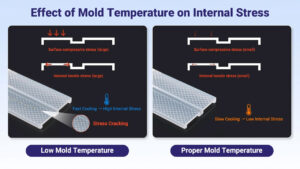
- If the mold temperature is low, the solidification of the raw materials will be fast and it is easy to occur (as mentioned in 4 above), which will prevent the elimination of volatile components;
- When the exhaust of the mold is poor, it is difficult to remove the gas when the raw materials enter, which can cause silver streaks. In this case, the top of the finished product often burns black;
- If moisture adheres to the mold, the heat generated by the filling material evaporates it and fuses with the molten material, forming injection molding defects (silver streaks)and presenting a protein colored mist;
- If there is cold material or small material in the cold material pit of the rubber channel, when it is injected, the cooled raw materials will be brought into the mold cavity, and some of them will quickly solidify to form a thin layer. At the beginning of production, low mold temperature can also cause silver streaks.
- During the filling process, the raw materials form a thin layer due to rapid cooling at the contact area with the mold cavity surface, which is then melted and decomposed by the subsequent raw materials, resulting in white or dirty marks, commonly seen in thin shell products;
- When filling, the raw materials are in a turbulent flow state, which prolongs the flow path of the raw materials and causes friction due to the influence of the structure inside the mold cavity. In addition, the filling speed is faster than the cooling speed of the raw materials, and GATE is located at the tendon or small area, which is prone to injection molding defects. Areas where the thickness of the finished meat increases sharply are also prone to ulceration;
- GATE and flow channels are small or deformed, with fast filling speed, which instantly generates friction and causes rapid temperature rise, leading to raw material decomposition.
- If the raw materials contain recycled materials that have not been fully dried and decompose during injection, injection molding defects(silver streaks)may occur;
- The raw materials stay in the material tube for a long time, causing partial overheating and decomposition;
- Insufficient back pressure and air entrapment (insufficient compression ratio)
Injection Molding Defects- Warping and Deformation
During injection, the injection molding materials inside the mold is subjected to high pressure, resulting in internal stress. After demolding, warping and deformation occur on both sides of the finished product, and thin shell molded products are prone to deformation, this is quite common for injection molding defects.
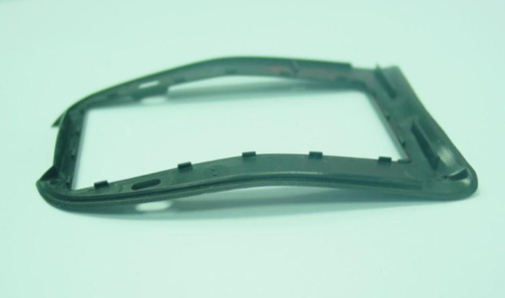
- When the molded product has not been fully cooled, it is ejected and pressure is applied to the surface through the ejector pin, resulting in warping or deformation;
- When the cooling speed of each part of the molded product is uneven, the slow cooling leads to an increase in shrinkage, while the raw materials in the thin-walled part cool quickly, resulting in an increase in viscosity and causing warpingand causing injection molding defects
- The distribution of the mold cooling water circuit is uneven, and the temperature needs to be changed or adjusted using multiple mold temperature machines;
- For molds with multiple waterway configurations, it is best to use a mold temperature machine for segmented control to achieve the desired temperature
Injection Molding Defects- Flow Marks
When the raw materials flow in the mold cavity, small wrinkles resembling rings centered around GATE appear on the surface of the finished product. This is the flow mark of injection molding defects
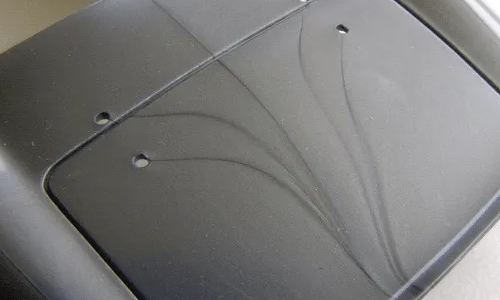
- If the raw material temperature is low, it will cause injection molding defects. Increasing the raw material temperature and mold temperature will make the raw material flow easily;
- If the filling speed is slow, the temperature will decrease during the filling process, and this phenomenon occurs. Adjust the injection speed of the injection molding machine.
- If the nozzle is too long, the temperature at the nozzle will decrease, causing the cooled raw material to be ejected first, resulting in a pressure drop and flow marks; Check the nozzle size of the mold.
- The cooling chamber is small, and during the initial injection stage, low-temperature raw materials are filled first, causing flow marks.
Injection Molding Defects- Short Shot
The incomplete filling of the finished product with some missing parts is believed to be caused by the following injection molding defects:
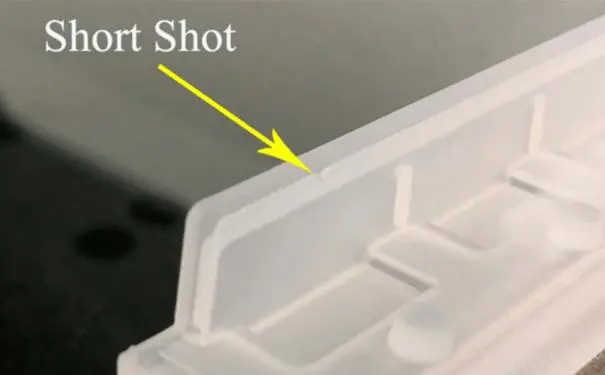
1. The finished product area is large, and the injection capacity of the machine is insufficient for plasticizing ability. At this time, it is necessary to choose a machine with higher capacity;
2. The exhaust effect of the mold is poor. If the air inside the mold cavity is not eliminated during injection, it will be incomplete due to residual air, sometimes resulting in burning and injection molding defects;
3. If the flow distance of the raw materials in the mold cavity is long or there are thin-walled parts, they should be cooled and solidified before the filling of the raw materials is completed;
4. Low mold temperature can easily cause short shots, but increasing the mold temperature prolongs the cooling time and the molding cycle time. Therefore, it is necessary to consider determining the appropriate mold temperature from the perspective of production efficiency;
5. The low temperature or slow injection speed of the melted raw materials can cause injection molding defects such as short shot due to the solidification of the raw materials before filling the mold cavity;
6. If the nozzle diameter is small or long, the nozzle temperature should be increased to reduce its flow resistance. The nozzle should be selected as short as possible. If the nozzle diameter is small or the nozzle length is chosen, it not only increases the frictional resistance of its flow, but also slows down the speed due to the effect of resistance, resulting in premature solidification of the raw material;
7. There are many mold holes in the finished product, and the flow rate is unbalanced. It is necessary to adjust the size of GATE to control it. The resistance of GATE small mold holes often leads to insufficient meat. If there is a hot rubber channel system, the temperature of a certain insufficient meat mold hole can also be adjusted separately to control it;
8. Low injection pressure leads to insufficient filling, resulting in injection molding defects.
Injection Molding Defects- Flashes/Burrs
The phenomenon of excess plastic in the finished product is called flash edge, which is one of common injection molding defects that often occurs at the mold’s closing, ejector pin, slider, and other moving parts.

- If the slider and positioning block are worn, it is easy to produce burrs, and the mold needs to replace spareparts after a period of production to prevent this injection molding defects.
- When foreign objects adhere to the surface of the mold, burrs may also appear,
- Insufficient clamping forcecauses the mold to be opened during injection, resulting in burrs. This injection molding defectsrequire a portion of clamping force to be reserved during mold design or change to suitable IMM;
- If the raw material temperature and mold temperature are too high, the viscosity will decrease, so it is also easy to produce burrs on the gaps of the mold;
- Excessive supply of materials leads to the production of burrs due to excessive raw material injection.
Injection Molding Defects- Bubbles
The gaps generated inside the wall thickness of the finished product cannot be seen on the surface of opaque products, and must be sliced open before they can be seen. The center of the wall thickness is the slowest cooling area, so rapid cooling and rapid shrinkage of the surface will pull the raw material up and create gaps, forming bubbles. For some exterior parts, this injection molding defects phenomenon is crucial.
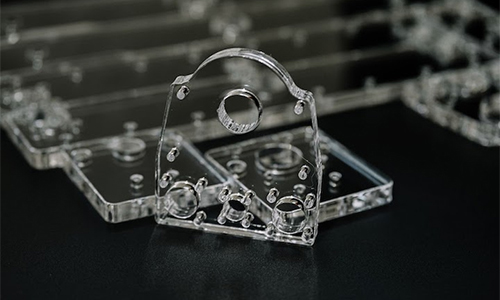
- The injection pressure should be as high as possible to reduce material shrinkage;
- When the thickness of the molded product changes rapidly, the cooling speed of each part is different, which can easily produce bubbles. This injection molding defect may require prior communication with the customer to change the product design.
- Bubbles are generated due to stagnant air;
- GATE is too small, and the thickness of the finished product changes quickly
- Before curing GATE, sufficient pressure must be maintained.
Injection Molding Defects- Burn Marks
Burning of injection molded parts refers to the injection molding defects in which the air inside the mold cannot be discharged in time due to poor mold exhaust or too fast injection during the injection molding process. The air rapidly heats up under instantaneous high pressure, causing the melt to burn yellow or burnt at certain positions
1. Improper control of molding conditions, too high injection speed or too long injection time, can cause the melt temperature to be too high and burn.
2. Poor exhaust of the mold, resulting in high temperature and burning caused by adiabatic compression of air. The injection molding defects can be solved by increasing the exhaust of the mold.
3. The raw materials do not meet the requirements, such as high moisture and volatile content, high melt index, or excessive use of lubricants, resulting in injection molding defects such as burning and paste spots.
4. Mold failure, such as blockage of exhaust holes by mold release agents and solidified materials from raw materials, and the production of high-temperature gases due to adiabatic compression of air that cannot be discharged in time from the mold, leading to injection molding materials decomposition and coking.
5. Excessive processing temperature, long processing time, and uneven dispersion of additives can lead to excessive local additives and burning.
Conclusion
In addition to the above injection molding defects, there may also be injection molding defects such as weld lines, shreds, scratches, jetting, sink marks, etc. during the injection molding production process. When injection molding defects occur, we need to investigate and find the root cause. The order of investigation is generally injection molding machine, raw materials, injection molding settings and auxiliary machines, surrounding environment, etc. Due to the complexity and irreversibility of mold changes, mold changes should be the ultimate solution for injection molding defects.
Comments
Latest Posts
Tags
Related Blogs
Senyo’s blog is focused on sharing our extensive knowledge of prototype manufacturing. Through our articles, we aim to support you in refining your product design and navigating the complexities of rapid prototyping more effectively.