Plastic Injection Mold Making: Your Guide to High-Quality Injection Molds
Table of Contents
Conclusion
In the world of plastic manufacturing, the injection mold is king. A precisely crafted injection mold maker is the foundation for producing high-quality plastic parts consistently and efficiently. This comprehensive guide dives into the world of plastic injection mold making, covering everything you need to know, from mold design to mold manufacturing, and how to choose the right injection mold maker for your custom plastic injection needs. If you are an injection plastic parts maker, and you’re seeking to enhance your plastic injection capabilities, this article is your roadmap to understanding and leveraging the power of expertly crafted injection molds.
What is an Injection Mold and Why is it Crucial for Plastic Injection Molding?
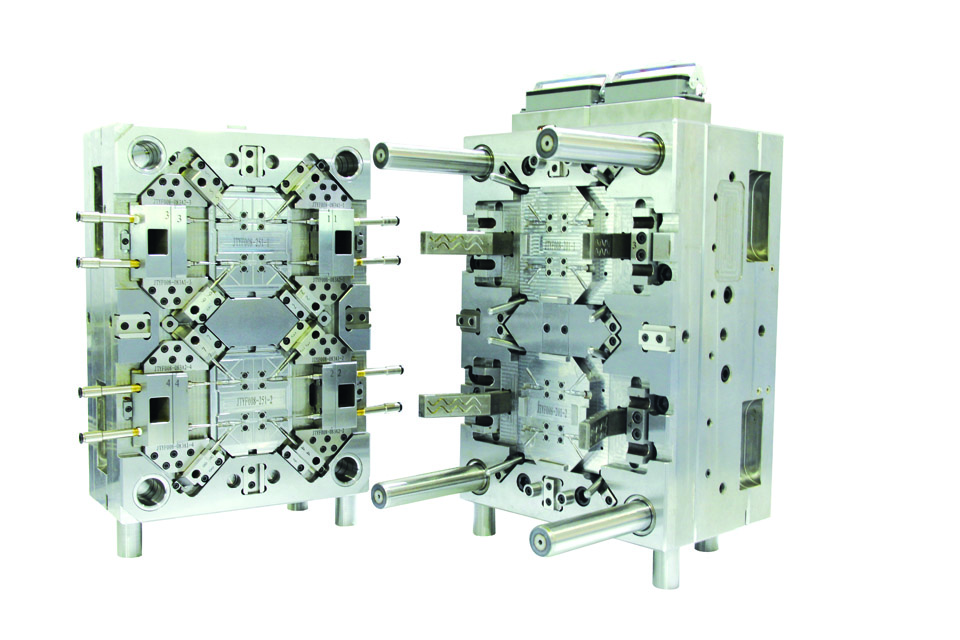
An injection mold, often referred to as a mould in some regions, is a specialized tool used in the plastic injection molding process. Think of it as a hollow metal block, typically made from steel or aluminum, that contains a cavity (or multiple cavities) precisely shaped to form the desired plastic part. Molten plastic is injected under high pressure into this cavity, where it cools and solidifies, taking the shape of the mold. Once the plastic has hardened, the mold opens, and the finished plastic part is ejected.
Why is the injection mold so crucial? It’s because the quality, precision, and consistency of the plastic injection molded components you produce are directly determined by the quality of the injection mold. A well-designed and expertly manufactured injection mold ensures:
- Dimensional Accuracy: The mold cavity dictates the precise dimensions and tolerances of the final plastic part.
- Surface Finish: The finish of the mold cavity is directly transferred to the surface of the molded plastic part.
- Part Consistency: A high-quality injection mold produces consistent plastic parts with minimal variation from part to part, crucial for high-volume production.
- Efficient Production: A well-designed injection mold optimizes cycle times, minimizes material waste, and ensures smooth, reliable injection molding process operation.
- Long Tool Life: A durable injection mold made from high-quality materials and expertly crafted can withstand hundreds of thousands, even millions, of injection molding cycles, providing a strong return on investment.
The injection mold is not just a tool; it’s the heart of the plastic injection molding process, and its quality directly impacts the quality, cost, and efficiency of your entire plastic manufacturing operation. A precision injection mold is an investment in success.
What are the Key Components of a Plastic Injection Mold?
A plastic injection mold is a complex assembly of precisely engineered components, each playing a critical role in the injection molding process. Understanding these components is fundamental to grasping how an injection mold functions and how to optimize its design and performance.
Here are the key components of a plastic injection mold:
- Cavity: This is the heart of the mold, the precisely shaped void that forms the external shape of the plastic part. A mold can have a single cavity or multiple cavities (for producing multiple parts per cycle). The quality and precision of the cavity are paramount.
- Core: The core forms the internal features of the plastic part, such as holes, ribs, or bosses. The core and cavity together define the complete shape of the molded plastic component.
- Sprue Bushing: This is the channel through which the molten plastic enters the mold from the injection molding machine‘s nozzle.
- Runner System: A network of channels that distribute the molten plastic from the sprue bushing to the individual cavities. The runner system design impacts filling efficiency and material usage.
- Gate: The gate is a small, restricted opening that connects the runner system to the cavity. The gate controls the flow of molten plastic into the cavity and is designed to be easily removed from the finished plastic part after molding.
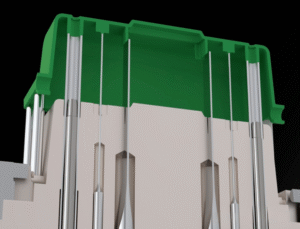
- Ejector System: This system pushes the solidified plastic part out of the mold after the plastic has cooled. It typically consists of ejector pins, an ejector plate, and an ejector rod.
- Cooling System: Channels within the mold through which coolant (usually water) circulates to control the mold temperature and ensure uniform cooling of the plastic part. Proper cooling is crucial for dimensional stability and cycle time optimization.
- Venting System: Small channels or gaps that allow air to escape from the mold cavity as the molten plastic is injected. Proper venting prevents defects like air traps or short shots.
- Mold Plates: The injection mold is typically constructed from a series of steel plates that hold all the components together. These plates include the cavity plate, core plate, ejector plate, and support plates. These are often referred to as mold halves. The plastic injection mold consists of these crucial mold halves.
Understanding the function and interplay of these components is essential for injection mold design, mold manufacturing, and troubleshooting injection molding issues. A well-designed and expertly manufactured injection mold optimizes the interaction of these components for efficient and high-quality plastic part production.
What is the Process of Plastic Injection Mold Making?
Plastic injection mold making, also known as injection mold tooling, is a highly specialized and precise manufacturing process that transforms raw metal (typically steel or aluminum) into the sophisticated tools used for plastic injection molding. It’s a blend of engineering, craftsmanship, and advanced technology.
Here’s a step-by-step overview of the plastic injection mold making process:
- Mold Design (CAD): The process begins with mold design, typically using specialized CAD (Computer-Aided Design) software. Mold designers create a detailed 3D model of the injection mold, considering factors like part geometry, material selection, injection molding machine specifications, cooling requirements, and ejection mechanisms. Mold design and manufacturing expertise is critical at this stage.
- Material Selection: The mold material (usually steel or aluminum) is selected based on factors like the required mold life, the type of plastic being molded, the complexity of the part, and budget considerations. High-quality steel is often preferred for long-lasting molds.
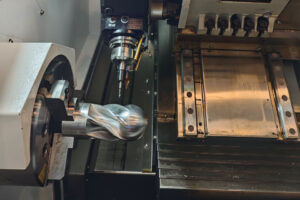
- Machining (CNC Machining): The core and cavity, along with other mold components, are precisely machined using CNC machines (Computer Numerical Control). CNC machining allows for the creation of intricate shapes and tight tolerances, essential for high-quality injection molds. This is a subtractive manufacturing process.
- EDM (Electrical Discharge Machining): For features that are difficult or impossible to machine with traditional CNC machining, EDM is used. EDM uses electrical sparks to erode metal, allowing for the creation of complex internal geometries and sharp corners.
- Grinding and Polishing: After machining, the mold surfaces, particularly the cavity and core, are carefully ground and polishinged to achieve the required surface finish and dimensional accuracy. This step is crucial for the aesthetics and functionality of the final plastic part.
- Heat Treatment (for Steel Molds): Steel molds are typically heat-treated to increase their hardness and wear resistance, ensuring long tool life and consistent performance. Heat treatment is a critical step for durability.
- Mold Assembly: All the machined and finished components are meticulously assembled to create the complete injection mold. This includes fitting the core and cavity, installing the ejector system, cooling channels, and other components.
- Mold Testing (Trial Runs): Before the injection mold is put into full production, it undergoes trial runs, often called “first shots.” These trials involve injecting plastic into the mold and inspecting the resulting plastic parts for any defects, dimensional accuracy, and overall quality. Adjustments are made to the mold or injection molding process parameters as needed.
- Mold Maintenance and Repair: Throughout its lifespan, the injection mold requires regular mold maintenance and occasional repairs to ensure optimal performance and prevent premature wear.
Plastic injection mold making is a complex and demanding process that requires specialized skills, advanced equipment, and meticulous attention to detail. The quality of the mold making process directly impacts the quality, cost, and efficiency of plastic injection molding.
How to Choose the Right Injection Mold Maker
Selecting the right injection mold maker, also known as a mold manufacturer, is one of the most critical decisions you’ll make in your plastic injection molding journey. The mold manufacturer‘s expertise, capabilities, and commitment to quality will directly impact the success of your project.
Here are key factors to consider when choosing an injection mold manufacturer:
- Experience and Expertise in Injection Mold Maker: Look for a mold manufacturer with a proven track record and extensive experience in designing and building high-quality injection molds. They should have a deep understanding of mold design principles, materials, machining techniques, and the intricacies of the injection molding process. Experience matters.
- Range of Mold Making Capabilities: Ensure the mold manufacturer offers the full range of mold making capabilities you need, including mold design (CAD/CAM), CNC machining, EDM, grinding, polishing, heat treatment, mold assembly, and mold testing. A comprehensive capability set is beneficial. Mold manufacturing capabilities are crucial.
- Quality Management System and Certifications: Inquire about the mold manufacturer‘s quality management system (QMS) and any relevant certifications, such as ISO 9001. A robust QMS demonstrates a commitment to consistent quality and process control, which is essential for precision mold making. Quality certifications are important indicators.
- Materials Expertise: The mold manufacturer should have expertise in working with various mold materials, primarily different grades of steel and aluminum alloys, and be able to recommend the best material for your specific injection molding application and plastic part requirements. Material knowledge is key.
- Technology and Equipment: Assess the mold manufacturer‘s technology and equipment. They should have modern, well-maintained CNC machines, EDM equipment, and other necessary tools for producing high-precision injection molds. State-of-the-art equipment is a plus.
- Communication and Project Management: Effective communication and strong project management are crucial for a successful mold making project. Choose a mold manufacturer that is responsive, communicative, and provides clear project timelines and updates. Good communication is essential.
- Design for Manufacturability (DFM) Support: A valuable mold manufacturer will offer DFM feedback and guidance, helping you optimize your plastic part design for efficient and cost-effective injection molding. DFM expertise can save you time and money in the long run. DFM support is a valuable asset.
- Mold Maintenance and Repair Services: Inquire about the mold manufacturer‘s mold maintenance and repair services. Even the best injection molds require periodic maintenance and occasional repairs, and having a reliable partner for these services is essential for minimizing downtime and maximizing mold life.
- Cost and Value: While cost is a factor, focus on overall value. Consider the mold manufacturer‘s expertise, quality, speed, capabilities, and ability to deliver a high-quality injection mold that meets your specific needs and contributes to the long-term success of your injection molding operation. The lowest price is not always the best value.
By carefully evaluating these factors and choosing a reputable and capable injection mold manufacturer, you are investing in the foundation of your plastic injection molding success. A strong partnership with the right mold maker is an investment in quality, efficiency, and long-term profitability. As injection mold maker Manufacturing plants for products, we pride ourselves on meeting these criteria.
What are the Different Types of Injection Molds?
Injection molds come in various types, each designed for specific plastic part geometries, production volumes, and injection molding process requirements. Understanding these different mold types is crucial for selecting the most appropriate and cost-effective mold for your project.
Here are some of the common types of injection molds:
- Two-Plate Mold: This is the most basic and common type of injection mold. It consists of two main halves: the cavity side (A-side) and the core side (B-side). The plastic part is formed between these two mold halves. Two-plate molds are relatively simple to design and manufacture and are suitable for a wide range of plastic parts. Half of the mold forms one side of the part, and the other half of the mold forms the other.
- Three-Plate Mold: A three-plate mold adds an additional plate (the stripper plate) between the cavity and core plates. This allows for more complex gating systems and can be advantageous for parts with undercuts or requiring multiple gates.
- Hot Runner Mold: In a hot runner mold, the runner system (the channels that deliver molten plastic to the cavities) is kept heated. This eliminates the need to solidify and eject the runner with each cycle, reducing material waste and cycle times. Hot runner molds are more expensive upfront but can be more cost-effective for high-volume production.
- Cold Runner Mold: In a cold runner mold, the runner system solidifies along with the plastic part and is ejected with each cycle. Cold runner molds are simpler and less expensive than hot runner molds, but they result in more material waste.
- Stack Mold: A stack mold has multiple parting lines and cavity sets stacked on top of each other. This allows for a significant increase in production output per cycle, making them ideal for high-volume production of smaller plastic parts.
- Family Mold: A family mold contains cavities for different plastic parts within the same mold. This is often used for producing sets of related parts that are assembled together. Family molds can reduce tooling costs but require careful balancing of the runner system to ensure consistent filling of all cavities.
- Overmold: An overmold is used for overmolding, a process where one plastic material is molded over another material (often a different plastic or a metal insert). This is used to create parts with multiple colors, textures, or material properties.
- Insert Mold: An insert mold is designed to incorporate pre-formed inserts (often metal) into the molded plastic part. The insert is placed in the mold cavity before injection, and the molten plastic flows around it, encapsulating the insert.
- Unscrewing Mold: For plastic parts with threaded features (like bottle caps), an unscrewing mold uses a mechanism to automatically unscrew the threaded core from the plastic part during ejection.
The choice of injection mold type depends on various factors, including the plastic part design, material, required production volume, budget, and desired cycle time. A skilled injection mold maker can guide you in selecting the most appropriate mold type for your specific plastic injection molding needs.
What are the Key Considerations for Injection Mold Design?
Injection mold design is a critical stage in the plastic injection mold making process. A well-designed injection mold is essential for producing high-quality plastic parts efficiently and consistently. Mold design involves a complex interplay of factors, requiring expertise in plastic materials, injection molding process parameters, and mold mechanics.
Here are key considerations for injection mold design:
- Part Design: The design of the plastic part itself heavily influences the mold design. Factors like wall thickness, draft angles, undercuts, ribs, bosses, and surface finish requirements all need to be considered during mold design. Design for Manufacturability (DFM) principles should be applied to optimize the part design for efficient injection molding.
- Material Selection: The type of plastic resin being used significantly impacts mold design. Different plastics have different shrinkage rates, flow characteristics, and cooling requirements, which must be accounted for in the mold cavity dimensions, runner system design, and cooling system design.
- Number of Cavities: The number of cavities in the mold (single-cavity or multi-cavity) depends on the required production volume, part size, and injection molding machine capacity. Multi-cavity molds increase production output but also increase mold complexity and cost.
- Gating System: The gate location, size, and type significantly impact the filling pattern, material flow, and final part quality. Proper gate design is crucial for preventing defects like weld lines, air traps, and sink marks.
- Runner System Design: The runner system, which delivers molten plastic to the cavities, needs to be carefully designed to ensure balanced filling, minimize pressure drop, and reduce material waste (especially in cold runner systems).
- Cooling System Design: An efficient and well-designed cooling system is essential for controlling the mold temperature, ensuring uniform cooling of the plastic part, and minimizing cycle times. Cooling channels need to be strategically placed to achieve optimal cooling performance.
- Ejection System Design: The ejection system must be designed to reliably and safely eject the solidified plastic part from the mold without causing damage or distortion. The location and type of ejector pins need to be carefully considered.
- Venting System Design: Proper venting is crucial for allowing air to escape from the mold cavity as the molten plastic is injected. Inadequate venting can lead to defects like air traps, short shots, or burn marks.
- Mold Material Selection: The mold material (typically steel or aluminum) should be selected based on factors like the required mold life, the abrasiveness of the plastic resin, the complexity of the part, and budget considerations.
- Tolerance and Precision: The mold design must account for the required dimensional tolerances and precision of the final plastic part. Tight tolerances require more precise mold manufacturing and higher quality mold materials.
Injection mold design is a specialized field that requires a deep understanding of the interplay between part design, material properties, injection molding process parameters, and mold mechanics. Collaborating with an experienced injection mold maker early in the design process is crucial for ensuring a successful and efficient mold design.
What are the Latest Trends in Injection Mold Making?
The field of injection mold making is constantly evolving, driven by advancements in technology, materials science, and the increasing demands of the plastic injection molding industry. Staying abreast of the latest trends is essential for injection mold makers and injection plastic parts manufacturers to remain competitive and deliver cutting-edge molding solutions tailored to meet evolving customer needs.
Here are some of the latest trends in injection mold making:
- Additive Manufacturing (3D Printing) for Mold Components: 3D printing is increasingly being used to create mold components, particularly for complex geometries, conformal cooling channels, and rapid prototype injection mold inserts. This allows for faster mold manufacturing, greater design freedom, and optimized mold performance.
- Conformal Cooling: Conformal cooling channels, which follow the contours of the mold cavity, are becoming more prevalent. These channels, often created using 3D printing, provide more uniform and efficient cooling of the plastic part, reducing cycle times and improving part quality.
- High-Precision Machining and Micro-Molding: Advances in CNC machine technology and micro-machining techniques are enabling the creation of injection molds with extremely tight tolerances and intricate micro-features, supporting the growing demand for miniaturized plastic parts and microfluidic devices. Precision plastic injection molding is becoming increasingly important.
- Advanced Mold Materials: Research and development in mold materials are leading to new alloys and coatings with improved wear resistance, thermal conductivity, and corrosion resistance, extending mold life and enhancing mold performance.
- Industry 4.0 and Smart Molds: The integration of sensors, data analytics, and automation into injection molds (smart molds) is gaining traction. These technologies allow for real-time monitoring of mold performance, predictive mold maintenance, and closed-loop process control, optimizing injection molding efficiency and quality.
- Rapid Tooling and Bridge Tooling: Rapid tooling techniques continue to evolve, offering faster and more cost-effective ways to create molds for prototyping and low-volume production. Bridge tooling bridges the gap between prototyping and full-scale production, providing a cost-efficient solution for initial market launches.
- Sustainable Mold Making Practices: There’s a growing emphasis on sustainable mold making practices, including the use of recycled materials, energy-efficient manufacturing processes, and design for mold longevity and recyclability.
- Simulation and Virtual Prototyping: Advanced simulation software is increasingly used to simulate the entire injection molding process, including mold filling, cooling, and warpage. This allows for virtual prototyping and optimization of mold design and process parameters before physical mold construction, reducing time and cost.
These trends are shaping the future of injection mold making, making it faster, more precise, more efficient, and more sustainable. Injection mold makers who embrace these advancements are well-positioned to meet the evolving needs of the plastic injection molding industry and deliver cutting-edge molding solutions to their customers.
How to Maintain and Extend the Life of Your Injection Molds
An injection mold is a significant investment, and proper mold maintenance is essential for maximizing its lifespan, ensuring consistent quality of plastic parts, and minimizing downtime in your plastic injection molding operation. A well-maintained injection mold can produce hundreds of thousands, even millions, of parts, providing a substantial return on investment.
Here are key practices for maintaining and extending the life of your injection molds:
- Regular Cleaning: Molds should be cleaned regularly to remove plastic residue, grease, and other contaminants that can build up over time. The cleaning frequency depends on the type of plastic being molded and the mold design. Use appropriate cleaning solvents and tools that won’t damage the mold surfaces.
- Proper Lubrication: Moving parts in the injection mold, such as ejector pins, slides, and lifters, require proper lubrication to prevent wear and ensure smooth operation. Use the recommended lubricants and lubrication schedule specified by the mold maker.
- Inspection and Preventive Maintenance: Establish a regular mold inspection schedule to identify any signs of wear, damage, or potential issues before they lead to major problems. This includes checking for cracks, erosion, corrosion, damaged ejector pins, and proper venting. Preventive mold maintenance, such as replacing worn components, can prevent costly repairs and downtime.
- Proper Storage: When not in use, injection molds should be stored in a clean, dry, and temperature-controlled environment to prevent corrosion and damage. Apply a rust preventative coating to protect the mold surfaces during storage.
- Controlled Operating Conditions: Operating the injection molding machine within the recommended parameters (temperature, pressure, injection speed) is crucial for preventing excessive stress on the injection mold. Overheating or over-pressurizing the mold can lead to premature wear and damage.
- Use of Correct Plastic Resin: Using the specified plastic resin for the injection mold is important. Some plastics are more abrasive or corrosive than others, and using an incompatible plastic can damage the mold. Always verify material compatibility.
- Proper Mold Handling: Handle injection molds with care to avoid dropping or damaging them. Use appropriate lifting equipment and follow safe handling procedures.
- Professional Mold Repair: If the injection mold sustains damage, it’s crucial to have it repaired by a qualified mold maker or mold repair specialist. Attempting to repair a complex injection mold without the proper expertise can lead to further damage and compromise its performance.
- Record Keeping: Maintain detailed records of mold usage, maintenance activities, repairs, and any modifications made to the mold. This documentation helps track mold performance, identify recurring issues, and plan for future maintenance needs.
By implementing these mold maintenance practices, you can significantly extend the life of your injection molds, ensure consistent production of high-quality plastic parts, and minimize downtime and repair costs, maximizing the return on your injection mold investment. Mold maintenance is a proactive investment in production efficiency.
FAQs
What is the typical lead time for making a plastic injection mold?
Lead times vary widely depending on the mold‘s complexity, size, material, and the mold maker‘s workload. Simple molds can be made in a few weeks, while complex, multi-cavity molds can take several months.
How much does a plastic injection mold cost?
Mold costs also vary greatly. A small, simple mold might cost a few thousand dollars, while a large, complex, high-precision mold can cost hundreds of thousands of dollars. Factors influencing cost include mold size, complexity, number of cavities, material, and required tolerances.
What is the lifespan of a plastic injection mold?
A well-maintained injection mold made from high-quality steel can last for hundreds of thousands, even millions, of cycles. However, mold life depends on factors like the mold material, the type of plastic being molded, the complexity of the part, and the mold maintenance practices.
What is the difference between a hot runner and a cold runner mold?
A hot runner mold keeps the runner system heated, eliminating material waste and reducing cycle times. A cold runner mold solidifies the runner with each cycle, resulting in material waste but lower upfront mold cost.
What is Design for Manufacturability (DFM) in the context of injection mold making?
DFM is the process of designing plastic parts and injection molds to be easy and cost-effective to manufacture. It involves considering factors like wall thickness, draft angles, undercuts, and material flow to optimize the design for efficient injection molding.
Comments
Latest Posts
Related Blogs
Senyo’s blog is focused on sharing our extensive knowledge of prototype manufacturing. Through our articles, we aim to support you in refining your product design and navigating the complexities of rapid prototyping more effectively.