The Power of the Rapid Prototyping and Tooling Process
Table of Contents
Speed and accuracy are what matter the most in today’s manufacturing world. This article talks about how a rapid prototype and the tool that is used to make it are interdependent, going deeply into how rapid prototyping and tooling have changed product development. We will look at the details of prototype tooling, the complexity of the tooling process, and how rapid tool strategies can help you save a lot of time and money.
Why this article should be read: If you are an engineer, designer, or product manager, it is very important for you to understand how a digital design is converted into a physical part. This guide is a complete coverage starting from the rapid prototype to the final tool for production. You will learn how rapid prototyping and tooling shorten the distance between a concept and a product, thus allowing for thorough testing without the huge financial investment that is usually the case for traditional methods. If you are aiming at just improving your tooling process or you are only interested in the latest rapid tool technology, this detailed post still provides you with the practical ideas on how to speed up your time to market and at the same time lower the risk.
What is Rapid Prototyping and How Does It Accelerate the Development Cycle?
Rapid prototyping refers to various techniques that expedite the creation of a physical model to scale, illustrating a part or an assembly, fabricated from three, dimensional computer, aided design (CAD) data. The essence of this prototyping method revolves around the minimization of the development cycle time. By generating the physical representation of the design at the earliest stage, developers can readily perceive and even test the product’s form, fit, and function. Historically, a prototype creation process might have spanned weeks or even months with the use of traditional manual methods.
Nowadays, rapid prototyping technologies have drastically shortened the time required to produce a prototype, often it is possible within hours or a few days. This advancement paces the number of iterations that can be tested in a set time frame, hence, the final design is not only solid but also ready to enter the market.
A rapid prototype’s generation speed is the determining factor for the overall project timeline. By employing rapid prototyping engineers can pinpoint design flaws on the spot, as opposed to waiting until the manufacturing stage. This iterative approach, hence, the prototype is constructed, tested, and tweaked, drastically diminishes the chances of expensive mistakes later on. Moreover, rapid prototyping facilitates concurrent engineering, where various elements of the product are developed and tested in parallel. This comprehensive method guarantees that the development cycle continues uninterrupted.
Why is Rapid Prototyping Important for Modern Product Development?
The question of why rapid prototyping is important can be resolved by examining the risks taken in manufacturing. Product development is a risky process; a design displayed on a computer may not always work in the real world. Thus, a prototype becomes a device for risk control. By making a functional prototype, companies can measure mechanical properties, ergonomics and assembly procedures. Such a testing stage is indispensable to be sure before full, scale production, where mistakes may cost hundreds of thousands of dollars. So, the possibility to check out a design with a rapid prototype is the way one can say the investment in expensive production tooling is both justified and safe.
Rapid prototyping is also important for user testing. For instance, in the fields of consumer electronics or medical devices, user feedback is the most important factor. A rapid prototyping technique allows the producers to deliver a physical part to the potential users at the very early stage of the design process. This kind of feedback from the real world is of the highest value. It may uncover usability issues which were not obvious in the CAD model. By using this feedback to produce the next version of the prototype, companies can design products that are most suitable for users. Being able to respond to market needs is one of the main competitive advantages that rapid prototyping has.
How Does Rapid Tooling Work Compared to Traditional Manufacturing?
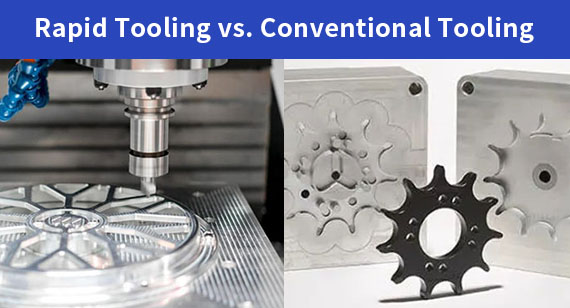
To grasp the differences of tooling changes in a rapid context compared to a traditional one, it is necessary to investigate first conventional manufacturing processes. Traditional tooling or hard tooling is usually called tooling that results from the machining of molds out of resistant metals such as steel. This is a very precise and durable process, which is able to produce millions of parts, however, it is also slow and very expensive. In fact, the production of a single mold can take from several weeks to a few months.
On the contrary, rapid tool manufacturing(we can also call it soft tool manufacturing) is a kind of production that lies between prototyping and industrial production. It is mainly oriented towards achieving fast results and low, cost products, and quite often, the long service life of the production tools is compromised in exchange for the fact that the parts are accessible quickly. Compared to traditional methods, rapid tooling allows for the creation of molds in a fraction of the time.
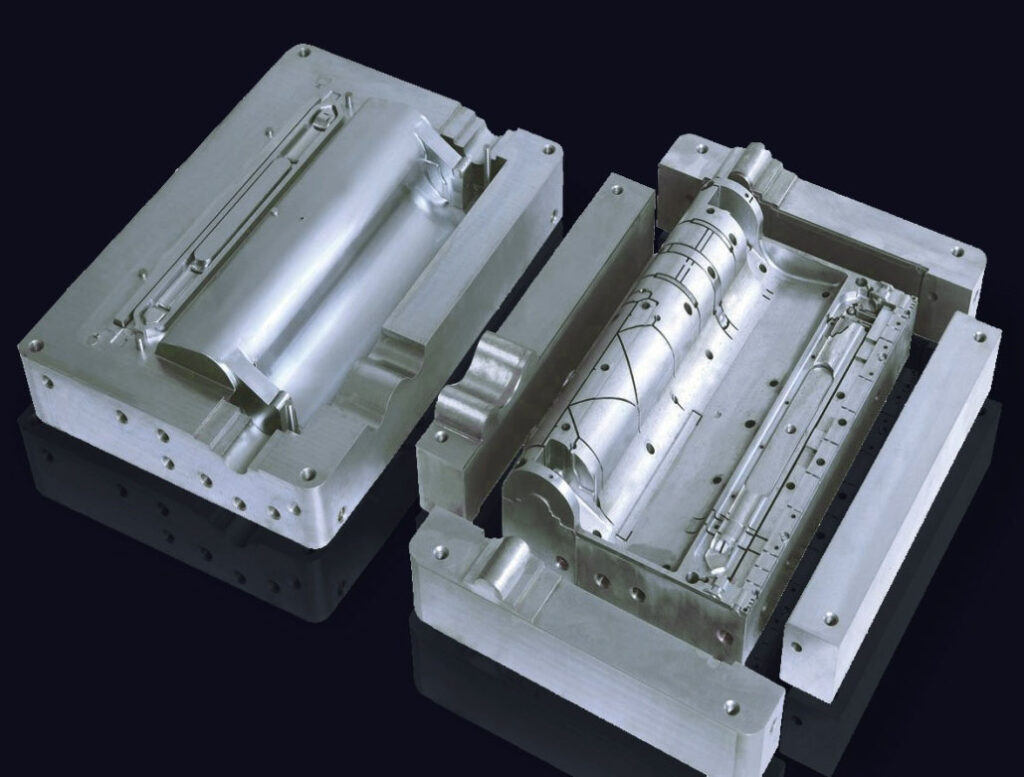
Rapid tooling technologies frequently rely on the use of aluminum molds or steels with a low carbon content that are easier and quicker to machine as compared to tool steel. In certain cases, additive manufacturing is used for directly printing the mold inserts. As a result of such a strategy, the whole lead time is shortened dramatically. While the manufacture of a steel tool may demand 12 weeks, the rapid tool is sometimes ready in 1, 2 weeks. This speed is essential for the process of injection molding validation as well as for material properties testing prior to the final cutting of the steel tool.
What are the Primary Applications of Rapid Tooling in the Industry?
The applications of rapid tooling are numerous and diverse throughout the manufacturing industry. The automotive sector is one of the most prevalent areas where rapid tooling is employed. In this case, a rapid tool is utilized to fabricate functional parts for test vehicles. These parts must be made from the appropriate material in order to resist engine heat or road vibration. A mere 3D printed rapid prototype may not be adequate for such harsh tests. Hence, the engineers fabricate a mold through rapid methods to obtain parts that are mechanically the same as the final product. Consequently, this enables performance testing to be conducted with complete validity long before the production line is finalized.
Moreover, the medical device industry is another significant area where rapid prototype tooling plays a vital role in pilot runs and clinical trials. Medical devices usually come with the requirement of certain biocompatible materials, which can only be processed by injection molding. The use of rapid tooling allows the manufacturers to make a limited number of devices for clinical evaluation. This ability is extremely important as it gives the product development team the opportunity to collect data regarding the device’s performance in real clinical settings. The tool used in these pilot runs is a means of design and process manufacturing validation at the same time.
Consumer electronics have also been enormously benefited from rapid tooling. In this quickly evolving market, the secret of success lies in the ability of introducing products to the market before competitors. The use of rapid tool plans by companies serves to the production of marketing samples and beta units destined to reviewers and early adopters. These units must be identical in appearance and touch as the final product.
What is the Difference Between Direct and Indirect Rapid Tooling?
Knowing the difference between direct and indirect methods is crucial when talking about rapid tooling. Direct rapid tooling means the actual injection mold or the tool inserts are created straight from CAD data by using additive manufacturing or machining.
For instance, a 3d printer can print the core and cavity of the mold by using a resin that can stand high temperatures or by sintered metal powder. It is extremely fast since no intermediate steps are needed. Thus, it is the digital file that is directly used to create the physical tool. This is especially advantageous for very low volumes or complex geometries that machining might take a lot of time or might not be possible. On the other hand, indirect rapid tooling uses a master pattern to make the mold.
An example could be using an SLA (stereolithography) rapid prototype as the master pattern to make a silicone mold for vacuum casting. Although it is not injection molding in the exact sense, it is a type of tooling that produces plastic parts. An additional indirect method includes using a pattern for creating the sand casting mold for metal parts. In most cases where direct 3D printed molds might be difficult to achieve due to surface finish requirements or the need for a material from which the tooling cannot be printed, indirect tooling is chosen.
These two methods, direct and indirect, are different procedures in the world of prototyping and both are viable. Usually, direct tooling is quicker and is becoming more powerful as the additive manufacturing technology keeps on evolving. On the other hand, indirect rapid tooling is still a solution that many can afford and is a popular choice for applications like urethane casting. The determination of different rapid tooling strategies hinges on the volume.
How Do You Manufacture Rapid Tooling Using Additive Technologies?
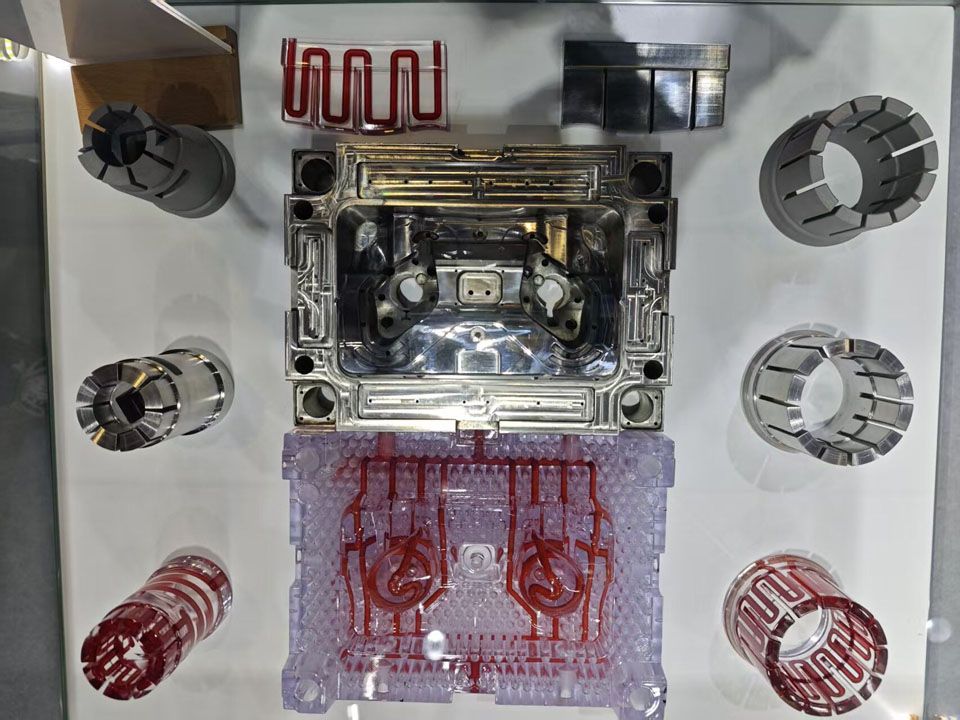
Engineers turn to innovative manufacturing methods like 3d printing in order to realize geometries that can hardly be achieved by traditional CNC machining. To produce rapid tooling via additive manufacturing, the first step is to have a digital representation of the mold shell, core, and cavity. Quite often this model contains conformal cooling channels cooling channels that follow the shape of the partwhich cannot be drilled in a conventional way. Then a machine capable of Direct Metal Laser Sintering (DMLS) or high, strength polymer printing is used to make the tool one layer at a time.
This 3d printed tooling can drastically cut the cooling time during the molding cycle, thus improving the quality of the part. A 3d printer is used to make a mold is a method that is especially suitable for prototype tooling. The materials used for 3d printed molds, such as digital ABS or maraging steel, are strong enough to endure the injection molding pressures for a limited number of cycles. Thus engineers get to inject the actual production resin into the printed tool.
This feature is a complete game changer as it provides the parts with the exact chemical and mechanical properties of the final product. It not only confirms the shape, but also the material performance, without the need for expensive machined metal tools. On the other hand, employing rapid prototyping technologies for tooling necessitates certain design considerations. The surface finish of a printed tool might need post, processing to get rid of the layer lines and thus the molded part will be smooth. Moreover, the thermal conductivity of polymer printed molds is lower than that of aluminum or steel, which leads to longer cycle times.
When Should You Use Prototype Tooling Versus Production Tooling?
The choice between prototype tooling and production tooling is mainly determined by volume, budget, and stage of development. Prototype tooling is the best option in the initial development and validation stages. If you require 50 to 500 parts to test assembly, conduct drop tests, or send to certification labs, then a prototype mold is the answer. This tool is normally made from aluminum or soft steel (such as P20). It is a financially viable and fast product, however, it will not be able to last for a long time. Speed and flexibility are the main aspects here; if the design changes, modifying or scrapping an aluminum tool is less costly than scrapping a hardened steel one.
Conversely, production tooling is made for the long run. When the design is final and the market demand is verified, it is necessary to install a multi, cavity, hardened steel mold. This tool is designed to run millions of cycles with little wear. Production tools may have manual inserts or hand, loaded cores, but in production, they are fully automated.
The switch from prototype to production toolingis an important point. It marks the moment when the product is mature enough for full, scale production and the design risks have been largely eliminated. Besides rapid prototype, there is a middle ground often called bridge tooling. This is a robust rapid tool used to bridge the gap between the prototype phase and high, volume manufacturing. It enables production runs that are too large for soft tooling but too small for a Class A to be supported.
How Does Rapid Prototype Tooling Reduce Costs and Lead Time?
The chief benefit of rapid tooling is its capacity to dramatically reduce both costs and timelines. Expensive tooling is one of the main obstacles to a path of manufacturing. For example, a complicated steel mold can be very pricey having a cost of more than $50, 000.
What is significantly more rapid prototype tooling is that by simply using aluminum or 3D printed inserts, a prototyping tool can be manufactured for a small fraction of the cost of the steel one. This cheapness enables not only startups, but also established companies to test ideas that, if not, would have been considered as too risky. By prototyping, companies which previously were in want of financial support for initial tooling can now afford to allocate more resources to design innovation and marketing.
When it comes to lead time, the difference is huge. Traditional tooling methods usually involve the use of complex supply chains, heat treatment, and precision EDM work, therefore the process takes around 8, 12 weeks. On the other hand, in rapid tooling, a mold can be cut and made operational in just 10 days. It is this speed that makes rapid manufacturing strategies feasible, thus, the products can be iterated and improved in real, time. In case a design flaw is detected through a rapid tool, there will be no trouble in modifying or remaking the mold quickly. Hence, the mobility prevents the ‘sunk cost’ fallacy, as companies will not be compelled to retain a bad design simply because the tool took months to build.
Besides that, the use of rapid prototyping for tooling also helps in avoiding the rework costs of production tools. It is incredibly more expensive to modify a production tool made from hardened steel than to make a slight adjustment to an aluminum prototype tool. By pinpointing issues such as sink marks, warping, or fill problems with the rapid tool, the engineers get a chance to correct the mold design.
What Role Does Injection Molding Play in the Prototyping Method?
Injection molding is generally considered a mass production process, but it is also the main driver in the prototyping method. Rapid injection molding (RIM) uses the same principles of standard molding but applies them to rapid tooling.
The aim is to have injection molded parts that are visually indistinguishable from the final product in the shortest possible time. This is different from a 3D printed prototype that could have different material properties (anisotropy) and surface finishes. If the purpose is functional validation, especially for snap, fits and living hinges, then the part has to be molded from the actual thermoplastic resin.
The machine for RIM is mostly the same as production, but the tool setup varies. Master unit die (MUD) systems are commonly employed, where standard mold bases are used, and only the core and cavity inserts are machined as a rapid tool. This results in less metal being needed and the tooling process being faster. Inserts for the application can be aluminum CNC machined or 3d printed. The choice of manufacturers can test multiple plastic grades to determine which one performs better, something that is nearly impossible with other prototyping methods.
Low volume injection molding through rapid tooling also raises the possibility of small parts batches for market testing. A company can make 1000 units to sell in a particular region or to a certain demographic. Such market validation is much more accurate than focus groups looking at a rendering.
What is the Future of Rapid Prototyping and Tooling Digital Fabrication?
The future of rapid manufacturing is largely dependent on the deep integration of digital manufacturing workflows. With the continuous evolution of software and machine capabilities, the distinction between a rapid prototype and a final product is getting less and less clear. Eventually, the direct rapid tooling process will become so effective that it will be able to replace the traditional methods of medium, volume production.
Learn how rapid prototyping is transforming into “direct digital manufacturing, ” where parts are produced on demand and no tools are required at all for certain applications. On the other hand, the mold will continue to be the main tool for the production of high, volume plastic parts, and rapid tooling will only be developed to make that mold quicker and cheaper.
Innovations in additive manufacturing are opening the door to manufacturing solutions that were previously unimaginable. One of the major trends we are witnessing is the emergence of hybrid machines that integrate 3D printing and CNC machining capabilities. These machines are capable of printing a near, net, shape tool and then machining it to the required tolerance in a single setup. The adoption of this hybrid method makes rapid tooling not only faster but also more accurate.
Moreover, the industry is also working on the development of new materials for 3D printing technologies that will have higher thermal conductivity and durability. This will not only extend the lifespan of 3D printed tooling but will also make it a feasible option for larger production runs.
In the end, rapid prototyping and tooling will be taken to a higher level and will become even more indispensable in the product development process. The companies that will be able to quickly produce a prototype, create a rapid tool, and manufacture injection molded parts in a seamless digital workflow will be the ones to succeed in the future manufacturing landscape. By providing companies with the means to iterate at a faster pace, lower costs, and reduce risks, these technologies are the ‘engineers’ dream’ and are the key to unlocking new possibilities for innovation.
FAQs
What is the difference between rapid prototyping and rapid tooling?
Rapid prototyping is the process of physically creating a part, typically through additive manufacturing methods like 3D printing, mainly for form and fit testing.
On the other hand, rapid tooling is the manufacturing of the mold or the tool that is required to produce the parts through techniques like injection molding. Rapid tooling enables the fabrication of parts that have material properties and mechanical strength closer to those of the final product.
How many parts can be produced using a rapid tool?
The number of parts that can be produced using a rapid tool depends on the materials of the mold and the one being injected. A mold made by 3D printing may only be good for 10 to 100 shots, thus, is suitable for extremely low volumes.
Aluminum molds or soft steel tools that are used in rapid tooling can, however, generally support anywhere from 100 to 10, 000 cycles. This renders them perfect for bridge production or pilot runs that come before the investment in production tooling made of durable materials.
How much time does rapid tooling save compared to traditional methods?
The traditional tooling refers to the cutting of hard steel, which can be very time, consuming and might take 8 to 12 weeks or more. This is mainly because of the difficulty in machining and the required heat treatment processes.
The lead time is speeded up considerably by rapid tooling. In fact, a rapid tool made of softer aluminum or through direct digital manufacturing can be ready for injection molding in just 1 to 2 weeks, thus, enabling much quicker go, to, market.
Can rapid tooling use the actual production, grade materials?
This is in fact the primary advantage of rapid tooling over standard 3D printed prototypes. Since the process is injection molding, you can inject the exact thermoplastic resins (e. g. ABS, Polycarbonate, or Nylon) that will be the source of the final product.
Therefore, testing chemical resistance, thermal properties and mechanical strength can be done accurately.
Is rapid tooling significantly cheaper than hard tooling?
Rapid prototype tooling is typically much less expensive than the alternative. Using aluminum or unhardened steel enables faster machining speeds, thus less machine time and labor costs are required. Moreover, rapid tools commonly use shared mold bases (Master Unit Dies), which means that you only pay for the core and cavity inserts and not for the entire mold structure, thus the investment needed for small batches is greatly reduced.
Can 3D printing be used to create injection molds?
Yes, the process is called direct rapid tooling. High, resolution 3d printers are capable of printing mold inserts with tough, high, temperature resins or metals produced by sintering.
Even though these 3d printed tools have lower thermal conductivity and less wear resistance than metal tools that are machined, they provide the quickest possible way to get the injection molded part, usually the tool is ready in just a few days.
Conclusion
- Rapid Prototyping is the process in which the development cycle is accelerated as a result of allowing quick iterations and a design validation prior to manufacturing.
- Rapid Tooling is the step that goes from a 3D printed prototype to full, scale production, where softer metals or additive methods are used to quickly create molds.
- Cost & Speed: These are the two major advantages of rapid prototype tooling. The cost is significantly lower and lead time is reduced greatly when compared to traditional tooling methods.
- Risk Mitigation: The use of a rapid tool enables engineers and designers to verify the injection molding process and material properties, thus, avoiding costly mistakes in hard tooling.
- Applications: The use of rapid tooling has no limits. It makes possible the development of functional prototypes and a small batch of products for the validation of the medical device sector or automotive testing, among other industries.
- Methods: Different approaches exist such as direct rapid tooling (printing the mold) and indirect rapid tooling (using patterns) which depend on the project needs.
- Future: The use of digital manufacturing and hybrid manufacturing techniques will eventually make the difference between prototyping and production not visible anymore.
Comments
Latest Posts
Related Blogs
Senyo’s blog is focused on sharing our extensive knowledge of prototype manufacturing. Through our articles, we aim to support you in refining your product design and navigating the complexities of rapid prototyping more effectively.