What is Milling: Definitions, Methods and Process
Table of Contents
What Is Milling?
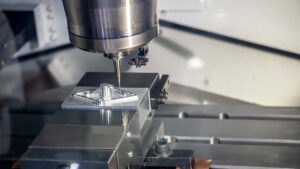
Milling is a widely used machining tool in machine tool equipment. It can perform plane milling, plane cavity milling, contour milling, three-dimensional and above complex surface milling, as well as drilling, boring, thread cutting and other hole processing. Machining centers, flexible manufacturing units, etc. have all emerged and developed on the basis of CNC milling machines.
What Is Milling Process?
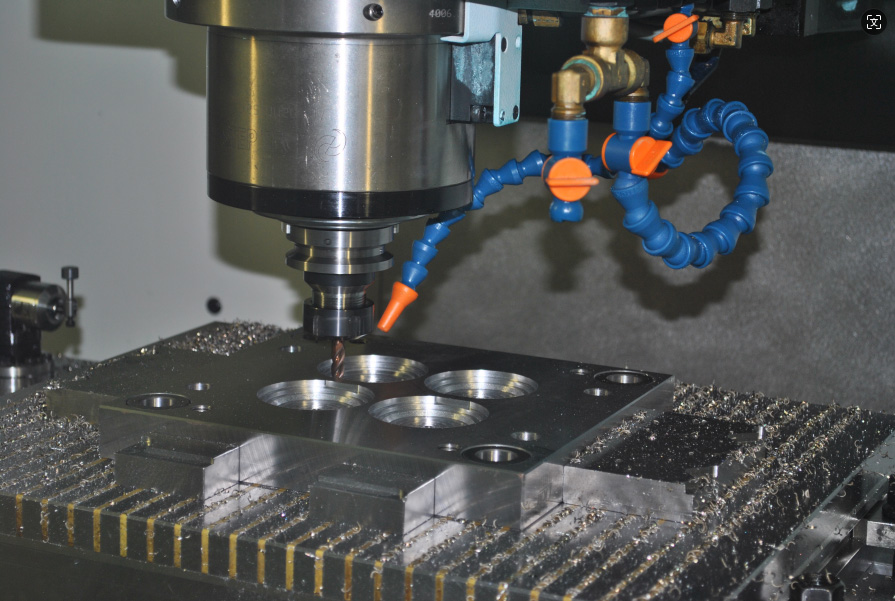
The milling operation is generally divided into the following steps
1. Choose the appropriate tool
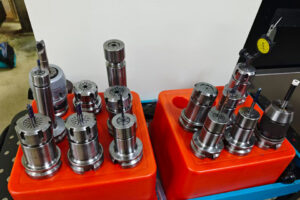
Choosing the appropriate tool is the first step in milling, selecting different types of tools based on the material, shape, and size of the workpiece. The selection of cutting tools should be based on the purpose of milling, generally divided into rough machining milling and precision machining milling
2. Fixed workpiece
Fix the tool on the milling worktable, and ensure that the workpiece is firmly and reliably fixed to avoid errors that may affect the quality and efficiency of the machining process.
3. Set cutting parameters
The cutting parameters of milling tools include cutting speed, feed rate, and cutting depth. Determine cutting parameters based on the material and shape of the workpiece to achieve optimal machining results.
4. Adjust the tool position and set the machining program
Adjust the tool to a suitable position relative to the workpiece, ensuring that the position and orientation of the tool match the part to be machined. Then, input the milling program into the CNC machine or manually operate the milling machine to complete the machining.
5. Remove burrs
After processing, burr removal operation is required, which can be done using cutting tools, sandpaper, or machines.
6. Clean the workpiece
Finally, it is necessary to clean the processed workpiece to ensure the quality of the product.
How Does Milling Work?
Milling is a mechanical processing method that involves cutting and rotating in a rapid manner. By placing the workpiece under a rotating tool, the tool cuts the surface of the workpiece to achieve the desired shape.
During the milling process, the cutting edge moves on the surface of the workpiece to remove excess material and achieve the final shape. Milling is a highly efficient and precise machining method.
What Are The Applications For Milling?
Milling is one of the most commonly used machining methods in mechanical processing, which mainly includes flat milling and contour milling, as well as drilling, expanding, reaming, boring, countersunking, and threading of parts. cnc milling is mainly suitable for processing the following types of parts.
Flat Parts
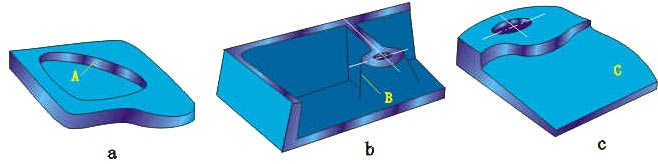
Flat parts refer to parts with machining surfaces parallel or perpendicular to the horizontal plane, and with a certain angle between the machining surface and the horizontal plane. These machining surfaces can be unfolded into a plane.
The three parts shown in the following figure are all planar parts. Among them, the curved contour surface “a” is perpendicular to the horizontal plane and can be machined using a cylindrical end mill.
The convex side “b” forms a certain angle with the horizontal plane, and this type of machining surface can be processed using a dedicated angle forming milling cutter.
For inclined plane “c”, when the workpiece size is not large, it can be processed by flattening it with an inclined plate; When the size of the workpiece is large and the slope is small, the cutting method is also commonly used for milling. At this time, residual marks of the cutting edge from the feeding process will be left on the machining surface, which need to be removed using pliers.
Straight line curved surface parts
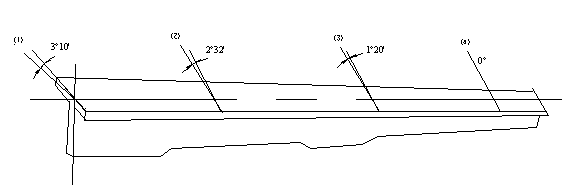
Straight line curved surface parts refer to curved surface parts generated by the movement of straight lines according to a certain law. The machining surface of the part shown in the following figure is a straight line surface.
When the straight line surface changes from section (1) to section (2), its angle with the horizontal plane uniformly changes from 3 ° 10′ to 2 ° 32′. When it changes from section (2) to section (3), it uniformly changes to 1 ° 20 ‘, and finally to section (4), the oblique angle uniformly changes to 0 °. The machined surface of parts with straight lines and curved surfaces cannot be unfolded into a plane.
When using a four coordinate or five coordinate CNC milling machine to machine parts with straight lines and curved surfaces, the moment when the machined surface comes into contact with the circumference of the milling cutter is a straight line. This type of part can also be approximately machined using the line cutting method on a three coordinate CNC milling machine..
Stereoscopic curved surface parts
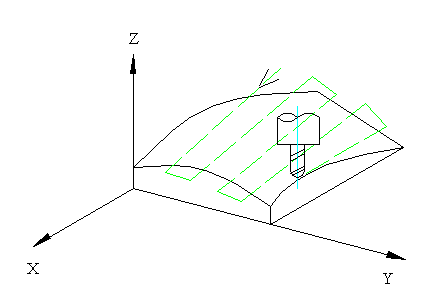
Parts with a machined surface that is a spatial surface are called solid surface parts. The machining surface of these parts cannot be flattened, and ball end milling cutters are generally used for cutting. The machining surface is always in point contact with the milling cutter. If other cutting tools are used for machining, interference may occur and adjacent surfaces may be milled. Three coordinate CNC milling machines are generally used for processing three-dimensional curved parts, using the following two processing methods.
Cutting processing method Using a three coordinate CNC milling machine for two axis semi coordinate control machining, namely the line cutting method. As shown in the figure, the ball end milling cutter performs linear interpolation processing along the curve of the XY plane. After processing a section of the curve, adjacent curves are processed along the X direction, and the planar curves are used to approximate the entire surface in sequence. The distance between adjacent curves should be selected according to the requirements of surface roughness and the radius of the ball end milling cutter. The ball radius of a ball end milling cutter should be selected as large as possible to increase tool stiffness, improve heat dissipation, and reduce surface roughness values. The radius of the milling cutter ball head when machining concave arcs must be smaller than the minimum curvature radius of the machined surface.
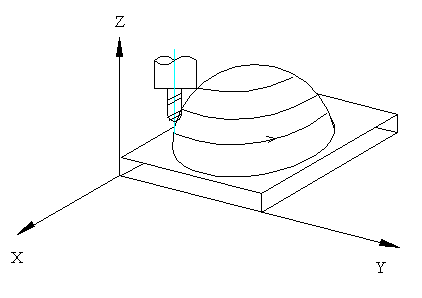
Three-Axis Machining Adopting a three-axis CNC milling machine for three-axis linkage machining, that is, performing spatial linear interpolation. If it is a semi spherical shape, it can be processed using the line cutting method or the three coordinate linkage method. At this point, the CNC milling machine uses spatial linear interpolation with X, Y, and Z coordinate linkage to achieve spherical machining, as shown in the following figure.
What Materials are Suitable and Unsuitable For Milling?
Suitable Materials
The materials used for CNC milling are usually divided into three categories: plastic, soft metal, and hard metal. Some material examples include aluminum, bronze, copper, plywood, steel, stone, wood, and zinc.
1. Metals
Both soft and hard metals are used for CNC milling. Soft metals such as aluminum and bronze are very suitable for CNC milling because they are prone to breakage and corrosion-resistant.
2. Plastic
Plastic is another common material used in CNC milling. They are lightweight, corrosion-resistant, and can be molded into complex shapes. They are typically used in industries such as automotive, healthcare, and consumer goods.
3. Other
Other materials such as wood and plywood, and some composite materials are also very suitable for milling processing
Unsuitable Materials
1. High hardness materials
Ordinary milling cannot process high hardness materials such as tungsten steel, hard alloys, etc. This is because high hardness materials have high requirements for the ultimate cutting force and cutting speed of milling cutters, and ordinary milling tools and processing equipment are difficult to meet these requirements.
2. Brittle materials
Brittle materials such as ceramics, glass, etc. are also not suitable for ordinary milling processing because these materials have high hardness but poor toughness, which can easily form cracks and cuts, leading to workpiece damage.
3. Thermally sensitive materials
Materials with thermal sensitivity, such as plastics and rubber, should not be processed by ordinary milling because the heat generated by machine cutting during the processing can cause material softening deformation or thermoplastic bonding, thereby affecting the processing quality.
What Industry Is Suitable For Milling Processing?
Mechanical Industry
Mechanical manufacturing Milling is widely used in mechanical manufacturing and can be used to manufacture various mechanical components. For example, milling can be used to machine bearings, gears, threads, etc. At the same time, it can also process complex automotive components.
Aerospace Industry
In the aerospace industry, milling is also an important machining method. Components such as aircraft bodies and wings often have complex curved shapes, and milling can meet the high-precision machining requirements of these components. Meanwhile, milling can also be used to process key components of aircraft engines, such as turbine discs and blades.
Automobile Manufacturing
In automobile manufacturing, milling is commonly used to machine key components such as engine cylinder heads and crankshafts. In general machinery manufacturing, milling is a commonly used basic process for machining machine tool spindles, bearing seats, etc.
Mold Manufacturing
In mold manufacturing, milling is one of the important processing methods. The mold is usually composed of complex shaped surfaces. Milling has become a common process for mold manufacturing because of its high precision, high efficiency and good surface quality. For example, in the production of plastic products, milling is often used to process molds to produce high-quality plastic products.
Milling has the characteristics of high precision, good surface quality, and high processing efficiency, so milling is indispensable in high-precision machining. Especially with the emergence of CNC milling, the role of mileage cups is crucial for the production of high-precision batch parts
What is Milling Machine?
Milling has the characteristics of high precision, good surface quality, and high processing efficiency, so milling is indispensable in high-precision machining. Especially with the emergence of CNC milling, the role of mileage cups is crucial for the production of high-precision batch parts
How Many Types of Milling Machines?
1. Classify by function
According to the functions of milling machines, they can be divided into ordinary milling machines, CNC milling machines, and machining centers. Ordinary milling machines can only complete basic milling operations, while CNC milling machines can achieve high-precision and high-efficiency milling operations. Machining centers have a higher degree of automation and a wider range of processing capabilities.
2. Classify by structure
According to the structure of milling machines, they can be divided into horizontal milling machines, vertical milling machines, and gantry milling machines. The spindle axis of the horizontal milling machine is parallel to the worktable, suitable for machining flat parts; The spindle axis of the vertical milling machine is perpendicular to the worktable, suitable for processing three-dimensional parts; Longmen milling machine is suitable for processing large parts.
3. Classify by control method
According to the control method of milling machines, they can be divided into mechanical control milling machines, hydraulic control milling machines, and CNC control milling machines. Mechanical control milling machines use mechanical transmission for feed control, hydraulic control milling machines use hydraulic transmission for feed control, and CNC control milling machines use CNC technology for feed control.
4. Classify by processing method
According to the machining method of milling machines, they can be divided into flat milling machines, curved milling machines, and profile milling machines. Flat milling machines are mainly used for processing flat parts, curved milling machines can process curved parts, and contour milling machines can perform contour machining according to the shape of the workpiece.
Frequently Asked Questions
What is difference from maching and milling?
Machining generally includes milling, while mechanical processing is a method of clamping a workpiece onto a machine tool and machining it through cutting or pressure. There are many types of machine tools, including lathes(cnc turning), milling machines, drilling machines, grinders, etc.
What is the most preferable milling technique?
Numerical control high-speed milling technology is the most preferred milling technology, and the biggest feature of high-speed milling is its high efficiency. Its cutting speed can be increased by more than 10 times compared to traditional milling, and it is also greatly beneficial for tool wear and surface quality. The demand for high cutting speed also puts forward higher requirements for the characteristics of machine tools, such as stiffness and dynamic rigidity, which is an inevitable requirement for the development of high-speed machine tool design.
Why is wet milling better than dry milling?
The main difference between dry milling and wet milling is whether cutting fluid is added. Cutting fluid has functions such as cooling, lubrication, cleaning, and chip removal, which play an important role in extending the service life of cutting tools and ensuring machining quality. Dry cutting is a conscious method of cutting without cutting fluid to protect the environment and reduce machining costs.
Dry milling, which does not use cutting fluid, has the advantages of saving water resources and reducing pollution, but the disadvantage is that it cannot complete machining tasks as efficiently and quickly as wet milling. The advantage of wet processing lies in its high efficiency and speed, but it requires a large amount of water resources and is also a challenge for wastewater treatment.
The choice between dry milling and wet milling depends on specific machining requirements, material properties, environmental requirements, and cost considerations. For some specific application scenarios, both methods have their own advantages and limitations
Why is milling so expensive?
It needs to be explained from three aspects: firstly, milling requires high precision, which requires the use of high-quality milling cutters, especially those made in Germany, which are highly praised for their excellent quality and performance. High quality milling naturally leads to an increase in the cost of milling equipment. Secondly, milling is an efficient machining method that uses rotating multi blade cutting tools to cut workpieces, suitable for machining flat and curved parts. Due to the complexity of its process, experienced technicians are required to operate it to ensure processing quality and efficiency. The cost of employing personnel is bound to increase. Furthermore, high-quality milling processing requires strict quality inspection to ensure that the product meets the requirements, which also incurs additional costs
What are the hazards of milling?
1、 Knife injuries
Cutting tools are one of the commonly used tools in milling, but they are also the most dangerous part. When the cutting tool breaks, fractures, or falls off during the machining process, it can cause injury to the operator, and in severe cases, even endanger life. Therefore, during milling processing, it is necessary to strictly inspect and maintain the cutting tools to ensure their good performance. At the same time, the operator should also wear protective equipment such as safety helmets and goggles to reduce injuries.
2、 Noise pollution
The working environment of milling processing is noisy, and prolonged exposure to this noisy environment can easily lead to potential health hazards caused by noise pollution. The processing workshop should adopt sound insulation facilities, and operators should also wear protective equipment such as noise cancelling earplugs to reduce the damage of noise to their bodies.
3、 Machine malfunction
Milling machines may experience various malfunctions, such as unstable machine operation, electrical failures, etc. If not handled in a timely manner, it may lead to equipment shutdown and cause serious losses to production. Therefore, maintenance and upkeep of milling equipment are very important. Once a malfunction is detected, it must be promptly investigated and dealt with.
4、 Metal dust
During the milling process, a large amount of metal dust is generated, which not only affects the operator’s respiratory system but also pollutes the equipment and workshop environment. Therefore, the treatment of metal dust is also very important, and enterprises must take corresponding measures to reduce the generation and spread of metal dust. At the same time, operators should wear protective equipment such as masks to protect their respiratory system.
5、 Wrong operation
Milling requires operators to have certain skills and experience. Once the operator makes a mistake, it may lead to equipment damage and personnel injury. Therefore, enterprises should provide training to operators and ensure that their skill levels meet certain requirements. At the same time, they should follow the prescribed operating procedures to avoid errors.
Conclusion
Milling is a cutting process widely used in manufacturing, an important metal cutting process with advantages such as high efficiency, precision, and flexibility, and is widely used in various industries. When performing milling, it is necessary to select appropriate milling cutters, control machining parameters, ensure stable workpiece clamping, and pay attention to the use of cutting fluid to ensure machining quality and efficiency. Meanwhile, with the continuous development of the manufacturing industry, milling technology is also constantly innovating and improving, providing strong support for the development of the manufacturing industry.
Comments
Latest Posts
Tags
Related Blogs
Senyo’s blog is focused on sharing our extensive knowledge of prototype manufacturing. Through our articles, we aim to support you in refining your product design and navigating the complexities of rapid prototyping more effectively.