Le prototypage rapide pourrait être une méthode avantageuse
Table des matières
Conclusion
Rapid prototyping may be a beneficial method which is frequently utilized in engineering, software development, and instructional design. The main idea behind such a process is to give the team members an opportunity to quickly create and iterate on a prototype thus resulting to a higher level of creativity, more effective problem-solving and, finally, faster innovation. The present article discusses the benefits of rapid prototyping, its use in various sectors, and the reasons why it is indispensable for any design project. People who read this article will be informed about the different ways in which rapid prototyping can be employed to make the process more efficient, to raise the standard of a product and to lower the expenses. Thus, designers, engineers, and educators cannot afford to miss this article.
Qu'est-ce que le prototypage rapide ?
Rapid prototyping is a design process that is centered around the idea of fast production of a scaled-down version or a prototype of a product or service. The primary goal of this technique is to make the designers and engineers able to see the concept and the working of the product visually before a big production is made. Through the use of different technologies such as 3D printing, computer-aided design (CAD), and software simulations, the teams can produce models that are not only physical but also in a way the user interaction is possible.
The point of rapid prototyping is the iteration cycle. The idea is to spend less time and money on one single design, thus, the teams will be able to come up with numerous versions, test them, and get their concepts refined by real user feedback. This method is mainly useful in sectors such as software development where fast iterations can result in better user experience and functionality.
Pourquoi le prototypage rapide est-il considéré comme une méthode avantageuse ?
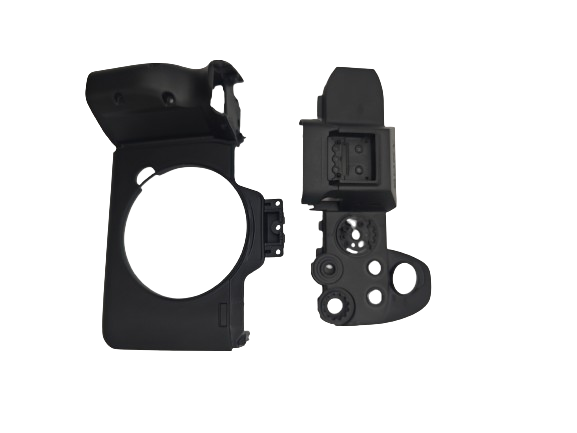
Le prototypage rapide pourrait être une méthodologie avantageuse pour plusieurs raisons. Tout d'abord, il permet des itérations plus rapides, ce qui permet aux équipes de tester et d'affiner leurs idées en temps réel. Cette rapidité est cruciale dans le paysage concurrentiel actuel, où le délai de mise sur le marché peut faire le succès ou l'échec d'un produit.Deuxièmement, il favorise la collaboration entre les équipes interfonctionnelles. Les concepteurs, les ingénieurs et les parties prenantes peuvent se réunir pour évaluer les prototypes et apporter leur contribution, afin de s'assurer que le produit final répond aux besoins et aux attentes des utilisateurs. Cet environnement collaboratif favorise l'innovation et la créativité, ce qui permet de trouver des solutions plus efficaces.Enfin, le prototypage rapide est une stratégie rentable. En identifiant les défauts de conception dès le début du processus, les organisations peuvent éviter des modifications coûteuses à un stade ultérieur du développement. Cette efficacité permet non seulement d'économiser de l'argent, mais aussi de réduire le risque de retard du projet, ce qui contribue en fin de compte à un processus de développement plus harmonieux.
Comment le prototypage rapide se compare-t-il aux méthodes de prototypage traditionnelles ?
Usually traditional prototyping methods depict a longer and more sequential way of handling the process. On the other hand, rapid prototyping is less bound to the fixed requirements as it enables continuous iterations and feedback. Whereas traditional methods might invest up to many months in perfecting one single prototype, rapid prototyping is based on the idea that more iterations result in better outcomes.
Technology is the main point where the two methods differ. Traditional prototyping is generally done manually, while rapid prototyping is done with the help of the advanced tools and software which make it possible to give quick adjustments and modifications. Such an inclusion of technology not only opens up for a more flexible designing process, but also is in line with the fast development of the modern projects.
Le prototypage rapide peut-il résoudre des problèmes de conception courants ?
Surmonter les obstacles à la conception
Designers are, in many cases, confronted with problems like vague requirements, modifications of the specifications, and the reception of the users’ feedback. Rapid prototyping is a tool that solves these problems by offering fast rounds of work and changes. Such flexibility helps to match the end product with the users’ needs and the objectives of the project without any difficulty.
Études de cas de réussite
For instance, a technology company might employ rapid prototyping to quickly bring to life a new idea for a mobile app. In this way, the company opened the door for user input by producing a prototype. As a result, they fine-tuned the app features based on users’ needs to a greater extent. The company thus shortened the time-to-market while at the same time the chances of app success were raised substantially as a result of the iterative process.
Comment le prototypage rapide est-il appliqué à la conception pédagogique ?
In the field of instructional design, employing rapid prototyping might serve as a powerful tool to invent novel computer-based learning programs. Such a process gives freedom to instructional designers for the swift creation and testing of educational materials that are capable of satisfying the requirements of different types of learners. Through the successive versions of the same content, format, and delivery methods, instructors can increase the potency of their teaching aids.
As an illustration, rapid prototyping is capable of contributing to the creation of online learning modules where designers come up with the initial versions, collect feedback from learners, and modify the content according to the practical applications. This cyclic approach is a guarantee that the end product will be attractive, up-to-date, and efficient in the accomplishment of learning objectives.
Quel rôle joue le retour d'information dans le prototypage rapide ?
Feedback is one of the essential elements in the rapid prototyping process. It steers the iterative development of the prototypes and provides the subsequent design decisions with the necessary information. Feedback, which can be user testing, peer reviews, or stakeholder input, is the main support for design teams in discovering their design functionalities and weaknesses. Frequently and early inclusion of feedback may raise the quality of the final product to a very high level. By knowing user needs and desires, the teams will be able to make the right changes that will improve the product’s functionality and usability. Such a collaborative way of working not only results in better outputs, but also, among team members and stakeholders, it creates the feeling of being owners.
Quels sont les éléments clés d'un prototype réussi ?
Éléments critiques
Un prototype réussi doit comprendre les éléments suivants :
- Fonctionnalité : Le prototype doit démontrer les fonctions essentielles du produit final.
- Facilité d'utilisation : Il doit être convivial et intuitif.
- Mécanisme de retour d'information : Permettre aux utilisateurs de fournir un retour d'information est essentiel pour l'amélioration itérative.
Améliorer l'efficacité des prototypes
Pour améliorer l'efficacité d'un prototype, il convient d'impliquer les parties prenantes dès le début du processus, de fixer des objectifs clairs et d'affiner continuellement la conception en fonction des réactions des utilisateurs. Cette approche permettra de s'assurer que le prototype répond aux exigences et aux attentes souhaitées.
Le prototypage rapide est-il une méthode viable pour toutes les industries ?
Considérations spécifiques à l'industrie
Although rapid prototyping is beneficial in many ways, it is not appropriate for each sector. Take, for example, sectors that are heavily regulated, like the pharmaceutical industry, where quick changes and repetitions may conflict with compliance standards.
Limites et inconvénients potentiels
Rapid prototyping consumes a lot of resources, among which are time and expertise, so it may not be possible for all organizations to carry it out. Besides that, concentrating only on the fast execution of the project can result in missing some quality or functionality aspects if it is not properly supervised.
FAQ
Quel est le principal avantage du prototypage rapide ?
Le prototypage rapide permet des itérations rapides et un retour d'information de la part des utilisateurs, ce qui permet d'affiner les produits et de les rendre plus conviviaux.
En quoi le prototypage rapide diffère-t-il des méthodes de conception traditionnelles ?
Contrairement aux méthodes traditionnelles, le prototypage rapide met l'accent sur la rapidité et la flexibilité, ce qui permet aux concepteurs d'apporter des modifications sur la base d'un retour d'information en temps réel.
Le prototypage rapide peut-il être appliqué aux produits physiques ?
Oui, le prototypage rapide peut être appliqué aux produits numériques et physiques, tels que l'électronique grand public et les pièces automobiles.
Quels sont les outils couramment utilisés pour le prototypage rapide ?
Les outils les plus courants sont les logiciels de CAO, les imprimantes 3D et les outils de conception de produits numériques.
Le prototypage rapide est-il rentable ?
Si les coûts initiaux peuvent être plus élevés en raison des ressources et de l'expertise requises, les économies réalisées à long terme grâce à la réduction des remaniements et à l'amélioration de l'adéquation du produit au marché l'emportent souvent sur ces coûts.
Commentaires
Derniers articles
Blogs associés
Le blog de Senyo est dédié au partage de notre expertise en matière de prototypage. Nos articles visent à vous accompagner dans l'amélioration de la conception de vos produits et à vous aider à maîtriser plus efficacement les complexités du prototypage rapide.