Rapid Prototyping: An Advantageous Design Methodology for Innovative
テーブルの内容
結論
In the swiftly-changing world of product development and instructional design, it is really important to be able to come up with new ideas quickly and in an effective way. there is a design methodology called rapid prototyping. Rapid prototyping is a major and winning method which essentially allows developers and designers to quickly make their ideas into a physical model, obtain the feedback, and then they can modify their invention. The iterative process is not just a fashion; it is a real method which helps to streamline the cycle of the development, lessen the risks, and promote the innovation in a wide range of areas, for instance, software engineering and educational technology.
Also, by using rapid prototyping companies and teachers can be sure that their projects are not only new but also user-friendly and they really solve the needs of the world. The approach has a great effect, especially in the field of computer-based instruction, where the creation of engaging and effective learning experiences is the main thing.
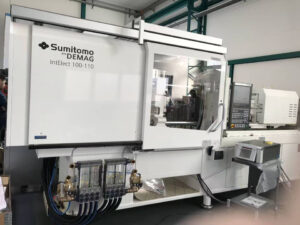
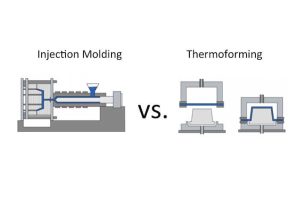
関連するトピックをさらに掘り下げるには、以下の情報を参照されたい。 試作プラスチック射出成形, 真空鋳造サービスそして 板金加工 ラピッド・マニュファクチャリングとプロトタイピング技術の広い展望を理解する上で有益である。

ラピッドプロトタイピングと呼ばれるデザイン手法とは何か?
Rapid prototyping is a design methodology that encompasses an iterative product development process that highlights the speed of execution and feedback from users. The primary emphasis is on the minimum, fast, cheap, and tested versions of the product or system-demo, which serve the purpose of refining the design by engaging users early in the design process. The first important feature of the method is the replacement of a full initial investment in a fully developed product with the ability of rapid prototyping to locate and solve design problems, user interface issues, and functionality of the product at an early stage. This iterative cycle of creating a testable model, obtaining feedback, and improving the idea is the process step repeated until the final design meets the requirements and satisfies users. The reason for the growing popularity of this methodology is that it has great potential for efficiency and risk-mitigation, which, in turn, makes it a very suitable and an increasingly indispensable strategy for different branches of the industry.
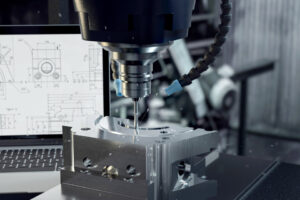
Those factors that make rapid prototyping a popular practice are various. To begin with, the method is instrumental in cost and time savings of the whole development process since it ensures the error detection at the earlier stages, thus preventing the need for expensive reworks at the later stages of the production cycle. Besides, it achieves more vigorous user involvement and, thus, the end product is more likely to meet the user’s expatiations and needs. A user-centric approach features prominently, along with the implementation of tangible prototypes, as the latter provide for more successful and user-friendly products. In addition, current developments in technologies such as 3D printing and CNC machining have brought rapid prototyping to a level of accessibility and affordability that was never thought possible in the past. These technologies provide for quicker and more accurate creation of the physical model, which is one of the reasons why rapid prototyping is increasingly becoming the foundation of software development and product engineering.
ラピッドプロトタイピングと従来のデザイン手法との比較
Traditional design methodologies usually rely on a linear, sequential manner of work like the waterfall model, where each stage of the design process is done entirely before moving to the next one. Although this approach is well-organized, it can be quite inflexible and slow and, as a rule, it is delayed user feedback that occurs at the very end of the development cycle. By contrast, rapid prototyping is, by its nature, an iterative and flexible process. It changes the situation and always incorporates user feedback in the design process. Unlike traditional methods, which imply comprehensive upfront planning, rapid prototyping values learning through doing and adapting based on empirical testing.
Their difference is based on philosophy. Traditional methodologies are trying to achieve the “right” solution from the very beginning through elaborate planning, whereas rapid prototyping admits that the process of obtaining the “right” solution is an iterative one. Rapid prototyping is less strict for the first errors, seeing them as learning opportunities rather than failures. This ability to change makes it especially appropriate for complicated projects with unclear requirements or companies whose user needs change very quickly. Furthermore, traditional methodologies might sometimes result in the design team being far from the end-users, whereas rapid prototyping closes this gap by making user feedback an indispensable part of the design methodology called rapid prototyping.
ラピッドプロトタイピングはなぜインストラクショナルデザインに有効な手法なのか?
Rapid prototyping is not only a suitable way product engineering, and software development use to quickly create products; but also, it is remarkably instructional design compatible. In the education sector, rapid prototyping enables learning designers to come up with, test and validate learning materials, modules, or courses, in a very short span of time. One of the most positive aspects of this, is the fast creation of computer-based instruction that is engaging and effective. The rapid creation of instructional content allows teachers to solicit opinions from students and experts even before the content development phase is in full swing, consequently, making the learning process effective and interesting. The iterative cycle thus guarantees that the final product in the form of educational materials is appropriate for the learners’ needs and the learning objectives.
The use of rapid prototyping in instructional design is also made better with the factor that it is capable of welcoming changes and new ideas that originate from the feedback given. The traditional model of instructional design tends to be slow and, once the development process starts, difficult to make changes. On the other hand, rapid prototyping is intended to be adaptable. If the tests indicate that an instructional method is ineffective, or students find certain content hard, then the prototype will be changed and tested again in no time. This cycle of iterative refinement raises the quality of learning experiences and the overall effectiveness of instructional design. Besides that, rapid prototyping also facilitates communication between instructional designers, subject matter experts, and students, resulting in education that is more consumer-oriented.
ラピッドプロトタイピングの文脈におけるソフトウェアデザインとインストラクショナルデザインの類似点とは?
The use of rapid prototyping is almost the same in software design and instructional design. Both areas require the creation of solutions that satisfy certain needs – in software design, these are functional applications, and in instructional design, these are effective learning experiences. Both fields are open to the development of iterations and the feedback from users. Thus, just as software engineers have been able to design applications successfully through the use of rapid prototyping, instructional designers are also afforded the opportunity to utilize this methodology to produce more effective and engaging learning materials. The main ideas of iterative design, user-centricity, and early testing are, to the same extent, implementable and valuable in both fields.
The resemblance goes as far as the kinds of prototypes that are made. Software design prototypes may be from low-fidelity wireframes to high-fidelity interactive mockups. In the same way, instructional design prototypes can be as basic as storyboards and outlines or as complex interactive e-learning modules. The intent is going to be always the same: to test the design concepts, collect feedback, and refine the solution iteratively. On top of that, the problems they encounter are also of the same nature. Both software design and instructional design require a profound understanding of user needs, effective communication between stakeholders, and the capability to adjust to changing requirements. Rapid prototyping as a designing methodology gives both a software and an instruction design a well-organized yet adaptable way of dealing with these issues, thus, being a really versatile and beneficial methodology.
ラピッドプロトタイピングアプローチはどのような分野で成功したのか?
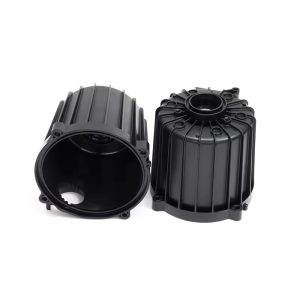
The rapid prototyping approach has been used successfully across a wide range of fields, demonstrating its versatility and effectiveness. In manufacturing, rapid prototyping, often referred to as additive manufacturing or 3Dプリンティングから、製品の物理的なプロトタイプを作成するために広く使用されている。 医療機器 への 自動車部品 そして 消費者向け製品. This allows companies to visualize and test product designs before committing to full-scale production, significantly reducing development time and costs. The aerospace and defense industries also heavily rely on rapid prototyping for creating complex and customized components.
Fast prototyping beyond the manufacturing realm is a key software development component, especially for user interface (UI) and user experience (UX) design. Software companies employ prototypes to test different interface designs, collect user feedback, and make sure that applications are intuitive and user-friendly.
In the architecture and construction sector, rapid prototyping is instrumental in producing scaled models of buildings and structures that facilitate design visualization and communication with clients and stakeholders. The use of rapid prototyping techniques in service design has emerged as a means of testing and refining service processes and customer interactions as well.
Moreover, the extensive success in these various areas indicates that rapid prototyping is a feasible and adaptable methodology that can be used in any field where iterative design and user feedback are appreciated.
なぜラピッドプロトタイピングは、革新的なコンピュータベースのインストラクションの開発に有利な方法論となりうるのか?
Rapid prototyping might be a very effective way to develop innovative computer-based instruction for a number of compelling reasons. To begin with, it promotes innovation through the trial of ideas and the repetition of the process. Instructional designers, for instance, in the field of education, can experiment with new teaching methods, student engagement strategies, and inclusion of multimedia in their computer-based learning materials. The possibility to quickly create a prototype and test it enables a more creative and exploratory design process which in turn, may result in more engaging and effective learning experiences. This is particularly important in the digital age where learners expect dynamic and interactive content.
Another reason is that rapid prototyping is inherently user-centered. Users in computer-based instruction are students; therefore, by involving students (or representative learners) in the testing and feedback stages of prototyping, instructional designers can get a lot of useful information about what works and what doesn’t from the learner’s perspective. This results in computer-based instruction that is not only pedagogically sound but also connects with learners and meets their specific needs. This user-centric approach is necessary to create truly effective and impactful learning experiences. Along with that, rapid prototyping facilitates the process of identifying and resolving potential usability problems at an early stage which makes the computer-based instruction user-friendly in terms of navigation and learning. Hence, if a rapid prototyping is implemented, it will not only increase quality but also innovation in computer-based education.
ラピッドプロトタイピングにおける教育技術研究開発の役割とは?
Research and Development (R&D) in educational technology is very instrumental in informing and enhancing the fast-pacing prototyping process in instructional design. The R&D in the educational technology area provides the basic understanding of the theories of learning, effective pedagogical strategies, and the use of different digital tools and technologies. To have a solid foundation in education and use the potential of technology to improve learning is the core of the instructional design prototyping process which the research base from educational technology makes possible. As an example, the design of learning materials can be greatly improved by the use of the research-based concepts of multimedia learning, cognitive load theory, and constructivist learning principles which are all rapid prototyping education techniques.
Besides, the research and development in educational technology gives the necessary means and instruments to the different methods of measuring the successes of prototypes. The rigorous evaluation step in an iterative cycle of rapid prototyping is very important and cannot be overlooked. To learner interaction with prototypes and learning outcomes achievement due to the use of the prototypes targeted at them can be measured or observed through the use of different research methods including usability testing, A/B testing, and learning analytics. The data-driven feedback loop is the core of the refinement process of the final computer-based instruction and guarantees that not only the innovation but also the demonstrable effectiveness of the final computer-based instruction. A rapid prototyping methodology that became more evidence-based and impactful for developing innovative computer-based instruction is achieved through the integration of insights from educational technology research and development.
ラピッドプロトタイピングは、どのように盗作を回避し、オリジナルのソースを確保するのに役立つのか?
While rapid prototyping mostly revolves around the design and development stages, it can also be considered as an indirect academic contributor to integrity and the reduction of plagiarism incidences especially in the educational sector. The focus of rapid prototyping on iterative design and feedback, thus, calls for thorough engagement with the original source and the learning process. When students are given the opportunity to create and refine prototypes as projects or assignments, they tend to grasp the concepts and ideas better, which eventually diminishes the temptation of copying word-for-word or even paraphrasing without acknowledgment.
Besides that, the repetitive aspect of rapid prototyping is a way of uniting different ideas and thinking originally. Learners should discover, modify, and develop new concepts out of the old ones, instead of merely duplicating them. This learner-centered method leads to the deeper comprehension of the subject matter and the gaining of new insights and personal opinions. In terms of computer-based instruction, rapid prototyping is a technique that can be utilized for creating activities that directly advocate for academic integrity and at the same time discourage plagiarism. One instance is the creation of interactive exercises that require the practical application of concepts in a novel way. Another is the formation of assessment tasks focusing on the process of creation and iteration rather than on the result only. These tasks can limit the occurrence of plagiarism and at the same time, encourage the ethical and meaningful use of original sources. It is equally important that students see the distinction between the proper use of original sources and academic dishonesty.
ソフトウェア開発におけるラピッドプロトタイピングの主な利点とは?
The use of rapid prototyping in software development brings in a lot of key benefits and thus, it is practically an essential design methodology in software engineering. One of the most substantial benefits is the lowering of the risk of the development process. When the prototype is made and tested at the early stages, potential problems and design flaws can be discovered and then changes can be made to address them without investing a large amount of money and time into the full-scale development. Such a prevention of the issue at a very early stage not only may save a lot of money but also may keep the project on the schedule, thus avoiding the costly rework that has been the cause of many project delays.
In addition, rapid prototyping revs up the communication flow between all parties involved in the project i.e. developers, clients, and end-users. Prototypes serve as real and concrete things that stake a clearer territory of requirements and design concepts as well as different users’ knowledge in the process, thus reducing the number and impact of the conversations in the air and ensuring all of the participants are at the same level. This strengthened interaction between the team members results in the expectations being more aligned and the development process becoming much more flowing.
More significantly, it results in more user involvement and satisfaction. Rapid prototyping techniques grab user feedback throughout the lifecycle of the development process. Users can play with the prototypes and provide feedback so developers can make sure that the end product will be the one for which users’ demands and expectations will have been met to the largest extent. Consequently, this user-centric approach results in the user community having a high level of satisfaction and thus the rate of adoption increases. Besides that, rapid prototyping encourages innovation and creativity in software development. The use of a methodology with a cyclical nature naturally leads to the finding of new solutions and the rejecting of others. Developers get the power to do so; they come up with new ideas, get the feedback instantly and refine their designs without spending much time. So, in principle, rapid prototyping represents a way to achieve the production of better software in less time and with greater user satisfaction, thus, it is a viable and highly beneficial methodology.
ラピッドプロトタイピングはデザインプロセスを強化する効率的な方法か?
Yes, rapid prototyping is clearly a powerful tool that is capable of significantly improving the design process across any discipline one can think of, such as product engineering, software development, and instructional design. Its effectiveness is primarily attributed to its iterative nature and the fact that it mainly deals with the solicitation of feedback from users. Rapidly creating models of the product to be developed in the design process enables the teams involved to test and validate design concepts, figure out any issues, and make the most necessary changes without the need to invest a lot of time and resources thus the full-scale development follows. The early validation is a way of ensuring that errors which are expensive to fix and rework will not occur at the later stages of the project, thus it is a means to do instructional design, software creation, or product engineering in a more streamlined and efficient way.
In addition, rapid prototyping is a tool through which user feedback is gathered more quickly as opposed to traditional design methodologies which require long development cycles before user feedback is sought. Unlike them, rapid prototyping is focused on frequent and early user feedback. This fast feedback cycle provides the opportunity for continuous improvement and refinement of the design, thus the product that will be finally delivered is more in line with the needs and expectations of the users. This iterative approach not only improves the quality of the final product but also shortens the total development time by a huge margin. The faster iteration, better communication, and early problem detection that are made possible by rapid prototyping are the reasons why it is not only a viable method but also an exceptionally efficient one to enhance the design process and drive innovation. To sum up, the adoption of rapid prototyping is a strategic move that would benefit any organization that is willing to optimize its design and development workflows and at the same time achieve superior results.
関連ブログ
仙のブログで共有における幅広い知識と経験による試作品製造. 弊社の記事を支援することを目指します石油精製製品のデザインとナビゲート、および、複雑な造形にします。